Mangala Gauri
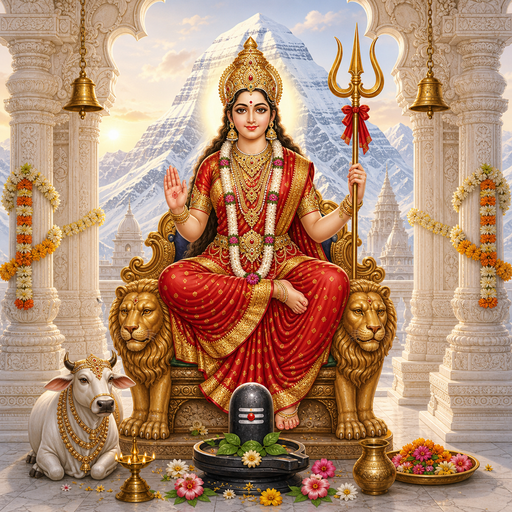
Mangala Gauri (Mangalagaur) is a women's vrat (observance) for saubhagya (marital good fortune) kept on every Tuesday of Shravan masa. It is mainly kept by newly-married women — usually for the first few years after marriage — who worship Gauri (Parvati) and Mahadev for their husband's long life and a happy married life. Its special feature is the traditional games of the night-long jagran (vigil) — fugadi, zimma, ukhane (rhyming couplets) and folk songs. Because the anchor is ‘the Tuesdays of Shravan,’ the dates shift every year with the panchang (there are 4 Tuesdays in 2026).
This year's dates (2026)
- First Shravan Tuesday18 Aug
- Second Shravan Tuesday (also Bhaum Pradosh)25 Aug
- Third Shravan Tuesday1 Sep
- Fourth Shravan Tuesday (also Bhaum Pradosh)8 Sep
Significance
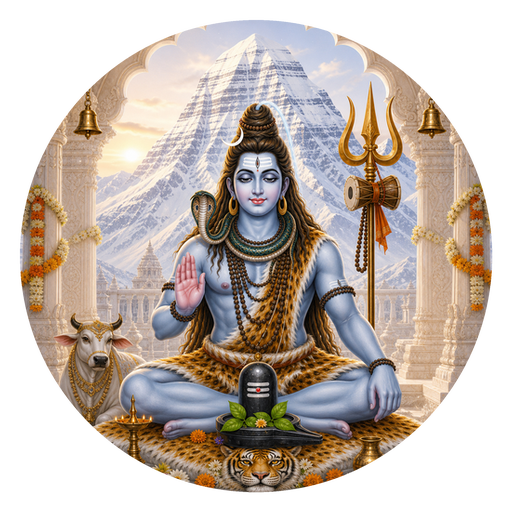
Mangala Gauri is treated as a saubhagya vrat of Shravan. In Maharashtra, Shravan is the month of vrats and of Shiv-bhakti, and its Tuesdays are regarded as dedicated to Gauri and Shankar. The heart of the vrat is said to be the newly-married woman's wish for her husband's well-being, long life and marital happiness. Because Shiv and Parvati are seen as the ideal couple, their puja becomes a symbolic prayer for a happy married life.
The social and cultural side of the vrat is just as prominent. Newly-married friends of a similar age gather to do the puja together and stay up through the night playing traditional games and singing — a living form of Maharashtrian folk culture.
The significance and phalashruti (fruits) here are described as faith and tradition, not as a universal religious or astrological rule. Details vary by region and family.
The legend (katha)
The vrat katha of Mangala Gauri is told, in brief, like this:
In a certain town lived a wealthy merchant (vani) who had no child for a long time. By the grace of the goddess he finally had a son, but the boy's horoscope carried a short lifespan — a yoga of death by snakebite, said to fall especially in his sixteenth year. As it happened, he was married to a girl whose mother faithfully kept the Mangala Gauri vrat; through that merit, the girl had been blessed with unbroken saubhagya.
When the moment of death came, Gauri's grace and the strength of the daughter-in-law's saubhagya averted it — ‘Mangala Gauri stood in the way,’ and the husband's life was saved. This is why the vrat is regarded as a protector of saubhagya; and the story closes with a prayer that ‘just as Mangala Gauri was pleased with her, may she be pleased with us all.’
In some versions the way death is averted takes a different form — in one, a serpent comes on the wedding night and the daughter-in-law keeps it at bay by offering it milk / catching it, and the husband is saved; while in some versions the emphasis is on the unbroken saubhagya earned through her mother's vrat, which lengthens the husband's life. The characters' names also change by version (in one the merchant is unnamed, in another he is called Dharmapal). The heart of the story, though, is the same everywhere — the Mangala Gauri vrat protects saubhagya.
Who observes it
- This is mainly a vrat of newly-married women.
- Duration: in many places it is said to be the first five years after marriage; some traditions say five or seven years, and some mention sixteen Tuesdays/years. This is a variation across versions — don't take one single number as a universal rule; treat your own family's or lineage's custom as the right one.
- In many regions there is a custom that the first year is kept at the maher (the parents' home) and later years at the sasar (the marital home) — but take this as a regional and family custom, not a rule that applies everywhere.
Puja vidhi (how to perform)
Below is the general shape of the puja vidhi; the details differ by household and region.
- The newly-married woman bathes in the morning, wears a sovle (a ritually pure garment) and sits for the puja; friends of a similar age are also invited so it becomes a group puja.
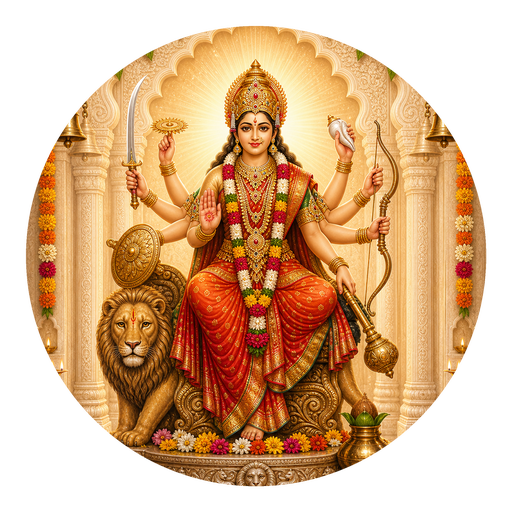
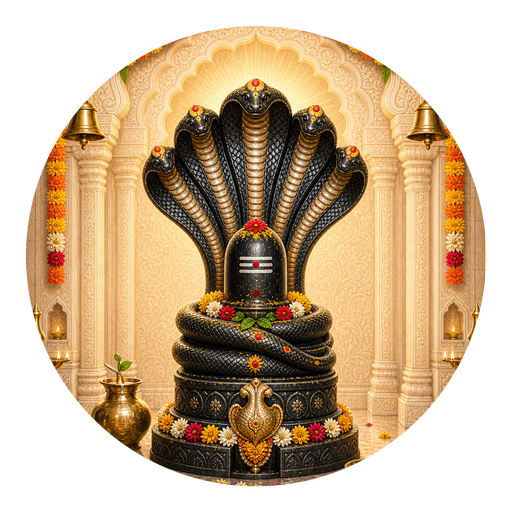
- A metal murti of Gauri (Parvati in the Annapurna form) is set up, with a Mahadev pindi placed beside it. (In some homes the puja is done along with Ganpati — a variation.)
- By tradition a shodashopchar puja (the sixteen-step worship) is performed; sixteen kinds of patri (leaves) are offered to the goddess.
- Aarti and prasad follow; haldi-kunku is given to the suvasinis (married women) present.
- Jagran at night — Mangala Gauri is ‘kept awake’ through the night with ukhane, songs and traditional games (see ‘Regional variations’ below).
Udyapan (the concluding rite)
- Many sources say the udyapan is done in the last (usually the fifth) year of the vrat cycle — on the last Tuesday of Shravan in that year.
- An important caution: the udyapan is an act that depends on the year of the vrat. No one should read this year's (2026) ‘last Tuesday of Shravan’ as ‘the udyapan’ — which year the udyapan falls in depends on that woman's own vrat year.
What you need (samagri)
(This is orientation — verify against local tradition.)
- A metal murti of Gauri (Annapurna) + a Mahadev pindi.
- Sixteen kinds of patri (leaves) and flowers/durva; in some traditions sixteen lamps.
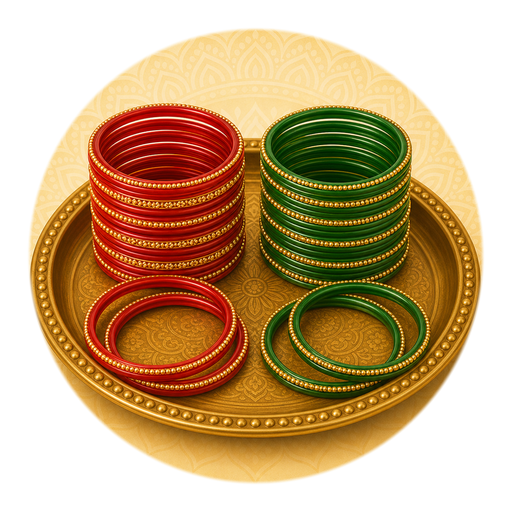
- Haldi-kunku, akshata, fruit, naivedya, supari-naral (betel nut and coconut), saubhagya items (bangles, kajal, etc.).
- Aarti items and prasad.
The full ‘shodashopchar’ list varies by region and lineage custom — don't take one single list as universal.
 Mahadev pindi
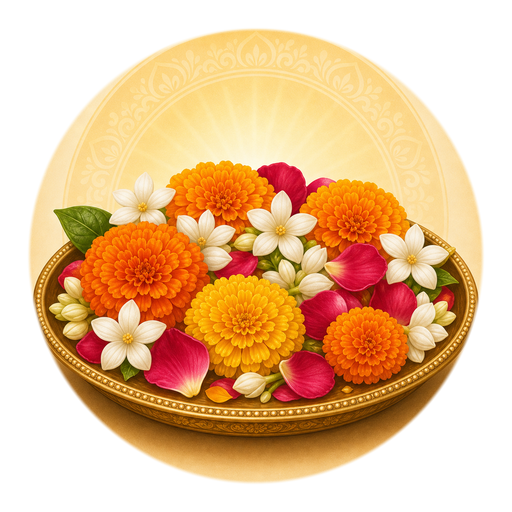 Flowers
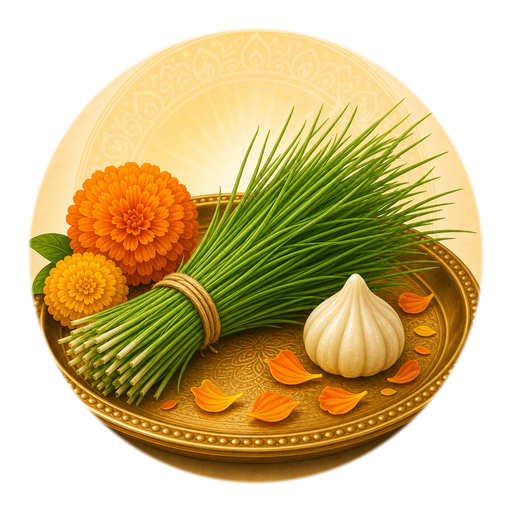 Durva
Durva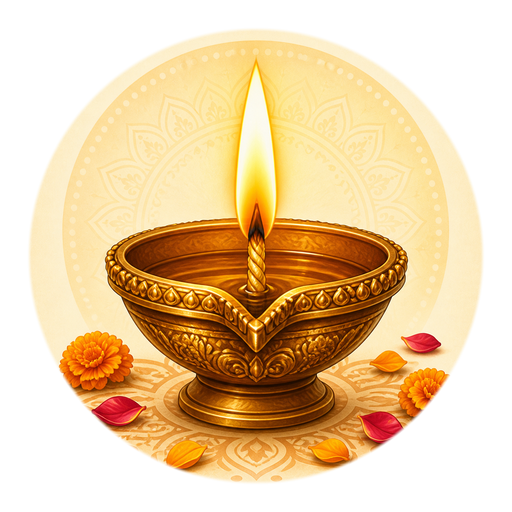 Sixteen lamps
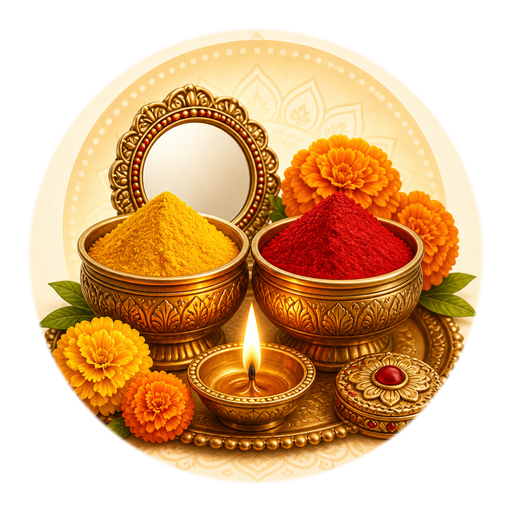 Haldi-kunku
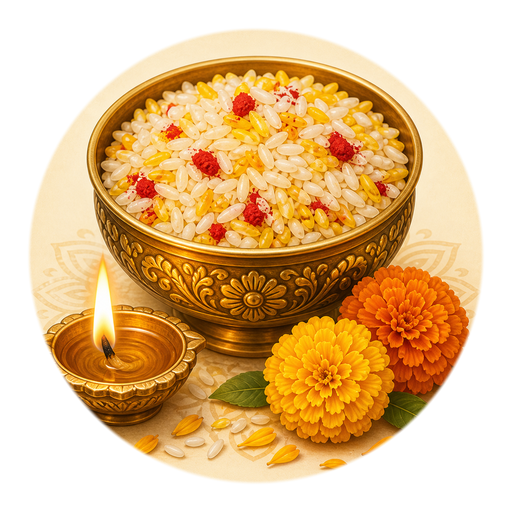 Akshata
 Fruit
Fruit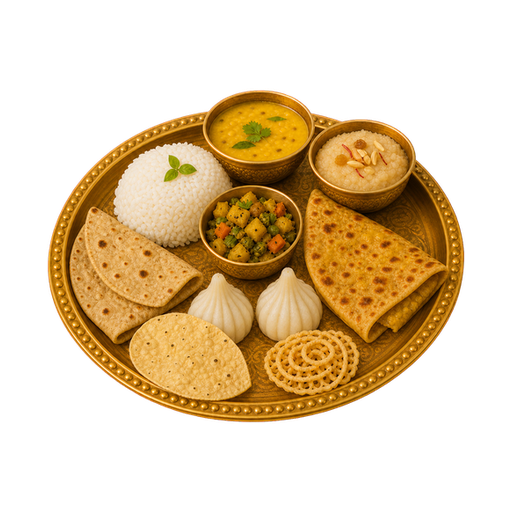 Naivedya
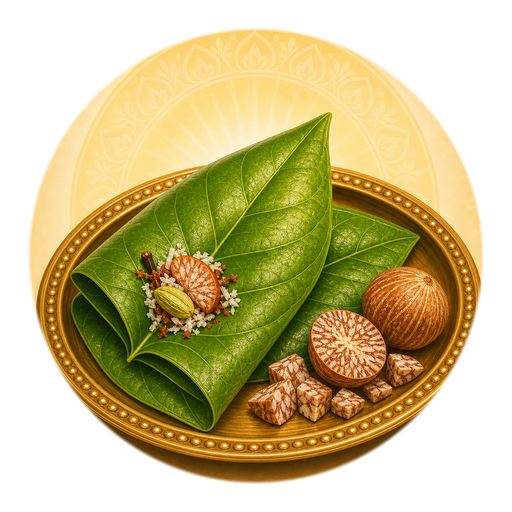 Supari (betel nut)
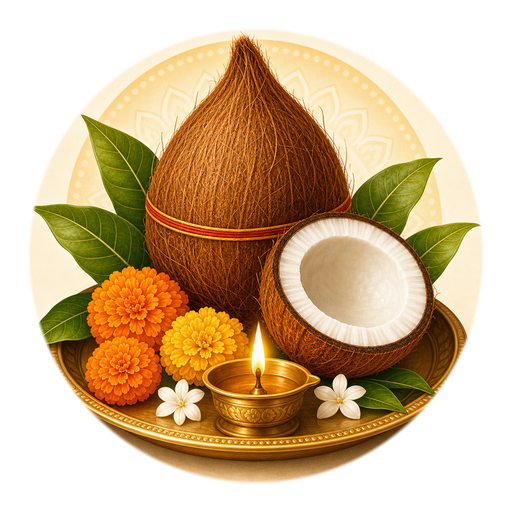 Coconut
 Bangles
Fasting & food (upvas)
- On the vrat day it is traditional to stay observant and keep a sattvik diet or an upvas (fast).
- The exact rules (nirjal / waterless, phalahar / fruit-only, or ekbhukt / one meal) vary by region and family — don't take one single method as a universal rule. Keep it as your own health and household tradition allow.
Mantra & aarti
- A separate aarti for Mangala Gauri is current in tradition; it is sung at the close of the puja and during the night jagran.
- When to sing: at the end of the puja and during the jagran.
- Meaning, in brief: the aarti praises Gauri-mata and prays that, by her grace, unbroken saubhagya, happiness and mangal (well-being) may be granted.
- Opening line (romanized): ‘Jay Devi Mangalagauri…’ (the opening may vary by version).
Regional variations (Maharashtra)
This vrat is mainly Maharashtrian, and its special feature is the traditional women's games of the night jagran — the living part that sets it apart.
- Games of the jagran: fugadi (many kinds), zimma, karavanti zimma, tiprya, gof, salunki, gathode, ‘lata bai lata,’ ghoda haat and many more; along with ukhane (rhyming couplets) and traditional songs. These games are said to have very many varieties.
- Shravan and its Tuesdays are fixed by the amanta (Maharashtra) system. In the North Indian (purnimanta) system the dates differ — so the dates on this page are taken only from this site's panchang.
- Like Nag Panchami, Shravani Somvar and Jivati pujan, Mangala Gauri too is part of the women-centred traditions of Shravan; the games, songs and details change by region.
Good to know
- Religious: the puja vidhi, upvas and udyapan vary by region and family — rather than ‘this is the only correct way,’ treat it as ‘according to your home/local custom.’
- Health: the night jagran and the fast come together; pregnant or unwell women should take extra care based on their health; phalahar and enough water are a general suggestion (not medical advice).
- Game safety: fast games like fugadi and zimma — play them with an eye on the space and your own health.
- Dates: the Tuesdays shift every year with the panchang; the 2026 dates are from this site's panchang only.
FAQ
- Who should keep the Mangala Gauri vrat?
- Mainly newly-married women, usually for the first few years after marriage (often five).
- How many years is Mangala Gauri kept?
- Commonly said to be five years; some traditions say five or seven years, and some say sixteen Tuesdays — a variation across versions, so follow your own family's custom.
- How is the Mangala Gauri vrat performed?
- A group puja in the morning (a Gauri-Annapurna murti + a Mahadev pindi, sixteen patri, aarti), and a jagran with traditional games at night.
- When is the Mangala Gauri udyapan done?
- In the last (usually fifth) year of the vrat cycle, on the last Tuesday of Shravan in that year. It is an act that depends on the vrat year; the exact timing follows household custom.
- What is Mangala Gauri?
- The saubhagya vrat that newly-married women keep for Gauri (Parvati) and Mahadev on the Tuesdays of Shravan.
- What samagri is needed for the Mangala Gauri puja?
- A metal Gauri murti, a Mahadev pindi, sixteen patri, flowers/durva, haldi-kunku, naivedya and aarti items (as per household custom).
- Which vrat is kept on the Tuesdays of Shravan?
- Mangala Gauri (the newly-married women's saubhagya vrat); Bhaum Pradosh can also fall on the same Tuesday.