Raksha Bandhan
Raksha Bandhan is the brother-sister festival kept on Shravan purnima (the full-moon day of the Shravan masa). On this day a sister ties a rakhi (raksha-sutra, a protective thread) on her brother's wrist, performs an aarti and prays for his well-being; the brother gives a gift and promises to protect her. "Raksha" means protection and "bandhan" means a bond or tie — so the rakhi is a symbol of love, trust and the promise of protection. In Maharashtra the same purnima is also called Rakhi Purnima / Povati Purnima. In 2026, Raksha Bandhan falls on Friday, 28 August.
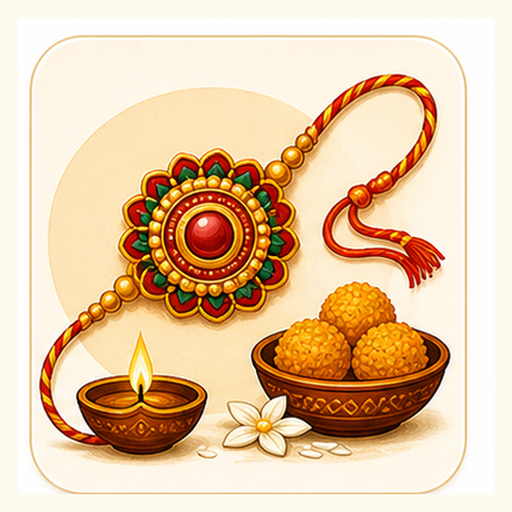
This year's dates (2026)
Significance
The rakhi is not just a thread but a symbol of the love, trust and mutual duty of protection between a brother and sister. The sister prays for her brother's long life and welfare, and the brother promises to protect her. It is a festival that celebrates this family bond.
Shravan purnima holds a special place in Maharashtra — this one full-moon day carries three traditions at once:
- Raksha Bandhan / Rakhi Purnima — the rakhi festival of brother and sister.
- Narali Purnima — the festival of the Koli (fishing) community of the Konkan coast, who offer a coconut to Varuna (the sea) and mark the start of the fishing season.
- Shravani / Upakarma — on this day Brahmin men don a new yajnopavit (janve, the sacred thread); this is an ancient Vedic tradition.
Because the raksha-sutra is offered, this purnima is also called Povati Purnima. This triple significance is what makes Raksha Bandhan distinctly Maharashtrian.
The origin of the raksha-sutra is quite old. In the Bhavishya Purana, a family priest ties a raksha-sutra on the right wrist of the patron on this purnima, and the accompanying shloka refers to "Yena baddho Bali raja…" (the thread by which the mighty Bali was bound). In other words, the rakhi was originally a protective thread; the brother-sister form is understood to have become customary later. (This is a religious/traditional belief — best understood as an article of faith.)
When to tie the rakhi
Tradition says the rakhi should be tied avoiding the Bhadra period — Bhadra (the Vishti karana) is regarded as an inauspicious period for starting important ceremonies. In 2026, on 28 August, Bhadra ends before sunrise, so the panchang indicates the morning is clear for tying the rakhi.
The exact auspicious time to tie the rakhi varies by your city and by year (it depends on sunrise, the end of the purnima tithi and the Bhadra window). Check the precise timing for 28 August 2026 on the day page.
The legends (katha)
Several legends are attached to Raksha Bandhan. Some of the main versions are given below; the details differ from source to source.
Indra and Indrani (Sachi) — the most-cited version.
In the war between the devas and the danavas, Indra stood on the edge of defeat. His wife Indrani (Sachi) then tied on Indra's wrist a raksha-sutra empowered by the sacred mantras of Shravan purnima, and on that strength the devas won — this is considered the oldest recorded version, told in the Bhavishya Purana. In some versions the advice to Indrani came from Vishnu, in others from Brihaspati (the devguru) or from Brahma. (Note: in this same story, "Bali" who is Indra's enemy and the "Bali raja" of the later shloka are two separate references — not to be confused.)
Lakshmi and Bali raja.
After the Vamana avatar, Vishnu stayed in the netherworld of Bali raja. The goddess Lakshmi tied a raksha-sutra on Bali raja, took him as her brother, and in exchange for that bond brought Vishnu back with her. It is this story that is linked to the traditional shloka "Yena baddho Bali raja" recited while tying the rakhi.
Krishna and Draupadi.
On one occasion, when Krishna's finger was bleeding, Draupadi tore a piece of her garment and bound it around his finger. In return for that affection, Krishna promised to protect Draupadi — a promise he is believed to have kept later, at the time of the vastraharan (the disrobing). In some versions Krishna's finger was cut by the Sudarshana chakra (at the slaying of Shishupala), while in others it was cut while cutting sugarcane or while eating.
Yama and Yamuna.
Yamuna tied a rakhi on her brother Yama. Pleased, Yama gave the blessing that "the brother who lovingly accepts a rakhi from his sister and resolves to protect her will be long-lived" — so this story is told. (This is a traditional blessing recounted within the legend, not an astrological guarantee.)
Popular historical legends
Some historical episodes are also linked to Raksha Bandhan; but according to scholars, many of these are contested, film-created or recent. So they are best treated as "popular legends", not as firm history.
- Rani Karnavati and Humayun (~1535): the popular story is that Karnavati sent Humayun a rakhi asking for help; however, it does not appear in contemporary or Mughal sources, and historians (for example Satish Chandra) have expressed doubt about it.
- Alexander, Roxana and Porus: this story was popularised largely by the 1941 film "Sikandar"; it has no ancient basis.
- Santoshi Maa: this story, linked to the 1975 film, is relatively recent.
Who observes it
- Mainly brothers and sisters; but not only blood siblings — cousins (paternal, maternal), friends and other family members also tie the rakhi.
- Today, as a mark of gratitude, there is a growing modern practice of tying a rakhi on soldiers and police as well.
- The Shravani / Upakarma (changing of the janve) kept on this same purnima is mainly for Brahmin men — a related but separate ritual that accompanies Raksha Bandhan.
Puja vidhi (how to perform)
The sequence below is a general one; the items on the thali and the exact manner vary a little by household and region.
- Arrange the thali: place the rakhi, kumkum and haldi (turmeric), akshata (rice), a niranjan/lamp and sweets on the thali.
- Aarti and tilak: the sister performs an aarti for her brother, applies a kumkum/chandan tilak and akshata on his forehead, and prays for his welfare.
- Tie the rakhi: the sister ties the rakhi on her brother's right wrist (the Bhavishya Purana too mentions the right wrist).
- Sweets and gift: the sister feeds her brother something sweet; the brother gives her a gift or dakshina and promises to protect her.
About the timing: tradition says the rakhi should be tied avoiding the Bhadra period; because the exact auspicious time is location-specific, see the "When to tie the rakhi" section above and the day page.
What you need (samagri)
Rakhi (raksha-sutra) · kumkum and haldi · akshata (rice) · niranjan / lamp · sweets (ladu, barfi) · a gift or dakshina for the brother. (This list is general and varies by tradition.)
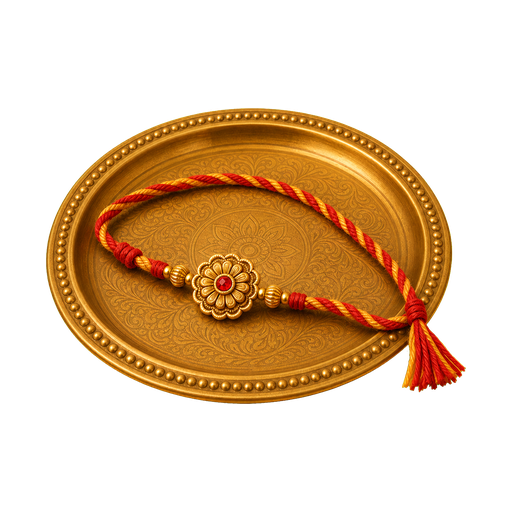 Rakhi (raksha-sutra)
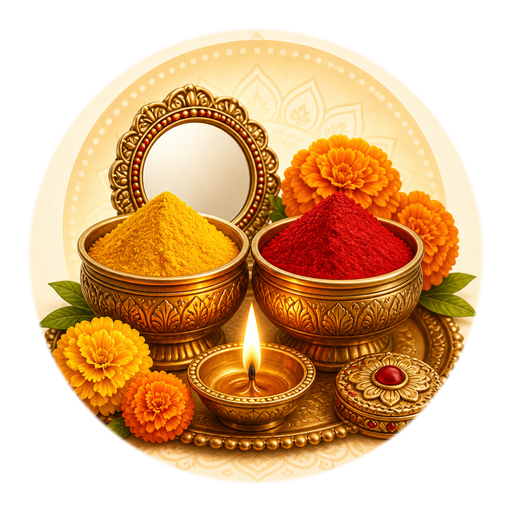 Kumkum and haldi
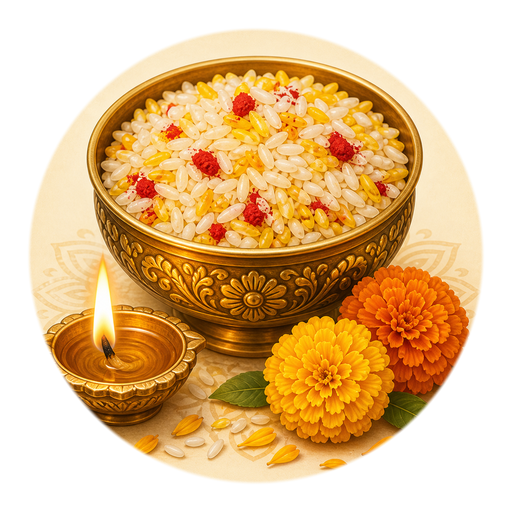 Akshata (rice)
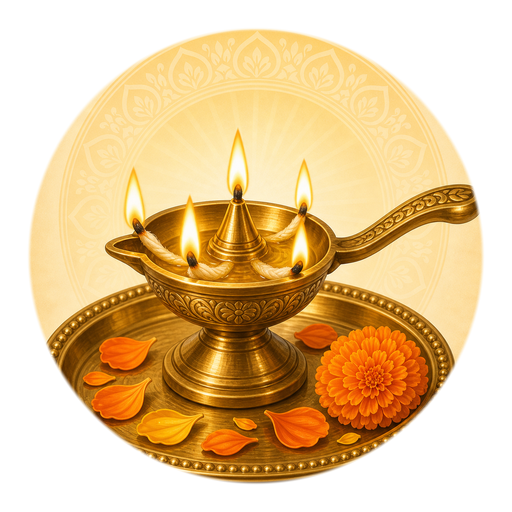 Niranjan
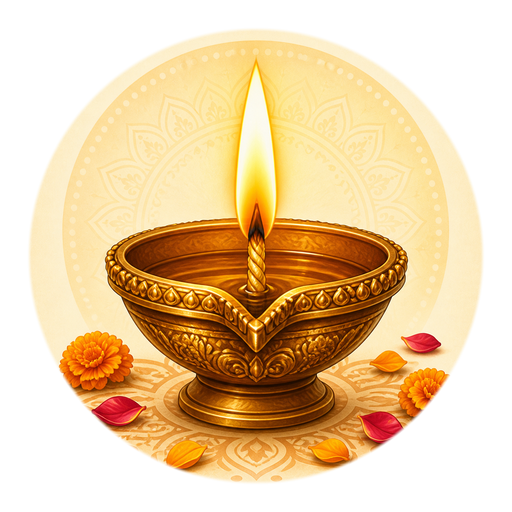 Lamp
Lamp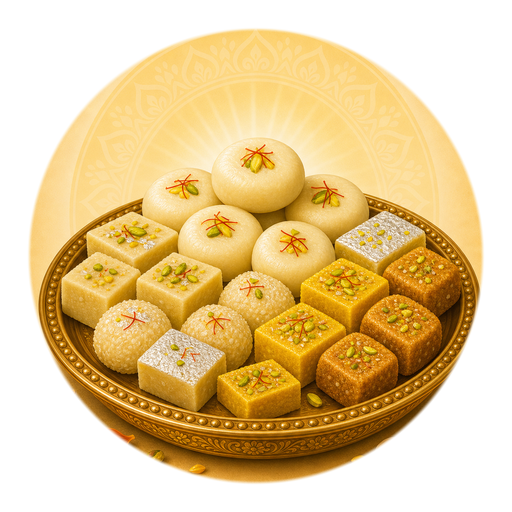 Sweets (ladu, barfi)
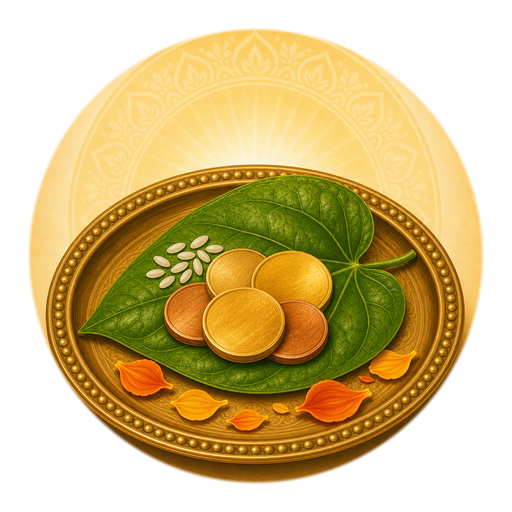 Gift / dakshina
Mantra
A shloka is traditionally recited while tying the rakhi; its opening line is:
Meaning (sense): "With the very raksha-sutra by which the mighty lord of the danavas, Bali raja, was bound, I bind you; O raksha (protective thread), stay firm."
Regional variations (Maharashtra)
- The two-purnima rule: when the purnima falls across two consecutive days, the first day is Narali Purnima and the second is Rakhi Purnima — this is the convention in Maharashtra. In 2026 it works out as 27 August = Narali Purnima and 28 August = Raksha Bandhan.
- Narali Purnima (coastal / Koli community): along the Konkan and Mumbai coast, the Koli community offers a coconut to Varuna (the sea) and marks the start of the fishing season. This is a festival linked to Raksha Bandhan but a separate one.
- Shravani / Upakarma / Povati: on this same purnima, Brahmin men change the janve (yajnopavit); because the raksha-sutra / povati is offered, the day is also called Povati Purnima.
- Saluno: one source records that in parts of Maharashtra and Karnataka the festival is also called "Saluno"; however, in the Marathi tradition the name Povati Purnima is the more established one.
Raksha Bandhan is part of the chain of Shravan festivals — alongside Shravani Somvar, Mangalagaur, Shravani Guruvar and Jivati pujan, it is part of what makes Shravan distinctive.
Good to know
- The rakhi is tied avoiding Bhadra; the exact auspicious time varies by city and year — see the 28 August 2026 day page.
- Narali Purnima is not Raksha Bandhan: they are linked to the same purnima but are separate festivals (on different days in 2026 — 27 and 28 August). Don't confuse the two.
- Handle the historical legends with care: the Karnavati–Humayun, Alexander–Porus and Santoshi Maa stories are contested / film-created legends — treat them as "popular legends" only.
- Custom varies: the vidhi, the items on the thali and the gift vary from home to home — keep in mind "as per local or family custom".
FAQ
- When is Raksha Bandhan in 2026?
- In 2026, Raksha Bandhan is on Friday, 28 August (Shravan Shukla Purnima; the purnima tithi lasts until 9:47 AM).
- Why is Raksha Bandhan celebrated / what does the rakhi mean?
- "Raksha" means protection and "bandhan" means a bond or tie. The sister ties a raksha-sutra on her brother's wrist and prays for his welfare, and the brother promises to protect her — the festival celebrates this family bond.
- What is the auspicious time (muhurat) to tie the rakhi?
- Tradition says to tie the rakhi avoiding the Bhadra period. The exact auspicious time varies by city and year, so check it on that day's day page (28 August 2026).
- Why should the rakhi not be tied during Bhadra?
- Bhadra (the Vishti karana) is considered an inauspicious time to begin important rituals, so by tradition the rakhi is tied only in a Bhadra-free window. To understand Bhadra and karana, see the karana (panchang) page.
- Are Narali Purnima and Raksha Bandhan the same, or what is the difference?
- Both are linked to Shravan purnima, but they are separate festivals — Narali Purnima is the Koli community's offering to the sea, while Raksha Bandhan is the rakhi festival. When the purnima falls across two days, the first is Narali and the second is Rakhi; in 2026 that is 27 and 28 August.
- What should be kept on the thali for Raksha Bandhan?
- The rakhi, kumkum and haldi, akshata, a niranjan and sweets. The sister performs an aarti, applies a tilak and ties the rakhi on the brother's right wrist. (The vidhi varies a little by home.)
- If there is no sister, who can tie the rakhi?
- A cousin sister, a friend or a woman of the family can tie the rakhi; today, as a mark of gratitude, a rakhi is also tied on soldiers and police.