Jivati Pujan (Jara-Jivantika)
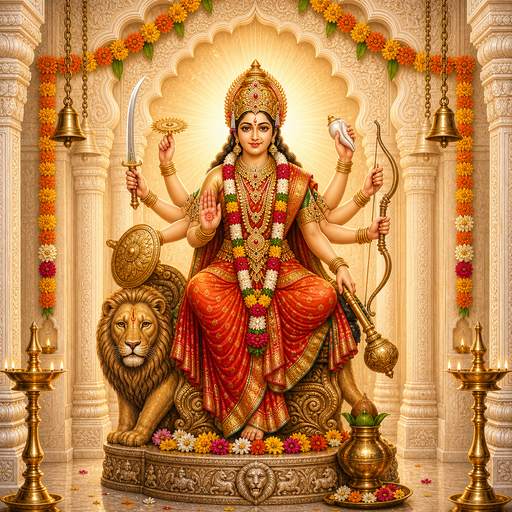
Jivati Pujan is a vrat (observance) kept on every Friday of the Shravan masa. Mothers, grandmothers and the women of the house worship Jivati (Jara-Jivantika), a goddess who protects children — with a single aim: the protection and long life of their children. A printed picture of Jivati (the jivati kagad) is put up on the devghar (home shrine) wall, worshipped every Friday through Shravan, and immersed (kagad visarjan) on Shravan Amavasya. It is chiefly a women's vrat of Maharashtra (and Gujarat), and in many families it is a kulachar (family tradition).
This year's dates (2026)
- first Shravan Friday14 Aug
- second Shravan Friday — Jara Jivantika Pujan21 Aug
- third Shravan Friday (Narali Purnima / Rakshabandhan)28 Aug
- fourth Shravan Friday (Shrikrishna Janmashtami)4 Sep
- fifth Shravan Friday (Shravan Amavasya — kagad visarjan)11 Sep
Significance
Jivati is regarded as the protector of children's life and health. By worshipping her, people pray that their children stay healthy, live long and remain safe from harm. In essence this puja is one motherly power appealing to another protective, nurturing power — a mother praying to the goddess for the well-being of her children.
Shravan is a month of vrats, and its Friday is traditionally dedicated to Jivati and Lakshmi — which is why the day is tied to the welfare of children and the happiness and prosperity of the home. Like Shravani Somvar (the Shiv puja), Mangalagaur (the vrat of newly-married women) and Shravani Guruvar, Jivati Pujan is one part of Shravan's weekday-vrat series.
Some also explain that the seven children (or seven forms) shown in the Jivati picture symbolise the seven stages of human life (and the seven koshas). Take this as one tradition's symbolism — not a universal rule.
The Jivati picture — its meaning
The printed jivati kagad and the deities on it are the most distinctive part of this vrat; a general pan-India calendar rarely records this picture-worship. A printed Jivati sheet usually has four or five deity panels, and each deity is taken as a symbol of one aspect of protecting a child:
- Narsimha — at the top; the form of Vishnu who protected the devotee Prahlad. A symbol of protecting a child from household accidents — falling from a height, fire, poisoning.
- Krishna subduing Kaliya (Kaliyamardan) — a symbol of protection from dangers while playing, from water, and from the fear of snakes (linked to the story of the ball falling into the Yamuna).
- Jara-Jivantika in the centre — the yakshi who plays with children around a cradle; “Jivantika” means the giver of long life, so she is directly linked to a child's lifespan.
- Budh and Brihaspati (Guru) below — Budh (on an elephant, holding a goad) is taken as a symbol of intellect and speech, and Brihaspati (on a tiger, holding a whip) of learning and the growth of knowledge.
The picture sometimes also shows a cat or Naroba; this varies with the regional printing.
The legend (katha)
Two different stories are attached to Jivati. One is the Mahabharata story of the yakshi Jara, and the other is the household “jivatichi kahani” read aloud during the puja in Shravan. Both are given below in brief; neither should be taken as the single “true” one.
Stream one — the yakshi Jara of the Mahabharata. King Brihadratha of Magadh had two queens but no child. The sage Chandakaushik, pleased with him, gave the king a fruit. Loving both queens equally, the king divided the fruit between them — and each queen bore a child that was only half a body. The king had these half-formed, frightening-looking bodies cast away in the forest. There a yakshi named Jara found the two halves lying together, joined them with her art, and a living child was formed. In the evening she brought the child to the king; because “Jara joined it” (Jara + sandha), the king named him Jarasandha. In gratitude the king honoured Jara as the protective household deity of Magadh, and from then on Jara is regarded as a child-protecting mother-goddess.
In this story Jivantika is described as a companion (sakhi) yakshi of Jara; over time the word “Jivantika” was worn down into the name “Jivati”. In some versions, however, Jivantika is not a separate yakshi but is taken to be a form of Parvati. The exact identity of Jivantika changes from version to version.
Stream two — the household jivatichi kahani. In a certain town a king had no son. In that same town a poor Brahmin woman faithfully kept the Jivati vrat every Friday of Shravan. Each time she would take akshata (rice grains) in her hand and pray — “Jai Jivati-aai mate! wherever my child may be, may it be well and happy” — and scatter the grains; it is believed they fell upon the head of the far-away child. (This version also mentions some vrat rules — not wearing green bangles, not passing under a mango bower, not washing the rice — but these rules belong only to that story-version and are not universal.) In the end, at the udyapan feast, by Jivati's grace the true mother is recognised, and the child later brings well-being to its parents — which is how the tradition of Jivati's protective grace takes root.
The shared lesson of both stories is one and the same — with faith and humility a mother appeals to Jivati for the protection and long life of her children; Jivati is the nurturing, protecting goddess of children.
Who observes it
- Chiefly mothers, grandmothers, aunts and the women of the house — especially those with young children.
- It is a vrat of Maharashtra (and Gujarat), and in many families it is a kulachar (family tradition).
- Keep it according to faith and family custom. A strict fast or fixed rules are not compulsory — some even say there is no fixed puja procedure; the day can be observed simply with puja and namasmaran (remembrance of the name).
Puja vidhi (how to perform)
The sequence below is a general one; details vary a little by family and region.
- At the start of Shravan, put up the jivati kagad on the devghar wall with chandan/gandha (sandal paste). (There is disagreement about exactly when to put it up — see “Regional variations” below.)
- Every Friday, first worship the kuladevata and Lakshmi, then Jivati — offering haldi-kunku, gandha, flowers, a garland of durva/aghada, and akshata.
- Offer Jivati a piece of cotton cloth (marked with haldi-kunku; in some places a cotton thread of 21 knots).
- Present the naivedya — milk and sugar, gul-futane (jaggery and roasted gram) and puran; then make five, seven or nine puran lamps and perform the aarti of Lakshmi and Jivati.
- After the aarti, seat the children of the house, give them akshata and blessings, apply kunku to the forehead, and give them gul-futane (or a puri fried in ghee and jaggery).
- In the evening, give the suvasinis (married women) haldi-kunku, gul-futane and milk.
- On one Friday it is customary to make puranpoli the main naivedya; on the last Friday or at the udyapan, a young girl (kanya) is invited and given puranpoli and a gift (van).
- Immersion: on Shravan Amavasya, immerse the jivati kagad in nirmalya or in a river or well.
What you need (samagri)
- The printed jivati kagad, chandan/gandha, haldi-kunku, akshata, flowers, durva/aghada, a piece of cotton cloth or a 21-knot cotton thread, betel leaves and fruit.
- For the naivedya: milk and sugar, gul-futane, puran / puranpoli; for the aarti, lamps or puran lamps, and rangoli.
(This list is general; details vary by family custom.)
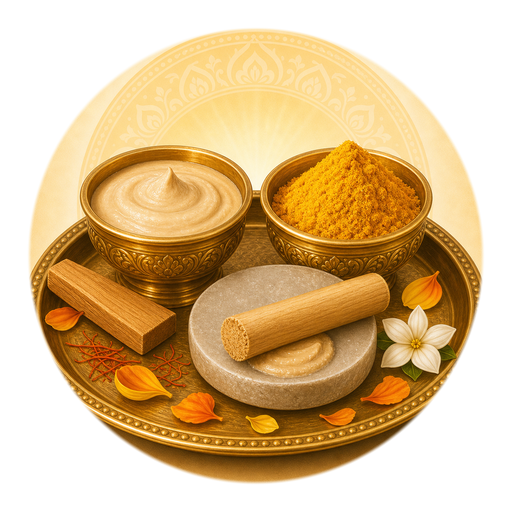 Chandan/gandha (sandal paste)
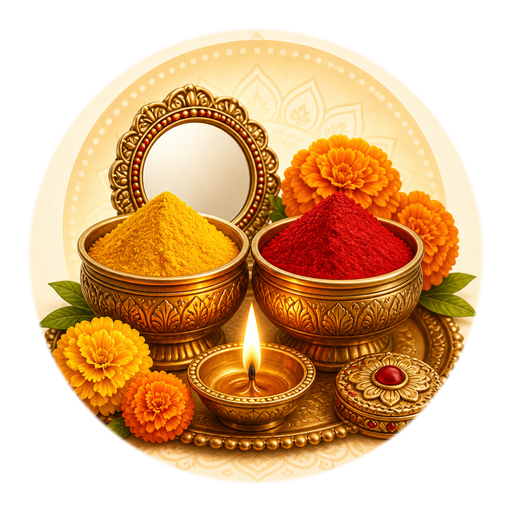 Haldi-kunku
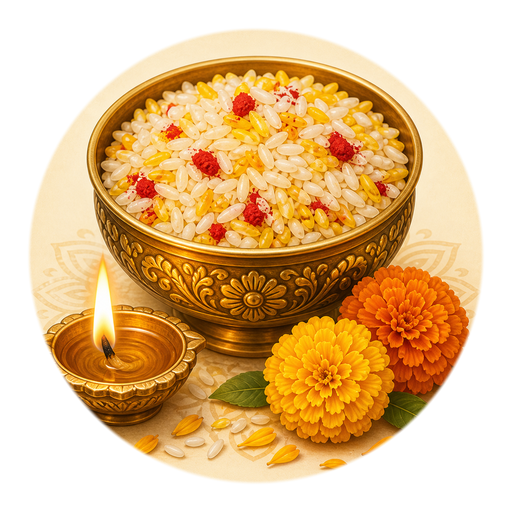 Akshata
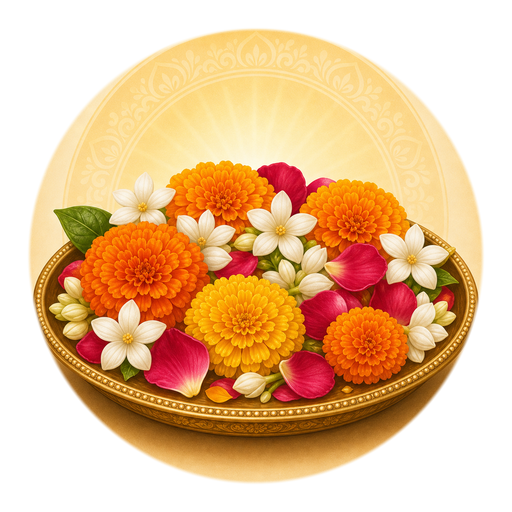 Flowers
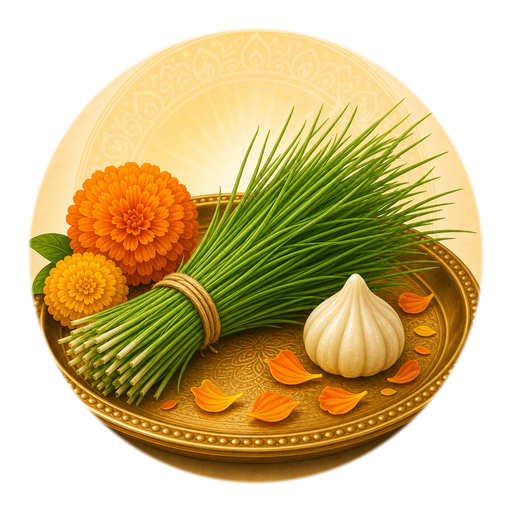 Durva grass
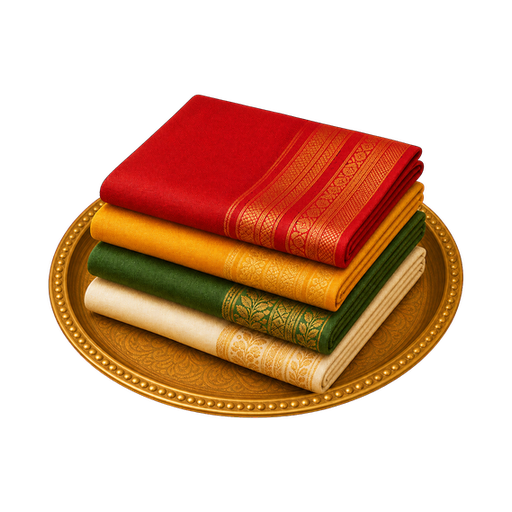 Cotton cloth
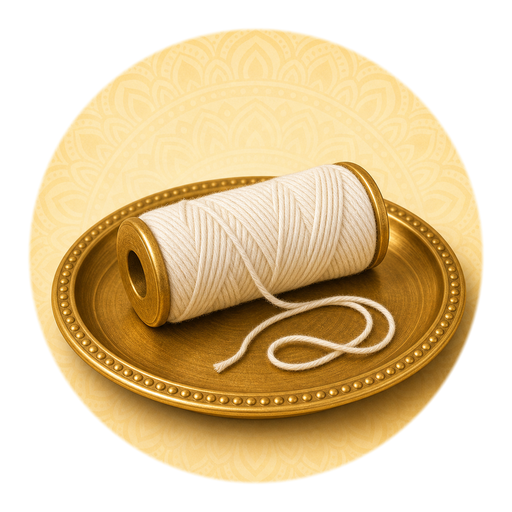 Cotton thread
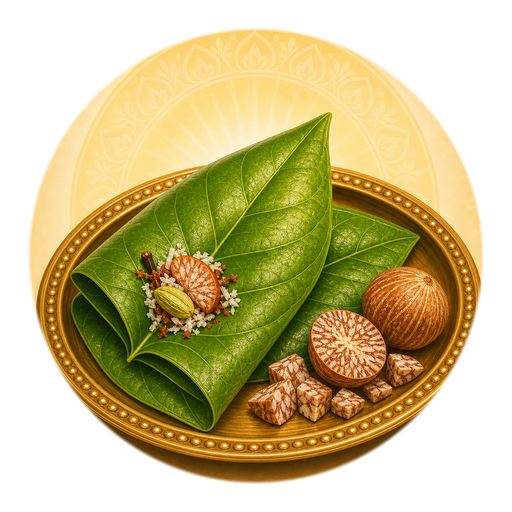 Betel leaves
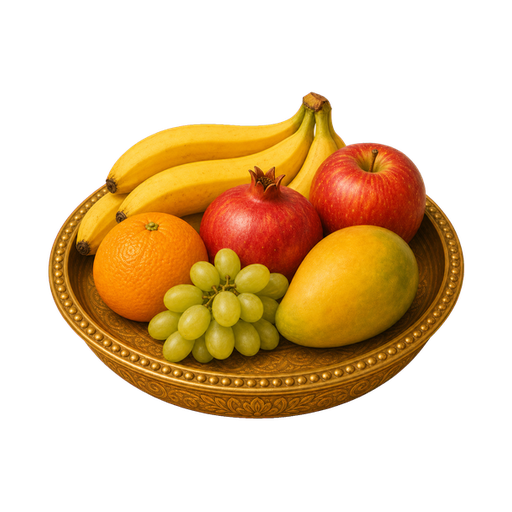 Fruit
Fruit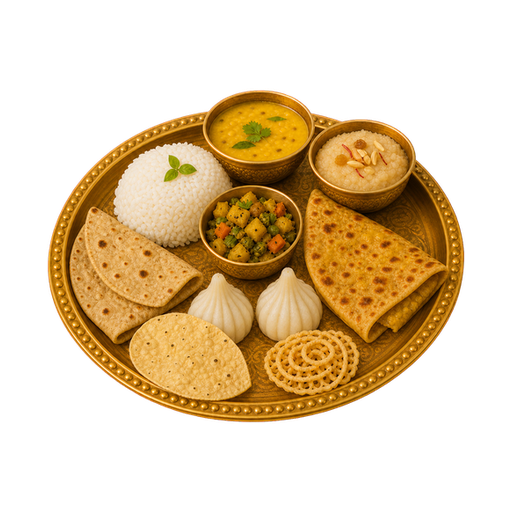 Naivedya
 Lamps
Lamps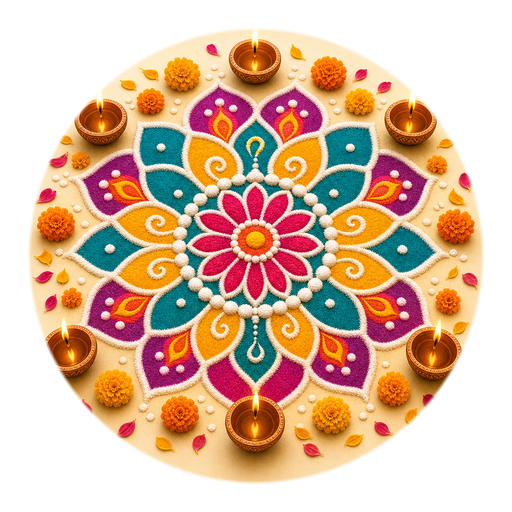 Rangoli
Fasting & food (upvas)
- This is a puja-centred vrat rather than a strict fasting one; in many homes the Jivati puja is done every Friday without keeping a fast.
- The naivedya and prasad — milk, gul-futane, puran, puranpoli — are eaten together with the family.
- Some traditional rules from the household kahani (not wearing green bangles, not washing the rice, not passing under a mango bower) are family- or story-specific, not universal.
- On health: if you have an illness or take medication, avoid a strict fast; pregnant women, the elderly and children should take relief as needed.
Mantra & aarti
There is no widely-used separate bija-mantra for Jivati; what is mainly done is namasmaran and prayer to Jivati. The traditional prayer line from the kahani is:
Meaning: “O Mother Jivati, wherever my child may be, may it stay safe and happy.” It is the simple appeal a mother makes for her child.
Aarti — the recognisable opening line
After the puja it is customary to sing the aarti of Lakshmi and Jivati. The well-known opening line of the Jivati aarti is:
Meaning: “Victory to you, Mother Jivati; at your feet is our prayer — keep our children happy.” (The full aarti is intentionally not given here — the text differs from family to family; the Devanagari opening line is on the Marathi version of this page.)
Regional variations (specific to Maharashtra)
- Putting up the printed jivati kagad in the devghar and worshipping it every Friday through Shravan is a distinctly Marathi (and Gujarati) practice; pan-India calendars rarely record this picture-worship.
- Two customs exist for when to put up the kagad — some put it up on Ashadh / Deep Amavasya, others on the first Friday of Shravan. Both vary by family and region; keep it as your own tradition has it.
- The immersion of the kagad on Shravan Amavasya ties the custom to the close of Shravan.
- Giving suvasinis and children gul-futane and haldi-kunku is part of this vrat; in many families it is a kulachar.
Good to know
- When to put up and when to immerse the kagad varies by family custom — do not take it as a fixed universal rule.
- The aarti and kahani text can differ from family to family — follow your own family's custom.
- Fasting is by health — children, pregnant women and the unwell should avoid a strict fast.
- 28 August (Narali Purnima / Rakshabandhan) and 4 September (Shrikrishna Janmashtami) are Fridays of major festivals — but note that Jivati Pujan is not skipped on those days either.
FAQ
- Why is Jivati worshipped?
- For the protection and long life of young children. Jivati (Jara-Jivantika) is regarded as the nurturing, protecting goddess of children; a mother appeals to her for the well-being of her child.
- When should the jivati kagad be put up in Shravan?
- There are two customs — some put it up on Ashadh / Deep Amavasya, others on the first Friday of Shravan. The immersion, however, is generally on Shravan Amavasya. Follow your own family's custom.
- How is Jivati Pujan performed?
- Worship the Jivati picture on the wall every Friday with haldi-kunku, flowers and a piece of cotton cloth; offer a naivedya of milk, gul-futane and puran; perform the aarti of Lakshmi and Jivati; and give blessings to the children of the house.
- Which deities are in the Jivati picture and what do they mean?
- Usually Narsimha at the top, Krishna subduing Kaliya, Jara-Jivantika playing with children in the centre, and Budh and Brihaspati below. Each deity is taken as a symbol of one aspect — protection of children, long life, intellect and learning.
- Who is Jara-Jivantika?
- Jara is the yakshi of the Mahabharata who joined the two halves of Brihadratha's child to make Jarasandha. Jivantika (→ Jivati) is the goddess who grants a child long life — taken in some versions as a companion of Jara, and in some as a form of Parvati.
- What is offered as naivedya to Jivati?
- Milk and sugar, gul-futane and puran; on one Friday it is customary to make puranpoli the main naivedya.