Narali Purnima
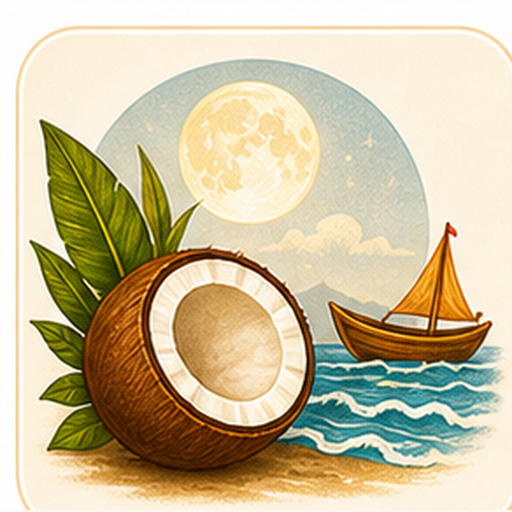
Narali Purnima falls on Shravan Shukla Purnima — a coconut is offered to Varuna, the sea god (whom Koli fisherfolk call Daryaraja), hence "Narali" (coconut) Purnima. It is the biggest festival of the Koli/fisherfolk communities along the Maharashtra-Konkan coast — traditionally marking the calm return of the sea after the monsoon and the start of the new fishing season.
This year's dates (2026)
This same day carries a second identity — Shravani Purnima/Shravani Upakarma, when Yajurvedi Brahmins change their sacred thread (janve). This year (2026) it falls on Thursday, 27 August — the sunrise tithi is Chaturdashi, with Purnima beginning at 9:08 AM; since Purnima prevails through the day, the festival is observed on this date.
Significance
For the Koli community, the sea is their very livelihood; the rough seas of the monsoon and the fish-breeding season halt fishing. Narali Purnima is regarded as the traditional starting point when the sea calms and fishing resumes — Varuna is worshipped gratefully for a safe voyage and an abundant catch.
The coconut is regarded as "Shriphal," the wish-fulfilling tree's fruit — a symbol of auspiciousness, prosperity, and life; being readily available year-round in coastal areas also makes it a fitting offering.
Shravani Purnima is also the day of Upakarma — a fresh start to Vedic study, tarpan for the sages, and changing the sacred thread (on Purnima for Yajurvedis; the day before for Rigvedis). A tradition associates this day with the legend of Hayagriva recovering the stolen Vedas — this legend is tied to Upakarma/Shravani Purnima, not directly to the coconut offering.
In Maharashtra, around this same Shravan Purnima, Narali Purnima, Raksha Bandhan, and Shravani Upakarma all fall close together. In some places/panchangs all three fall on the same day, while in Shubh Darshika's panchang, Narali Purnima falls on 27 August and Raksha Bandhan on 28 August (the reason is below, under Dates) — this can vary by calendar and should not be treated as universal.
The legend (katha)
There is no single, consistent mythological legend for Narali Purnima, unlike Raksha Bandhan — this is primarily a folk/seasonal-cycle festival tied to the sea. During the monsoon, the sea is rough and it is the fish-breeding season, so fishing stops; when the season turns on Shravan Purnima and the sea calms, a coconut is offered to Varuna (Daryaraja) out of gratitude and as a prayer for a safe season, before returning to the sea.
Who observes it
Mainly the Koli and fisherfolk communities (Mumbai, Thane, Raigad, Ratnagiri, Sindhudurg, and the Konkan coast) — observed most enthusiastically since the sea is their livelihood. The Brahmin community (Yajurvedis on this day; Rigvedis the day before) observes Shravani Upakarma and changes the sacred thread. Even in non-coastal areas, there is a custom of preparing sweet coconut dishes (narali bhaat) at home to mark Shravan Purnima.
Puja vidhi
Koli devotees gather at the beach in traditional attire with a decorated coconut; boats are painted and decorated with flowers, flags, and festoons. The sea is worshipped (turmeric-vermilion, flowers, incense), and a coconut is offered into the sea at high tide. In some places, women wave an aarti of coconuts on the shore and plant incense sticks in the sand. A prayer for a safe season is offered on the boat before fishing begins.
In Shravani Upakarma (the Brahmin tradition), the sequence is a sacred bath, tarpan for the sages, changing the sacred thread (janve), and beginning Vedic study/Gayatri chanting (on Purnima for Yajurvedis; the day before for Rigvedis). This is a festive occasion, not a rule-bound vrat with a closing ceremony.
What you need
A decorated coconut (Shriphal), turmeric-vermilion, flowers/garlands, incense, a small lamp; flowers, coloured flags, and festoons for decorating boats. For the offering: narali bhaat and sweet coconut dishes. For Upakarma: a new sacred thread and tarpan items (per Brahmin tradition).
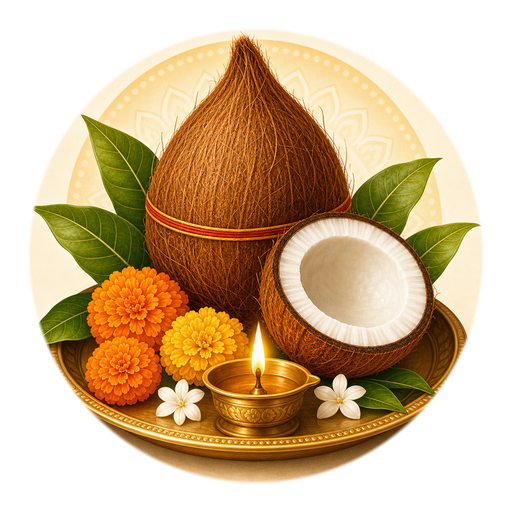 Coconut (Shriphal)
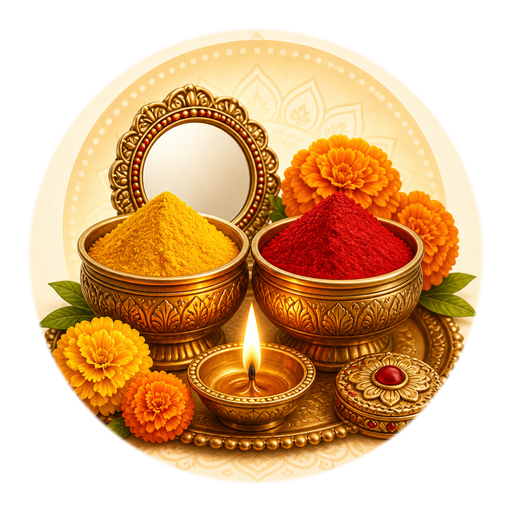 Turmeric-vermilion
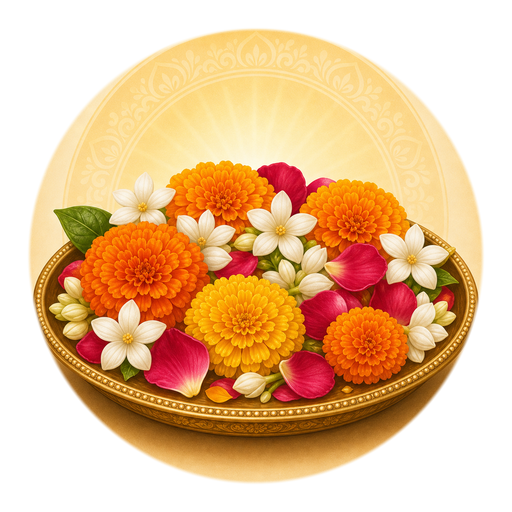 Flowers
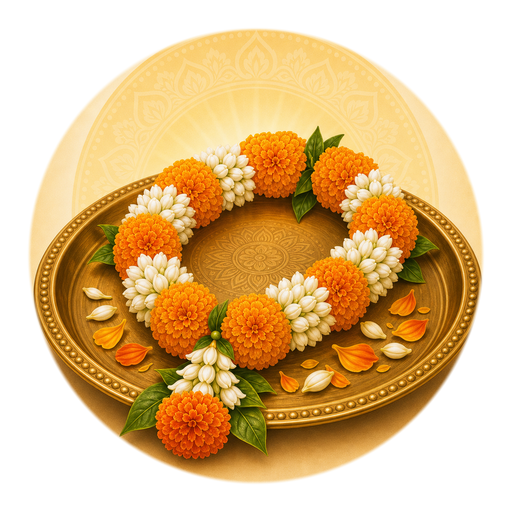 Garlands
 Incense
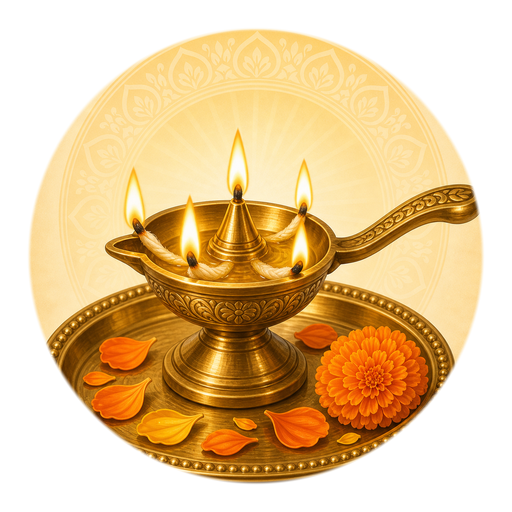 Niranjan lamp
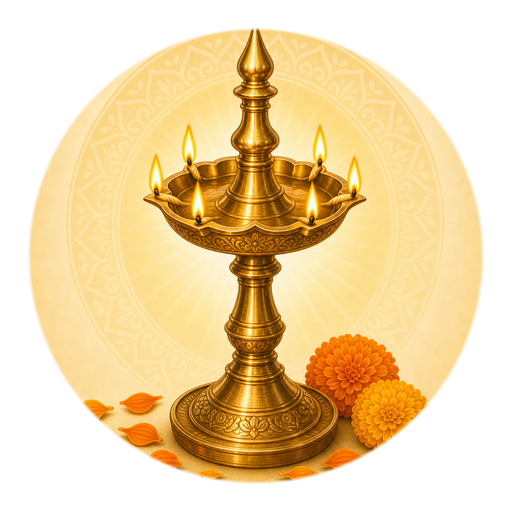 Samai lamp
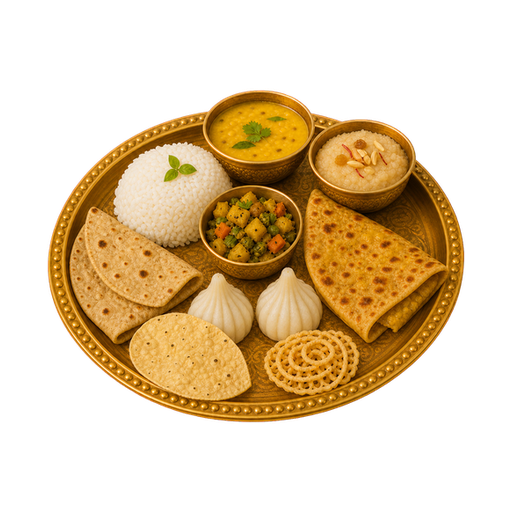 Naivedya (narali bhaat)
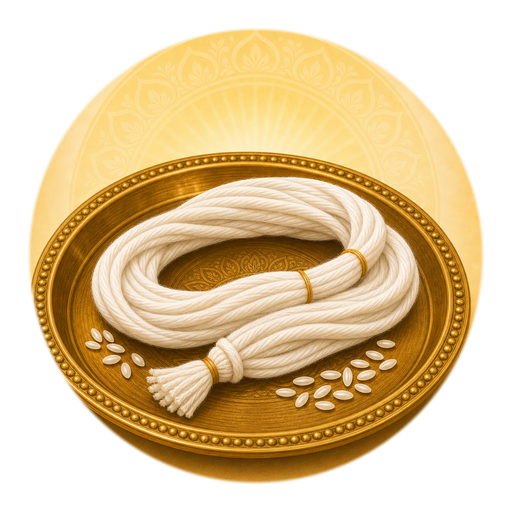 Sacred thread (janve)
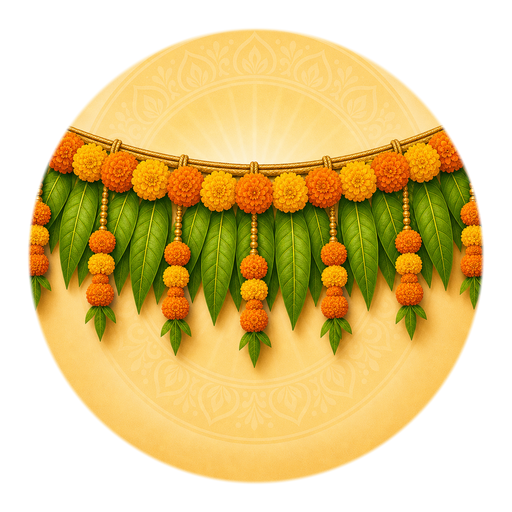 Toran (mango-leaf & marigold garland)
Fasting and the offering
There is no general rule of strict fasting on Narali Purnima — it is instead primarily a day of offerings. The main dish is narali bhaat (fresh coconut, jaggery, and rice), along with sweet coconut dishes like naralwadi and karanji. The exact recipe and quantities vary by household.
Mantra
No single standardised aarti/stotra is prescribed for Narali Purnima; a prayer to Varuna is offered during samudra pujan. Gayatri chanting/Vedic mantras occur during Upakarma, per Brahmin tradition.
Regional customs
Konkan/Mumbai coast: the most prominent — decorated boats, communal samudra pujan, Koli folk songs and dance, processions.
Inland/ghat Maharashtra: without a coast, the emphasis shifts to Shravan Purnima, Raksha Bandhan, and narali bhaat; homely sweets replace samudra pujan.
Brahmin tradition: Shravani Upakarma/changing the sacred thread — regional and Vedic-branch (Yajurvedi/Rigvedi) variations exist.
There is also a tithi-based regional difference — Shubh Darshika's panchang shows Narali Purnima on 27 August and Raksha Bandhan on 28 August separately; some panchangs/regions may show both on the same day.
Dates — the 27 vs. 28 August difference
| Festival | Date | Tithi (at sunrise) | Nakshatra | Notes |
|---|---|---|---|---|
| Narali Purnima | 27 August 2026 | Shravan Shukla Chaturdashi (Purnima begins 9:08 AM) | Dhanishtha | Thursday; samudra pujan at high tide |
| (reference) Raksha Bandhan | 28 August 2026 | Shravan Shukla Purnima | Shatataraka | Friday; falls on a different day in Shubh Darshika's panchang — reason below |
Narali Purnima's samudra pujan happens during the daytime high tide — since Purnima prevails all day on 27 August from 9:08 AM onward, this date is used. Raksha Bandhan, however, follows the traditional rule of not tying the rakhi during Bhadra (Vishti karan) — since Vishti lasts until 9:31 PM on 27 August, the rakhi is tied the next day (28 August) instead.
Some public panchangs show Narali Purnima on 28 August (the day of full Purnima) — for Shubh Darshika, 27 August is authoritative; since this can vary by local panchang, check your own region's panchang as well.
The exact date for future years follows that year's panchang.
Good to know
- You may wonder why Narali Purnima falls on 27 August if full Purnima is on the 28th — Purnima tithi prevails through the day from 9:08 AM on 27 August, which is why that date is used; check your own region's panchang too.
- Take care with the waves/tide when offering the coconut at high tide — children and first-timers especially should stay a safe distance from the shore.
- Use natural materials rather than plastic/thermocol decorations in the sea, for coastal cleanliness.
- The government's monsoon fishing ban (1 June–31 July) and Narali Purnima's traditional start of the season are two separate things — don't conflate them.
FAQ
- When is Narali Purnima in 2026?
- Thursday, 27 August 2026 (Shravan Shukla Purnima begins 9:08 AM). Some panchangs show 28 August — check your local panchang.
- Why is a coconut offered to the sea?
- As gratitude to Varuna (Daryaraja) and a prayer for a safe fishing season; the coconut is Shriphal, a symbol of auspiciousness. It also marks the sea calming after the monsoon.
- Do Narali Purnima and Raksha Bandhan fall on the same day?
- Both fall around Shravan Purnima; in Shubh Darshika's panchang, Narali Purnima is 27 August and Raksha Bandhan is 28 August (due to the Bhadra rule). In some regions/panchangs, both may fall on the same day.
- What is prepared on Narali Purnima?
- Mainly narali bhaat (fresh coconut, jaggery, rice), along with naralwadi and karanji — quantities vary by household.
- What is Shravani Upakarma/changing the sacred thread?
- On Shravan Purnima, Brahmins wear a new sacred thread (janve), marking a fresh start to Vedic study and performing tarpan for the sages (on Purnima for Yajurvedis).
- Who observes Narali Purnima?
- Mainly the Koli/fisherfolk community of the Konkan coast; the Brahmin community for Upakarma; elsewhere, homely narali bhaat.