Shravani Guruvar
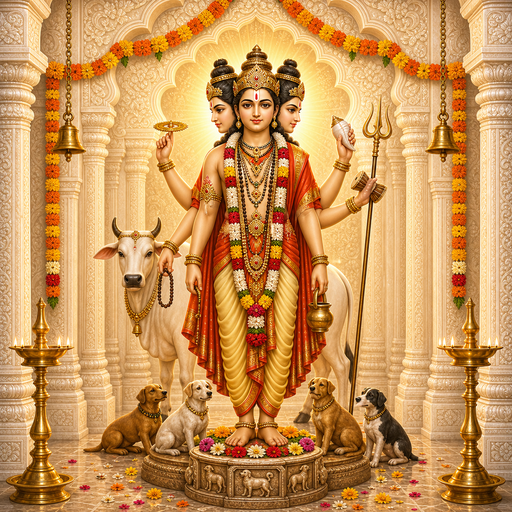
Shravani Guruvar means the Thursdays of the Shravan masa (lunar month), kept as a vrat (observance) and puja. The main deity is Brihaspati — the devguru, the planet Guru (Jupiter); in some traditions, especially the dattasampradaya, Thursday is regarded as the day of Dattaguru and a guru-stotra is recited. The signature colour of the puja is yellow — yellow clothes, yellow flowers and fruit, chana dal, jaggery and bananas are offered. It is one strand of the weekday-wise vrat cycle of the Shravan masa. In 2026 there are 5 Thursdays in Shravan (13, 20, 27 August and 3, 10 September).
This year's dates (2026)
- 1st Thursday (first day of Shravan)13 Aug
- 2nd Thursday20 Aug
- 3rd Thursday27 Aug
- 4th Thursday3 Sep
- 5th Thursday10 Sep
Significance
Shravan is considered the month of vrats and part of Chaturmas. In Maharashtra there is a tradition of worshipping a different deity on each weekday of Shravan — Aditya Ranubai on Sunday, Shiv on Monday (Shravani Somvar — the shivamuth offering), Mangalagaur on Tuesday, Budh-Brihaspati on Wednesday, Brihaspati on Thursday, Jivati on Friday and Shani on Saturday. In this chain, Thursday belongs to the devguru Brihaspati.
Brihaspati is regarded as the karaka (significator) of knowledge, intellect, wealth, dharma and the guru-principle. So the Shravan Thursday vrat is said to be kept for vidya (learning), wealth, the fulfilment of wishes and the removal of obstacles. (This is a devotional belief — take it as sentiment, not a universal rule.)
In some traditions it is kept as a combined Budh-Brihaspati vrat across Wednesday and Thursday, in which dahi-bhat (curd rice) is offered as naivedya. (This custom is regional and not observed everywhere.)
The deity is not agreed upon (an important note)
Most sources describe Shravan Thursday as the puja of Brihaspati (the devguru). But in the dattasampradaya of Maharashtra, Thursday is the day of Dattaguru, and there is a parallel practice of reciting a guru-stotra or Datta stotra on Shravan Thursday. Both traditions are current; the sources do not settle which one is the single "correct" one — which one applies to you depends on your family or local custom.
The legend (vrat katha)
The story given here is the traditional Thursday (Brihaspativar) vrat katha — it is not specific to Shravan Thursday but is attached to the Thursday vrat generally. A separate legend for Shravan Thursday alone was not found in the sources.
The shared seed of the story
A prosperous householder neglects charity and his devotion to Brihaspati, or slights a guru who has come in the guise of a sadhu. Because of this conduct, Lakshmi turns away and his wealth slowly falls to ruin. Poverty, insult and the crisis of a false accusation descend on him. Finally, when he keeps the Brihaspativar vrat properly — the yellow offerings, chana, bananas, jaggery — Brihaspati's grace restores his wealth, his family and his honour.
How the versions differ
In some versions, there is a generous king whose queen opposes charity; she refuses Brihaspati in a sadhu's guise and has the household's wealth destroyed. Later the queen's sister teaches her the vrat, and through the king's devotion the prosperity returns. In other versions, there is a wealthy merchant whose miserly wife commits inauspicious acts on three successive Thursdays to avoid giving in charity, bringing on the loss of wealth; the family recovers only through keeping the vrat and the help of a charitable woman.
The shared lesson of both versions is one and the same — charity, devotion to the guru and humility keep Brihaspati's grace, while pride and miserliness drive it away. (Both versions are found in tradition; neither is treated as final.)
Who observes it
- Mainly women and homemakers keep this vrat on the Thursdays of Shravan — for learning, marriage, children and the well-being of the family. Men too may perform Brihaspati/Guru puja.
- Datta devotees recite a guru-stotra or Datta stotra on Thursday (the dattasampradaya tradition).
- The sources set no strict bar of class or age. (Practice varies by family and local custom.)
Puja vidhi (how to perform)
The steps below are a general sequence; the details vary a little by tradition.
- Bathe early in the morning (in the brahma-muhurat if possible) and wear yellow clothes.
- Clean the place of puja and sprinkle gangajal (Ganga water) over it.
- Do puja of a murti or image of Brihaspati/Guru (in some places, of a banana plant); perform abhishek with gangajal.
- Offer yellow flowers, yellow fruit (bananas), chana dal, jaggery, haldi (turmeric), raisins and yellow sweets.
- Light a lamp and dhup-agarbatti, and apply a haldi tilak.
- Recite the Brihaspati mantra/stotra and perform the aarti (see the Mantra section below).
- Read or listen to the vrat katha, then take the naivedya and prasad. (In the Budh-Brihaspati tradition, dahi-bhat is offered as naivedya.)
The sequence above is a general guide only; details can vary by family or local custom, so check with your family tradition or a guruji for the exact practice you should follow.
About the count and udyapan: ‘7 consecutive Thursdays followed by an udyapan’ is a rule of the general Brihaspati vrat — it is not specific to Shravan Thursday. Shravani Guruvar is kept on every Thursday of Shravan (5 this year). No separate udyapan for Shravan Thursday is mentioned in the sources. (Note: the Margashirsh Guruvar Mahalakshmi vrat is a different observance — a different deity, a different masa and a structure of 4 Thursdays plus udyapan; do not apply it to Shravani Guruvar.)
What you need (samagri)
Yellow clothes · yellow flowers · yellow fruit (bananas) · chana dal · jaggery · haldi · raisins · yellow sweets · yellow chandan · gangajal · akshata (rice) · tulsi leaves · a lamp (oil/ghee) · dhup-agarbatti · (dahi-bhat in the Budh-Brihaspati tradition). (This list is general and varies by tradition.)
 Yellow clothes
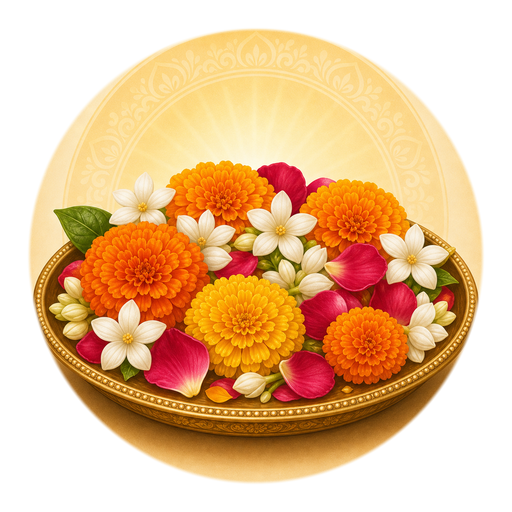 Yellow flowers
 Yellow fruit (bananas)
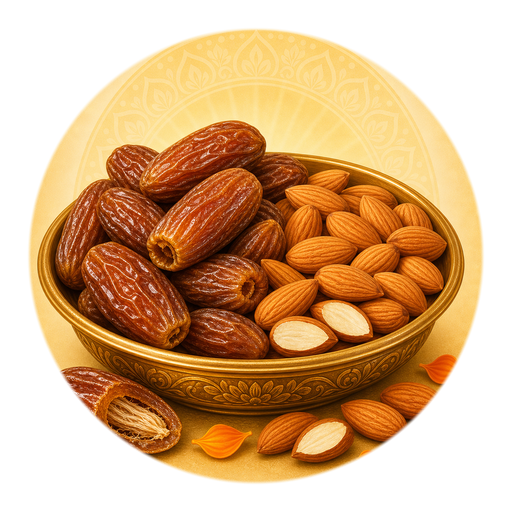 Raisins
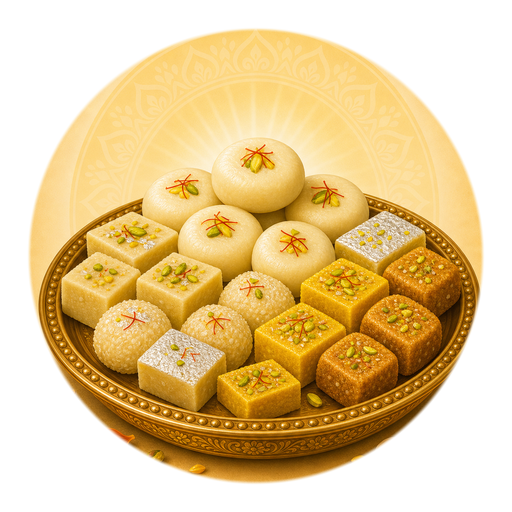 Yellow sweets
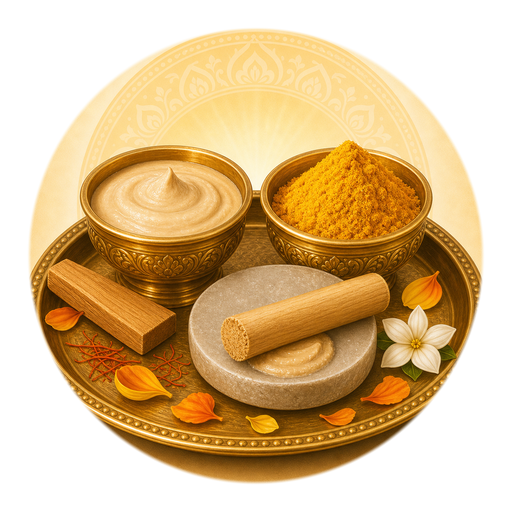 Yellow chandan
 Gangajal
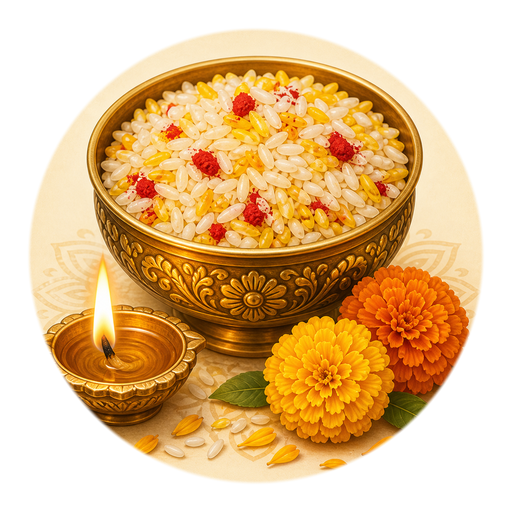 Akshata (rice)
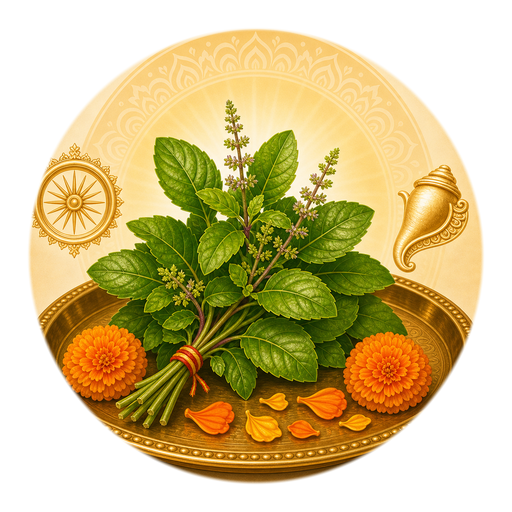 Tulsi leaves
 Lamp (oil/ghee)
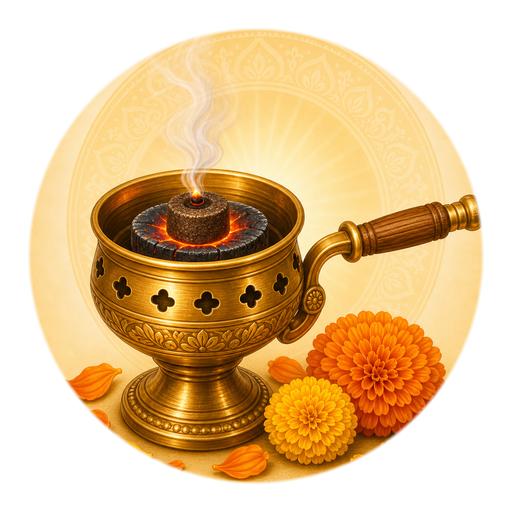 Dhoop (incense)
 Agarbatti
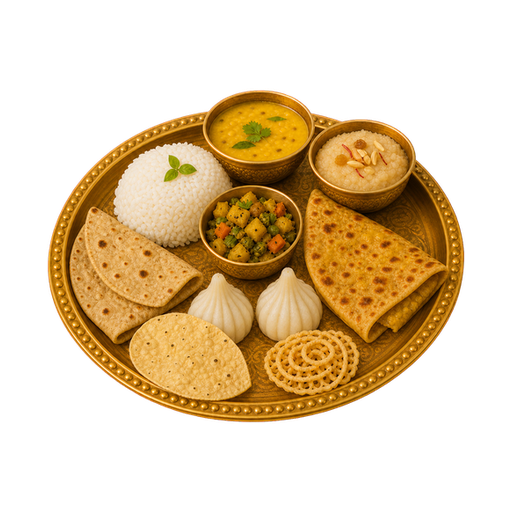 Dahi-bhat naivedya (Budh-Brihaspati tradition)
Fasting & food (upvas)
- Many keep an ekbhukt upvas on Thursday (one meal in the day) and take yellow-coloured or Brihaspati-linked foods (yellow rice, chana, bananas), as is said.
- In some versions there is a mention of ‘yellow rice once a day, avoiding salt’.
- How strict the fast is varies by person and tradition. (Those with health conditions — diabetes, pregnancy, the elderly — should take medical advice before fasting.)
Mantra & aarti
Brihaspati bijmantra (jap-mantra — a salutation to the Guru graha / devguru)
This is the bija-mantra of the planet Guru; it is chanted on Shravan Thursday in remembrance of Brihaspati. (Some sources give ‘Greem’ in place of ‘Graam Graam’ — follow your family or guru tradition.)
Brihaspati aarti — after the puja, an aarti hailing the devguru Brihaspati is sung. Opening line — ‘Om Jai Brihaspati Deva’. It is a praise of the devguru; its full text will be given here only once its public-domain status is confirmed.
Dattasampradaya tradition — in the tradition that regards Thursday as Datta's day, a guru-stotra / ‘Shri Gurudev Datta’ jap and the Datta aarti are sung on Shravan Thursday. This aarti — ‘Trigunatmak Trimurti Datta ha jaana’ (by Eka Janardani / Eknath) — praises Dattatreya as the three-in-one form of Brahma-Vishnu-Mahesh, and says that offering the aarti dispels the cares of worldly existence. Its full text (romanized here; Devanagari on the Marathi version of this page) is given below. (This is for the dattasampradaya tradition; the mainstream of Shravan Thursday is the Brihaspati puja described above.)
The bijmantra, aarti opening line and Datta aarti text above are recited with minor variations across traditions; for the exact pronunciation and wording your family follows, check with your family tradition or a guruji.
Regional variations
- The weekday-wise Shravan vrat cycle: Shravan Thursday is not a standalone festival but part of Maharashtra's Shravan vrat cycle — alongside Shravani Somvar (shivamuth), Mangalagaur, Budh-Brihaspati, Jivati and Aditya Ranubai. This is what makes it distinctly Maharashtrian.
- In some places a combined Budh-Brihaspati vrat (Wednesday + Thursday, with dahi-bhat naivedya) is kept.
- In dattasampradaya regions (where Thursday is Datta's day), the emphasis falls on reciting a guru-stotra or Datta stotra.
Good to know
- The deity is regional: Brihaspati or Dattaguru — this belief varies by family and tradition; rather than treating any one practice as ‘correct’, keep to your own.
- Health: an upvas or ekbhukt fast — those with diabetes, pregnant women and the elderly should keep it on medical advice; avoid an excess of yellow/sweet foods.
- Ritual: the puja vidhi and udyapan vary by family custom; refer to a guruji or your family tradition.
FAQ
- What is Shravani Guruvar?
- The vrat and puja kept on every Thursday of the Shravan masa. Mainly the puja of the devguru Brihaspati; in some traditions (the dattasampradaya), the remembrance of Dattaguru and the recitation of a guru-stotra.
- Which deity is worshipped on Shravan Thursday?
- Chiefly Brihaspati (the devguru / planet Guru). In the dattasampradaya, Thursday is the day of Dattaguru. Both traditions are current.
- How many Thursdays fall in Shravan in 2026?
- There are 5 Thursdays in 2026 — 13, 20 and 27 August, and 3 and 10 September. The number varies each year with the panchang.
- How is the Shravan Thursday puja performed?
- Wear yellow clothes and offer yellow flowers and fruit, chana dal, jaggery and bananas to Brihaspati; recite the mantra/aarti and read the vrat katha. (Details vary by tradition.)
- Why are yellow things used on Shravan Thursday?
- Yellow is regarded as the colour of the Guru (Brihaspati) graha, so there is a tradition of offering yellow clothes, flowers, fruit and foods.
- Are Shravani Guruvar and Margashirsh Guruvar the same?
- No. Margashirsh Guruvar is the Mahalakshmi vrat — a different deity, a different masa and a structure of 4 Thursdays plus udyapan. Shravani Guruvar is the Brihaspati puja of Shravan.