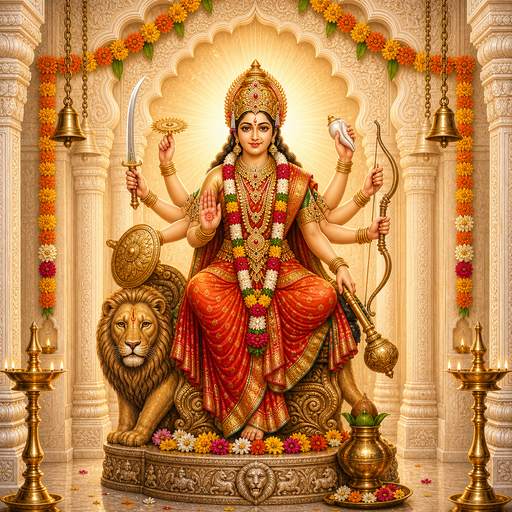
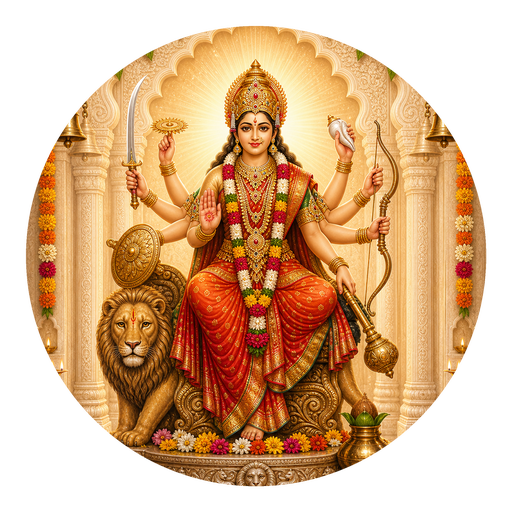
Ashwinshuddhapakshi Amba is the Devi's aarti describing all ten days of Navratri — composed by Samarth Ramdas, sung every evening from ghatasthapana through Vijayadashami.
Deity: Devi
Mantra & aarti
Composer: Samarth Ramdas Swami (1608–1682 CE) — a contemporary of Chhatrapati Shivaji Maharaj, and author of the Manache Shlok and Dasbodh; the closing verse names him directly as "Vipra Ramdasa."
When to sing it: Every evening's aarti through the nine nights of Navratri, from ghatasthapana through Vijayadashami (seemollanghan).
Ashwinshuddhapakshi Amba baisali sinhasani ho |pratipadepasun ghatasthapana ti karuni ho |Mulmantrajap karuni bhovate rakshak thevuni ho |Brahma Vishnu Rudra aaiche pujan kariti ho || 1 ||Udo bola udo, Ambabai maulicha ho |udokare garjati, kay mahima varnu ticha ho || dhru ||Dwitiyeche divashi milati chausashth yogini ho |Sakalanmadhye shreshtha Parashuramachi janani ho |Kasturi malvat bhangi shendur bharuni ho |udokare garjati sakal Chamunda miluni ho || udo || 2 ||Tritiyeche divashi ambe shrungar mandila ho |Malvat patal choli kanthi har muktaphale ho |Kanthinchi padake kanse pitambar pivala ho |Ashtabhuja miravati ambe sundar dise lila ho || udo || 3 ||Chaturthiche divashi vishwavyapak janani ho |Upasakan pahasi ambe prasanna antahkarani ho |Purnakrupe pahasi jaganmate manmohino ho |Bhaktinchya mauli, sur te yeti lotangani ho || udo || 4 ||Panchamiche divashi vrat te Upang Lalita ho |Arghyapadyapujane tujla Bhavani stavati ho |Ratriche samayi kariti jagaran harikatha ho |Anande prem te aale sadbhave kridata ho || udo || 5 ||Shashthiche divashi bhaktan anand vartala ho |Gheuni divatya hasti harshe gondhal ghatala ho |Kavdi ek arpita desi har muktaphalan ho |Jogva magata prasanna zali bhaktakulan ho || udo || 6 ||Saptamiche divashi Saptashrunggadavari ho |Tethe tu nandasi bhovati pushpe nanapari ho |Jaijuishevanti puja rekhiyali baravi ho |Bhakta sankati padata zeluni ghesi vacharevari ho || udo || 7 ||Ashtamiche divashi Ashtabhuja Narayani ho |Sahyadriparvati pahili ubhi jagajanani ho |Man majhe mohile sharan alo tujlaguni ho |Stanpan deuni sukhi kele antahkarani ho || udo || 8 ||Navamiche divashi nav divasanche parane ho |Saptashatijap homhavane sadbhakti karuni ho |Shadras anne naivedyasi arpiyeli bhojani ho |Acharya brahmanan trupt kele tva krupenkaruni ho || udo || 9 ||Dashamiche divashi Amba nije seemollanghani ho |Sinharudh darun shastre ambe tva gheuni ho |Shumbhanishumbhadik rakshasan kiti marisi rani ho |Vipra Ramdasa ashray didhala to charani ho || udo || 10 ||
Meaning (brief): In the bright fortnight of Ashwin, Amba takes her throne — from Pratipada the ghatasthapana and the root-mantra japa are performed and guardians are set around her; Brahma, Vishnu, and Rudra themselves worship her. On Dwitiya the sixty-four yoginis and Chamunda gather; on Tritiya her shringar (adornment) is arrayed; on Chaturthi she, the universal mother, looks on her devotees with a gracious heart; on Panchami the Upang Lalita vrat is kept, with a night vigil and harikatha; on Shashthi the gondhal and jogwa rituals are performed and her devotees are gladdened; on Saptami she dwells on the Saptashrungi hill amid a flower-worship; on Ashtami, standing on the Sahyadri as the eight-armed Narayani, she nurses her devotee like a mother; on Navami the nine-day vrat is completed with Saptashati japa, homa-havan, and a feast; and on Dashami, riding her lion and bearing fierce weapons, she goes forth at the seemollanghan to slay the demons Shumbha, Nishumbha, and others, granting refuge to Ramdas at her feet.
The words and tune can vary slightly by household or sect. This text follows a traditional household Aarti Sangrah booklet.