Papmochani Ekadashi
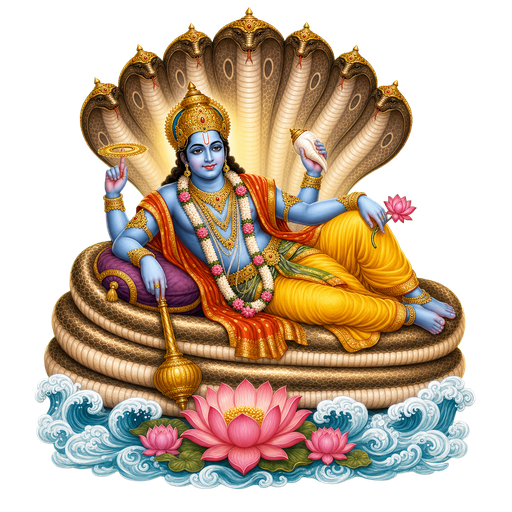
Papmochani Ekadashi falls in the Krishna (waning) paksha — a sin-removing fasting vrat dedicated to Vishnu. "Papmochani" means the one that frees from sin (paap + mochan). This year (2026): Sunday, 15 March — with parana the next day (16 March).
This year's dates (2026)
Which month — both names
In Maharashtra (the amanta panchang convention), this is Falgun Krishna Ekadashi; the scriptural/North Indian (purnimanta) name is Chaitra Krishna Ekadashi — the same day (15 March 2026), only the month's name differs. Both names are given here with equal standing — neither is settled as the sole "correct" one.
Significance
A sin-removing / atonement vrat — the core of its name and glory. Like all Ekadashis, devotion to Vishnu and fasting form its core, but Papmochani's distinguishing feature is that its name and mahatmya are centred on atonement, purification of the mind, and sin-removal. By the original mahatmya text, it's held to be "the destroyer of all sins… exceedingly meritorious."
The last Ekadashi before Gudi Padwa. Under the amanta reckoning, the Falgun Krishna paksha is the last fortnight of the Shaka year; this Ekadashi within it is the last one before Gudi Padwa (Falgun Amavasya follows a few days later, which in 2026 falls on the very same day as Gudi Padwa). A light connection can be drawn between the name "sin-removal" and "purification before the new year" — but this is only an interpretation based on the name's meaning and the tithi's proximity, not an established custom.
The described fruits of the vrat — the removal of all sin, merit equal to donating a thousand cows through reading/hearing the legend, and freedom even from grave sins like killing a Brahmin, stealing gold, or drinking liquor — are Puranic praise recounted with devotion, not a firm guarantee.
Note the distinction in deity — the vrat itself is dedicated to Vishnu, but the sage Medhavi in the legend is a devotee of Shiva; don't conflate the two when retelling it.
The legend
The legend below is compiled from the ancient mahatmya text and modern sources; details vary, noted where relevant.
In a forest called Chaitraratha — frequented by Gandharva maidens and Kinnaras — the apsara Manjughosha comes to distract the sage Medhavi, who was observing celibacy. Fearing the sage, she stops a distance away and sings a melodious tune on her veena. Wandering over, Medhavi is overcome by Kamadev (the god of desire) and drawn to her; the two become absorbed in each other.
Lost in passion, they lose all sense of day and night; 57 years pass. Eventually Manjughosha wishes to return to the celestial realm. Medhavi becomes aware of the time that has passed — realizing his penance is destroyed, he grows furious and curses her: "Sinner! Become a pishachini (female ghost)." She becomes one, and humbly begs to be freed of the curse. Medhavi tells her: "The auspicious Ekadashi of the Chaitra Krishna paksha is called 'Papmochani' — it destroys all sin. Observe its vrat, and your ghostly state will lift."
Medhavi then goes to his father, the sage Chyavan, and confesses his lapse; Chyavan prescribes the Papmochani Ekadashi vrat as atonement. Medhavi observes the vrat — his sin is destroyed and his penance restored; Manjughosha too observes it — freed from her ghostly state, she ascends to heaven in her divine apsara form.
The narration frame varies by source — the original mahatmya text nests Yudhishthira→Krishna, and within that, the sage Lomash→King Mandhata; some modern sources give Krishna→Arjuna→Lomash→Mandhata, while some summaries go directly with Chyavan→Medhavi. Puranic attribution is also uncertain — popular sources credit this legend to the Bhavishya Purana (some to the Padma Purana), but the original mahatmya text doesn't name a specific Purana.
Who observes it
Any devotee of Vishnu, regardless of gender, can observe this Ekadashi vrat. It's observed with particular devotion for atonement, purification of the mind, or freedom from grave sins, per the legend's spirit. By tradition, those who can't keep a full fast may instead take a fruit-based diet or a single meal, remember Vishnu, and hear the legend to observe the day.
Puja vidhi
The sequence below is compiled from multiple sources as a general guide — not a fixed, single-correct ritual; it can vary by family and local custom.
- Bathe before sunrise; meditate on Vishnu and take the vow to fast.
- Perform a (ideally full sixteen-step) puja of Vishnu — sandalwood paste, flowers, incense, a lamp, naivedya, fruit, and tulsi leaves.
- Fast through the day; chant Vishnu's names, recite the Vishnusahasranama, sing bhajans and kirtan, and hear or recite the Papmochani Ekadashi legend.
- Keep a vigil at night, in the spirit of atonement and purification of mind, according to one's faith.
- The next day, on Dwadashi (2026: 16 March), break the fast at the proper time — the exact clock-time is location-specific and isn't fixed here.
Puja samagri
An image or murti of Vishnu, tulsi leaves, sandalwood paste-akshata-haldi-kumkum, flowers/tulsi garlands, incense and a lamp, sattvic naivedya, fruit, panchamrit, and a kalash/copper pot.
Fasting / dietary rules
Grains, lentils, rice, and pulses are avoided on Ekadashi; many also avoid onion and garlic and tamasic foods. The type of fast — waterless (even without water), fruit-based (fruit-milk-dried fruit), or a single sattvic meal — depends on health and tradition. Papmochani is not a designated "waterless" (Nirjala) Ekadashi; a waterless fast is an optional, stricter choice. A single sattvic meal is taken the night before (Dashami); a vigil is kept on Ekadashi. Parana is done on Dwadashi, at the proper time after sunrise.
Mantra / aarti
The common Vishnu chant: "Om Namo Bhagavate Vasudevaya" (the twelve-syllable Vishnu mantra). The ancient mahatmya chapter gives no Papmochani-specific independent mantra or aarti (it's centred on the legend's glory). The exact aarti varies by tradition.
Regional customs
The amanta/purnimanta naming difference (Falgun vs. Chaitra Krishna) is the reader's genuine point of confusion. Being the last Ekadashi before Gudi Padwa is a second reference point — the mirror of Kamada Ekadashi ("the first after the new year"). Papmochani's distinctiveness rests on its pan-India sin-removing mahatmya and the new-year proximity above, not a Maharashtra-specific pilgrimage.
This year's date
| Date (2026) | Day | Tithi | Nakshatra | Note |
|---|---|---|---|---|
| 15 March | Sunday | Falgun Krishna Ekadashi (scriptural: Chaitra Krishna) | Shravan | Papmochani Ekadashi; the last Ekadashi before the new year (Gudi Padwa); parana on 16 March |
Future years: the tithi stays the same (Falgun/Chaitra Krishna Ekadashi); the Gregorian date follows that year's panchang and is only known once that year's panchang is published.
Good to know
- Health: a waterless or strict fast isn't suited to everyone — those with diabetes, who are pregnant, or elderly should take the fruit-based option or consult a doctor.
- Avoid confusing it (the month): though "Chaitra Krishna" is the scriptural name, in Maharashtra it falls within Falgun Krishna — one and the same day, not two separate Ekadashis.
- Avoid confusing it (Kamada): Papmochani (Krishna paksha, 15 March) is not Kamada Ekadashi (the next one, Chaitra Shukla, 29 March). Both appear in the same chapter of the same ancient mahatmya text, but they're different Ekadashis.
- Avoid confusing it (deity): the vrat is Vishnu's; the sage Medhavi in the legend is a Shiva devotee — don't conflate the two.
FAQ
- When is Papmochani Ekadashi in 2026?
- Sunday, 15 March 2026 (Falgun Krishna Ekadashi; scriptural name Chaitra Krishna). Parana on 16 March.
- Why is it called Papmochani Ekadashi?
- "Papmochani" means the one that frees from sin (paap + mochan); observing the vrat is believed to atone for even grave sins and purify the mind.
- Does Papmochani fall in Chaitra or Falgun?
- One and the same day, under two names — Falgun Krishna Ekadashi in Maharashtra (amanta); the scriptural/North Indian (purnimanta) name is Chaitra Krishna Ekadashi.
- What is the legend of Papmochani Ekadashi?
- The ascetic sage Medhavi was distracted by the apsara Manjughosha for 57 years; enraged at his broken penance, he cursed her into a ghostly form. On his father sage Chyavan's advice, he observed the Papmochani vrat, and both were freed from sin.
- What should be eaten or avoided during the fast?
- Avoid grains, lentils, and rice; fruit, milk, and dried fruit are fine; choose waterless or fruit-based fasting based on your health.
- What's the difference between Papmochani and Kamada Ekadashi?
- Different tithis — Papmochani falls in the Krishna paksha (15 March 2026); Kamada is the next one, in the Shukla paksha (29 March 2026).
- When should the fast be broken?
- The next day, on Dwadashi (16 March 2026), at the proper time; the exact time varies by the local panchang.