Kamada Ekadashi
Kamada Ekadashi falls on Chaitra Shukla Ekadashi — a fasting vrat dedicated to Vishnu/Krishna (Vasudeva). "Kamada" means the granter of wishes (kama = desire, da = giver). In Maharashtra, this same day is Chaitri Ekadashi/Chaitri Wari — the first pilgrimage of the year to Vitthal at Pandharpur! This year (2026): Sunday, 29 March.
This year's dates (2026)
Significance
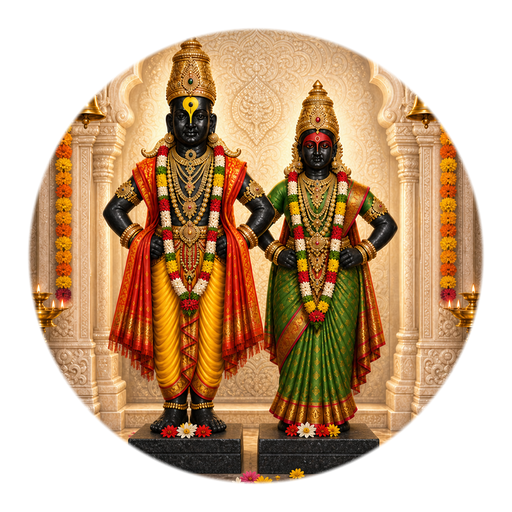
Chaitri Wari — Pandharpur's first pilgrimage of the year (Maharashtra's key angle). In Marathi/Warkari tradition, Kamada Ekadashi equals Chaitri Ekadashi; the same day sees the Chaitri Yatra/Wari at Pandharpur, drawing devotees for darshan of Vitthal. Pandharpur holds four annual pilgrimages — Chaitri (this one, the first) · Maghi · Ashadhi (the largest) · Kartiki. Bathing in the Chandrabhaga, darshan of Vitthal, circling the temple precinct, and bhajans are the customary observances. Though not as massive as Ashadhi or Kartiki, Chaitri Wari matters as the year's opening pilgrimage — see Pandharpur Vitthal and Ashadhi Ekadashi for the fuller pilgrimage details. Darshan queues and timings on the pilgrimage day vary year to year and by crowd size — check the temple committee's own portal.
The first Vishnu Ekadashi of the new year. Following Gudi Padwa (the Shaka new year, 19 March) and Ram Navami (26 March), this is the first Ekadashi of Chaitra — carrying the spirit of beginning the year with a vow.
Fruits of the vrat (Puranic praise): sources say the vrat grants all wishes, removes curses or ghostly affliction, and destroys sins as grave as killing a Brahmin; hearing or reciting the legend is held equal to the merit of the Vajapeya yajna. This should be understood as Puranic praise recounted with devotion, not a firm guarantee. Popular sources attribute this legend to the Varaha Purana, though the original ancient text doesn't name a specific Purana — it only gives the frame of sage Vasishtha narrating it to King Dilipa.
The legend
The legend below is compiled from multiple sources — the ancient text's common thread plus modern-version details, with their divergences noted.
Krishna narrates this legend to Yudhishthira; it was originally told by the sage Vasishtha to King Dilipa. There was a city of golden palaces where Gandharvas, Kinnaras, and Apsaras dwelt; King Pundarika ruled there. The Gandharva Lalit and his wife Lalita (daughter of the Gandharva Viradhanva) were devoted to each other. One day, while singing at the royal court, Lalit's mind wandered to thoughts of his wife — disrupting the melody and rhythm. A naga reported this to the king; the enraged king cursed Lalit, "become a rakshasa," and he instantly turned into a terrifying demon.
Grief-stricken, Lalita wandered the dense forest after her husband and reached the hermitage of a tranquil sage. The sage advised her to observe the Chaitra Shukla "Kamada" Ekadashi vrat properly and dedicate its merit to her husband — the curse would then lift at once. Lalita observed the vrat and dedicated its merit to her husband — Lalit returned in a form even more beautiful than before, and the two shone radiantly together. The moral: the merit of the Kamada vrat can be dedicated to another person too.
Divergences (no version treated as final): the city's name varies by source — some call it "Nagpur" (a Puranic city of nagas, not the modern city of Nagpur), some "Ratnapura," and the Marathi version "Bhogipur." King Pundarika is a naga-king in one source, while other versions make him a human king, with a separate naga named "Karkotaka" filing the complaint. The advising sage is unnamed in one source, while others name him "Shringi" (on Mount Vindhyachal). One source even swaps the husband/wife names — the majority version, used here, has Lalit as the husband and Lalita as the wife.
Who observes it
Any devotee of Vishnu, regardless of gender, can observe this Ekadashi vrat. It's observed with particular devotion for the fulfilment of a wish, the removal of a curse or affliction, or dedicating merit to someone in the family. By tradition, those who can't keep a full fast may instead take a fruit-based diet or a single meal, remember Vishnu, and hear the legend to observe the day.
Puja vidhi
The sequence below is compiled from multiple sources as a general guide — not a fixed, single-correct ritual; it can vary by family and local custom.
- Bathe before sunrise; meditate on Vishnu and take the vow to fast.
- Perform a full sixteen-step (shodashopachar) puja of Vishnu/Krishna (Vasudeva) — sandalwood paste, flowers, incense, a lamp, naivedya, fruit, and tulsi leaves.
- Fast through the day; chant Vishnu's names, sing bhajans and kirtans, and hear or recite the Kamada Ekadashi legend.
- Keep a vigil at night; as Lalita did in the legend, form the resolve to dedicate the vrat's merit to a chosen purpose, according to one's faith.
- Break the fast the next day, on Dwadashi (30 March), at the proper time.
Puja samagri
An image or murti of Vishnu/Krishna, tulsi leaves, sandalwood paste-akshata-haldi-kumkum, flowers/tulsi garlands, incense and a lamp, sattvic naivedya, fruit, panchamrit, and a kalash/copper pot.
Fasting / dietary rules
Grains, lentils, rice, and pulses are avoided on Ekadashi; many also avoid onion and garlic. Drinking water is permitted (Kamada is not a Nirjala Ekadashi); some voluntarily observe the stricter waterless fast instead. Fruit, milk, and dried fruit are acceptable. A single sattvic meal is taken the night before (Dashami); a vigil is kept on Ekadashi. Parana is done on Dwadashi, after Harivasar ends, at the proper time after sunrise — in 2026, the Ekadashi tithi ends early, so the parana window may be narrow.
Mantra / aarti
The common Vishnu chant: "Om Namo Bhagavate Vasudevaya" (the twelve-syllable Vishnu mantra). The ancient mahatmya chapter gives no Kamada-specific independent mantra or aarti (it's centred on the legend's glory). The exact aarti varies by tradition.
Regional customs
Chaitri Ekadashi/Chaitri Wari (Pandharpur) — Maharashtra's key angle: in Marathi/Warkari tradition, Kamada Ekadashi equals Chaitri Ekadashi; the same day brings the year's first pilgrimage (Chaitri Wari) to Pandharpur. Warkari processions (dindis), darshan of Vitthal, bathing in the Chandrabhaga (Bhima) river, circling the temple precinct, and abhang-bhajans. Some Marathi sources also call it "Chaitra Wari"/"Chaitri Wari" — a name tied directly to the Pandharpur pilgrimage.
In Maharashtra, Chaitra marks the Shaka new year (Gudi Padwa); so Kamada is described as "the new year's first Ekadashi" and Chaitri Wari as "the year's first pilgrimage" — an angle most general pan-India calendars don't carry. The legend's city name "Nagpur" is not the modern city of Nagpur — worth keeping clear in retelling.
This year's date
| Date (2026) | Day | Tithi | Nakshatra | Note |
|---|---|---|---|---|
| 29 March | Sunday | Chaitra Shukla Ekadashi | Ashlesha | Kamada Ekadashi = Chaitri Ekadashi (Pandharpur's first pilgrimage of the year); parana on 30 March (Dwadashi, Somapradosh) |
Avoid confusing it: Kamada Ekadashi (Chaitra Shukla Ekadashi) is different from the preceding Papmochani Ekadashi (Falgun Krishna); it's also distinct from the "Kamada/Kamala" Ekadashi that falls in an intercalary (Purushottam) month — a different tithi altogether, not to be confused with the regular Chaitra Kamada. Future years: the tithi stays the same (Chaitra Shukla Ekadashi); the Gregorian date follows that year's panchang and is only known once that year's panchang is published.
Good to know
- The day of Chaitri Wari — expect large crowds at Pandharpur; check darshan timings on the temple committee's portal beforehand.
- Health — a waterless or strict fast isn't suited to everyone; those with diabetes, who are pregnant, or elderly should take the fruit-based option or consult a doctor.
- Avoid confusing it — Papmochani Ekadashi and the intercalary-month Kamada/Kamala fall on different tithis.
- Watch the parana time — since the tithi ends early, the parana window can be narrow; check the local panchang.
FAQ
- When is Kamada Ekadashi in 2026?
- Sunday, 29 March 2026 (Chaitra Shukla Ekadashi); parana on 30 March (Dwadashi).
- Why is it called Kamada Ekadashi?
- "Kamada" means the granter of wishes (kama = desire, da = giver); observing the vrat is believed to fulfil wishes and remove curses.
- Are Kamada Ekadashi and Chaitri Ekadashi the same?
- Yes. In Marathi/Warkari tradition, this same day is Chaitri Ekadashi; the same day brings Chaitri Wari (the year's first pilgrimage) at Pandharpur.
- What is the legend of Kamada Ekadashi?
- The Gandharva Lalit was cursed into a demon's form by a king (a naga-king in some versions); his wife Lalita observed Kamada Ekadashi and dedicated its merit to him, freeing him from the curse. The city's name and other details vary by version.
- What should be eaten or avoided during the fast?
- Avoid grains, lentils, and rice; fruit, milk, and dried fruit are fine; drinking water is permitted (a waterless fast is optional).
- What's the difference between Kamada and Papmochani Ekadashi?
- Different tithis — Kamada falls on Chaitra Shukla Ekadashi (29 March 2026), while Papmochani falls on the preceding Krishna-paksha Ekadashi.
- When should the fast be broken?
- The next day, on Dwadashi (30 March 2026), at the proper time; the exact time varies by the local panchang.