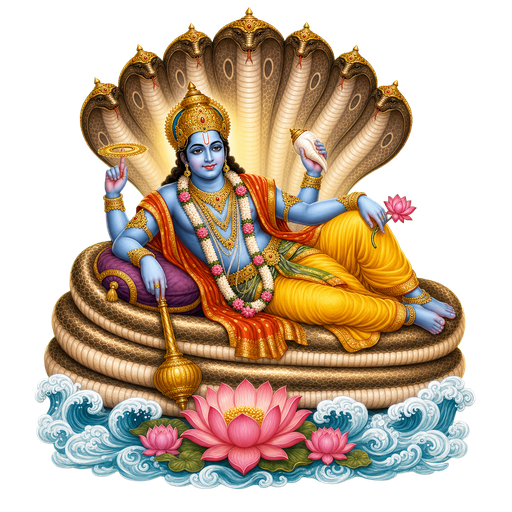
Putrada Ekadashi
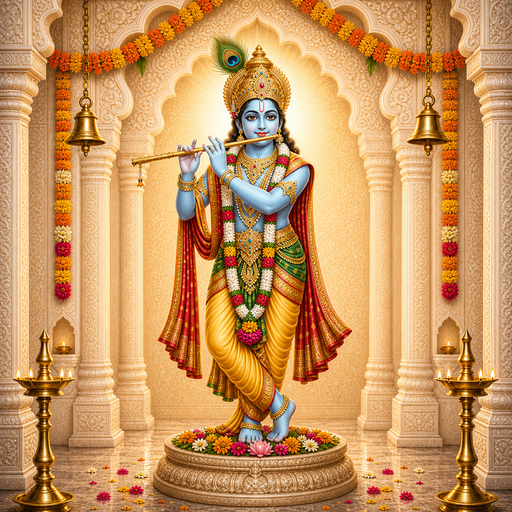
Putrada Ekadashi falls on Shravan Shukla Ekadashi — a fasting day devoted to Vishnu (as Shri Hari/Krishna). "Putrada" means "the giver of a son"; this Ekadashi is observed mainly with the wish for a child. An alternate name is Pavitra/Pavitropana Ekadashi. In 2026: Putrada Smarta Ekadashi falls on Sunday, 23 August, and Putrada Bhagavata Ekadashi on Monday, 24 August.
This year's dates (2026)
- Sunday; Putrada Smarta Ekadashi (householder tradition)23 Aug
- Monday; Putrada Bhagavata Ekadashi (Vaishnav tradition) — the next day due to Dwadashi-vriddhi, location-dependent24 Aug
Twice a year — this page covers Shravan Putrada
"Putrada Ekadashi" falls twice a year: Paush Shukla Putrada (December-January; prominent in North India) and Shravan Shukla Putrada (July-August; more popular outside North India). This page is primarily about the Shravan Putrada Ekadashi — the two have different legends, and shouldn't be conflated. Paush Putrada is noted here only briefly, as the year's other Putrada Ekadashi.
Significance
"Putrada" — the giver of a son: Shravan Shukla Ekadashi is dedicated to Vishnu; by traditional belief, this vrat grants a child and family well-being — which is why it's observed especially by couples wishing for a child.
The name "Putrada" traditionally implies specifically a son (putra); the more inclusive term "child/offspring" fits today's context better.
Ekadashi is Vishnu's tithi; fasting, chanting his names, and a vigil are believed to atone for sin, purify the self, and bring merit. This Ekadashi falls in Shravan — an especially sacred month within Chaturmas — which is believed to heighten its significance; it falls within the Chaturmas period between Ashadhi (Devshayani) and Kartiki (Prabodhini) Ekadashi.
The legend
A few details differ across versions of this legend.
At the dawn of the Dvapara Yuga, King Mahijit ruled Mahishmatipura righteously; but he had no son, so even his kingdom brought him no joy. The king told his subjects: "In this life I've committed no sin; I've amassed no ill-gotten wealth, taken nothing belonging to Brahmins or the gods, and cared for my subjects as my own children — so why have I no son? Consider this." His well-wishing subjects and Brahmins went deep into the forest searching for sages, and found the great sage Lomash there.
The subjects told him of the king's sorrow at being childless and asked for a remedy; Lomash, entering meditation, revealed the king's past life — King Mahijit had, in a former birth, been a poor, greedy Vaishya (merchant). Once, on Jyeshtha Shukla Dashami, thirsty in the harsh midday heat, he reached a pond to drink water; a thirsty cow with her calf was drinking there — the merchant drove the cow away and drank the water himself. It was this very sin that left him childless in this life.
As a remedy, Lomash said: "The Ekadashi that falls in the Shukla paksha of the Shravan month is known as 'Putrada,' and grants the fruit one desires — observe its vrat." The subjects observed the Putrada Ekadashi vrat properly, with a night vigil, and dedicated its pure merit to the king. Through the power of that merit, the queen conceived and gave birth to a strong son.
The narration frame varies by source — Krishna→Yudhishthira (the original mahatmya text) versus Krishna→Arjuna (some modern sources). The king's name also appears with spelling variants — Mahijit versus Mahajita — the form "Mahijit" is used here as the more established one.
Smarta vs. Bhagavata — why two days (2026-specific, location-dependent)
In 2026, Shravan Putrada falls across two days (Smarta 23, Bhagavata 24). This doesn't mean Putrada always falls on two days — it's a panchang-calculation matter specific to this year and location. Smarta Ekadashi is the fasting day for those following the Smarta (householder) tradition; Bhagavata Ekadashi is the fasting day for Vaishnav devotees/ascetics/the Bhagavata tradition.
When the Ekadashi tithi, due to the growth of Dwadashi, spans two sunrises, the Smarta and Bhagavata traditions fast on different days (Bhagavata usually the next day). In 2026: on Sunday, 23 August, the Ekadashi tithi ends late at night; the Dwadashi tithi the next day ends even later. In places where sunrise on 25 August falls before Dwadashi ends, Dwadashi-vriddhi occurs, giving two days — Putrada Smarta on 23rd and Putrada Bhagavata on 24th; in some other places, there may be only a single Ekadashi day. So the "two days" is location-based and specific to that year's panchang — it won't necessarily recur every year or in every place. The exact fasting day should be confirmed with the local panchang/tradition.
Who observes it
Mainly couples wishing for a child (husband and wife together) observe this vrat for that purpose. Smarta Ekadashi is for those following the Smarta (householder) tradition; Bhagavata Ekadashi for Vaishnav devotees, ascetics, and those following the Bhagavata tradition. Generally, any devotee of Vishnu can observe this Ekadashi fast with devotion.
Puja vidhi
The sequence below is a general guide, not a fixed, single-correct ritual — it can vary by family and local custom.
- On Ekadashi morning, bathe and take the sankalp (with the intent for a child, if observing it for that purpose); worship an image or murti of Vishnu (as Shri Hari/Krishna) at home.
- Offer sandalwood paste, akshata, flowers, tulsi leaves/manjari (the original mahatmya gives special glory to tulsi worship), incense and a lamp, and naivedya; chant Vishnu's names/bhajans and hear the legend.
- Fast through the day and chant his names; keep a vigil at night (bhajans, kirtan, praise) — in the legend, it's the merit of the vigil itself that's dedicated to the king.
- The next day, break the fast on Dwadashi at the proper time (in the Bhagavata version, feeding Brahmins/those in need on Dwadashi is customary). The exact clock-time for parana depends on tithi and location, and isn't fixed here.
Puja samagri
An image or murti of Vishnu/Krishna, sandalwood paste-haldi-kumkum-akshata, tulsi leaves and manjari, flowers/garlands, incense and a lamp, fruit-based/sattvic naivedya, and the legend text.
Fasting / dietary rules
Fasting is central on Ekadashi — by tradition, waterless, purely fruit-based (fruit, milk, sabudana, rajgira, water-chestnut flour, potato), or a single meal. Avoiding rice/grains and lentils on Ekadashi is a widespread custom; some traditions observe a light, restrained diet on Dashami, with parana on Dwadashi. Consult a doctor if you have a health condition (diabetes, pregnancy, old age) — since this vrat is often observed by couples trying to conceive, those who are pregnant or undergoing fertility treatment should take medical advice specifically.
Mantra / aarti
The Vishnusahasranama, Vishnu/Vitthal aarti, and the "Om Namo Bhagavate Vasudevaya" chant (meaning: "Salutations to Lord Vasudeva — Vishnu") are traditionally recited in Vishnu worship; the original mahatmya mentions worship under the names "Shridhar, Hari, Vishnu, Madhav, Madhusudan." Their full text isn't given here — only the meaning and opening line. The exact aarti/stotra varies by tradition.
Regional customs
In Maharashtra, Putrada Ekadashi is observed mainly as devotion to Vishnu/Vitthal and an Ekadashi fast; Warkari and Vaishnav families observe the fast, worship tulsi, and hold bhajan-kirtan. Couples wishing for a child observe this vrat with particular devotion. The Smarta/Bhagavata distinction is prominently shown in Maharashtra's panchangs; in years when tithi-growth brings two days, householders and Vaishnavs fast on different days. In North India, Paush Putrada is more prevalent; Shravan Putrada is observed more widely outside North India, including Maharashtra.
Good to know
- Which day to fast (2026): householders/Smarta → Sunday, 23 August; Vaishnav/Bhagavata → Monday, 24 August. But this is location-based (some places may have only a single Ekadashi on the 23rd) — confirm with the local panchang/tradition.
- Fasting and health (special note): since this vrat is often observed by couples trying to conceive, those who are pregnant or undergoing fertility treatment should take a waterless or extended fast only on medical advice.
- The fruit of a child = belief: the Putrada vrat's fruit of a child is a matter of faith/religious belief — not presented here as a guaranteed outcome; medical options are separate.
- The Shravan season: Shravan (August) falls during the monsoon — take care of your health during pre-dawn baths and night vigils.
FAQ
- When is Putrada Ekadashi in 2026?
- Shravan Putrada 2026: Putrada Smarta Ekadashi on Sunday, 23 August, and Putrada Bhagavata Ekadashi on Monday, 24 August.
- Why is it called Putrada Ekadashi?
- "Putrada" means the giver of a son; by traditional belief, this vrat brings a child.
- Why do Putrada Smarta and Putrada Bhagavata Ekadashi fall on different days?
- In 2026, due to Dwadashi-vriddhi (a location-based panchang matter); householders generally fast on the first day, Vaishnav/Bhagavata-tradition followers on the second. This won't necessarily happen every year.
- What is the legend of Putrada Ekadashi?
- King Mahijit of Mahishmati had no son; on the sage Lomash's advice, his subjects observed the Shravan Shukla Putrada Ekadashi vrat and dedicated its merit to the king, and he was blessed with a son.
- How many times a year does Putrada Ekadashi fall?
- Twice a year — Paush Shukla (December-January) and Shravan Shukla (July-August); this page covers Shravan Putrada.
- What should be eaten or avoided during the Putrada Ekadashi fast?
- Avoid rice/grains and lentils; a fruit-based diet (fruit, milk, sabudana) is fine; choose waterless or fruit-based fasting based on your health.
- Who should observe the Putrada Ekadashi vrat?
- Mainly couples wishing for a child; any general devotee of Vishnu can also observe it with devotion.
- When should Putrada Ekadashi's parana be done?
- The next day, on Dwadashi, at the proper time; the exact time varies by the local panchang.