Rama Ekadashi
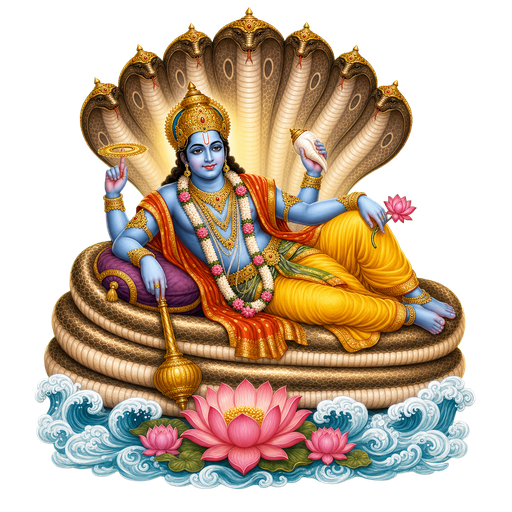
Rama Ekadashi falls in the Krishna paksha of the Kartik month (in Maharashtra's amanta convention, Ashwin Krishna Ekadashi; both are the same tithi) — a fasting day dedicated to Vishnu (as Shri Damodar). An alternate name is Rambha Ekadashi. It's the Ekadashi that falls before Diwali — roughly four days before it. This year (2026): Thursday, 5 November — followed by Dhanteras (6 November), Lakshmi-Kubera puja (8 November), and Diwali-Padwa (10 November).
This year's dates (2026)
Which month — Ashwin or Kartik?
In Maharashtra (the amanta panchang convention), this is Ashwin Krishna Ekadashi; most pan-India/purnimanta sources call it Kartik Krishna Ekadashi — the same tithi, the same day (5 November 2026), only the month's name differs.
Note: the phrase "Ashwin Krishna Ekadashi" can also match Indira Ekadashi (which is amanta Bhadrapad Krishna = purnimanta Ashwin Krishna) — but Rama and Indira are two entirely different Ekadashis, with different legends and different tithis. To avoid confusion, Rama's distinctive identifying name is Kartik Krishna Ekadashi.
Significance
A pre-Diwali Vishnu Ekadashi: Rama falls in the Kartik/Ashwin Krishna paksha — right at the doorstep of the festival of lights. By tradition, fasting and worshipping Vishnu on this day frees the devotee from sin and prepares them, through inner purification, for the auspicious festival of Diwali.
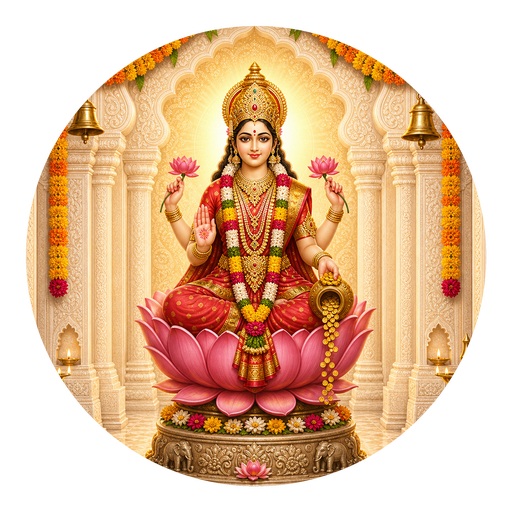
Rama = Lakshmi → the start of Lakshmi worship: "Rama" is held to be another name of Goddess Lakshmi; hence this Ekadashi is called Rama Ekadashi, and it's believed that Lakshmi worship begins from this very day and continues through Diwali (alongside Vishnu worship). This is an etymological/devotional belief — Vishnu is the vrat's primary deity, with Lakshmi as a secondary one.
The fruit of the Ekadashi vrat (mahatmya): by tradition, the Rama vrat is believed to destroy all worldly sins; one who hears the Rama mahatmya attains liberation and Vishnu's supreme abode. In Puranic tradition, this vrat's fruit is described as equal to a hundred Rajasuya and a thousand Ashwamedha yajnas — this is devotional praise-language, not a universal truth.
Rama falls in the last stretch of Chaturmas (from Ashadhi Devshayani to Kartiki Prabodhini) — roughly 15 days before Prabodhini (which ends Chaturmas). The immediately preceding Ekadashi is Papankusha (Ashwin Shukla).
The legend
The legend below is compiled from multiple sources; details vary by version.
Once there was a righteous, truthful, Vishnu-devoted king named Muchukunda (said to be friends with Indra, Yama, Varuna, Kubera, and Vibhishan). His daughter Chandrabhaga was married to Shobhan, son of King Chandrasena — Shobhan was devoted to Vishnu, but extremely frail.
In Muchukunda's kingdom, the Ekadashi fast was observed with great strictness. One Kartik, while Shobhan was staying at his in-laws', Rama Ekadashi arrived; on Dashami, a proclamation went out across the kingdom that "no one shall eat on Ekadashi." Chandrabhaga worried for her frail husband, but Shobhan fasted with firm resolve. Unable to bear the hunger of the fast, Shobhan passed away. On Muchukunda's counsel, Chandrabhaga did not commit sati; she stayed at her father's home and continued observing the Ekadashi vrat.
Through the power of the Rama vrat, Shobhan was granted Devpur, a gem-and-gold city of great splendour atop Mount Mandarachal, and became its king — but since he'd observed the vrat unwillingly, without devotion, the city remained unstable. Later, word of this reached Chandrabhaga; longing to see her husband, she travelled there and dedicated the merit of her own lifelong Ekadashi vrat to him, making the city permanent (stable) — and the two lived there happily together.
The timing of Shobhan's death varies by version — some say at sunrise, others at midnight. The narration frame also varies — most versions give Krishna→Yudhishthira, one gives Krishna→Arjuna. Puranic attribution differs too — some sources credit the Brahmavaivarta Purana, others the Padma Purana.
Note: this legend is entirely separate from Indira Ekadashi's legend (King Indrasena and his ancestors' liberation from Yamlok) — despite the name resemblance (both can be called "Ashwin Krishna Ekadashi"), these are two independent Ekadashis with independent legends, not to be conflated.
Who observes it
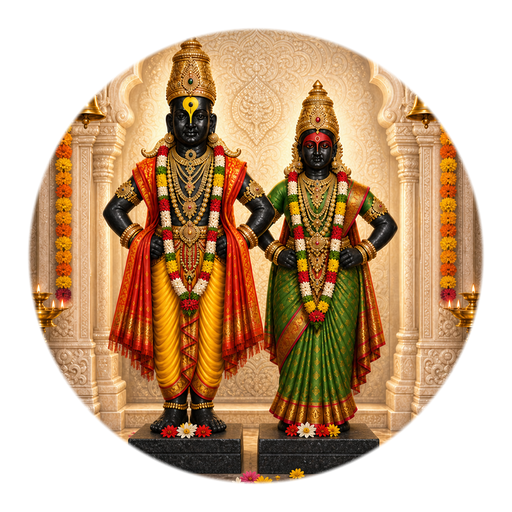
Devotees of Vishnu/Vitthal, Vaishnavs, and many householder families. Those who observe Kartik-month vrats/lamp-lighting particularly observe Rama Ekadashi. Many devotees keep this fast for pre-Diwali inner purification and to mark the start of Lakshmi worship.
Puja vidhi
The sequence below is compiled from multiple sources as a general guide — not a fixed, single-correct ritual; it can vary by family and local custom.
- On Dashami, a restrained/single meal, and preparation for the fast's vow after sunset.
- On Ekadashi morning, bathe and take the vow; worship an image or murti of Vishnu (as Shri Damodar/Vitthal) at home.
- Offer sandalwood paste, akshata, flowers, tulsi leaves, incense and a lamp, and naivedya; chant Vishnu's names, hear the Rama mahatmya/legend, and sing bhajans and kirtan.
- Given the Rama=Lakshmi connection, many households also begin worshipping Lakshmi and lighting lamps for her from this day.
- By tradition, fast through the day, chant his names, and keep a vigil at night.
- The next day, break the fast (parana) on Dwadashi at the proper time — in 2026, Dwadashi falls on 6 November, which is Dhanteras; the exact parana time varies by location — check that day's panchang or the 6 November page.
Puja samagri
An image or murti of Vishnu/Vitthal (as Shri Damodar), tulsi leaves and a tulsi garland, flowers/garlands, incense and a lamp, camphor, an arghya vessel, fruit-based/sattvic naivedya, the Rama Ekadashi legend/Vishnu text, and (for Lakshmi worship) an image of Lakshmi/a lamp.
Fasting / dietary rules
Fasting is central on Ekadashi. By tradition, this means going waterless, eating only fruit-based foods (fruit, milk, sabudana, rajgira, water-chestnut flour, potato), or taking a single meal. Avoiding rice/grains/lentils on Ekadashi is a widespread custom; many traditions also avoid onion-garlic and meat. A light, restrained diet is taken on Dashami, with parana on Dwadashi. Those with diabetes, who are pregnant, or elderly/unwell should fast only on medical advice.
Mantra / aarti
On Rama Ekadashi, chanting Vishnu's names, hearing the Rama mahatmya/legend, and reciting the Shri Damodar aarti are customary. The meaning and opening line follow below; for the full aarti, see a printed aarti-sangrah. The exact verse/aarti varies by tradition.
Regional customs
Connection to the Diwali season (Maharashtra): Rama Ekadashi falls right at Diwali's doorstep; in Maharashtra, it's observed against the backdrop of Kartik-month vrats, lantern-lighting, and preparation for the pre-Diwali oil bath (abhyang snan). Diwali is a separate festival in its own right — see the Diwali page for full details.
"Rama" = Lakshmi → the start of Lakshmi worship: in some traditions, Lakshmi puja and lamp-lighting begin from this very day — this holds particular significance for devotees of Mahalakshmi.
Warkari/Chaturmas context: falling near the end of Chaturmas, this Ekadashi is observed regularly by Vitthal devotees; the following Kartiki (Prabodhini) Ekadashi marks Chaturmas's end.
This year's date
| Date (2026) | Day | Tithi | Nakshatra | Note |
|---|---|---|---|---|
| 5 November | Thursday | Ashwin Krishna Ekadashi (scriptural: Kartik Krishna) | Uttara Phalguni | The pre-Diwali Ekadashi; parana on 6 November (Dwadashi — Dhanteras) |
Future years: the tithi stays the same (Ashwin/Kartik Krishna Ekadashi); the Gregorian date follows that year's panchang and is only known once that year's panchang is published.
Good to know
- Parana day = Dhanteras: Rama's parana falls on Dwadashi, which in 2026 is Dhanteras itself — keep both in mind; Dhanteras is a separate festival, not part of Rama Ekadashi's fast.
- The month's name can be confusing — Maharashtra calls it "Ashwin," most other places call it "Kartik," but the date is the same.
- Avoid confusing it with Indira Ekadashi — despite the name resemblance, Rama and Indira are different Ekadashis, with different legends.
- Health: if choosing a waterless fast, those with diabetes, who are pregnant, or elderly should take the fruit-based option or consult a doctor.
FAQ
- When is Rama Ekadashi in 2026?
- Thursday, 5 November 2026 (Ashwin/Kartik Krishna Ekadashi); parana on 6 November (Dhanteras).
- Why is it called Rama Ekadashi? (Does Rama mean Lakshmi?)
- "Rama" is held to be another name of Goddess Lakshmi; hence this Ekadashi is called Rama Ekadashi, and Lakshmi worship is believed to begin from this day.
- What's the connection between Rama Ekadashi and Diwali?
- Rama Ekadashi falls roughly four days before Diwali; Lakshmi worship is believed to begin on this day and continue through Diwali.
- What is the legend of Rama Ekadashi?
- The legend of King Muchukunda's daughter Chandrabhaga and her frail husband Shobhan — Shobhan dies from the hardship of a strict fast but gains an unstable kingdom through the vrat's power; Chandrabhaga stabilizes it with the merit of her own vrat.
- How is the Rama Ekadashi vrat observed, and what fruit does it bring?
- Fasting, worship of Vishnu and chanting his names, hearing the legend, a night vigil, and parana on Dwadashi. By tradition, it brings the removal of sin and the fruit of liberation.
- What should be eaten or avoided on Rama Ekadashi?
- Avoid rice/grains/lentils; a fruit-based diet (fruit, milk, sabudana) is fine; choose waterless or fruit-based fasting based on your health.
- When should Rama Ekadashi's parana be done?
- The next day, on Dwadashi (2026: 6 November, Dhanteras); the exact time varies by the local panchang.