Sajjangad — Samarth Ramdas Samadhi
Sajjangad (originally called Parli fort) is a hill fort near Satara, known as the final residence and samadhi site of Samarth Ramdas Swami — author of the Dasbodh and the Manache Shlok. Chhatrapati Shivaji Maharaj captured the fort in 1673; once Samarth Ramdas settled here permanently from 1676, it came to be called "Sajjangad" (fort of good people). Through the year, the biggest observance here is Ramdas Navami (Das Navami, the samadhi anniversary); Ram Navami and Hanuman Jayanti are general, nationwide festivals that are also reported to be observed at Sajjangad.
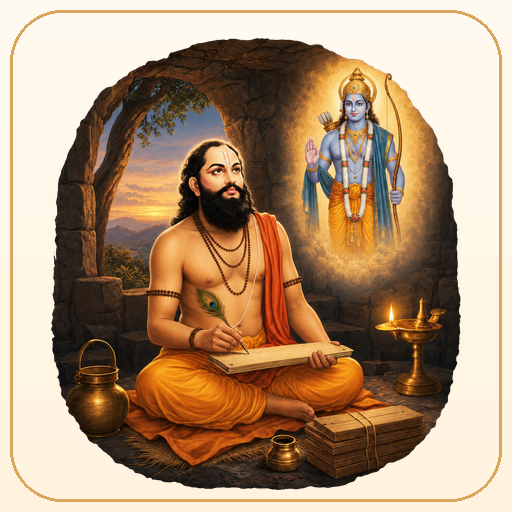
This year's dates (2026)
- Wednesday — Ramdas Navami / Das Navami (samadhi anniversary, the biggest annual observance)11 Feb
- Thursday — Shri Ram Navami (public holiday)26 Mar
- Friday — Samarth Ramdas Swami Jayanti (birth anniversary)27 Mar
- Thursday — Hanuman Jayanti2 Apr
- Saturday — Shreedhar Swami Punyatithi (Shreedhar Kuti, Sajjangad)4 Apr
Deity and significance
Sajjangad is the highest seat of the Samartha sampradaya (the Ramdasi order) — the place where Samarth Ramdas Swami spent his final six years (from 1676) and took samadhi. Samarth Ramdas — one of the leading figures of Marathi bhakti literature and social reform — has his full biography covered on the Ramdas Navami page; this page focuses on the site itself.
Chhatrapati Shivaji Maharaj is traditionally regarded as a spiritual disciple of Samarth Ramdas, and tradition holds that Shivaji Maharaj had a math (monastery) built for him on Sajjangad. However, historians disagree on the exact historical extent of this guru-disciple relationship — some hold that the traditional account isn't backed by contemporary historical evidence as strongly as popular belief suggests.
Besides the samadhi temple, the fort has a separate Shri Ram temple (built by Chhatrapati Sambhaji Maharaj, with idols of Ram-Lakshman-Sita-Hanuman), an Anglai Devi temple, and Maruti temples (Peth Maruti, Dhabya Maruti) — making it a multi-deity darshan site for pilgrims. Sajjangad isn't only a religious site; it also holds a place in Maratha history (Shivaji Maharaj's fort, later Mughal control, then the British period).
History and legend
The fort's original name was Parli fort. Most sources say it was originally built under Bahamani rule (roughly 1347-1527), later held by the Adilshahi (1527-1686). One source instead says it was built in the 11th century by the Shilahara king Bhoj — the two claims differ substantially, so no single period can be stated as certain.
Chhatrapati Shivaji Maharaj captured the fort from the Adilshahi on 2 April 1673. Samarth Ramdas began living here permanently from 1676, which is why the fort's name changed from "Parli" to "Sajjangad." After six years there, he took samadhi on Magh Krishna Navami, Shake 1603 — this Shake-calendar date is undisputed, but sources differ on its Gregorian-year equivalent, giving either 1681 or 1682.
Most sources say Chhatrapati Sambhaji Maharaj subsequently built the Shri Ram temple and, in its basement, the Samarth Samadhi temple at the site. According to temple tradition, the black stone of the samadhi is said to have "appeared on its own" after Samarth's last rites, and five panchadhatu (five-metal) idols were later installed there — this is recorded in two independent sources, but should be understood as temple tradition, not verified history.
One detailed source records that the Ram-Lakshman-Sita-Hanuman idols in the Shri Ram temple were gifted by the Venkoji kings and carved by a blind artisan from Tanjavur named "Aranikor."
Before settling on Sajjangad, around 1648 Samarth had already established his first math and original Ram temple at Chaphal (a separate village near Satara), consecrating a stone found in the Angapur river as a Ram idol — this is believed to be where the public Ram Navami festival tradition began. Chaphal and Sajjangad are two distinct places, both part of the same Ramdasi pilgrimage circuit.
Between 1644 and 1654, Samarth Ramdas established eleven Maruti (Hanuman) temples across the Satara-Karad-Kolhapur-Sangli region, aiming to build young people's sense of physical strength. These eleven temples are spread across that wider region.
Shreedhar Swami (1908-1973), a 20th-century founder of the Varadpur/Sagar ashram in Karnataka regarded by devotees as an incarnation of Dattatreya, lived on Sajjangad for a time in his youth. According to devotee tradition, about one and a half to two years later Samarth Ramdas himself blessed him — since this happened roughly 300 years after Samarth's samadhi, it's presented here purely as devotional tradition, not historical fact. A place called "Shreedhar Kuti" still exists on Sajjangad today, where his death-anniversary mahapuja is observed.
The detailed story of the samadhi episode and Samarth's biography is given on the Ramdas Navami page — not repeated here.
Architecture and layout
Sajjangad stands at about 3,350 feet above sea level, in the Urmodi river valley, southwest of Satara. The fort has two main gates — "Shivaji Maharaj Darwaja" (facing southeast) and "Samarth Darwaja" (facing east, closed after 9 PM). The fort has tanks/ponds, though sources don't fully agree on their exact number or names.
At the centre stands the Shri Ram temple, with the black-stone samadhi of Samarth, decorated with brass work, in the sanctum below it. Other structures include the Anglai Devi temple, the Peth Maruti temple, and the Dhabya Maruti temple. Samarth's original residence — built by Shivaji Maharaj — is preserved today, displaying his personal belongings (a brass-legged cot, garments, a staff, a sword). Free pilgrim accommodation is available at the "Bhaktadham" and "Kalyan Smruti" buildings.
Main festivals and pilgrimage
| Date (2026) | Day | Occasion | Connection to Sajjangad |
|---|---|---|---|
| 11 February | Wednesday | Ramdas Navami / Das Navami | Samadhi anniversary — the biggest observance, a multi-day festival drawing thousands of pilgrims |
| 26 March | Thursday | Shri Ram Navami | A general, nationwide festival; see the Ram Navami page for detail |
| 27 March | Friday | Samarth Ramdas Swami Jayanti | Samarth's birth anniversary |
| 2 April | Thursday | Hanuman Jayanti | A general, nationwide festival; see the Hanuman Jayanti page for detail |
| 4 April | Saturday | Shreedhar Swami Punyatithi | Memorial mahapuja at Shreedhar Kuti |
Apart from Ramdas Navami, two of the remaining four occasions — Ram Navami and Hanuman Jayanti — are general festivals observed across Maharashtra rather than being specific to Sajjangad; Ramdas Navami remains the site's own principal annual observance.
During the Das Navami period (Magh Vadya Pratipada to Navami, roughly 9-10 days), rituals include a dawn Kakad Aarti, samadhi mahapuja, community alms-rounds, circumambulation of the samadhi temple, a torchlight procession (chhabina), and readings of the Dasbodh/Manache Shlok — full detail is on the Ramdas Navami page.
Darshan and aarti timings
The fort and its premises are generally open to devotees from 5 AM to 9 PM. One detailed source records paduka-puja from 6 to 7:30 AM (at Shreedhar Kuti) and evening aarti from 6 to 7:15 PM — schedules can change per the trust's own notices, so confirm the current schedule with the temple committee before visiting.
Management is reported to rest with the "Shri Ramdas Swami Sansthan Trust" and "Shri Samarth Seva Mandal Sajjangad." For official, current information, checking with the enquiry office on the fort itself or with the trust directly is the more reliable option.
Free mahaprasad is generally available around midday and at night, and free accommodation is available too — confirm actual availability on arrival at the fort.
Mantra
Full detail is on the Ramdas Navami page — just a brief introduction here. Tradition holds that Samarth chanted the taraka mantra "Shri Ram Jai Ram Jai Jai Ram" (a salutation and surrender to Shri Ram) at his final hour; the Ramdasi followers' traditional greeting-call "Jai Jai Raghuvir Samarth" is widely used across the sampradaya — it's likely used on Sajjangad too, though no site-specific confirmation was found.
How to reach
About 10-18 km from Satara, roughly a 30-40 minute drive. MSRTC buses run regularly from Satara ST depot; private taxis/autos are also available. From Pune it's roughly 120-127 km by road (nearest airport: Pune International Airport); from Mumbai roughly 270-273 km (via NH48). The nearest railway station is Satara, on the Mumbai-Pune line.
Two routes lead up the fort — via Gajwadi village on a paved road (comparatively fewer steps from the parking area, roughly 100-250), and on foot from Parli village (roughly 750-780 steps, about an hour's climb).
Most sources don't mention an entry fee at all — since this is an active religious trust, free entry is plausible. One general tourism source mentions ₹10 for Indian visitors and ₹80 for foreign visitors, but no other source corroborates this — confirm on arrival at the fort.
Nearby places
- Chaphal — Samarth's first math and original Ram temple (around 1648); Samarth Dhyan Gumpha (meditation cave). An essential companion site on the Ramdasi pilgrimage circuit.
- Thoseghar waterfall — about 26 km away.
- Kas Pathar (Valley of Flowers, a UNESCO World Natural Heritage site) — about 30 km away.
- Koyna reservoir (Bamnoli) and Vasota fort — in the same western-Satara tourist belt.
- Ajinkyatara fort — within Satara city itself.
Traveller tips
- Depending on the route, expect 100 to 780 steps — wear comfortable footwear and carry water; plan extra time if travelling with elderly family or young children.
- During Das Navami (Magh), crowds are very large, and special MSRTC bus services are added for the occasion.
- Steps can get slippery in the monsoon — take the usual precautions for a hill-fort trek; October-February is generally the best time to visit.
- This is an active samadhi temple and pilgrimage site — follow local guidance on the fort for photography and dress code; photography may not be allowed inside the samadhi sanctum, so check the posted notice at the entrance first.
- Don't confuse Sajjangad (the samadhi site, February) with Chaphal (the original math, a different village).
Good to know
- The Gajwadi route is comparatively easier (fewer steps), while the Parli-village route has more steps but is the traditional path — choose based on physical ability.
- Ram Navami, Ramdas Swami Jayanti, and Das Navami are three separate occasions — see the Ram Navami page for the disambiguation.
- If visiting Chaphal too, plan it as a separate leg alongside the Sajjangad visit — both can be done in one day, but budget the distance and time.
FAQ
- Where is Sajjangad?
- A hill fort in Satara district, Maharashtra, about 10-18 km from Satara city.
- What was Sajjangad originally called, and how did the name change?
- Originally Parli fort. It came to be called "Sajjangad" once Samarth Ramdas Swami settled here permanently from 1676.
- Who captured Sajjangad fort, and when?
- Chhatrapati Shivaji Maharaj captured it from the Adilshahi on 2 April 1673.
- Whose samadhi is on Sajjangad?
- Samarth Ramdas Swami's — he took samadhi on Magh Krishna Navami, Shake 1603. Chhatrapati Sambhaji Maharaj later built the Shri Ram temple and samadhi temple there.
- How many steps does it take to climb to Sajjangad?
- It varies by route — comparatively fewer (roughly 100-250) via Gajwadi, more (roughly 750-780, about an hour's climb) from Parli village.
- What are the main festivals at Sajjangad, and when?
- Das Navami (Magh Krishna Navami, 11 February 2026 — the biggest), Ram Navami (26 March), Hanuman Jayanti (2 April), and Shreedhar Swami Punyatithi (4 April).
- What is the connection between Sajjangad and Chaphal?
- Chaphal was Samarth's first settled site and original Ram temple (around 1648); Sajjangad was his later (from 1676) and final residence-cum-samadhi site. Two separate villages, part of the same Ramdasi pilgrimage circuit.
Related Info
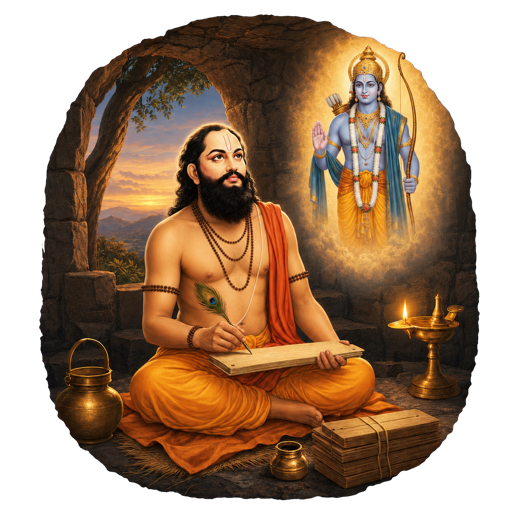 Ramdas Navami / Das Navami11 Feb
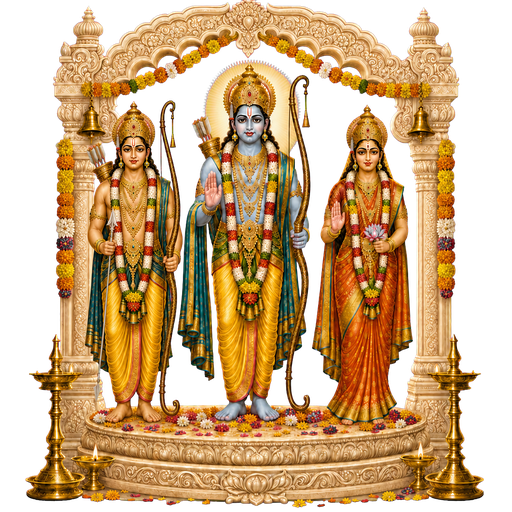 Ram Navami26 Mar
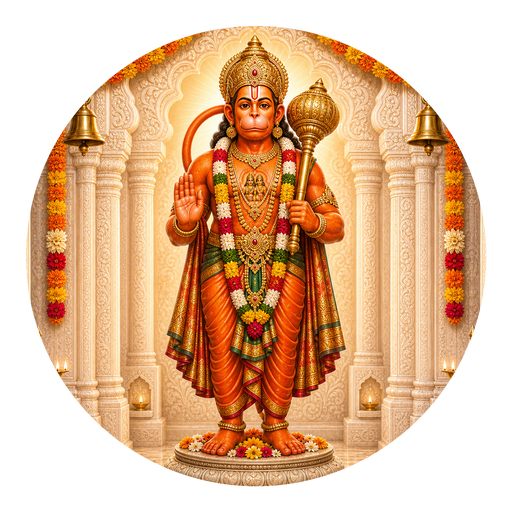 Hanuman Jayanti2 Apr
 Akkalkot Swami Samarth19 Feb
 Shegaon Gajanan Maharaj8 Feb
 Pandharpur Vitthal-Rukmini Temple29 Jan
 Dehu — Sant Tukaram Maharaj5 Mar
 Alandi Sant Dnyaneshwar Samadhi Mandir8 Jul
 Paithan — Sant Eknath Maharaj Samadhi Mandir9 Mar
 Shirdi Sai Baba26 Mar