Sankashti Chaturthi
Sankashti Chaturthi is a monthly Ganesh vrat (observance) that falls on the Chaturthi of the Krishna paksha (the fourth tithi of the waning fortnight) in every lunar masa. ‘Sankasht’ means trouble or crisis, so the vrat is kept to remove obstacles and to fulfil a wish. You fast through the day and break the fast only after moonrise (chandrodaya) at night, offering puja and naivedya to Ganpati and the Moon — which is why the city-wise moonrise time is the heart of this page. Because 2026 has an adhik maas (an extra lunar month), there are 13 Sankashtis this year instead of the usual 12.
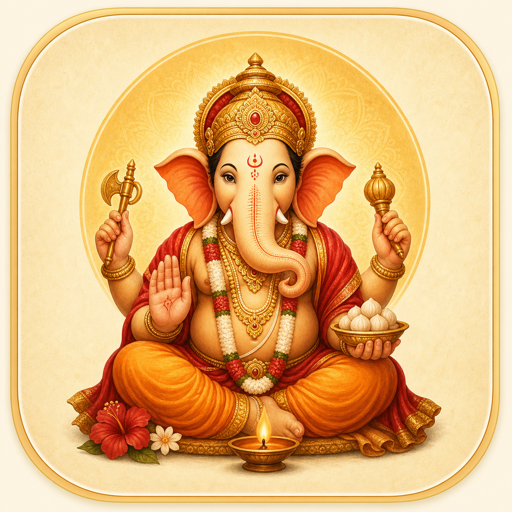
This year's dates (2026)
- Angarki · moonrise (Mumbai) 09:20 pm6 Jan
- moonrise (Mumbai) 09:47 pm5 Feb
- moonrise (Mumbai) 09:18 pm6 Mar
- moonrise (Mumbai) 09:47 pm5 Apr
- Angarki · moonrise (Mumbai) 10:19 pm5 May
- adhik maas Sankashti · moonrise (Mumbai) 09:51 pm3 Jun
- nija Jyeshtha Sankashti · moonrise (Mumbai) 09:51 pm3 Jul
- moonrise (Mumbai) 09:36 pm2 Aug
- moonrise (Mumbai) 08:50 pm31 Aug
- Angarki · moonrise (Mumbai) 08:13 pm29 Sep
- moonrise (Mumbai) 08:52 pm29 Oct
- moonrise (Mumbai) 08:51 pm27 Nov
- moonrise (Mumbai) 08:45 pm26 Dec
Significance
Ganesh is the Vighnaharta — the remover of obstacles. The Sankashti vrat is kept for relief from difficulties, for peace of mind, prosperity and the fulfilment of wishes. Because it returns every month, it becomes a regular practice for many Ganesh devotees.
The vrat is tied closely to the Moon. The upvas (fast) begins at sunrise and is broken only after darshan of the Moon. Waiting for moonrise is said to teach patience, the arghya (water offering) expresses humility, and breaking the fast only after seeing the Moon suggests that reward should follow discipline. (This is a spiritual reading — take it as devotional sentiment, not a universal rule.)
The Chaturthi tithi of the Krishna paksha belongs to the Rikta group, yet as Ganesh's own tithi, Sankashti holds a special devotional place. Some people keep this vrat for life, others for a sankalp (vow) of 21 years or a single year. This Krishna-paksha Chaturthi is Sankashti; the Shukla-paksha Chaturthi is called Vinayaki Chaturthi — both are monthly Ganesh chaturthis.
What is Angarki Sankashti Chaturthi
When Sankashti Chaturthi falls on a Tuesday (Mangalvar), it is called Angarki Sankashti Chaturthi. ‘Angarak’ is a name of Mangal (Mars); the coming together of Mangal and Ganesh makes it rare and especially meritorious. In 2026 the Angarki Sankashtis are on 6 January, 5 May and 29 September (all Tuesdays).
By tradition, an Angarki carries especially great merit (for example, some say it equals a whole year of Sankashtis). Temples draw large crowds on Angarki, and Marathi media highlight the moonrise time prominently.
The legend (vrat katha)
Several stories are attached to Sankashti, and none is a single ‘authoritative’ version. The most widely told thread is given first, followed by the others in brief.
Why moonrise matters — the story of the Moon's curse.
One day Ganpati was riding his vahana, the mouse (mushak), when he lost his balance and slipped. Seeing this, the Moon laughed in mockery. Angered, Ganpati cursed the Moon — ‘whoever looks upon your face will be blamed unjustly.’ When the Moon prayed for forgiveness, the curse was softened and limited to the day of Ganesh Chaturthi (Bhadrapad Shukla). The famous illustration of this curse is Shrikrishna and the Syamantak jewel — having glanced at the Moon on Chaturthi, Krishna was falsely accused of stealing the jewel; after a struggle with Jambavant the jewel was recovered and the truth came out. In some versions the day one must not look at the Moon is Ganesh Chaturthi, while in some versions it is any Chaturthi; some accounts tell the Syamantak episode in detail, others only mention it.
Other stories of the vrat's glory.
In some versions a childless king and queen (in one account Kritavirya and Sugandhadevi) are advised to keep the Sankashti vrat; by rising in the brahma-muhurat, fasting through the day and performing Ganesh puja at moonrise, they are blessed with a child through Ganesh's grace. In other versions, in connection with the Ganesh-devotee sage Bhrushundi, Indra's flying vehicle is grounded by the gaze of a sinner and only rises again once the merit of a Chaturthi vrat is given to it — the message being that one who keeps the vrat finally reaches Ganeshlok. In some versions this story is told a little differently; the names change from version to version.
The shared lesson of all these stories is one and the same — kept with faith and humility, the Sankashti vrat pleases Ganesh the Vighnaharta, so that troubles are removed and wishes are fulfilled.
Who observes it
Any Ganesh devotee — women and men alike — may keep this monthly vrat. It is kept by those facing difficulty or crisis, those making a sankalp (vow) for a particular wish, and it is also mentioned as a vrat kept for the blessing of a child.
The sankalp is taken for life, for 21 years, or for a single year. (This practice varies by region and family — take it as your own tradition rather than a universal rule.)
Puja vidhi (how to perform)
The sequence below is a general one; details vary a little by tradition.
- Rise in the brahma-muhurat and bathe (by tradition, a til (sesame) paste is applied). Take the sankalp to fast through the day.
- Through the day, remember and worship Ganpati; keep the upvas.
- At moonrise at night, perform Ganpati's puja — haldi-kunku, durva, flowers, dhup-dip — and offer modak or ladu (in some traditions 21 modaks) as naivedya.
- Take darshan of the Moon and (in some traditions) offer arghya (water) to it, with a prayer to Ganpati.
- Only then break the fast (parana).
The exact sequence, the number of naivedya items and the samagri can vary by family/regional tradition — the sequence above is a general guide, not the one correct method.
What you need (samagri)
A Ganesh murti or image, haldi-kunku, akshata, durva (durvankur), red flowers or jaswand (hibiscus), dhup-dip, modak or ladu for the naivedya, and water for the arghya to the Moon (in some traditions with a flower, chandan and akshata added). (This list is general; details vary by tradition.)
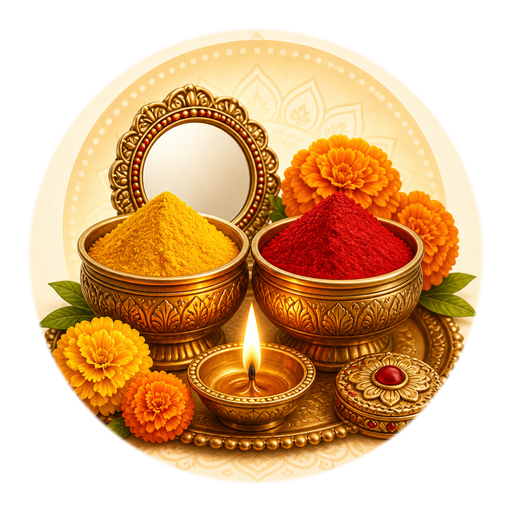 Haldi-kunku
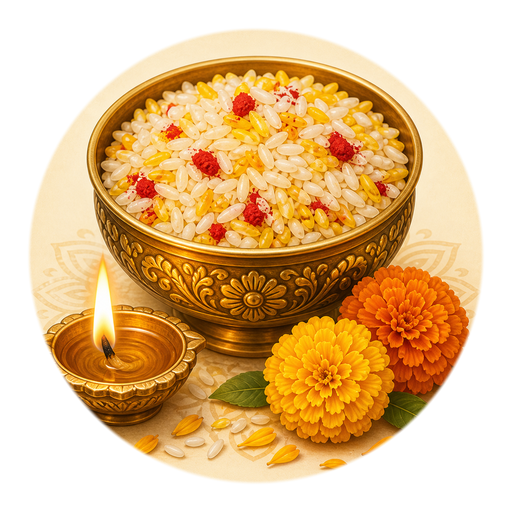 Akshata
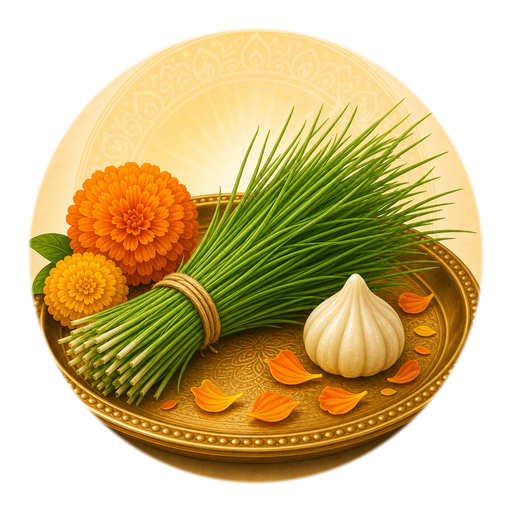 Durva (durvankur)
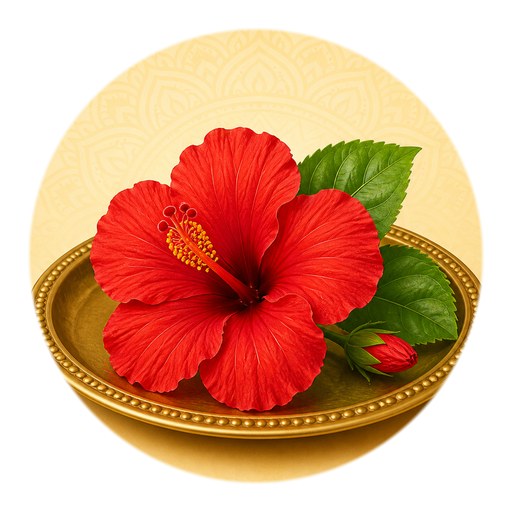 Red flowers / jaswand (hibiscus)
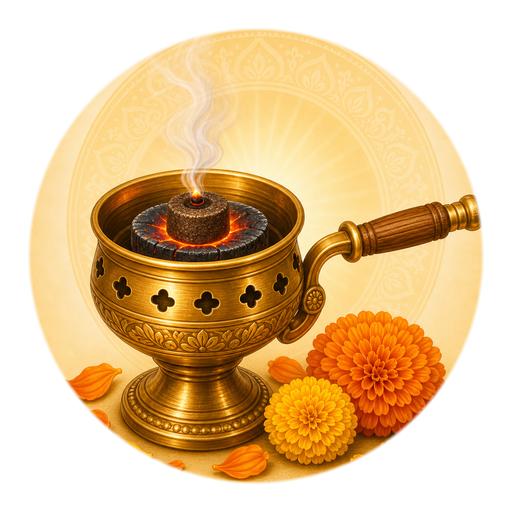 Incense
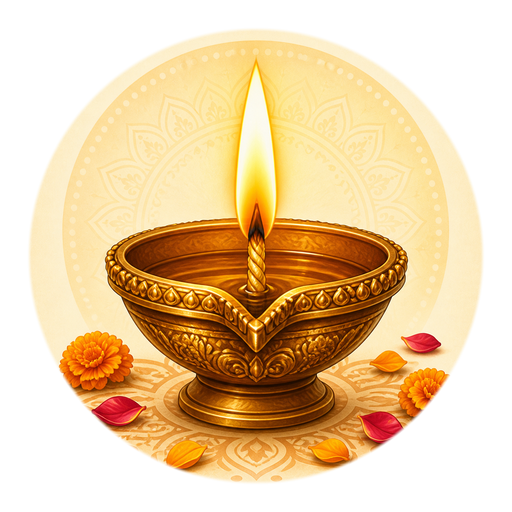 Lamp
Lamp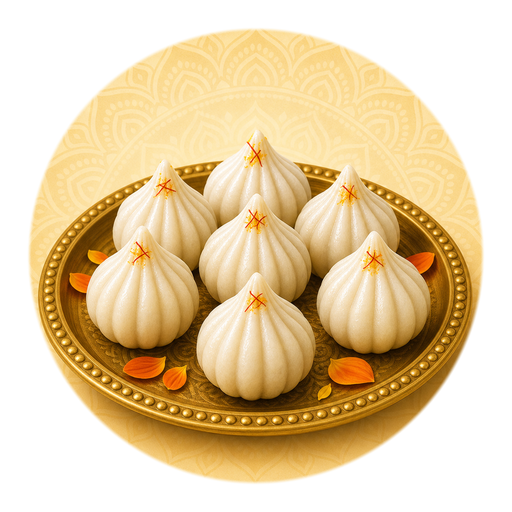 Modak
Modak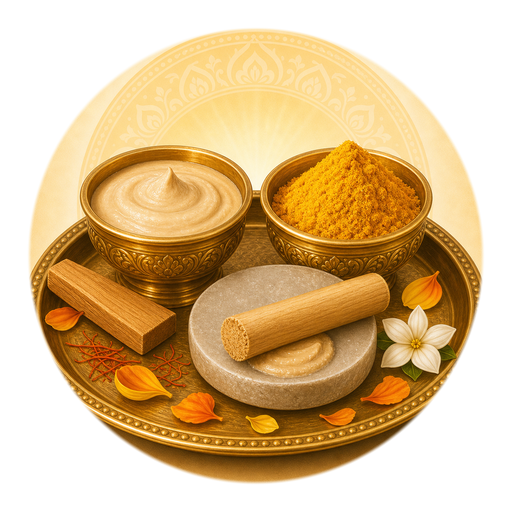 Chandan (sandalwood paste)
Fasting & food (upvas)
- The upvas runs from sunrise until darshan of the Moon; the parana is done only once the Moon is seen.
- Some people take phalahar and upvas foods (sabudana, fruit, groundnuts), while others keep a nirjal (waterless) or strict fast. How strict the fast is varies by tradition and personal health — take it as your own comfort and health allow, not as a universal food rule.
Mantra & aarti
Jap-mantra:
‘Om Gam Ganapataye Namah’ — a short salutation to Ganesh, chanted during the namasmaran on the Sankashti day.
Ganpati aarti — ‘Sukhkarta Dukhharta’ (by Samarth Ramdas).
It is traditionally sung after the moonrise puja. Its meaning: Ganpati is the giver of happiness and the remover of sorrow, who takes away his devotees' troubles.
Regional variations
In Maharashtra, where devotion to Ganesh runs strong, the Sankashti observance is widespread. One local feature is the city-wise moonrise time — announced in newspapers, panchangs and temples; this site too gives the time for many cities such as Mumbai, Pune, Nagpur, Nashik, Kolhapur, Solapur, Pandharpur, Ratnagiri and Panaji.
In some places there is a tradition of worshipping Ganpati under a different name each masa and telling that month's own vrat katha (the form names are given in the table above). (These form names and story variations are tradition-level; take them as your own custom rather than a universal rule.)
Good to know
- Health: the fast is long (sometimes waterless). People with diabetes, pregnant women, the elderly and children should take relief on medical advice and as needed. Because the parana comes late at night (after moonrise), keep hydration and a light meal in mind.
- Moonrise time varies by city — prepare for the parana by your own city's time; on a cloudy night the Moon may appear a little late.
- Temples are crowded on Angarki — plan your timing.
FAQ
- What is Sankashti Chaturthi?
- A Ganesh vrat that falls on the Krishna paksha Chaturthi of every lunar masa. ‘Sankasht’ means trouble; the vrat is kept to remove difficulties, and the fast is broken after darshan of the Moon at night.
- When is Sankashti in 2026?
- There are 13 Sankashtis this year (an adhik maas year). All dates are in the table above (from the site's panchang). Next year's dates follow that year's panchang.
- What time is moonrise on Sankashti? (Mumbai/Pune/Nagpur)
- It differs on each date; the city-wise time is in the table (e.g. 6 Jan: Mumbai 9:20 PM, Pune 9:16 PM, Nagpur 8:53 PM). As the time is location-specific, check your own city.
- What is Angarki Sankashti and why is it important?
- When Sankashti falls on a Tuesday it is Angarki; the coming together of Mangal (Angarak) and Ganesh makes it rare and especially meritorious.
- What is the difference between Sankashti and Ganesh Chaturthi?
- Ganesh Chaturthi comes once a year (Bhadrapad Shukla Chaturthi — the installation of Ganesh), while Sankashti comes every month (Krishna Chaturthi — a fasting vrat).
- How is the Sankashti fast broken?
- After fasting through the day, take darshan of the Moon at night and offer puja and naivedya to Ganpati and the Moon, then break the fast (parana).