Vinayaki Chaturthi
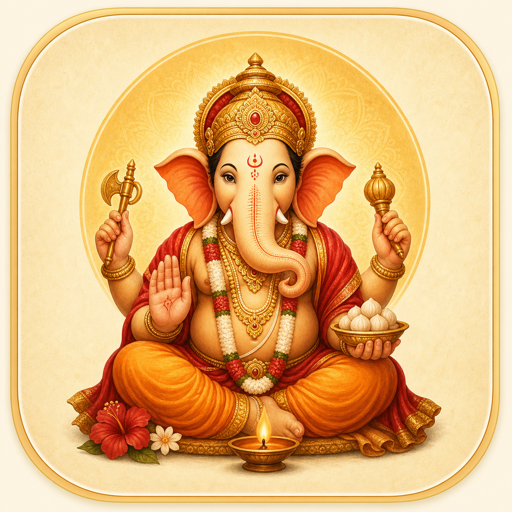
Vinayaki Chaturthi (Vinayak Chaturthi) is the monthly Ganesh vrat observed on Shukla paksha Chaturthi — the fourth tithi after Amavasya. The Krishna paksha Chaturthi is Sankashti; the Shukla paksha one is Vinayaki. Puja is performed at madhyahna (midday) — believed to be Ganesh's birth time. Unlike Sankashti, the tradition on Vinayaki is to avoid looking at the moon. Twelve Vinayaki dates fall across 2026.
This year's dates (2026)
- Thursday; alongside Maghi Ganesh Jayanti — that day carries its own distinct significance22 Jan
- Saturday21 Feb
- Sunday; the panchang notes offering davana leaves to Ganesh22 Mar
- Monday; Tritiya at sunrise, Chaturthi from afternoon20 Apr
- Tuesday; panchang note 'Vinayak Chaturthi (Angarak Yog)'; falls in the Adhik masa19 May
- Thursday; falls in the Nij Jyeshtha month18 Jun
- Friday; Tritiya at sunrise, Chaturthi from afternoon17 Jul
- Sunday; the panchang's main entry is the Nag Chaturthi fast — this same day is also Shravan's Vinayaki16 Aug
- Monday; the panchang's main entry is Shri Ganesh Chaturthi — the biggest Vinayaki of the year14 Sep
- Wednesday14 Oct
- Friday13 Nov
- Sunday13 Dec
Significance
Ganesh is regarded as Vighnaharta — the remover of obstacles; Vinayaki vrat is believed to be observed for riddhi-siddhi (prosperity and accomplishment), knowledge, intellect, courage, and abundance. Sankashti, by contrast, is observed mainly for relief from difficulties — a subtle difference in purpose between the two.
Vinayaki Chaturthi is also known as Varad Vinayak Chaturthi — "varad" meaning a boon or the blessing of wish-fulfilment; devotees are said to observe this vrat for the fulfilment of their wishes.
Two Chaturthis fall each month — the Shukla paksha one (Vinayaki) and the Krishna paksha one (Sankashti). Chaturthi tithi is traditionally dedicated to Ganesh; devotees regularly observe either both or just one.
The biggest Vinayaki of the year is Bhadrapad Shukla Chaturthi — this is Ganesh Chaturthi itself, the Ganeshotsav festival. A detailed account of that day is on its own separate page.
The legend
Vinayaki Chaturthi's significance comes mainly from devotion to Ganesh and the general importance of Chaturthi tithi. The background for why the moon is avoided lies in the belief in mithya dosha — a false accusation invited by looking at the moon on Chaturthi. The well-known example is the story of Krishna and the Syamantaka gem, where looking at the moon's reflection on Chaturthi led to a false charge of theft against him. This story is primarily tied to Ganesh Chaturthi and the custom of avoiding the moon; its fuller telling is on the Ganesh Chaturthi page.
Who observes it
Any Ganesh devotee — both women and men — observe this monthly vrat, typically with the intention of riddhi-siddhi, knowledge, prosperity, and wish-fulfilment. Some observe both monthly Chaturthis (Vinayaki and Sankashti), while others observe only one — this varies by family and regional tradition.
Puja vidhi
- One rises early, bathes, and takes a sankalp (vow) for the fast and the Ganesh puja.
- At madhyahna (midday), at an auspicious muhurat, Ganesh is installed and worshipped — with a panchamrit bath, sindoor, durva grass, flowers (marigold/hibiscus), unbroken rice, and incense-lamps. Since midday is considered Ganesh's birth time, this is the main window for the puja.
- Modak, ladoo, or bananas are offered as naivedya; a Ganesh stotra, Chalisa, or vrat katha is recited; an aarti is performed with a camphor or ghee lamp, followed by a prayer for forgiveness.
- Looking at the moon on Chaturthi is avoided — the exact opposite of Sankashti.
- The time to break the fast varies by tradition (see the separate note below).
The madhyahna puja muhurat varies by date and city.
What you need
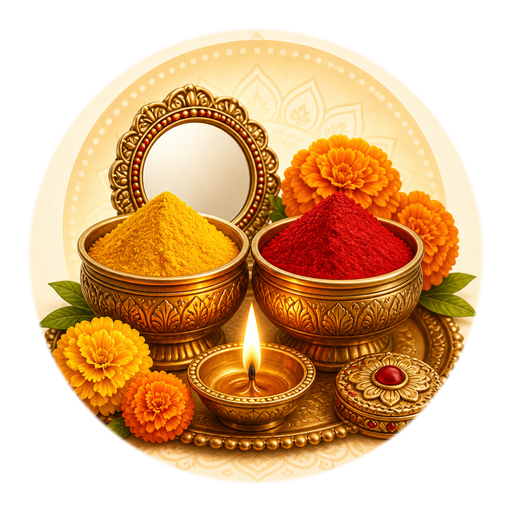
A Ganesh murti or image, turmeric-kumkum, unbroken rice, durva grass, sindoor, red or marigold flowers and garlands, incense-lamps, camphor, panchamrit, modak-ladoo-bananas for naivedya, and betel nut (considered a symbol of riddhi-siddhi).
 Turmeric-kumkum
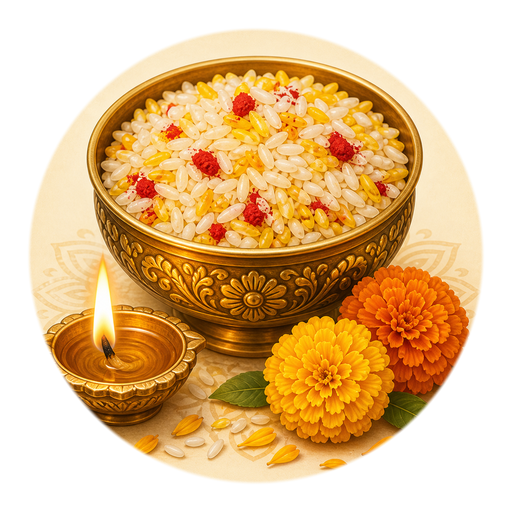 Unbroken rice (akshata)
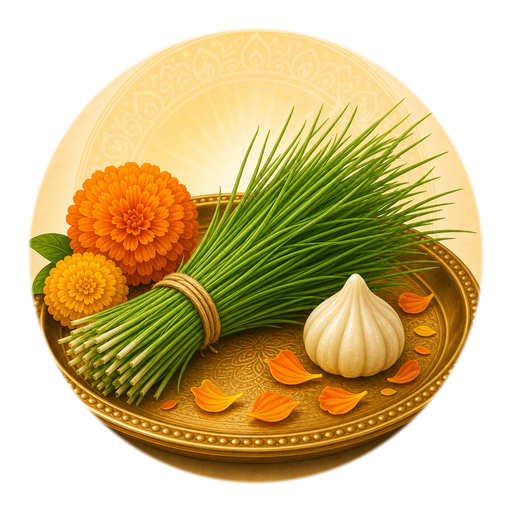 Durva grass
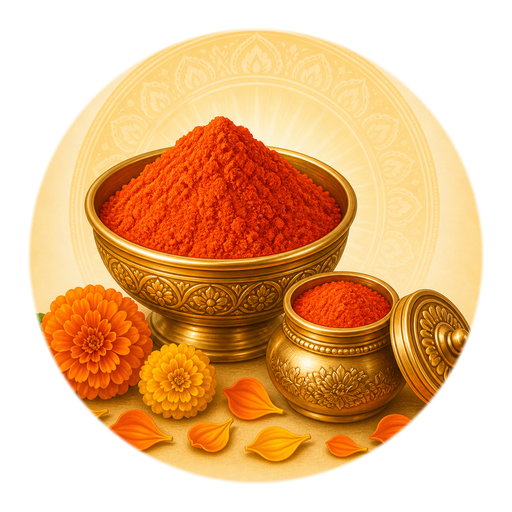 Sindoor
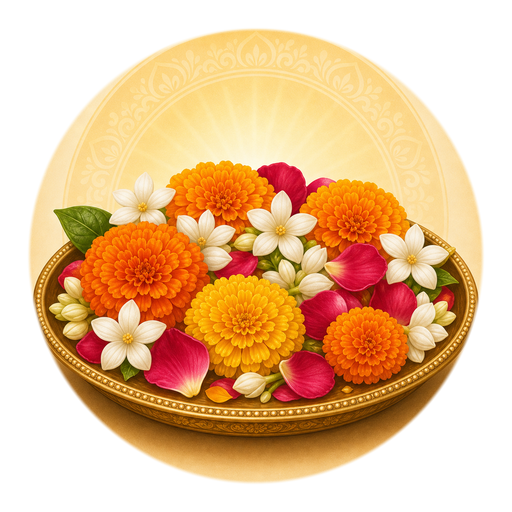 Red or marigold flowers
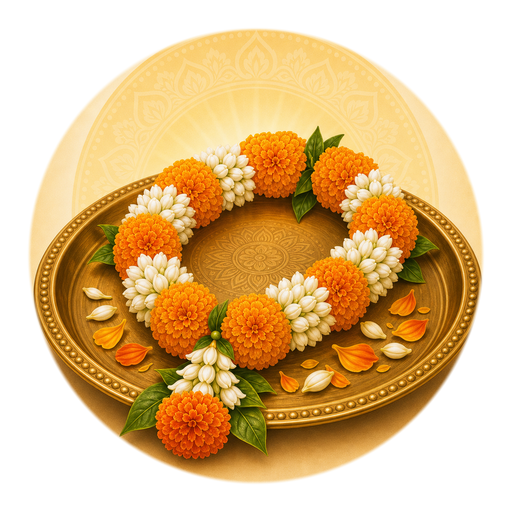 Garlands
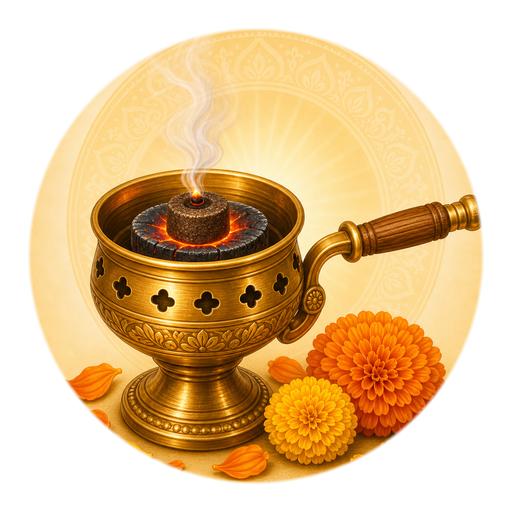 Incense
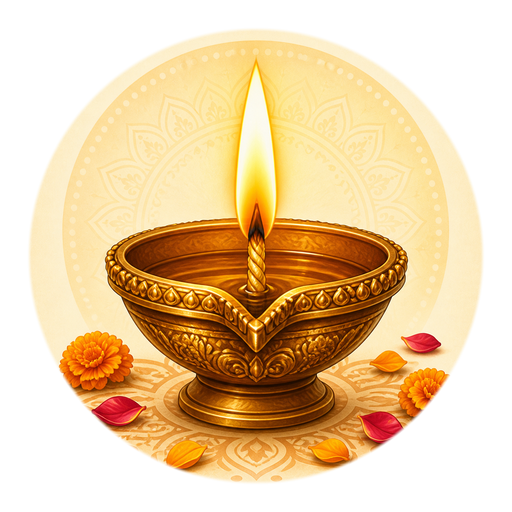 Lamp
Lamp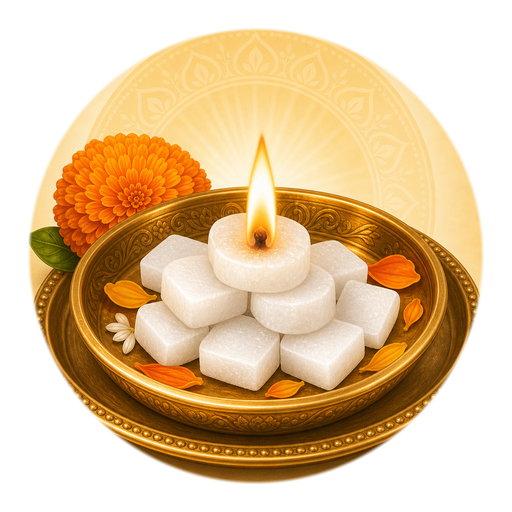 Camphor
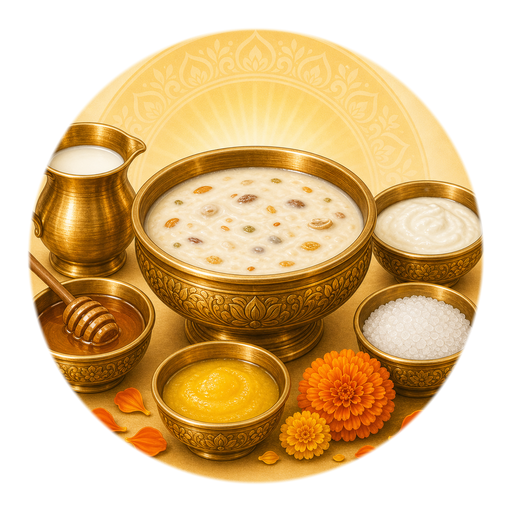 Panchamrit
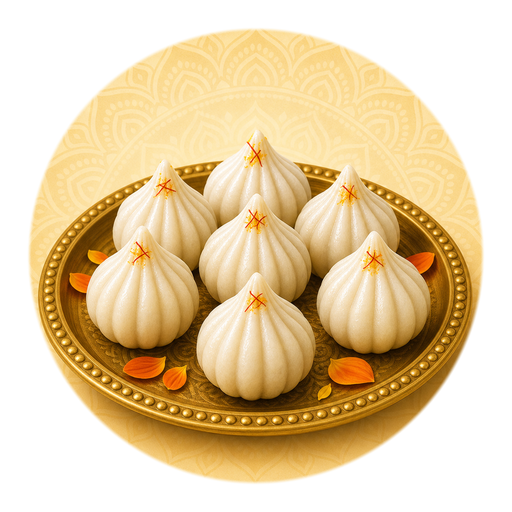 Modak
Modak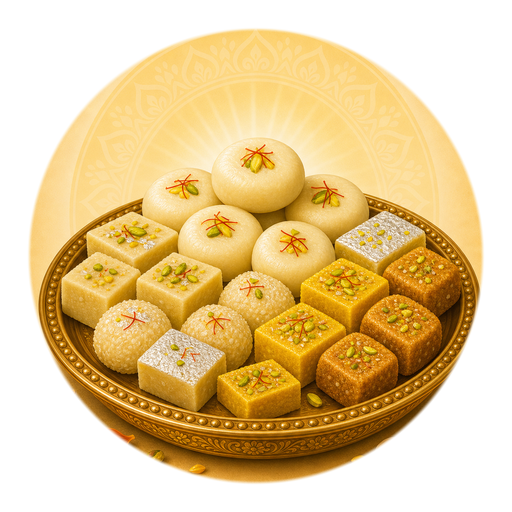 Ladoo
Ladoo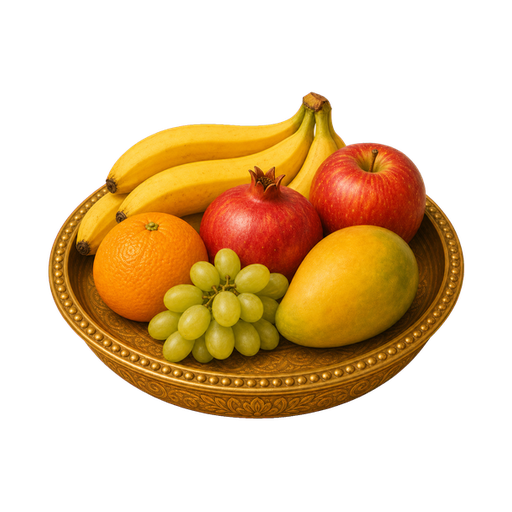 Bananas
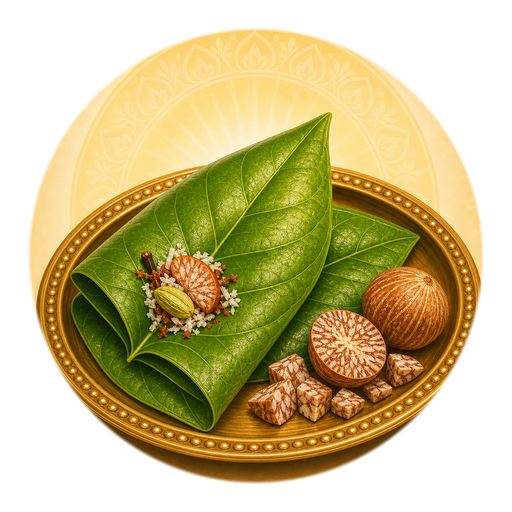 Betel nut
When to break the fast
A day-long fast is kept — grains, onion-garlic, and tamasik food are avoided; fruit, milk, coconut water, and fasting foods like sabudana and peanuts are permitted. The strictness varies by tradition and personal health.
Three different traditions exist for when to break the fast — none is presented here as the single definitive one:
- In some places, the fast is broken right after the madhyahna puja, since the puja is the day's central focus.
- In others, the fast is broken in the evening, after the puja and aarti.
- Some traditions follow an Ekadashi-like pattern — fasting through both windows and breaking the fast only the next day, after a bath and charity.
Follow whichever practice your family tradition observes.
Mantra & aarti
The core mantra 'Om Gam Ganapataye Namah' is a salutation to Ganesh. The Ganpati aarti is recognised by its opening line "Sukhkarta Dukhharta…" (composed by Samarth Ramdas, traditional) — meaning that Ganpati is the giver of happiness and remover of sorrow, who clears devotees' troubles.
Regional customs
Ganesh devotion runs especially strong in Maharashtra — Marathi media cover each month's Vinayaki by its masa name (e.g. "Vaishakh Vinayak Chaturthi", "Nij Jyeshtha Vinayak Chaturthi"), along with the madhyahna muhurat and puja vidhi.
Vinayaki differs from Sankashti as follows — Shukla versus Krishna paksha, midday puja versus night moonrise, moon-avoidance versus moon-sighting, and riddhi-siddhi versus relief from difficulties.
Why the moon is avoided on Chaturthi traces back to the mithya-dosha tradition — this rule gets the most emphasis around Ganesh/Bhadrapad Chaturthi specifically; whether it applies with equal strictness to every monthly Vinayaki is not entirely settled across sources.
Vinayaki falls in both Adhik Jyeshtha (19 May) and Nij Jyeshtha (18 June) this year. Observing the vrat in the nij (repeated) Jyeshtha month is the more common tradition, though practice varies by family; Adhik Jyeshtha's Vinayaki is also observed.
Dates (2026) — twelve Vinayaki Chaturthis
| # | Date | Day | Masa | Tithi | Nakshatra | Note |
|---|---|---|---|---|---|---|
| 1 | 22 January | Thursday | Magh | Shukla Chaturthi | Shatataraka | Alongside Maghi Ganesh Jayanti |
| 2 | 21 February | Saturday | Falgun | Shukla Chaturthi | Revati | — |
| 3 | 22 March | Sunday | Chaitra | Shukla Chaturthi | Bharani | Panchang notes offering davana leaves |
| 4 | 20 April | Monday | Vaishakh | Tritiya→Chaturthi | Rohini | Tritiya at sunrise, Chaturthi from afternoon |
| 5 | 19 May | Tuesday | Adhik Jyeshtha | Shukla Tritiya→Chaturthi | Mrigashirsha | 'Vinayak Chaturthi (Angarak Yog)'; Adhik masa |
| 6 | 18 June | Thursday | Nij Jyeshtha | Shukla Chaturthi | Pushya | Nij Jyeshtha's Vinayaki |
| 7 | 17 July | Friday | Ashadh | Tritiya→Chaturthi | Magha | Tritiya at sunrise, Chaturthi from afternoon |
| 8 | 16 August | Sunday | Shravan | Shukla Chaturthi | Hasta | Panchang's main entry is Nag Chaturthi fast |
| 9 | 14 September | Monday | Bhadrapad | Tritiya→Chaturthi | Chitra | = Ganesh Chaturthi, the year's biggest Vinayaki |
| 10 | 14 October | Wednesday | Ashwin | Shukla Chaturthi | Anuradha | — |
| 11 | 13 November | Friday | Kartik | Shukla Chaturthi | Mula | — |
| 12 | 13 December | Sunday | Margashirsh | Shukla Chaturthi | Shravana | — |
In August and September the panchang's main entry is Nag Chaturthi and Shri Ganesh Chaturthi respectively, but that same day is also that month's Vinayaki.
A few dates (20 April, 19 May, 17 July, 14 September) show Tritiya tithi at sunrise, because Chaturthi begins that afternoon and prevails through madhyahna — this is simply the madhyahna-vyapini rule.
Good to know
- Health: those fasting — people with diabetes, pregnant women, the elderly, and children — should take exemptions based on need and medical advice; stay hydrated and eat light.
- Moon-sighting: by tradition, looking at the moon on Chaturthi is avoided; if seen accidentally, the custom is to recite a Ganesh mantra and listen to the Syamantaka story — this is a matter of belief.
- Muhurat: the madhyahna puja muhurat varies by date and location — check that date's panchang for the precise time.
FAQ
- What is Vinayaki Chaturthi?
- The Ganesh vrat observed on Shukla paksha Chaturthi every lunar month (after Amavasya); the Krishna paksha Chaturthi is Sankashti. Puja is performed at madhyahna.
- What's the difference between Vinayaki and Sankashti Chaturthi?
- Vinayaki falls in Shukla paksha, with a midday puja, avoiding the moon, observed for riddhi-siddhi. Sankashti falls in Krishna paksha, with the fast broken at night after moonrise (moon-sighting required), observed for relief from difficulties.
- When should the puja be performed?
- At madhyahna (midday) — believed to be Ganesh's birth time; the exact muhurat varies by date, per that day's panchang.
- Should the moon be looked at or not?
- By tradition, looking at the moon on Chaturthi — especially Ganesh Chaturthi — is avoided, due to the belief in mithya dosha (false accusation).
- How should the fast be broken?
- This varies by tradition — after the madhyahna puja, in the evening, or (Ekadashi-style) the next day. Follow your family's custom.
- When are all the Vinayaki dates in 2026?
- Twelve dates across the year (see the table above) — one each month from January through December.
- What is Varad Vinayak Chaturthi?
- An alternate name for Vinayak Chaturthi itself — "varad" means the blessing of wish-fulfilment.