Jyotiba (Wadi Ratnagiri, Kolhapur)
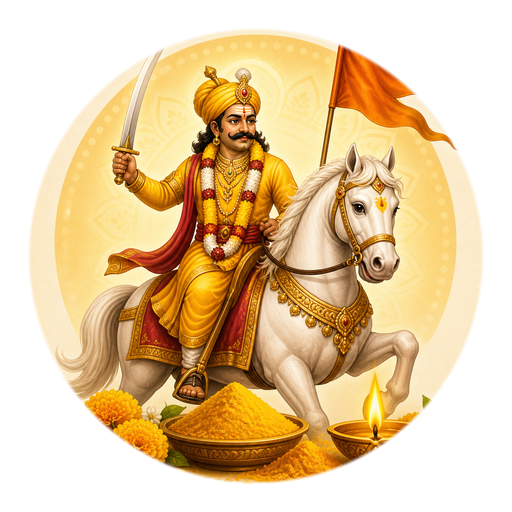
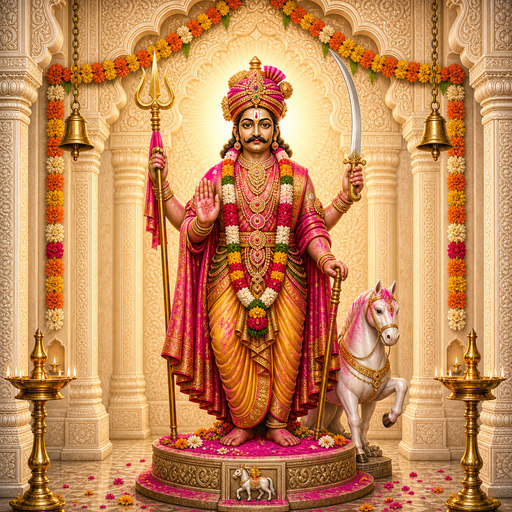
Jyotiba, also called Kedareshwar, is a much-loved kuldaivat (family deity) of Maharashtra — fondly known as the Dakkhancha Raja (“king of the Deccan”). The temple sits northwest of Kolhapur at Wadi Ratnagiri (Jotiba Dongar), about 3,124 ft above sea level, roughly 17 km from Kolhapur (by some accounts 14.5–20 km). Devotees revere Jyotiba as an avatar of Shiv. The biggest yatra (fair) falls on Chaitra Purnima, when lakhs of pilgrims, tall sasankathi poles and clouds of gulal (pink powder) fill the hill — which is why the chant “Jotibachya navana Changbhal” rings out everywhere.
This year's dates (2026)
- Chaitra Yatra — main day (Purnima culmination)2 Apr
- Chaitra Shashti Yatra (Jotiba Dongar)23 Mar
- Jyotirlinga Jagar - Kolhapur (Navratri)18 Oct
- Jotiba Khete start (Sunday)8 Feb
Deity & significance
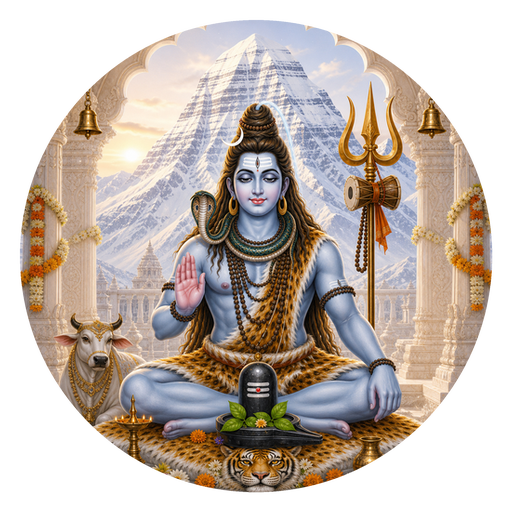
Jyotiba is Kedareshwar / Kedarling; Ravalnath and Saudagar are given as his other names too. Devotees regard him as an avatar of Kedarnath — that is, of Shiv.
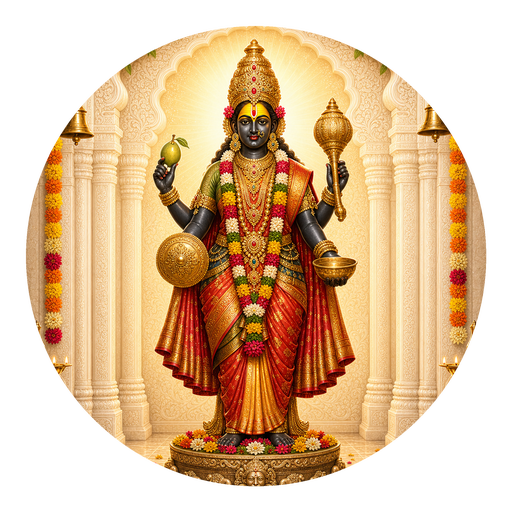
By tradition, Jyotiba is a form that arose from the combined radiance of Brahma, Vishnu and Mahesh, together with a part of the sage Jamadagni and the brilliance of twelve suns; the murti (idol) is four-armed (chaturbhuj). In some places, popular belief also calls Jyotiba “one of the twelve Jyotirlingas” — but this is different from the shastrokta (scriptural) list of twelve Jyotirlingas; Wadi Ratnagiri is not in that authoritative list. So treat this as popular belief (lokshraddha), not as the official list.
For lakhs of families across western Maharashtra (Kolhapur, Sangli, Satara) and the border region, Jyotiba is a kuldaivat. The legend says he helped Ambabai (Kolhapur Mahalakshmi) in her battle against demons; this is why Kolhapur Mahalakshmi and Jyotiba are held to share a puranic and pilgrimage link.
History & legend
The legend below is told in original words, built on the common thread that runs through several sources. Versions of the katha differ; do not take any single version as “the final truth.”
Long ago, this hill was troubled by the demons Ratnasur (and Raktabhoja); the gods and sages were tormented. To protect them, Jyotiba (Kedareshwar) appeared from the combined radiance of Brahma, Vishnu and Mahesh, with a part of the sage Jamadagni and the fierce brilliance of twelve suns. He slew Ratnasur; and it is believed the hill came to be called Wadi Ratnagiri from this very event.
The legend continues that Ambabai (Mahalakshmi) invited Kedarnath into her war with Kolhasur and other demons. After the victory, he was requested to stay here to guard Kolhapur; and so, it is believed, Kedarnath settled on this hill in the form of Jyotiba.
Another story tied to the Chaitra yatra involves Yamai Devi (Renuka Mata, Aundh) — regarded as a related / guru-mother figure to Jyotiba. During the yatra, Jyotiba's palkhi (Nath's palanquin) goes to meet Yamai, and in some places a ritual in the form of the Jamadagni–Yamai wedding is performed.
Version differences: by some accounts the original small Kedareshwar shrine was built by the saint Navji (Navjinath), while the present larger Jyotiba temple was built by Ranoji Shinde in 1730. Some government sources simplify this to “1730, built by Navji.” The sources differ on the details of the founding.
Architecture
The temple is in the Hemadpanti style, built in black basalt stone. The hill has mainly three shrines (take the measurements below as approximate):
- Jyotiba / Kedarling main shrine — roughly 57 × 37 × 77 ft with the spire; built by Ranoji Shinde, about 1730.
- Kedareshwar — roughly 49 × 22 × 89 ft; built by Daulatrao Shinde, about 1808.
- Ramling — roughly 13 × 13 × 40 ft; built by Malji Nilam Panhalkar, about 1780.
Festivals & yatra
Jyotiba is known above all for its grand yatras. Each tithi-based event below resolves to a date by that year's panchang and is linked to its day page.
| Festival | Tithi / when | This year's date | In brief |
|---|---|---|---|
| Chaitra Yatra (main) | Chaitra Shukla Purnima (Hasta nakshatra); yatra begins on Chaitra Shukla Ekadashi, peaks on Purnima | 2 April 2026 | The biggest yatra of the year — lakhs of pilgrims, sasankathi, gulal, the Yamai meeting |
| Chaitra Shashti Yatra | Chaitra Shukla Shashti | 23 March 2026 | Chaitra Shashti Yatra, observed at Jotiba Dongar, Kolhapur |
| Vaishakh Yatra | Vaishakh (exact tithi uncertain) | — | A palkhi procession, around April/May; the exact tithi is not settled in the sources |
| Navratri — Jyotirlinga Jagar | Ashwin Shukla Saptami (during Navratri) | 18 October 2026 | Jyotirlinga Jagar, a Navratri-time observance at Kolhapur |
| Mahashivratri | Magh/Phalgun Krishna Chaturdashi | (major festival) | A big gathering, as Jyotiba is revered as a Shiv avatar |
| Khete | Five Sundays of the Magh masa | starts 8 February 2026 | Kolhapur devotees climb the hill barefoot after a Panchaganga bath |
Note: Chaitra Purnima is the main yatra day; the Shashti Yatra (23 March) appears to be a separate / earlier event. Whether the Shashti yatra and the main Purnima yatra are two distinct events, or whether Purnima is the climax and Shashti a lead-up, should be clarified with the temple committee.
A palkhi procession is also held during Vaishakh; check the exact tithi with the temple trust.
Yatra dates shift with each year's panchang; verify the current dates with the temple trust before planning travel. (The local Jalav / Gundewadi “Jyotirlinga yatras” belong to separate local Jyotiba shrines — they are not the main Wadi Ratnagiri temple, so they are not listed here.)
Darshan & aarti timings
The timings below are from the temple devasthan website, which describes itself as official. Some other sources give a different window (5:30 AM – 10:00 PM). Verify the timings with the temple trust.
- 4:00 AM — the temple opens with a bell.
- 5:00 AM — padyapuja and kakad aarti.
- 3:00 PM — abhishek / ritual bath and baithi puja.
- 7:00 – 9:00 PM — dhup aarti and shej aarti.
- 11:00 PM — the temple closes.
Per the website, the temple is managed by the Devasthan Management Committee, West Maharashtra, Kolhapur (contact: 02328-239041).
Special rituals
- Gulal showering and the “Changbhal” chant: devotees throw gulal (pink powder) in huge quantities — on yatra day the whole hill turns pink (hence the ‘Pink temple’ nickname). The chant “Jotibachya navana Changbhal” rings out; Changbhal means roughly “may everyone's good / welfare prevail” (a link is drawn to the Punjabi changa bhala = “all is well”). This chant is raised in the name of both Jyotiba and Khandoba.
- Sasankathi: tall poles about 45–50 ft high — symbols of the victory banner. It is said that eighteen poles of honour and ninety-six (96) in all are brought up the hill the day before the yatra; the first honour goes to Padali (Satara) — by some accounts granted by Chhatrapati Shahu Maharaj in 1896.
- Khete: on the five Sundays of the Magh masa, Kolhapur devotees climb the hill barefoot after a bath in the Panchaganga.
- Offerings / naivedya: along with gulal, davana (southernwood), copra and khark (dried dates) are said to be dear to Jyotiba. (The rituals and naivedya can vary by family, village and local custom.)
How to reach
- Rail: the nearest station is Kolhapur (Chhatrapati Shahu Maharaj Terminus) — about 17–20 km from the hill; trains from Mumbai, Pune and other cities.
- Air: Kolhapur Airport (Chhatrapati Rajaram Maharaj) is about 30–35 km away; flights from Mumbai, Pune and so on.
- Road: Kolhapur is on the national highway (NH-4 / old NH-4); from Kolhapur you can take a bus, cab or rickshaw and then a ghat road up to the hilltop. (The distance from Kolhapur is 14.5–20 km by some accounts, so take it as “about 17 km”.)
Nearby
- Kolhapur Mahalakshmi (Ambabai) temple — about 18 km; one of the three-and-a-half Shaktipeeths, with a puranic link to Jyotiba.
- Panhala Fort — about 35 km; a Maratha-history fort tied to Chhatrapati Shivaji Maharaj.
- (Rankala lake, Narsobachi Wadi and other spots are also nearby; check exact distances before you travel.)
Travel tips
- Best time: for a calm darshan, go outside the yatra season; the Chaitra Purnima yatra draws a huge crowd of lakhs — go on that day only if you want the crowd and the festival experience.
- Gulal: gulal is thrown in large amounts — clothes get stained; if you are sensitive in the eyes or airways, carry a mask and glasses.
- Climb and heat: mind the hill climb and the April heat — the elderly, children and the unwell should take care; for the barefoot Khete, mind your feet and carry plenty of water.
- Dress and offerings: keep a modest, sattvik dress; the offering custom is gulal-davana-copra-khark.
- Timings shift: during the yatra and festivals the darshan timings change — check the current timing with the temple trust before you travel.
Mantra & aarti
The official devasthan website carries a Shri Jyotiba aarti; its full text is not reproduced here. Jyotiba's most recognizable devotional cry is the Changbhal chant:
“Changbhal re Changbhal, Jotibachya navana Changbhal!”
Meaning: “may everyone's good / welfare prevail” — an auspicious prayer for all. It is raised while showering gulal, during the yatra and at darshan.
Regional variations
- Across western Maharashtra (Kolhapur, Sangli, Satara), Jyotiba is a kuldaivat for many; visiting Jotiba after a wedding or a fulfilled navas (vow), a gulal-navas and the Khete are family traditions.
- Sasankathi poles come from the border region (Karnataka) and various districts — each village has its own pole of honour, its own colour and its own procession.
- (Rituals vary by clan and village custom — keep in mind “as per home / local tradition.”)
Good to know
- On yatra day follow the crowd-management and local police / temple notices; look after your valuables.
- Gulal can irritate the eyes and airways — sensitive people should take precautions.
- Plan travel only after verifying darshan timings and yatra dates with the temple trust.
FAQ
- Where is the Jyotiba temple?
- Northwest of Kolhapur, about 17 km away, at Wadi Ratnagiri (Jotiba Dongar) — about 3,124 ft above sea level.
- How far is Jotiba Dongar from Kolhapur?
- About 17 km by the official website; other sources give roughly 14.5–20 km, so take it as “approximate.”
- Which deity is Jyotiba — Shiv or a Jyotirlinga?
- Devotees revere him as an avatar of Shiv (Kedareshwar / Kedarnath). Popular belief also calls him “one of the twelve Jyotirlingas,” but Wadi Ratnagiri is not in the shastrokta list of twelve Jyotirlingas — so take that as a popular reference.
- When is the Jyotiba Chaitra Yatra?
- The main yatra is on Chaitra Purnima (Hasta nakshatra); this year, per the panchang, 2 April 2026. Verify yatra dates with the temple trust.
- What does “Jotibachya navana Changbhal” mean?
- An auspicious prayer that “may everyone's good / welfare prevail” — the chant raised while showering gulal and during the yatra.
- What is Khete, and when is it done?
- On the five Sundays of the Magh masa, Kolhapur devotees climb the hill barefoot after a Panchaganga bath — this pilgrimage is called ‘Khete’.
- Why is gulal showered at the Jyotiba temple?
- Gulal is seen as a symbol of victory and devotion; the showering turns the whole hill pink — creating the ‘pink hill’ sight.