Kalubai — Mandhardev, Wai (Satara)
Kalubai (Kalubai Devi) is a temple in Wai taluka of Satara district, on the Mandhardev hill (Sahyadri range, roughly 4,500-4,700 feet above sea level) — about 20-22 kilometres from Wai town. The goddess is regarded as a form of Adimaya Parvati, in her four-armed Mahishasurmardini form. The main annual yatra falls on Paush Purnima (also called Shakambhari Purnima) — 3 January in 2026 — and runs as a ten-day fair drawing lakhs of devotees. Kalubai is not one of the Sadeteen Shaktipeeths — she is a distinct regional folk goddess, much like Ekvira Devi.
This year's dates (2026)
Deity and significance
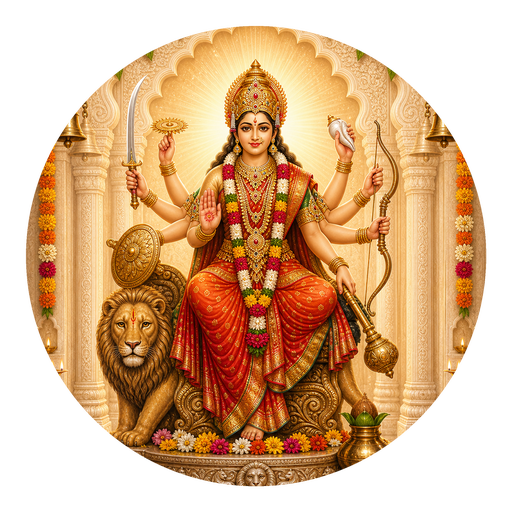
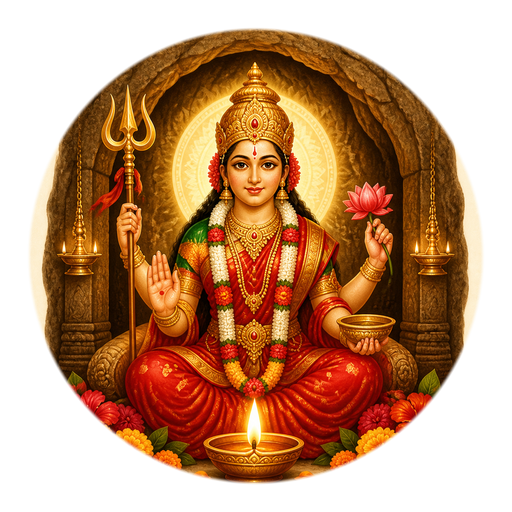
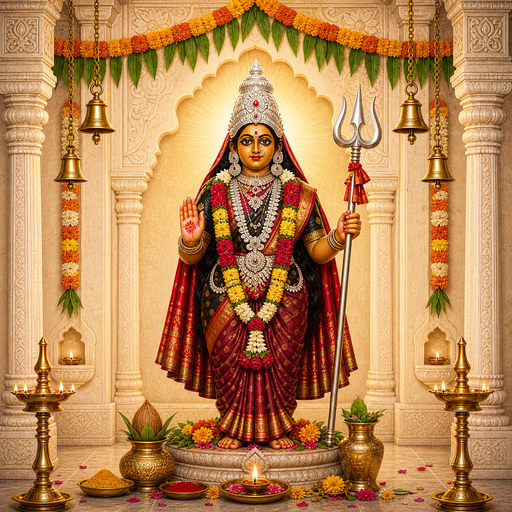
Kalubai is regarded as a form of Adimaya Parvati, in her four-armed Mahishasurmardini form, standing with one foot on a demon's chest, holding a trishul and sword in the right hands and a shield and the demon's severed head in the left.
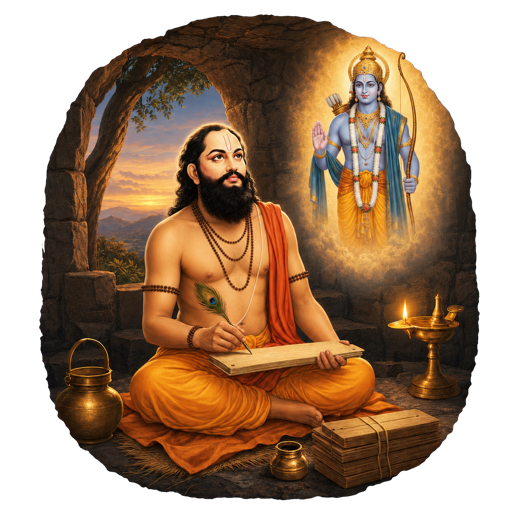
The name of the hill/site, "Mandhardev," is said to be linked to sage Mandhavya, who is said to have done penance here; a website that identifies itself as the temple trust also mentions a separate Mahadev temple on the same hill where sage Mandhavya performed his penance — so the hill has two elements, a Shiva-linked name/temple and the main Kalubai Devi temple that devotees actually worship at.
Mandhardev is Kalubai's principal and most famous site, though smaller shrines to her are also said to exist at Velhe, Kusumbi, Varoshi, Kanjale, and Kelvade. Devotees from Maharashtra and Karnataka regard her as a goddess who fulfils vows (navas), a description that recurs consistently across sources. No source has clearly established a specific caste/community-kuldevi connection for Kalubai (unlike Ekvira Devi's Koli/Agri connection).
No source describes Kalubai as part of the Sadeteen Shaktipeeths — she is a distinct regional folk goddess who fulfils vows.
History and legend
By tradition, in ancient times a demon named Lakhyasura troubled sages and ascetics. Sage Mandhavya worshipped Shiv and appealed to Parvati for help. Parvati appeared in the form of Kalubai and slew the demon at midnight on Paush Purnima, then settled permanently at that spot. Some versions say the demon troubled only sage Mandhavya, while others say he troubled ascetics and sages more broadly — the exact detail varies, but the heart of the story (Parvati becoming Kalubai, the demon's slaying, midnight on Paush Purnima) is consistent across sources.
A separate legend about the temple's founding is also told — a village leader had a dream vision, following which a divine idol was discovered on the hill and a temple was built there, according to a website that identifies itself as the temple trust; this is a distinct legend from the demon-slaying story, specifically about the temple's founding. That same website explicitly states that historians reject any Pandava-era connection, since the Pandavas never visited this region.
The temple is built in Hemadpanthi style, according to one source, which is taken as a sign of its antiquity. Sources vary on its age — some say over 400 years old, dating to Chhatrapati Shivaji Maharaj's era; the official Satara district administration's page says roughly 350 years; while a website that identifies itself as the temple trust says the exact date is unknown. The temple is hundreds of years old; the exact founding date is unknown.
Architecture and layout
The temple stands on the Mandhardev hill in Wai taluka, on the border of Pune and Satara districts and the Wai-Bhor-Khandala talukas, in the Sahyadri range, at roughly 4,500 to 4,700 feet above sea level. The temple offers a sweeping view of the Pandavgad and Purandar forts.
The temple faces east, with a sabhamandap and a large sanctum (with silverwork). Cow and lion sculptures on the shikhara are also present.
The idol is four-armed, holding a trishul, sword, shield, and the demon's severed head. During the yatra, the goddess is given a special gold or silver mask, by tradition; some accounts describe two silver masks and silk garments as well, carried in procession by a hereditary priest family.
Main festivals and pilgrimage
| Festival | Tithi | 2026 date | In short | Link |
|---|---|---|---|---|
| Paush Purnima Yatra (main annual fair, 10 days) | Paush Shukla Purnima | 3 January | The panchang labels it "Shakambhari Purnima"; two independent web sources separately confirm this as the main day of the Kalubai yatra | 3 January day page |
| Midnight Chhabina | Night of Paush Purnima | Night of the full moon | A masked palanquin procession of the goddess, with music — the yatra's main attraction | — |
| Morning main puja/abhishek | Morning of Paush Purnima | Around 6 AM (can vary by year) | Part of the main yatra | — |
| Shakambhari Purnima (general, a different goddess) | Paush Shukla Purnima | 3 January | This is a different goddess and a different story — not Kalubai's demon-slaying legend | Shakambhari Purnima |
| Navratri (minor observance) | Unclear | General festival | No Kalubai-specific tag in the panchang; which Navratri is unclear | Navratri |
Paush Purnima is Kalubai's main annual yatra.
Darshan and aarti timings
One source says the temple is open for darshan from 5 AM to 7 PM — the only source found for this; a website that identifies itself as the temple trust has no directly available timetable, only a general mention of ticketed darshan and live-streaming options. Confirm with the temple committee before an actual visit. During the yatra period (Paush Purnima, ten days), timings and arrangements are likely to change due to crowding.
Rituals here
The goddess is offered puran poli and curd rice as naivedya, according to two independent sources. The night-time masked palanquin procession (Chhabina) during the yatra is its main attraction. A hereditary priest family is said to carry the goddess's masks in the procession, according to one source — not independently corroborated.
For the 2026 yatra, the district administration has recorded a complete ban on coconut-breaking, oil-pouring, and animal slaughter — presented here as part of the current (2026) safety rules for the yatra.
How to reach
About 20-22 kilometres from Wai town; private vehicles can reach the parking area near the temple directly; state transport buses run from Wai and Bhor; a trekking route also exists from Shirval village in Khandala taluka. About 56 kilometres from Satara. The nearest railway station is Satara; the nearest airport is Pune (Lohgaon). During the yatra period (Paush Purnima, early January), state transport runs extra buses and special traffic arrangements are made on the Wai-Satara route.
Nearby places
- Pandavgad fort — visible from the Mandhardev temple, northwest of Wai town; built around 1200 CE, with a Pandjai Devi temple on it (a distinct deity/site from Kalubai — don't conflate the two).
- Purandar fort — visible from the temple, according to one source.
- Wai town ("Dakshin Kashi") — a religious centre on the banks of the Krishna river; the Dholya Ganpati temple (1762, the largest temple in Wai), and the Siddheshwar/Ganga Rameshwar/Kashi Vishwanath temples along the river ghats.
- Menavali — the Nana Phadnavis Wada (1768) and Menavaleshwar temple, on the Krishna river ghat.
- Vairatgad, Kenjalgad, Kamalgad forts — in the same Wai taluka.
Traveller tips
The route involves hill paths and steps, so comfortable footwear and enough water are worth carrying. Crowds are very heavy during the yatra period (Paush Purnima, January) — lakhs of devotees arrive over the ten days. For the 2026 yatra, arrangements recorded include CCTV cameras, increased police deployment, drinking water and sanitation facilities, medical teams, and barricaded, shaded queues.
Good to know
It's worth remembering that Kalubai is not part of the Sadeteen Shaktipeeths — she is a distinct regional folk goddess. The "Shakambhari Purnima" observed on the same tithi (Paush Purnima) is a different goddess and a different story, not Kalubai's own legend — don't conflate the two. Crowds are very heavy during the yatra period, so take extra care with your safety, and since no confirmed official timetable is directly available, it's worth phoning ahead to confirm darshan timings before visiting.
FAQ
- Where is Kalubai Mandhardev temple?
- In Wai taluka of Satara district, on the Mandhardev hill, about 20-22 km from Wai town.
- Who is Goddess Kalubai?
- A form of Adimaya Parvati, in her four-armed Mahishasurmardini form; by legend, she slew a demon at midnight on Paush Purnima.
- When is the Mandhardev Kalubai yatra?
- Every year on Paush Purnima (also called Shakambhari Purnima) — 3 January in 2026; it runs as a ten-day fair.
- How many devotees visit the Mandhardev yatra?
- Lakhs of devotees — estimates range from about two to over four lakh.
- How do I reach Kalubai Mandhardev temple?
- By road via Wai/Bhor (about 20-22 km from Wai); the nearest railway station is Satara; the nearest airport is Pune.
- What are the darshan timings at Kalubai Mandhardev temple?
- Generally around 5 AM to 7 PM (single-source; confirm with the temple committee).
- Is Kalubai one of the Sadeteen Shaktipeeths?
- No. She is a distinct regional folk goddess who fulfils vows, much like Ekvira Devi.