Dhanteras (Dhantrayodashi)
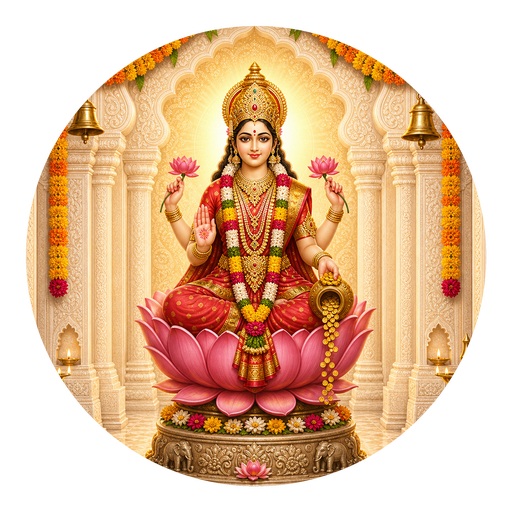
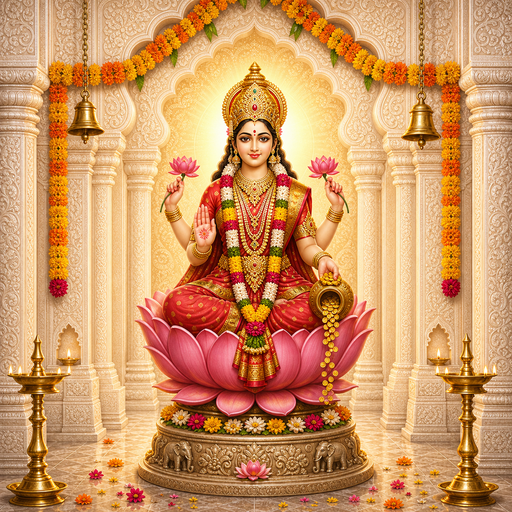
Dhanteras (Dhantrayodashi) is the first day of Diwali, observed on Ashwin Krishna Trayodashi (during the pradosh window). It's a day for worshipping wealth, health, and prosperity — the presiding figures being Shri Mahalakshmi, Kubera, and Dhanvantari (the deity of Ayurveda). In the evening, Yamadeepdaan is performed — lighting a lamp facing Yama's direction, with a prayer against untimely death. This year (2026): Friday, 6 November. Its distinct custom is that buying gold, silver, utensils, and a new broom is considered auspicious — a symbol of Lakshmi's arrival.
This year's dates (2026)
Significance
"Dhan" means wealth, and "teras/trayodashi" means the thirteenth tithi — hence the name Dhanteras. In Maharashtra, this day marks the start of the Diwali season, followed by Narak Chaturdashi, Lakshmi Pujan, Padwa, and Bhau Beej.
By tradition, Dhanvantari (bearing the pot of amrit) and the goddess Lakshmi both emerged from the Samudra Manthan (the churning of the ocean) on this very tithi — so both health and prosperity are worshipped. In the evening, a lamp is lit facing south (Yama's direction) with a prayer that untimely death be averted and long life granted — this is Dhanteras's distinctive practice.
The legend (katha)
Two main stories are linked to Dhanteras.
The story of King Hima's son (the origin of Yamadeepdaan): it was foretold that King Hima's 16-year-old son would die of a snakebite on the fourth night after his marriage. That night, his new bride heaped gold, silver, and jewels at the doorway, lit countless lamps, and kept her husband awake with stories and songs. Yama arrived in serpent form, but was so entranced by the brilliance of the lamps and the bride's singing that he lingered there all night; the hour passed, and the prince was spared. From this, the custom of lighting lamps and Yamadeepdaan is said to have taken root — in some regions, this day is even called "Yamadeepam." Some versions say the bride's own horoscope, which promised long life, is why the match was arranged; in some regions, lamps lit for Yama are also offered to ancestors and set afloat on water. This is a traditional folk legend.
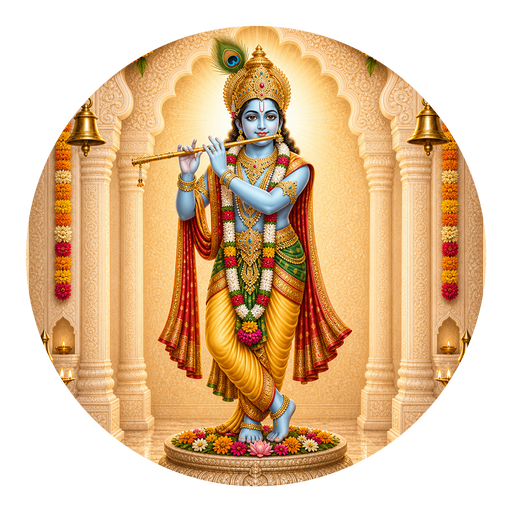
Samudra Manthan — the emergence of Dhanvantari and Lakshmi: by tradition, during the churning of the ocean by the gods and demons, Dhanvantari (an avatar of Vishnu and the father of Ayurveda) emerged bearing the pot of amrit on this very tithi, and the goddess Lakshmi emerged from the same churning. This is why Dhanvantari is worshipped for health, and Lakshmi-Kubera for prosperity, on this day. Some traditions emphasize Dhanvantari Jayanti (health), while others emphasize the auspiciousness of buying for Lakshmi-Kubera.
Who observes it
The whole family — women of the house (lamps, rangoli, Yamadeepdaan), the merchant and goldsmith community (an auspicious buying day), and many in the health sector (Dhanvantari puja). From a buying standpoint, this is a big day for merchants and shoppers — buying gold, silver, utensils, or a vehicle is considered auspicious.
Puja vidhi (how to perform)
The order varies by tradition; it can differ by household and local custom.
- Lakshmi-Kubera-Dhanvantari puja: clean the house and draw a rangoli at the doorstep; on a low seat (chaurang), remember Lakshmi-Kubera and, for health, Dhanvantari; place newly bought items or coins in the puja and offer akshata-kumkum-flowers-incense-naivedya; light a lamp in the evening.
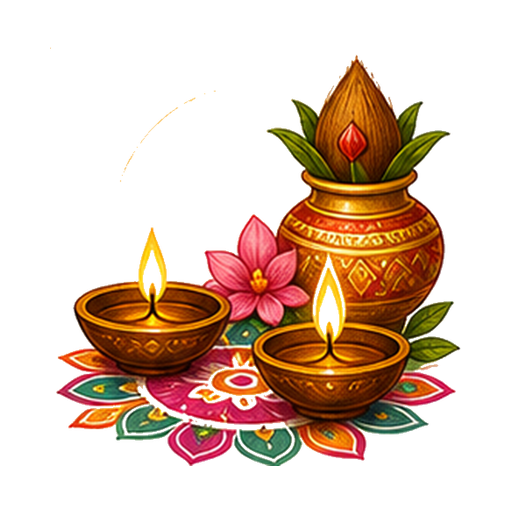
- Yamadeepdaan: in the evening (during pradosh), light a lamp outside the house with its wick facing south — traditionally an oil lamp made with flour or sesame oil — and worship it with sandalwood paste, flowers, and akshata while praying to Yama for protection from untimely death.
The exact time for the pradosh puja varies by city — check the day page for it.
What you need
An idol or coins of Lakshmi-Kubera, newly bought items (gold, silver, or utensils), akshata-kumkum-turmeric, flowers-garlands, incense, a niranjan or samai lamp with oil-wicks, naivedya or sweets, a rangoli; and a separate lamp (flour or sesame oil) for Yamadeepdaan.
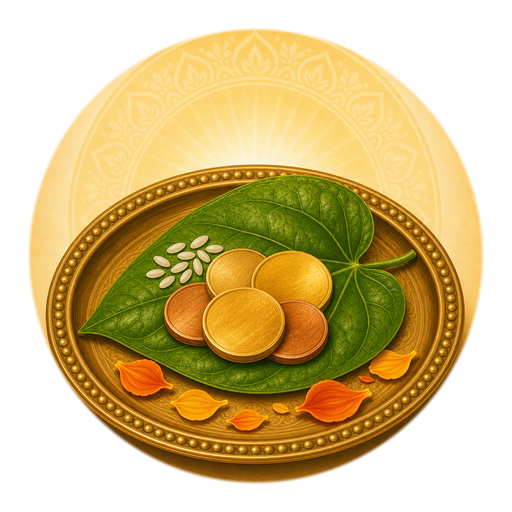 Coins
Coins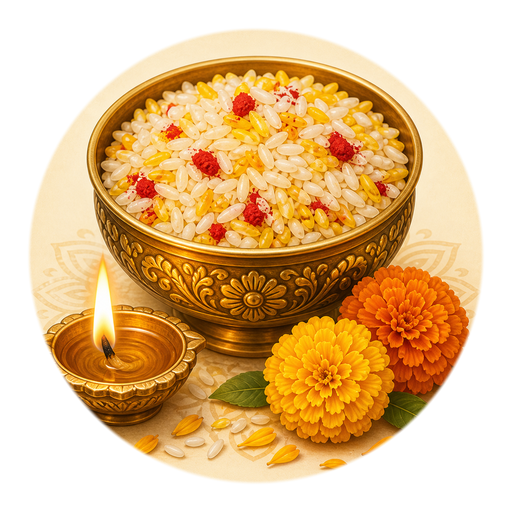 Akshata
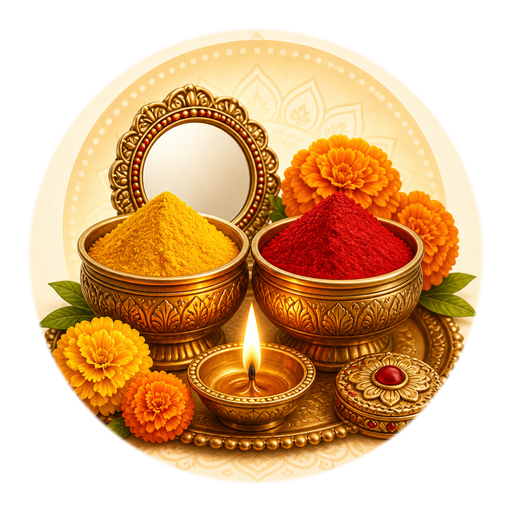 Haldi-kunku
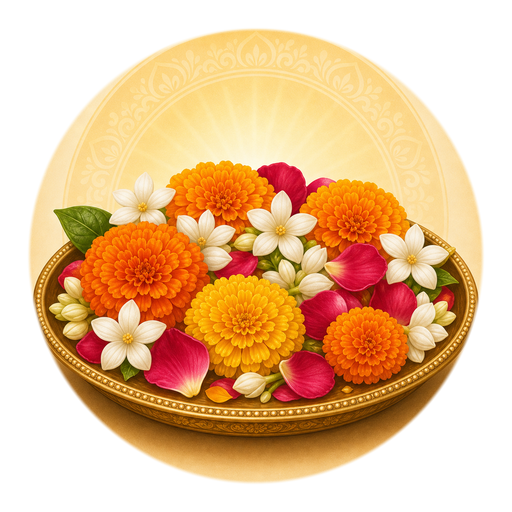 Flowers
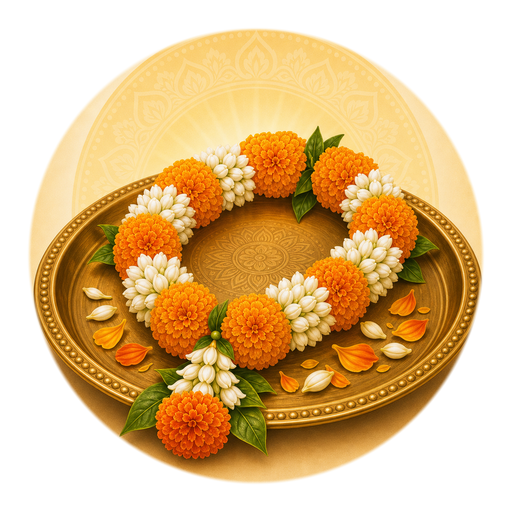 Garlands
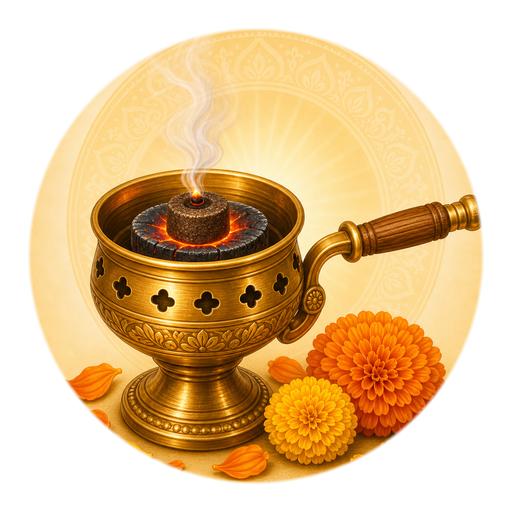 Dhoop
Dhoop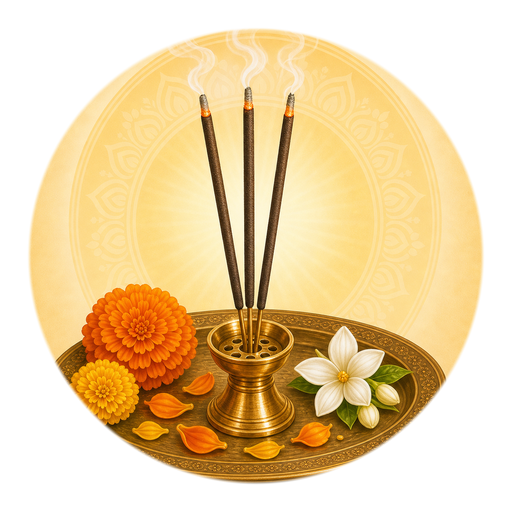 Agarbatti
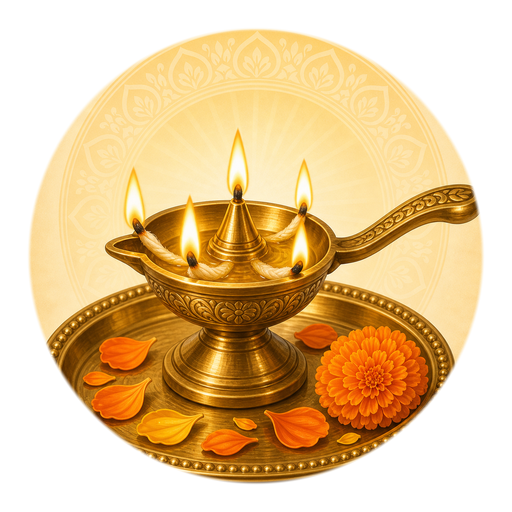 Niranjan lamp
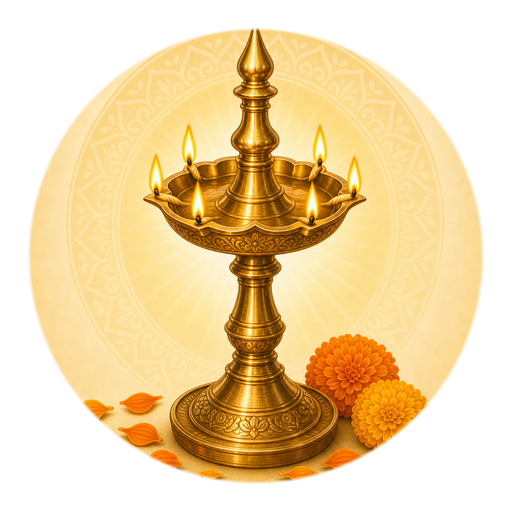 Samai lamp
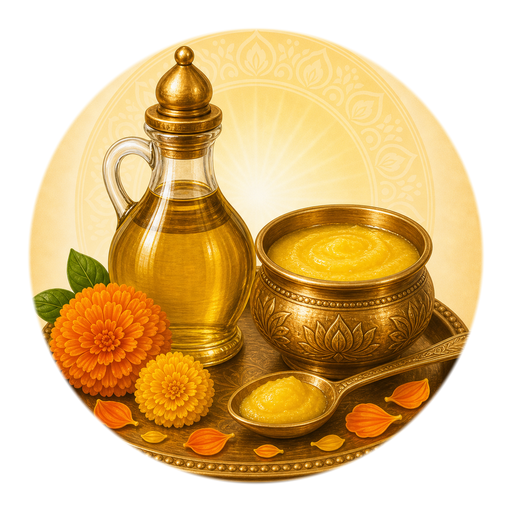 Oil-wick
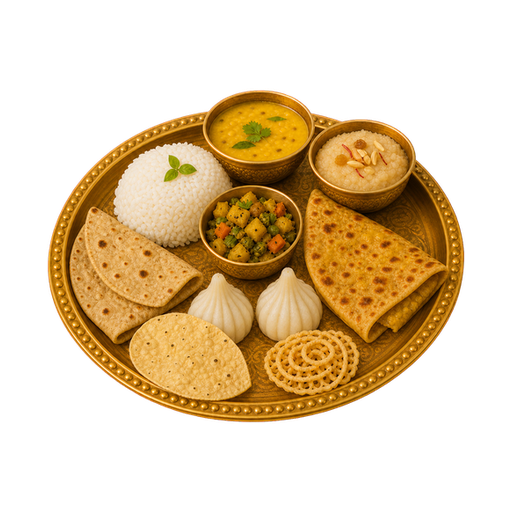 Naivedya
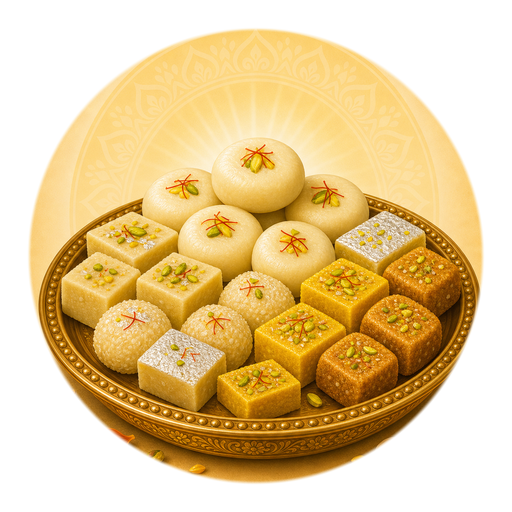 Sweets
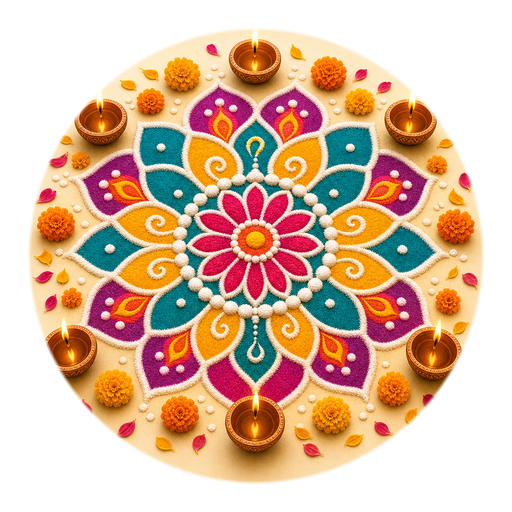 Rangoli
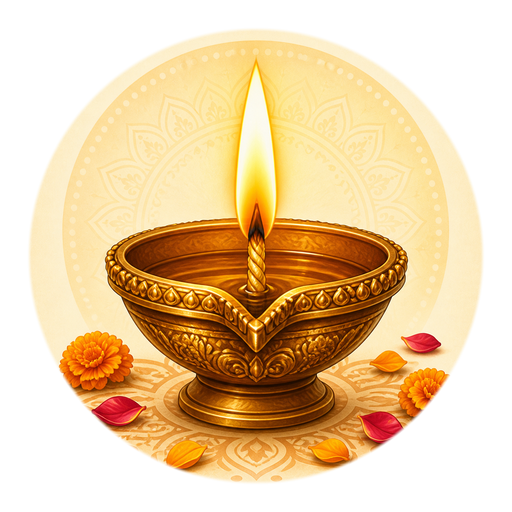 Lamp (Yamadeepdaan)
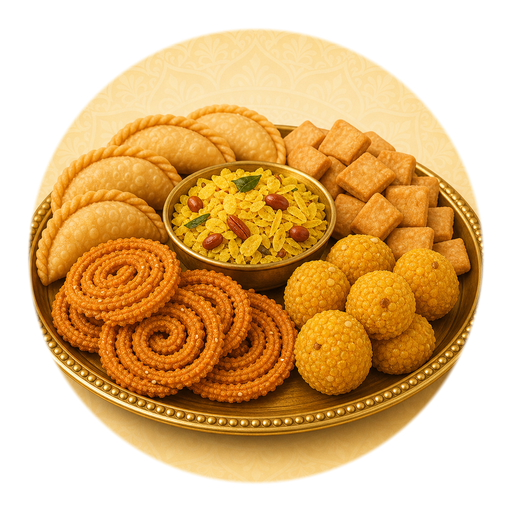 Diwali faraal (festive snacks)
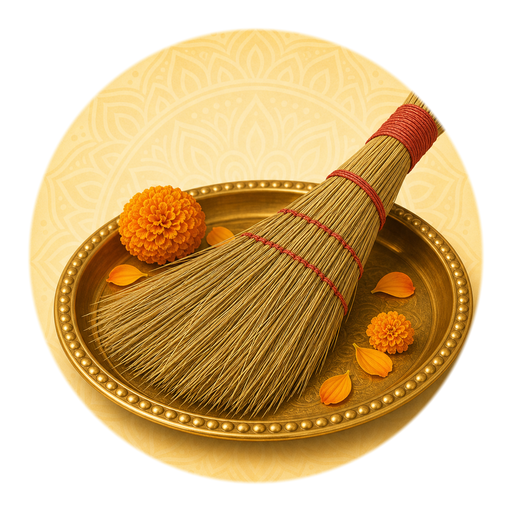 New broom (kerasuni)
Fasting & food
Dhanteras is mainly a day of puja and shopping — there's no specific rule of strict fasting observed everywhere. Broader Diwali-faral information is on the Diwali page.
Mantra & aarti
A Dhanvantari and Lakshmi stuti is sung at puja time — its sense is a praise of the deities for health and prosperity. The full text isn't given here.
Regional variations
- Yamadeepdaan — the practice of lighting a south-facing lamp on Dhanteras is prominent in Maharashtra.
- Buying tradition — gold and silver, brass-copper-steel utensils (brass is linked to Dhanvantari's pot of amrit), and a new broom (sweeping away poverty, inviting Lakshmi) are considered auspicious buys.
- The Diwali cluster's shared Maharashtrian customs (faral, akash-kandil lanterns and diyas, rangoli, children's forts) are covered on the Diwali page.
- In 2026, since 6 November's sunrise tithi is Dwadashi, that same day is also Vasubaras (Govatsa Dwadashi) — two observances fall on the same day.
Good to know
- Puja/Yamadeepdaan time — in the evening, during pradosh; the exact muhurat varies by city, see the day page.
- Buying — keep market crowds, hallmark certification, and your budget in mind when buying gold/silver/utensils — this is a matter of faith and tradition, not financial advice.
- Lamps/Yamadeepdaan — take care with open flames and decorative light strings.
- Rituals and the katha vary by tradition — they can differ by household and local custom.
FAQ
- When is Dhanteras in 2026?
- Friday, 6 November 2026 (Ashwin Krishna Trayodashi, during pradosh).
- What should be bought on Dhanteras, and why?
- Gold and silver (a symbol of Lakshmi's arrival), brass-copper utensils (a symbol of Dhanvantari's pot of amrit), and a new broom (sweeping away poverty) are considered auspicious.
- What is Yamadeepdaan? Which direction should the lamp face?
- In the evening, a lamp is lit facing south for Yama, with a prayer against untimely death — based on the legend of King Hima's son.
- What is the story behind Dhanteras?
- King Hima's son was foretold to die of a snakebite; his new bride kept Yama entranced with lamps, gold, and songs, saving his life — from this, Yamadeepdaan is said to have taken root.
- What is the connection between Dhanteras and Dhanvantari Jayanti?
- Dhanvantari, the deity of Ayurveda, is held to have emerged on this tithi during the Samudra Manthan — which is why Dhanteras is also linked to health worship.
- Which day of Diwali is Dhanteras?
- The first day; followed by Narak Chaturdashi, Lakshmi Pujan, Padwa, and Bhau Beej.