Bali Pratipada / Diwali Padwa
Bali Pratipada (Diwali Padwa) is a major Diwali day that falls on Kartik Shuddha Pratipada — the day after Lakshmi Pujan. It is known as half of the Sade-Teen Muhurat, the merchants' new year, and a day celebrating the bond between husband and wife.
This year's dates (2026)
This day is observed in memory of the Bali-Vamana legend. This year (2026) it falls on Tuesday, 10 November — between Lakshmi Pujan (8 November) and Bhau Beej (11 November). As part of Diwali, the Diwali page has the full picture of the festival cluster.
Significance
Bali Pratipada is regarded as the day the generous, well-governing asura-king Bali returns to earth; people pray for the same prosperity his kingdom is said to have had.
This day is traditionally considered half of the Sade-Teen Muhurat — the fully auspicious muhurats of the year are Gudi Padwa, Akshaya Tritiya, and Dussehra (three full ones), with Diwali Padwa as the "half." By tradition, no separate muhurat-checking is considered necessary on this day.
For merchants, this is the financial new year — the old year's accounts are closed, the new ledger (vahi/chopdi) is worshipped, and fresh bookkeeping begins. In Maharashtra this day is also celebrated as a husband-wife bond — the wife performs aukshan (a lamp-waving ritual) for her husband, wishing him a long life.
Note — this is not Maharashtra's cultural new year (that is Gudi Padwa, in Chaitra). The "new year" here refers to the merchants'/vahi-pujan new year; the start of the Vikram Samvat calendar is a co-occurring event on the same tithi.
The legend (katha)
Bali was a descendant of the devotee Prahlad — a king of the asura lineage, but exceptionally generous, truthful, and devoted to Vishnu; he had conquered all three worlds. To restore what the gods had lost, Vishnu took the Vamana (dwarf-Brahmin) avatar and, at Bali's sacrificial-donation ceremony, asked for three paces of land. Ignoring his guru Shukracharya's warning, Bali agreed to the gift. Vamana then took the form of Trivikram and covered the earth in one step and heaven-and-netherworld in the second; with no space left for the third step, Bali offered his own head. Pleased by this generosity, Vishnu granted Bali the kingdom of the netherworld and a boon that he would return to earth — and this is that day.
Some versions say Bali returns to rule on earth for one day each year, while some Marathi versions hold that his rule lasts for the fixed three days of Diwali. In one telling, Vishnu himself became the gatekeeper of Bali's kingdom — regarded as a symbol of his affection for his devotees.
Who observes it
The whole family observes this day as part of Diwali. The merchant community places special emphasis on vahi-pujan/rojmel worship and starting fresh accounts; husbands and wives mark it with aukshan and ovalani. This is a festive day — there is no specific vrat or fast.
Puja vidhi
An oil-and-ubtan bath (abhyang-snan) at dawn is a traditional practice. Merchants worship a new ledger/chopdi with turmeric-vermilion, akshata, and flowers, and begin new accounts. In the evening, a rangoli is drawn around a low wooden seat (paat), and the wife performs aukshan for her husband; the husband gives her ovalani (a gift).
In some rural areas, an image or rangoli of Bali is drawn and worshipped in his memory as "shenacha Bali" (a cow-dung image of Bali).
The exact auspicious clock-time for vahi-pujan varies by year and by city — check that year's panchang.
What you need
For vahi-pujan: a new ledger/chopdi/rojmel, turmeric-vermilion, akshata, flowers and garlands, incense-lamp, and a sweet offering. For aukshan: a plate for ovalani, a small lamp and oil-wicks, vermilion; a low wooden seat (paat) and rangoli to sit on.
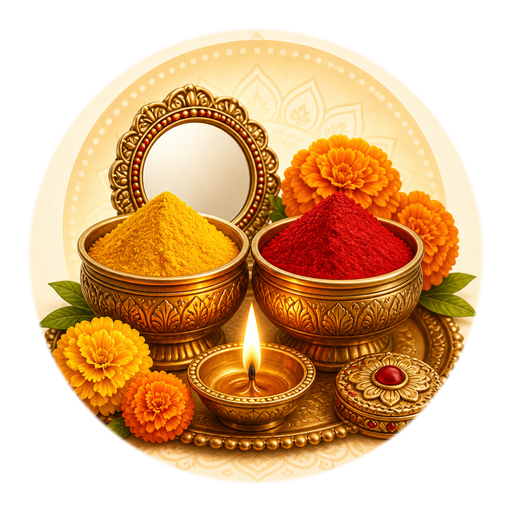 Turmeric-vermilion (vahi-pujan & aukshan)
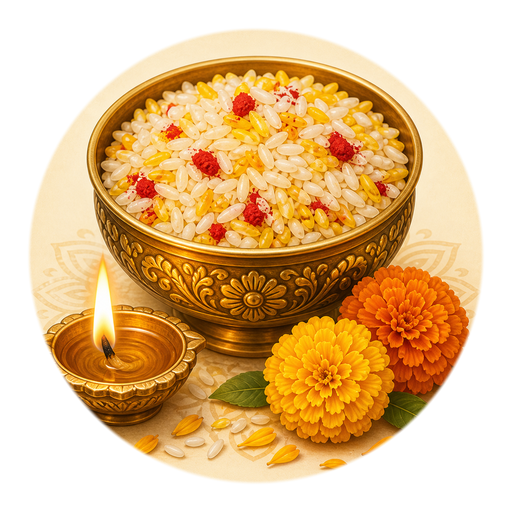 Akshata
 Flowers
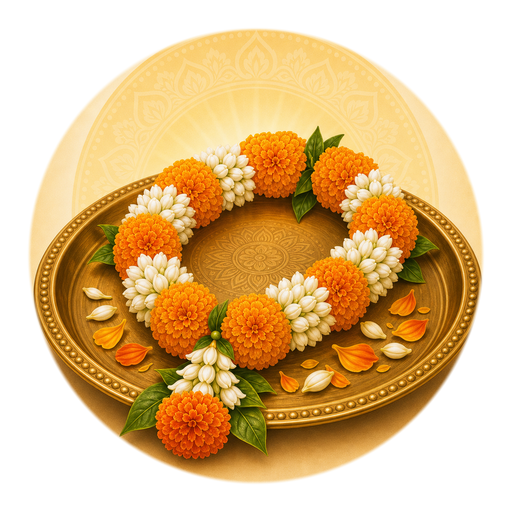 Garlands
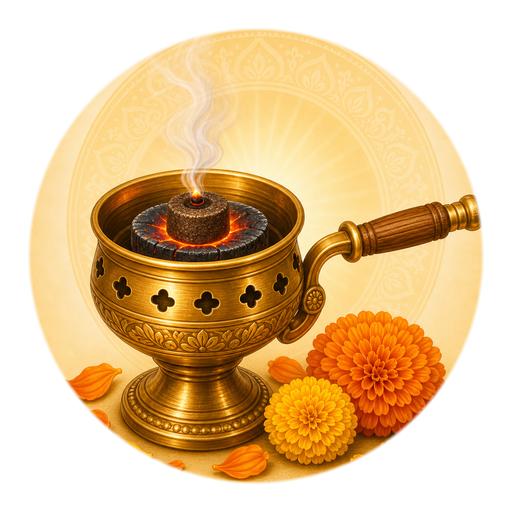 Incense
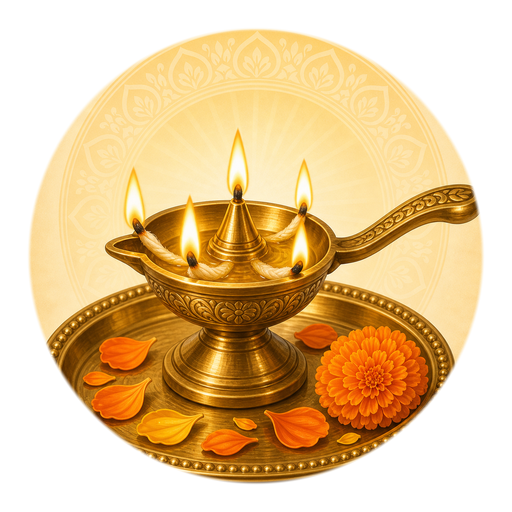 Small lamp
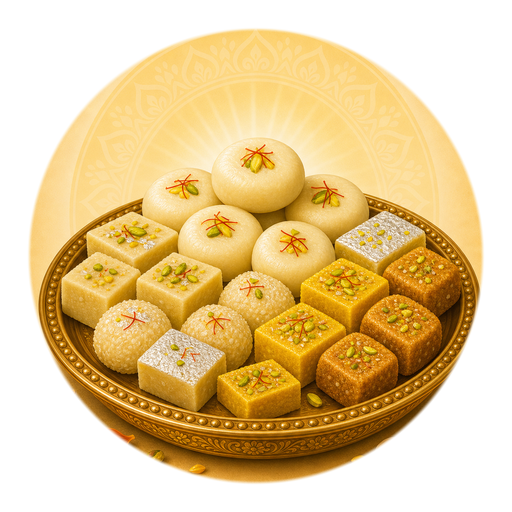 Sweet naivedya
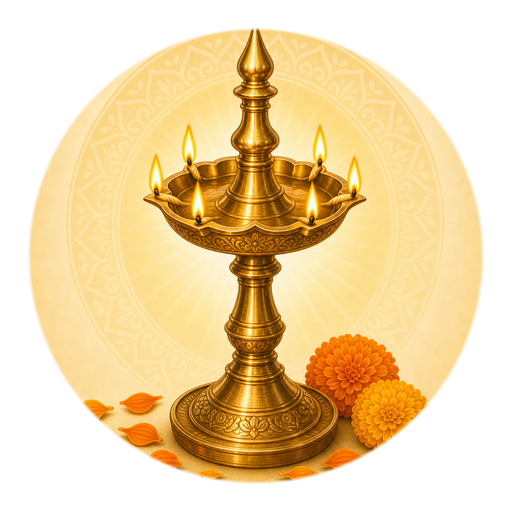 Samai (oil lamp)
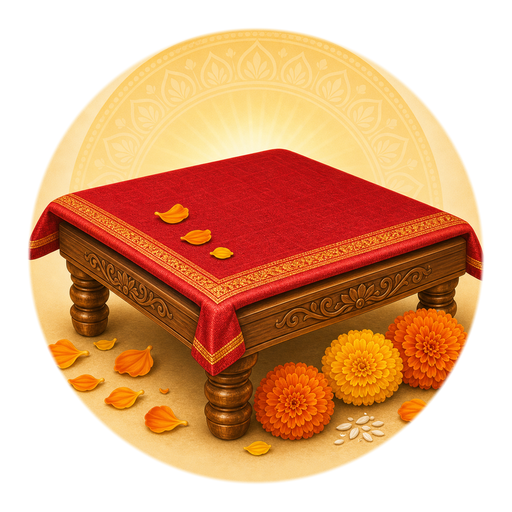 Low wooden seat (paat)
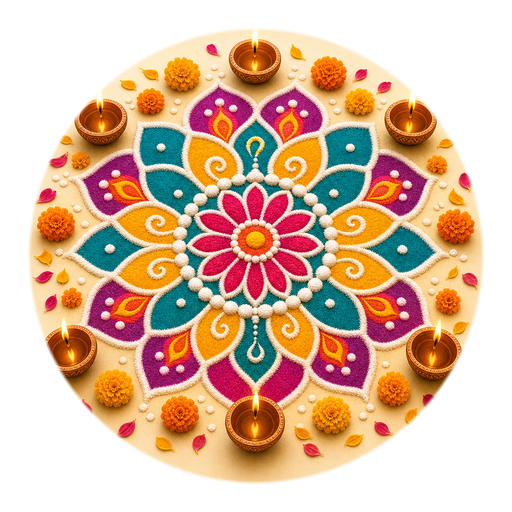 Rangoli
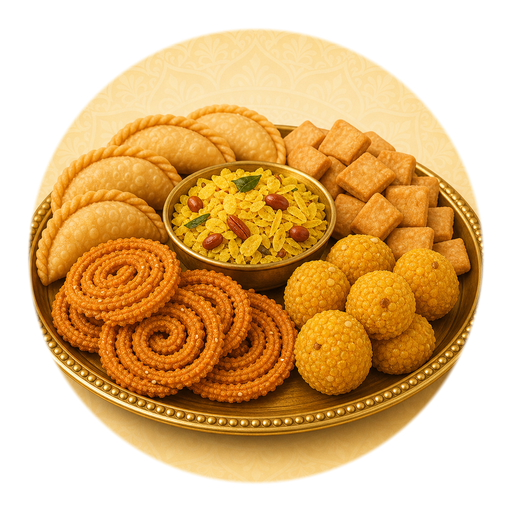 Diwali faraal (festive snacks)
Fasting
There is no fast on Bali Pratipada — it is a festive, feast day. The Maharashtrian spread typically includes puran-poli, potato curry, and Diwali snacks (chakli, karanji, laddoo, chivda).
Regional customs — Maharashtra's distinctive identity
Husband-wife aukshan Padwa — in the evening, the wife performs aukshan for her husband, and the husband gives her ovalani (a gift); this is Maharashtra's distinctive identity for this day.
Merchants' vahi-pujan — merchants worship a new ledger and start fresh accounts; in Maharashtra, Diwali Padwa is regarded as the merchants' new year.
"Ida Pida talo, Baliche rajya yevo" — a folk blessing recited on this day, meaning roughly "may troubles and illness be averted, and may prosperity like Bali's kingdom arrive." This line is not an aarti or a stotra — it is only a traditional blessing phrase. Exactly who recites this varies by region — in some places the wife says it while performing aukshan for her husband, while in others it is linked to Bhau Beej instead.
On this same tithi, North India and Gujarat observe Govardhan Puja/Annakut (marking Krishna's Govardhan miracle), and Gujarat marks "Bestu Varas" (new year). While it's the same tithi, this is a separate regional observance — Govardhan Puja should not be presented as a Maharashtrian practice.
Gudi Padwa vs. Diwali Padwa — the difference
These are two different "Padwas" — don't confuse them.
| Gudi Padwa | Diwali Padwa / Bali Pratipada | |
|---|---|---|
| Tithi | Chaitra Shukla Pratipada (March–April) | Kartik Shukla Pratipada (Oct–Nov) |
| Core meaning | Marathi cultural new year; raising the Gudi | Remembering Bali-Vamana; merchants' new year; husband-wife aukshan |
| Sade-Teen Muhurat | A full muhurat | The "half" muhurat |
| Dedicated page | Gudi Padwa | This page |
Good to know
- The auspicious time for vahi-pujan/shopping varies by city — check that year's panchang.
- Since this falls within the Sade-Teen Muhurat, tradition holds that no separate muhurat-checking is necessary for new purchases or starting a business — but for major financial decisions, use your own judgement, or a professional advisor's, as needed.
- The exact rituals and story details vary by tradition — follow your family's/local custom.
FAQ
- When is Bali Pratipada / Diwali Padwa in 2026?
- Tuesday, 10 November 2026 (Kartik Shuddha Pratipada) — between Lakshmi Pujan and Bhau Beej.
- What is Bali Pratipada? What is the Bali-Vamana katha?
- Vishnu, as Vamana, asked the generous king Bali for three paces of land and covered the three worlds; Bali offered his own head. He was granted the netherworld kingdom and a boon to return to earth — this is that day.
- Why is Diwali Padwa half of the Sade-Teen Muhurat? Why is it called "half"?
- Gudi Padwa, Akshaya Tritiya, and Dussehra are three full muhurats, and Diwali Padwa is the "half" — together making Sade-Teen (three-and-a-half); by tradition, no separate muhurat-checking is considered necessary on this day.
- What is the difference between Diwali Padwa and Gudi Padwa?
- Gudi Padwa falls on Chaitra Shukla Pratipada (the Marathi new year, raising the Gudi); Diwali Padwa falls on Kartik Shukla Pratipada (Bali-Vamana, the merchants' new year) — two different observances.
- Why do merchants perform vahi-pujan on Bali Pratipada?
- To close the old year's accounts, worship a new ledger, and begin fresh bookkeeping — marking the merchants' new year.
- Why is "Ida Pida talo, Baliche rajya yevo" recited?
- It is a folk blessing wishing that troubles and illness be averted and that prosperity like Bali's kingdom arrive. Who exactly recites it varies by region.
- What do husband and wife do on Diwali Padwa?
- The wife performs aukshan for her husband, wishing him a long life; the husband gives her ovalani (a gift).