Khande Navami (Ayudha/Shastra Puja)
Khande Navami (Khande Maha Navami) is Navratri's ninth day — Ashwin Shukla Navami — the day weapons, tools, machines, and vehicles are worshipped; also called "Shastra Puja" or "Ayudha Puja." In 2026, Khande Navami falls on Tuesday, 20 October — the same day Dussehra/Vijayadashami begins that afternoon.
This year's dates (2026)
Significance
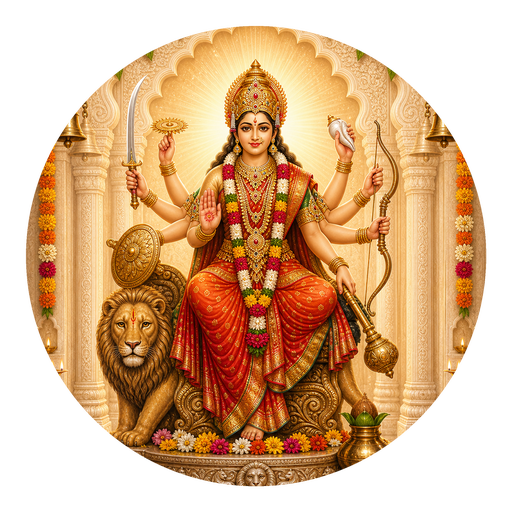
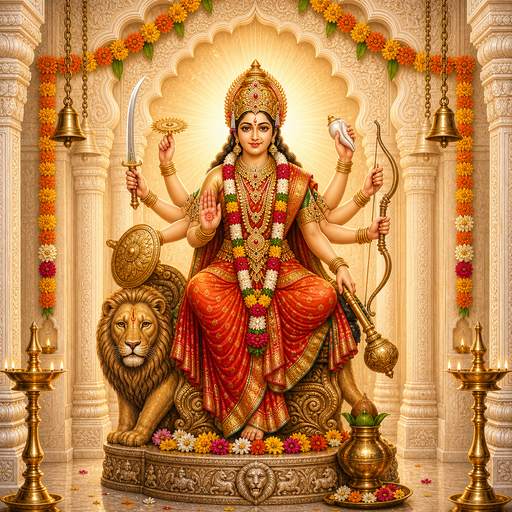
Navratri's ninth day concludes on this day — Siddhidatri, the ninth of the Goddess's nine forms (the giver of siddhi and fulfilment), is worshipped on this day; Maha Navami marks the completion of Navratri's penance. The full detail on the nine forms of Durga is on the Navratri page.
Weapons, tools, and machines are instruments of human progress and livelihood — expressing gratitude toward them and regarding them as worthy of worship is the core meaning of this day. In its modern extension, this includes computers, mobile phones, and vehicles too.
By tradition, after the four months of monsoon ended, warriors would set out on campaigns; for this, weapons were readied and worshipped on the ninth day (Khande Navami), with the actual campaign/border-crossing beginning on the tenth day (Vijayadashami) — one source records this two-stage historical sequence. In 2026, due to a tithi contraction, both stages fall on the same calendar day (see the dates section below).
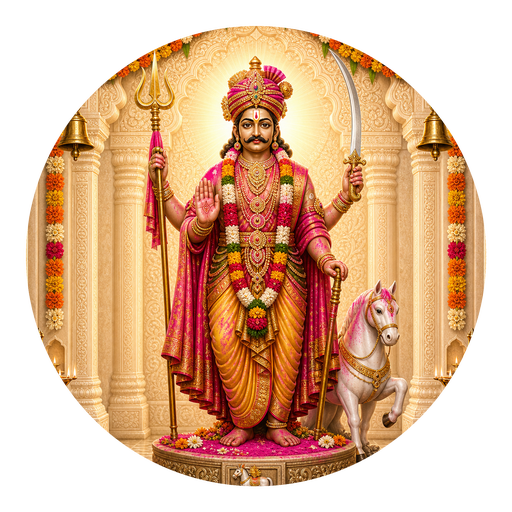
Khadga Puja (sword worship) holds special importance among the Maratha and Rajput communities; the Nirnayasindhu text is said to record specific mantras for weapon worship.
The legend
The main Dussehra legends — Mahishasurmardini, Ram-Ravana, and Kautsa-Raghuraja-Kubera — are told in detail on the Dussehra page; they are not repeated here.
One point specific to Khande Navami is the source disagreement over exactly which day the Pandavas' retrieval of weapons from the Shami tree took place. Some sources (Maharashtra-focused articles) hold that Arjuna or the Pandavas retrieved their weapons from the Shami tree on Navami at the end of their exile, and that the weapon-worship custom began that same day. The Marathi Vishwakosh and Marathi Wikipedia, however, place this same weapon-retrieval story on Dashami (Vijayadashami) — neither version should be treated as final; see the Dussehra page for the full story.
There is also a passing mention that after slaying Mahishasura, the Goddess's own weapons underwent a purification — though the details here are unclear.
Who observes it
Historically, communities with a warrior tradition (Maratha, Rajput, and others) performed ritual weapon worship.
Today, more broadly, farmers (farming tools), artisans and craftspeople (traditional tools), professionals and drivers (machines, vehicles), and students (books, instruments) worship their own instruments. Modern factories and offices also clean their machines and equipment, decorating them with rangoli and marigold flowers for a collective puja.
Puja vidhi
Weapons, tools, machines, and vehicles that gathered rust or dust during the monsoon are cleaned. They are anointed with turmeric-kumkum, sandal paste, and flowers (especially marigold), and a tilak is applied; they are arranged in a row against a wall. Weapons and tools are worshipped alongside images of Saraswati (knowledge), Lakshmi (prosperity), and Parvati (strength); in some places, a Navagraha puja, Navarna mantra havan, and Saptashati recitation are also performed. Naivedya is offered after the puja. These weapons, tools, and vehicles are not used that day — it is regarded as a day of rest for them.
What you need
Turmeric-kumkum, unbroken rice, sandal paste, flowers (especially marigold), incense-lamps, and naivedya. The weapons, tools, machines, and vehicles themselves are the main subject of worship; images or symbols of Saraswati-Lakshmi-Parvati. The list varies by local tradition.
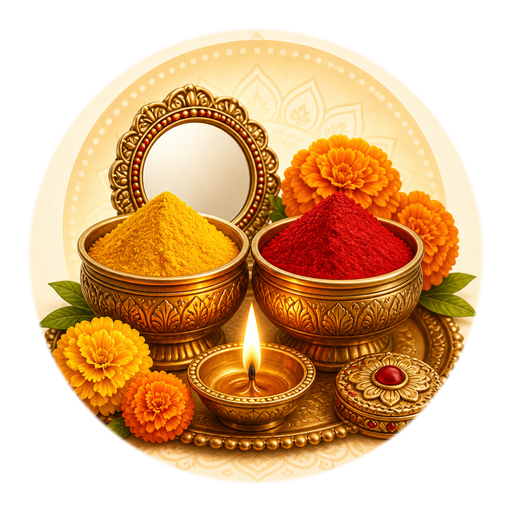 Turmeric-kumkum
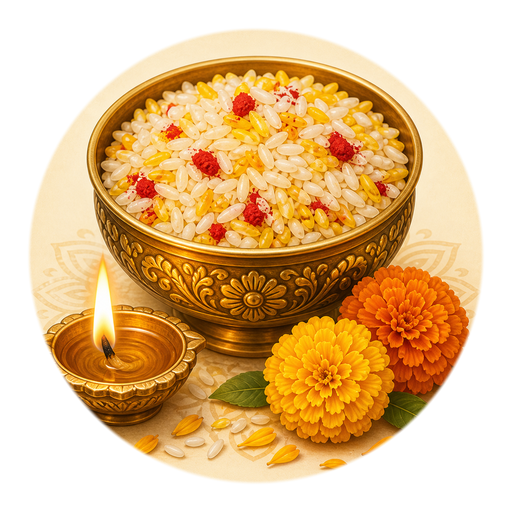 Unbroken rice (akshata)
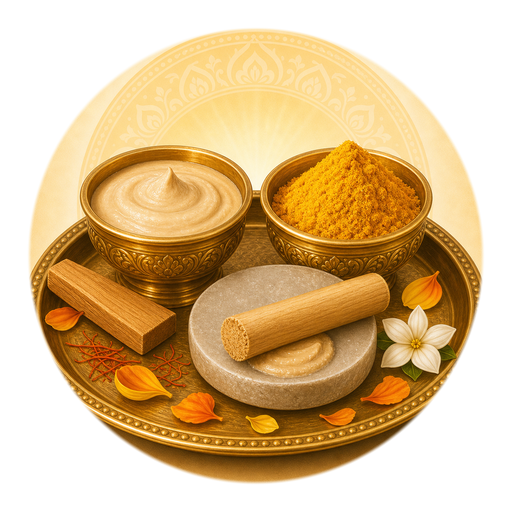 Sandal paste
 Flowers (marigold)
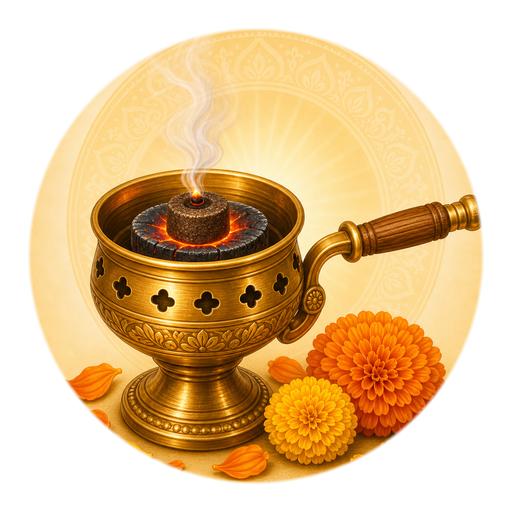 Incense
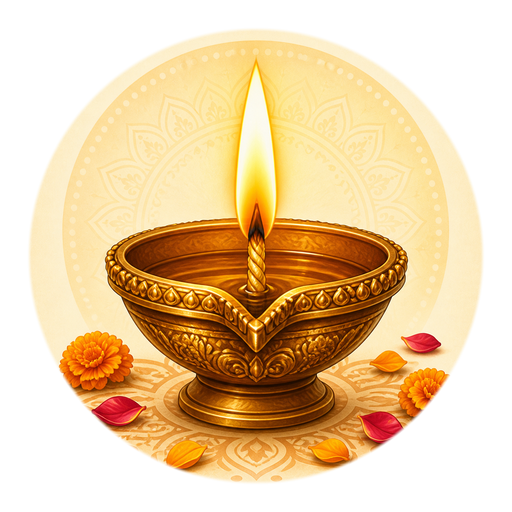 Lamp
Lamp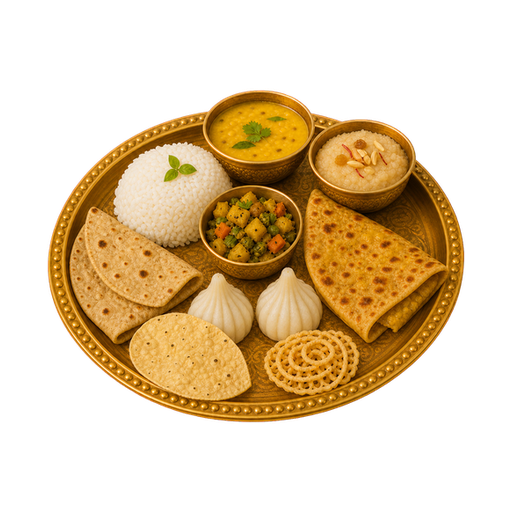 Naivedya
Fasting
Khande Navami is mainly a day of worship and celebration, without any strict fasting rules of its own. For those observing the Navratri fast, this is part of the ninth day (Navratri's general fasting rules are on the Navratri page). Dietary customs vary by household and tradition.
Mantra & stotra
The Nirnayasindhu text is said to record specific mantras for weapon worship; a Navarna mantra havan and Saptashati recitation are also mentioned. No distinct "Khande Navami aarti" was found independently.
Regional customs
In Kolhapur, a palanquin procession takes place at the Kshetra Jyotiba temple on Khande Navami — lamp-waving, weapon worship, and the ghat-removal ritual are all celebrated together, with a temple circumambulation accompanied by camels, horses, and musicians. The exact annual timing and route can vary year to year, so confirm them with the temple committee before visiting.
In tribal regions, the Navratri-season fair is recorded as concluding on Khande Navami. In modern urban and industrial areas, factories, offices, and transport businesses clean their machines and vehicles for a collective puja — a modern urban parallel to the rural farmer-artisan custom.
The same festival is known in Karnataka as "Ayudha Puje," in Tamil Nadu as "Ayudha Pujai," in Odisha as "Astra Puja," and in North India/Rajasthan as "Shastra Puja" — Maharashtra's "Khande Navami" is a regional name, not a separate festival.
Good to know
- Since Khande Navami and Dussehra fall on the same day in 2026 (20 October), readers might assume they're separate dates — in fact, both coincide.
- The word "Khande" is believed to relate to "Khanda" (a sword-like weapon), but this comes from a single source and isn't a settled linguistic claim.
- Confirm the Jyotiba temple palanquin procession's exact timing with the temple committee before visiting — the annual schedule and route can change.
FAQ
- What is Khande Navami?
- Navratri's ninth day (Ashwin Shukla Navami) — the day weapons, tools, machines, and vehicles are worshipped; also called "Shastra Puja"/"Ayudha Puja."
- When is Khande Navami in 2026?
- Tuesday, 20 October 2026 (Ashwin Shukla Navami) — Dussehra also begins that same afternoon.
- What's the difference between Khande Navami and Dussehra?
- Khande Navami is the ninth day, for weapon/tool worship; Dussehra/Vijayadashami is the tenth day, for victory, border-crossing, and the apta-leaf exchange. In 2026, both fall on the same date.
- What does the word 'Khande' mean?
- Believed to relate to "Khanda" (a sword-like weapon) — from a single source, not settled.
- Are Ayudha Puja and Khande Navami the same?
- Yes, the same festival is called "Khande Navami"/"Shastra Puja" in Maharashtra, "Ayudha Puje/Pujai" in Karnataka-Tamil Nadu, and "Astra Puja" in Odisha.
- Who observes Khande Navami?
- Communities with a traditional warrior heritage perform weapon worship; today farmers, artisans, professionals, and students worship their own tools, machines, vehicles, and books.
- What worship is performed on Khande Navami?
- Weapons, tools, machines, and vehicles are cleaned and worshipped alongside Saraswati-Lakshmi-Parvati, with turmeric-kumkum, flowers, and tilak; they are not used that day.
- What is Maha Navami?
- The name of Navratri's ninth day; Siddhidatri, the ninth form of the Goddess, is worshipped this day, completing Navratri's penance.