Kojagiri Purnima (Sharad Purnima)
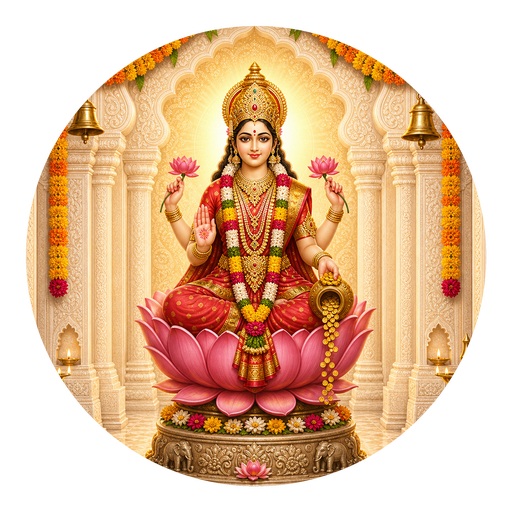
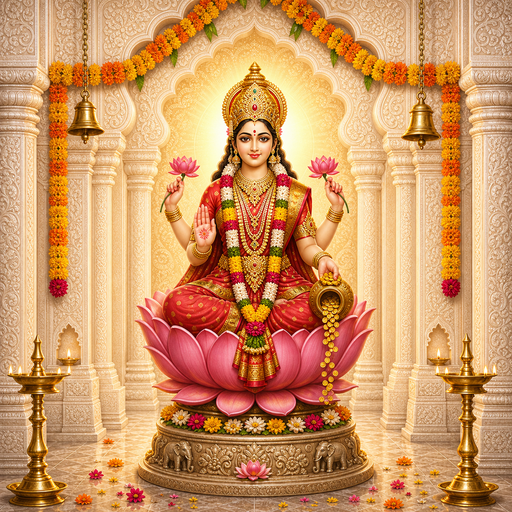
Kojagiri Purnima is the night of Ashwin Shukla Purnima — devoted mainly to goddess Lakshmi (alongside Indra on Airavata and King Bali) and the full moon. The name "Kojagiri" comes from the Sanskrit "Ko jaagarti?" ("Who is awake?") — by tradition, Lakshmi wanders the earth this night asking exactly that, granting wealth and prosperity to those who stay awake in devotion. An all-night vigil, masala milk simmered under moonlight, and Ashwin's clear autumn moonlight are this night's signature features. This year (2026): Sunday, 25 October.
This year's dates (2026)
Significance
This is the Purnima of the autumn season, right at the end of the monsoon — the sky is clear and the moonlight bright, making this a moon-centred festival. The moon is held to be full with all sixteen kalas (phases) on this night, and its rays are believed to carry amrit (nectar) down to earth — which is why milk or kheer is left out under the open moonlight before being taken as prasad.
This night is linked to the period when Lakshmi is said to have emerged from the Samudra Manthan (the churning of the ocean); a wish for wealth and prosperity lies at its heart — coming roughly two weeks before Diwali, it feels like the start of the "Lakshmi season." A broader Indian belief also holds that Krishna performed the raaslila with the gopis in Vrindavan on this same Sharad Purnima night — though Maharashtra's Kojagiri emphasis remains centred on Lakshmi and the moon.
Rice, nachni, and vari — the new season's grain — arrive around this time, giving rise to Navanna Purnima (nav + anna, "new grain"), when the first offering of the new harvest is made; it's observed in Konkan and rural areas alongside Kojagiri.
The legend (katha)
Two stories are mainly linked to Kojagiri; both share a common thread — that keeping an all-night vigil in devoted worship of Lakshmi on Ashwin Purnima removes poverty and brings wealth and prosperity, since Lakshmi wanders about asking "who is awake."
Version A — the Valit Brahmin and the Naga maidens. A learned but poor Brahmin from the land of Magadh, stung by his wife's taunts, resolves to seek Lakshmi's favour and goes into the forest. There, Naga maidens of serpent lineage are observing a Lakshmi vrat on Ashwin Purnima; they give him prasad and play dice (dyuta) with him, and by Lakshmi's grace he receives abundant wealth and gold. The custom of playing games through the Kojagiri night is traced to this story.
Version B — the generous king, the queen, and the iron idol of Alakshmi. A generous king once buys an iron idol of Alakshmi (the goddess of poverty); Lakshmi, unable to bear living alongside Alakshmi, weeps. The queen performs Lakshmi puja on Ashwin Purnima and keeps vigil all night; by the radiance of her devotion, the iron idol melts, and prosperity comes to the kingdom.
According to English Wikipedia, this night is described in the Brahma, Skanda, Brahma Vaivarta, and Linga Puranas.
Who observes it
Families and friends gather at night for the vigil, songs, conversation, and masala milk — in Maharashtra, this is a social, family-gathering festival. Devotees of Lakshmi keep a threefold vrat of fasting, worship, and vigil. Farming and rural families also observe this day for its Navanna connection. In Bengal-Assam it's Kojagari Lakshmi puja; in Odisha, Kumar Purnima (where unmarried girls keep a vrat for a suitable husband); in Gujarat, garba is celebrated.
Puja vidhi (how to perform)
The order and details vary by household and local tradition — the following is a researched general form.
- A threefold vrat — fasting, worship, and an all-night vigil — with equal weight given to each.
- In the first watch of the night, images of Lakshmi and Indra on Airavata (in some places, King Bali too) are worshipped with flowers offered.
- Lamps or sky-lanterns are offered at night; some traditions light as many as 108 lamps or candles.
- Milk is simmered with saffron, almonds, pistachios, cardamom, nutmeg, and sugar; it's left under the full moon's rays at midnight before being taken as naivedya and prasad.
Kojagiri does not have a separate, formal concluding (udyapan) rite in common practice.
What you need
Images of Lakshmi (and Indra-Bali), lamps or sky-lanterns with oil-wicks, flowers, garlands, rangoli materials, milk with saffron-almonds-pistachios-cardamom-nutmeg-sugar (masala milk), a silver, glass, or clay vessel (for the moonlight), naivedya (kheer or new-grain dishes), and incense.
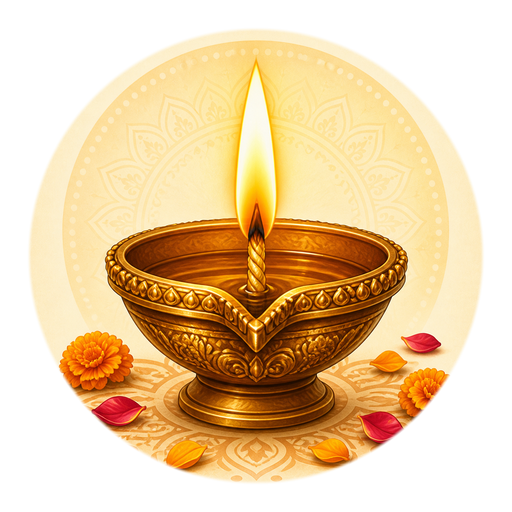 Lamps
Lamps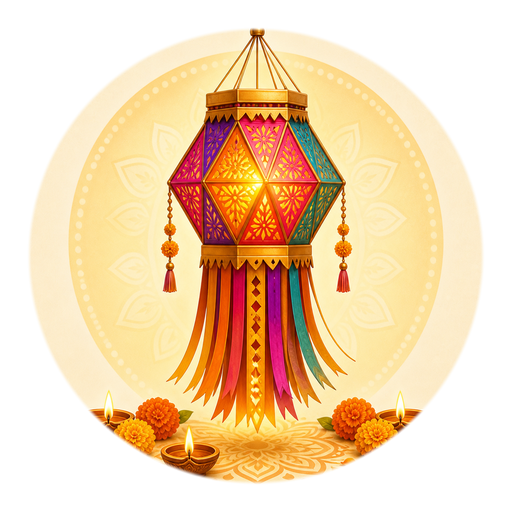 Sky-lanterns
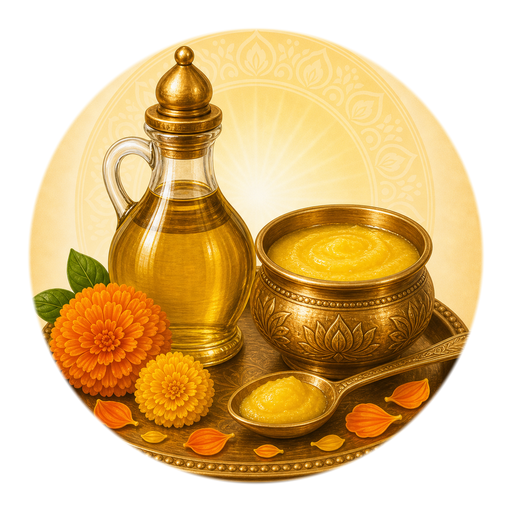 Oil
Oil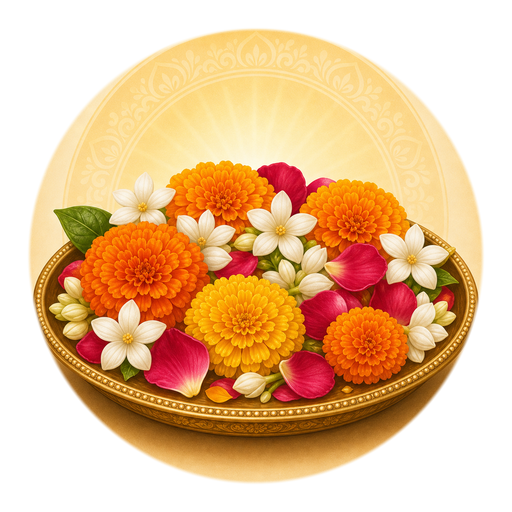 Flowers
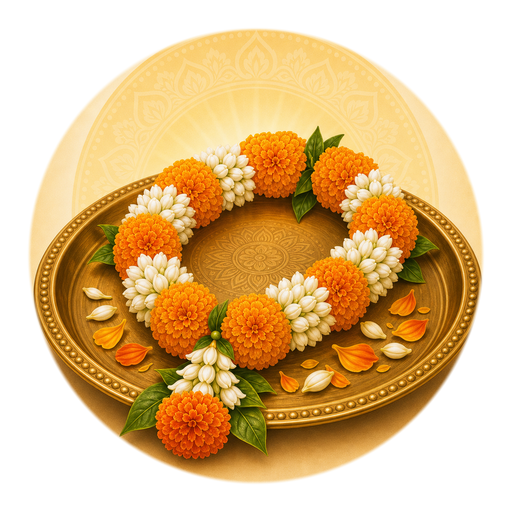 Garlands
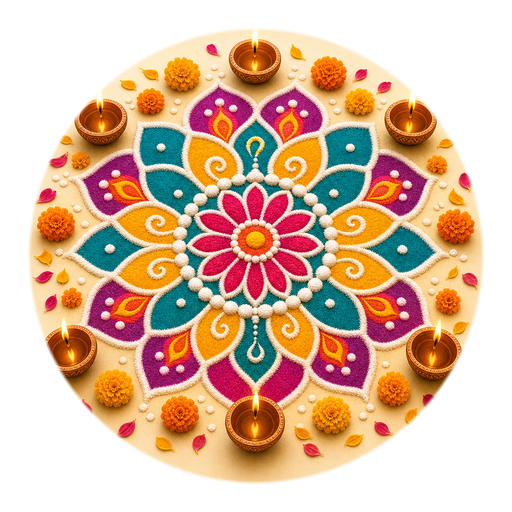 Rangoli
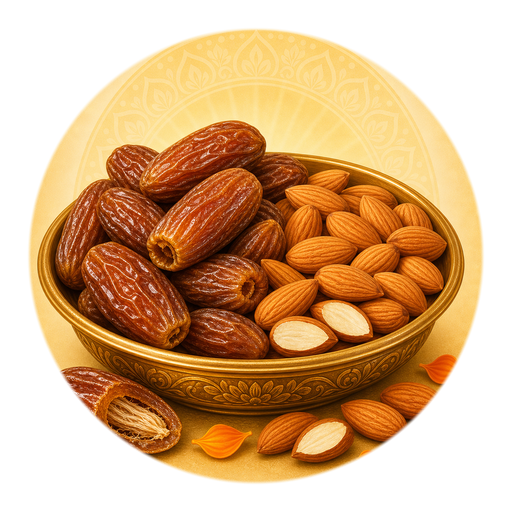 Almonds-pistachios (dry fruit)
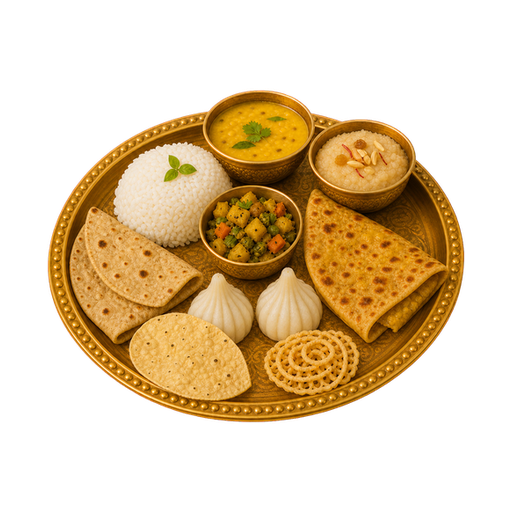 Naivedya (masala milk/kheer)
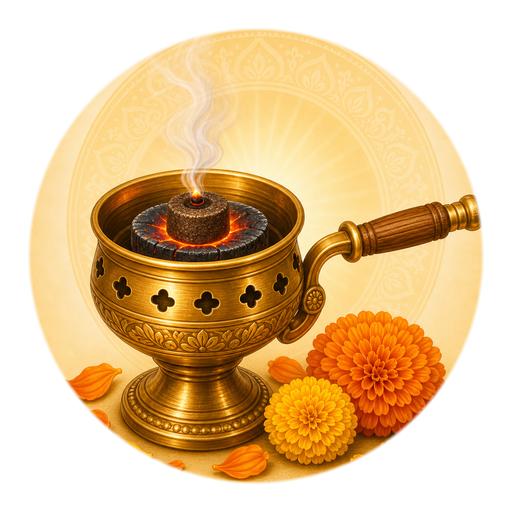 Dhoop
Dhoop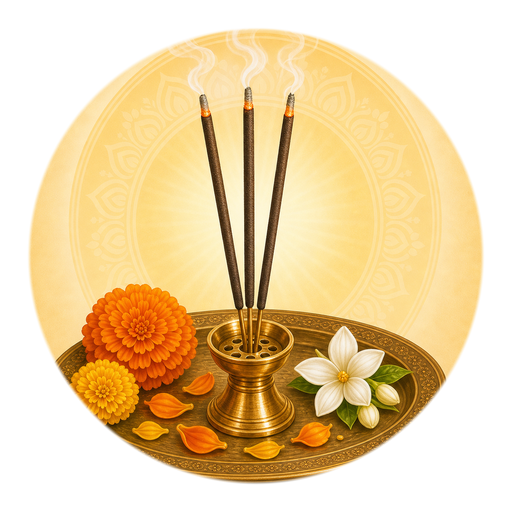 Incense
Fasting & food
A daytime fast followed by masala milk or kheer as prasad after the night's vigil is the general practice; its strictness varies by household and local tradition. New-grain dishes (rice, kheer) are also made for the Navanna connection.
Mantra & aarti
An aarti and Lakshmi mantra/stotra are recited on this night, invoking Lakshmi's presence and her blessing. The familiar opening line of the Mahalakshmi aarti: "Jai Devi Jai Devi Jai Mahalakshmi" ("Victory to you, O Mahalakshmi"). Only the meaning and opening line are given here, not the full aarti text.
Regional variations
- Maharashtra: known as "Kojagiri"; masala milk and an all-night gathering of friends and family are its signature features. Lakshmi-Indra puja, sky-lantern offerings, kuladharma, and aagrayan (the first offering of the new grain) are its local touchstones.
- Aukshan of the eldest child: some families perform aukshan (a small lamp-waving blessing) for the eldest son or daughter around the time of Kojagiri; it isn't necessarily on the Kojagiri night itself — the timing can vary by family.
- Konkan and rural areas: Navanna — stalks of paddy and mango leaves at the doorway, and naivedya of the new grain.
- Other states: Bengal — Kojagari Lakshmi puja; Odisha — Kumar Purnima; Gujarat — garba; North-Central India — kheer under moonlight.
- Tuljapur and Kolhapur: the Bhavani Devi festival at Tuljapur and the Shri Mahalakshmi mahaprasad at Kolhapur are notable local celebrations linked to the goddess; exact timings and claims should be checked with the respective temple trusts.
The Purnima tithi runs from 11:56 AM on 25 October to 9:41 AM on 26 October. Since 26 October has Purnima at sunrise, Navanna Purnima (and Valmiki Jayanti) fall on that day. Kojagiri, however, is a vigil-centred night festival, so it's observed on the night when Purnima is actually running — that is, the night of 25 October.
Future years: the tithi (Ashwin Shukla Purnima) stays the same; the Gregorian date is set by that year's panchang.
Good to know
- Health and faith: "moonlight carries amrit" or "moonlit milk/kheer helps with asthma-type ailments" is a traditional belief, not a proven medical treatment; anyone unwell should consult a doctor.
- The vigil: take care of small children and elders during the all-night vigil; be mindful when sitting out in the cold.
- Muhurat/moonrise time varies by city — see the day page for that.
- Temple festivities (Tuljapur/Kolhapur): check exact timings and darshan with the temple trust.
FAQ
- When is Kojagiri Purnima in 2026?
- Sunday, 25 October 2026 (the night of Ashwin Shukla Purnima).
- Why is it called "Kojagiri"? What does "ko jaagarti" mean?
- The Sanskrit "Ko jaagarti?" means "Who is awake?" — by tradition, Lakshmi wanders about asking this on this night, granting prosperity to those who stay awake.
- Why is milk simmered / left under moonlight?
- By tradition, the moon is full with sixteen kalas and its rays carry amrit; simmered masala milk or kheer is left under the moonlight at midnight before being taken as prasad.
- Are Kojagiri and Sharad Purnima the same?
- Yes — the same Ashwin Shukla Purnima is called "Kojagiri" in Maharashtra and "Sharad Purnima" (also "Kaumudi Purnima" in some places) more broadly across India. Navanna Purnima and Kumar Purnima are related regional observances, but are treated as distinct from Kojagiri (see below).
- Who is worshipped?
- Mainly Lakshmi; alongside Indra on Airavata, King Bali, and the full moon.
- What is Navanna Purnima — is it the same as Kojagiri?
- Navanna (nav + anna, "new grain") is the first offering of the new season's harvest — a harvest observance linked to this same Ashwin Purnima. In many places it's observed alongside Kojagiri, while in some it falls on 26 October instead, since Purnima runs at sunrise that day — related, but a separate observance.