Sarvapitri Amavasya
Sarvapitri Amavasya is the day for a collective shraddha of all ancestors of one's lineage — especially for those whose death-tithi is unknown, or whose tithi-shraddha was missed this year. This tithi is Bhadrapad Krishna Amavasya — the last (concluding) day of Pitru Paksha. In 2026, it falls on Saturday, 10 October. This day is also called Pitru Moksha Amavasya.

This year's dates (2026)
Significance
Throughout Pitru Paksha, shraddha is performed daily by tithi-matching — this principle is covered in full on the Pitru Paksha page. But Sarvapitri Amavasya doesn't require a specific tithi at all — a collective remembrance of all known and unknown ancestors, and of any missed shraddhas, becomes possible on this single day. This is the core of this day.
Since not knowing the exact death-tithi is a common situation for many families, this day is, in practice, treated as the most widely observed day of Pitru Paksha.
Ancestors' souls are believed to visit their descendants during this fortnight; if shraddha isn't performed, they're said to return disappointed — Sarvapitri Amavasya, being the last chance, is considered especially important. The same underlying sentiment — repaying a debt to past generations, expressing gratitude — applies here too.
By some traditions, performing shraddha on this day is believed to ease the effects of pitru-dosha (delayed marriage, financial difficulties); this isn't offered here as a specific remedy or prescription.
Mythological backdrop
The full Karna legend of Pitru Paksha is already covered in detail on the Pitru Paksha page — it isn't repeated here. Only this brief backdrop: the charitable Karna received gold and jewels after death in return for his charity, but no food, because he had never fed his ancestors (shraddha) — so he was sent back to earth for a time to perform shraddha and food-donation. This period later came to be called Pitru Paksha/Mahalaya, and its last day is this very Sarvapitri Amavasya — where, by belief, all such debts are settled.
Who observes it
Shraddha is generally performed by a male household member, especially the eldest son, for his ancestors — following the general Pitru Paksha rule. It especially applies to: (a) those who don't know their ancestors' exact death-tithi; (b) those whose tithi-shraddha was missed this Pitru Paksha for any reason; (c) those who wish to remember all ancestors of their lineage together. It's observed pan-India, including Maharashtra; details vary by family tradition.
Puja vidhi / shraddha vidhi
- Bath and sankalp: after a morning bath, a sankalp is made in the name of all ancestors.
- Tarpan: sesame and water are offered as tarpan to all known and unknown ancestors.
- Pindadan: balls of cooked rice/grain are offered.
- Panchbali: food portions from the shraddha are given to a cow, a dog, a crow, a deity, and an ant; some household practices keep it to just a cow and crow at minimum. The crow accepting the food is widely believed to signify the ancestors' acceptance.
- Brahmin-bhojan/food donation: a simple, sattvic vegetarian meal is donated to Brahmins or the needy in the ancestors' name.
- Timing: this is generally performed in the afternoon; the exact muhurat is place-dependent.
The components/sequence vary slightly by source, and by tradition.
What you need
Black sesame, darbha/kush grass, rice/grain flour, ghee, water, a banana leaf (in simple household rituals), food portions for the panchbali, naivedya, and dakshina. Items vary by family/priest tradition.
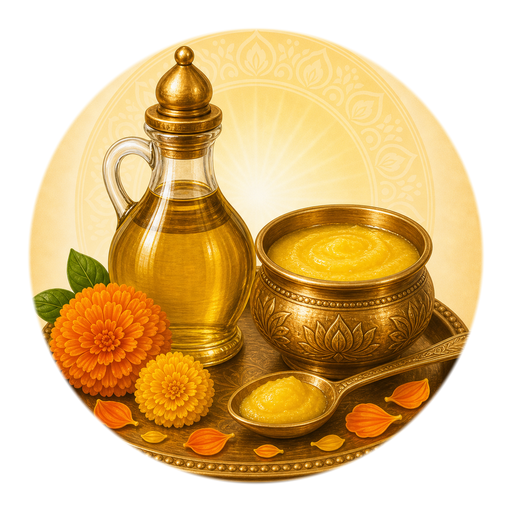 Ghee
Ghee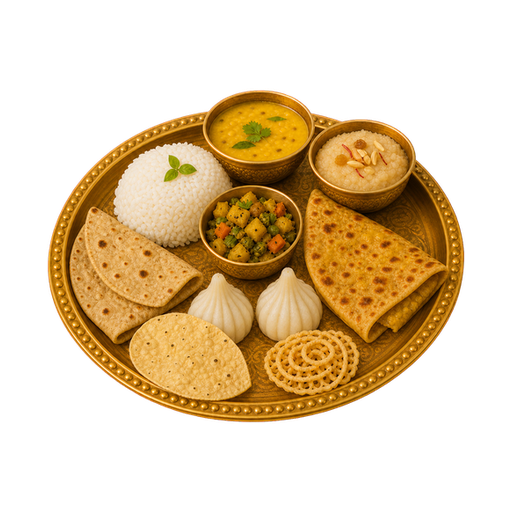 Naivedya
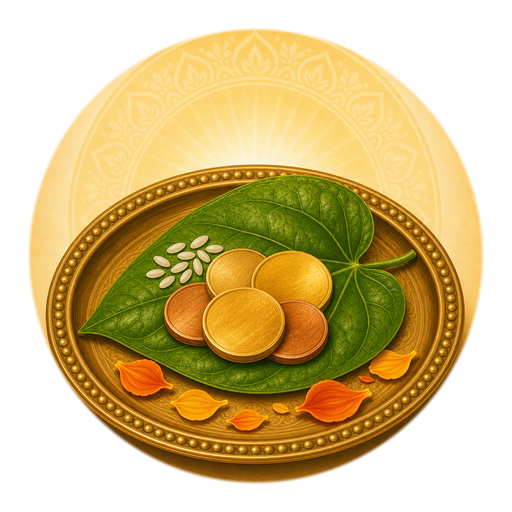 Dakshina
Fasting
A simple, sattvic vegetarian meal; onion, garlic, meat, and alcohol are avoided — the general Pitru Paksha rule also applies on Sarvapitri Amavasya. This can vary by household/local tradition.
Mantra & tarpan-mantra
Traditional tarpan mantras and gotra recitations are chanted during tarpan.
Regional customs
Maharashtra: Nashik (on the Godavari's bank, at Ramkund) is a well-known shraddha-tarpan tirtha — the detailed reference for this lives on the Pitru Paksha page, and isn't repeated here.
For pitru-dosha remedies, Narayan Nagbali/Tripindi Shraddha at Trimbakeshwar are separate, year-round rituals — distinct from the routine/Sarvapitri shraddha of Pitru Paksha. See the Trimbakeshwar page for more.
Naming: in the Maharashtra/amanta tradition, this tithi is Bhadrapad Krishna Amavasya; in the North Indian/purnimanta tradition, it's called "Ashwin Krishna Amavasya" — the same day, just a different name.
This practice is believed to date back to the Puranic era, though no specific scripture is definitively cited for it.
Good to know
- To do: remembrance of all ancestors, tarpan-shraddha (if possible), panchbali, food donation to the needy/Brahmins — especially if any tithi-shraddha was missed this Pitru Paksha, today is the last chance.
- To avoid (by tradition): new auspicious undertakings, large purchases, onion-garlic-meat-alcohol — the same Pitru Paksha rules apply today too.
- Avoid the date confusion: 9 October is not Sarvapitri; only 10 October is.
- This is Pitru Paksha's concluding, solemn day of remembrance — mark it with quiet remembrance of, and gratitude toward, one's ancestors, rather than celebration.
FAQ
- When is Sarvapitri Amavasya in 2026?
- 10 October 2026 (Saturday) — Bhadrapad Krishna Amavasya, the last day of Pitru Paksha.
- Why is Sarvapitri Amavasya considered so significant?
- Because on this single day, a collective remembrance of all known and unknown ancestors and any missed tithi-shraddhas becomes possible — other days require a specific tithi, this one doesn't.
- When should shraddha be performed for those whose death-tithi is unknown?
- On Sarvapitri Amavasya — this is this day's original purpose.
- Are Sarvapitri Amavasya and Pitru Moksha Amavasya the same?
- Yes; Pitru Moksha Amavasya is another name for this same tithi.
- Why is food offered to crows on this day?
- The crow is regarded as a symbol of the ancestors; its accepting the food is believed to mean the ancestors have accepted the shraddha (the panchbali — cow, dog, crow, deity, ant).
- What festival comes right after Sarvapitri Amavasya?
- The very next day (11 October 2026), Ghatasthapana/Sharadiya Navratri begins — a transition from mourning to celebration.
- What's the difference between Sarvapitri Amavasya and the other shraddha tithis in Pitru Paksha?
- Other days (Bharani, Magha, Avidhava Navami, etc.) involve tithi/nakshatra-specific shraddha (covered in detail on the Pitru Paksha page); Sarvapitri Amavasya is all-encompassing — for all ancestors, without needing a specific tithi.