Pitru Paksha (Mahalaya)
Pitru Paksha is a fortnight of Shraddha (ancestral rites) devoted to remembering one's pitru (ancestors), expressing gratitude, and praying for their peace — it centres on the ancestors themselves, not a single deity. It falls during Bhadrapad Krishna Paksha — from Pratipada (Mahalaya begins) through Amavasya (Sarvapitri). In 2026, this runs from 27 September to 10 October. By tradition, each ancestor's Shraddha is generally performed on the paksha-tithi matching their date of death (best confirmed against family custom or the panchang/a priest); if that tithi isn't known, it is performed on Sarvapitri Amavasya. The principal rites are Shraddha, tarpan (offering water), pinddan, and panchbali (offering food to the cow, crow, dog, and others).

This year's dates (2026)
- Mahalaya begins — Pitru Paksha starts; Sunday27 Sep
- Avidhava Navami — Shraddha for married women who passed before their husbands4 Oct
- Magha Shraddha — regarded as especially meritorious under the Magha nakshatra7 Oct
- Sarvapitri (Darsha) Amavasya — Pitru Paksha ends; the most significant day10 Oct
In North India, this same fortnight is called "Ashwin Krishna" — the same days, just a different name.
Significance
During Pitru Paksha, all the departed ancestors of a lineage are believed to approach their descendants in hope of food and water; whatever is offered during this period is believed to reach them swiftly, bringing their contentment and blessings. The underlying spirit is repaying pitru-rin (the debt owed to one's ancestors) — typically across three generations — through gratitude and a wish for their peace. This fortnight is regarded as solemn or inauspicious (being connected with the rites of death) — which is why new auspicious undertakings are avoided during this period.
By tradition, neglecting or disrespecting one's ancestors is believed to bring "pitru-dosha" upon a family, and Shraddha-tarpan is believed to reduce it — this is a matter of belief and tradition, not astrological fact, and no specific remedy is implied.
The Mahalaya legend (Karna)
This legend is traditionally linked to the Mahabharata, though its exact place within the original text isn't settled.
After the generous Karna died in the Mahabharata war, he went to the other world; there, whenever he asked for food, he received gold and jewels instead — because throughout his life he had given away abundant wealth and gold in charity, but had never once offered food in Shraddha to his own ancestors. So he was sent back to earth for a few days; there, he gave food and water in charity and performed Shraddha for his ancestors, and only then did he receive food. This period came to be known afterward as Pitru Paksha, or Mahalaya Paksha — the lesson being that charity in wealth alone isn't enough; remembering one's ancestors through food matters too.
The legend has some variation — some sources say it was Indra who explained this to him, others say Yama. The duration, too, is given variously as '15 days' or '14 days' across versions.
Who observes it
Shraddha is generally performed by a son (usually the eldest) or a male relative within the paternal line, for the previous three generations (father, grandfather, great-grandfather). Avidhava Navami's Shraddha is specifically for a married woman who passed away before her husband (usually performed by the eldest son). This fortnight is observed pan-India, including in Maharashtra; regional names and customs vary.
Shraddha vidhi (how it is performed)
The general order below varies by family and priestly tradition in its exact mantras, sankalp, and tarpan method — it isn't presented as universal.
- Determining the tithi: by tradition, the paksha-tithi matching the ancestor's date of death is generally chosen for their Shraddha; if unknown, Sarvapitri Amavasya is used instead. If there's any doubt about the exact tithi, check with family custom or a priest/panchang.
- After the morning bath, the sankalp (resolve) is taken; in many traditions, water is offered to the ancestors (tarpan) right after the bath.
- Tarpan is offered by releasing sesame-water from the hand for the ancestors.
- Pinddan is offered — cooked rice, barley flour, ghee, and sesame formed into pindas (with accompanying water offerings).
- Food is given in charity to Brahmins or the poor, in the ancestors' name.
- Panchbali (gograas-kakbali): food set aside for the ancestors is given to the cow, crow, dog, and others — by belief, it reaches the ancestors through them; a crow accepting the food is taken as the ancestors' acceptance. The exact components, order, and Marathi household practice of panchbali vary by tradition.
Narayan Nagbali or Tripindi Shraddha, performed at Trimbakeshwar, is a separate rite — some traditions and practitioners regard it as a remedy for pitru-dosha, though this is a matter of belief, not a universal diagnosis or a guaranteed cure. It is distinct from the routine Mahalaya Shraddha of Pitru Paksha; see the Trimbakeshwar page for more on that.
What you need
Black sesame seeds, darbha-kusha grass, rice or barley flour, ghee, water with a copper vessel and ladle, tulsi and flowers, incense-lamp, cooked rice for the pinda, naivedya or food (for charity and panchbali), and dakshina. Materials vary by family and priestly tradition.
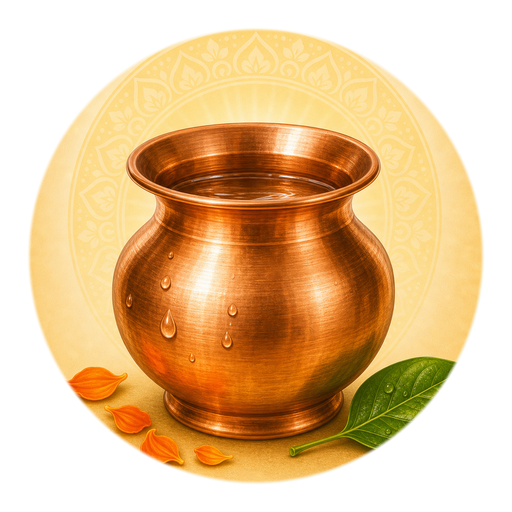 Copper vessel
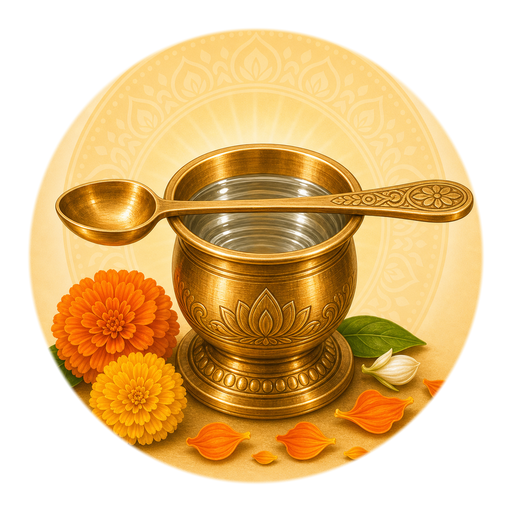 Ladle
Ladle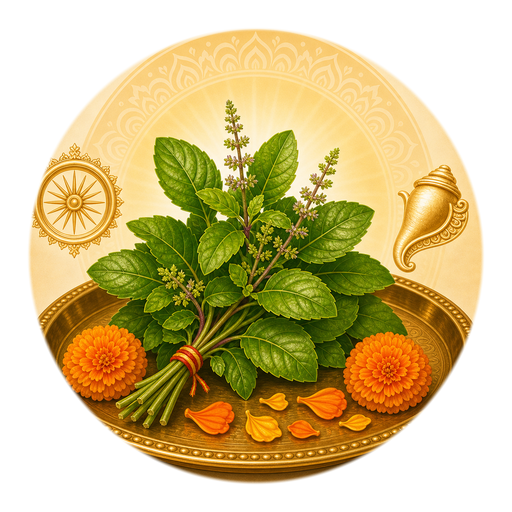 Tulsi
Tulsi Flowers
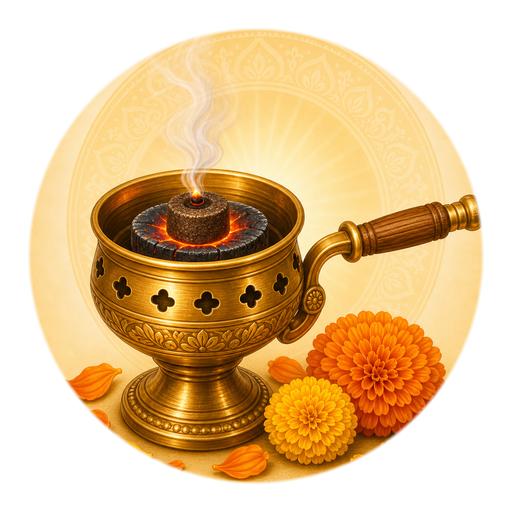 Incense
 Lamp
Lamp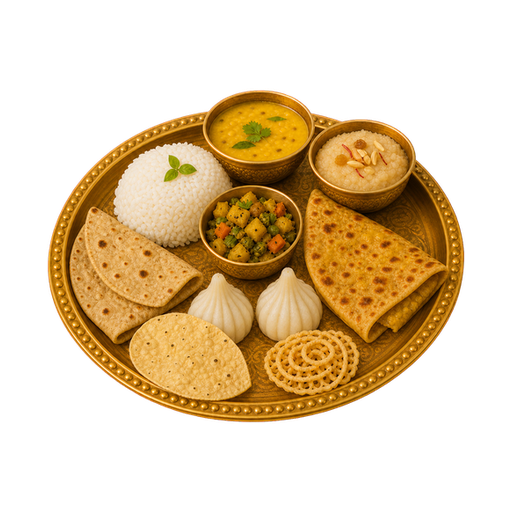 Naivedya / food
 Dakshina
Food customs
Onion, garlic, meat, and alcohol are avoided during this period; a sattvic diet is followed. Those performing Shraddha often keep a single meal or a fast on that day, eating only after the rite. These rules aren't binding equally on everyone — they vary by household and local custom.
Tarpan mantra
Traditional tarpan mantras and gotra-recitations, invoking the ancestors and the intent to offer them water and food, are chanted during tarpan and pinddan.
Regional customs
In Maharashtra, Nashik (along the Godavari, at Ramkund) is regarded as a well-known tirtha for Shraddha-tarpan and the immersion of ashes; the Trimbakeshwar area is also considered significant for ancestral rites (including genealogy records). Exact darshan and ritual timings at these temples should be checked with the relevant temple trust.
In Bengal, the last day of Pitru Paksha, "Mahalaya," is regarded as the cultural start of Durga Puja, marked with the Mahishasuramardini radio broadcast at dawn. On the month's name — the Maharashtra/amanta convention calls it Bhadrapad Krishna, while the North Indian/purnimanta convention calls the same days "Ashwin Krishna."
Named special days
Certain tithis within Pitru Paksha carry special names and significance:
| Date (2026) | Tithi | Significance |
|---|---|---|
| 27 September | Bhadrapad Krishna Pratipada | Mahalaya begins — Pitru Paksha starts |
| 29 September | Bhadrapad Krishna Chaturthi | Bharani nakshatra — a Bharani Shraddha reference |
| 4 October | Bhadrapad Krishna Navami | Avidhava Navami — Shraddha for married women who passed before their husbands |
| 7 October | Bhadrapad Krishna Dwadashi | Magha Shraddha — regarded as especially meritorious under the Magha nakshatra |
| 9 October | Bhadrapad Krishna Chaturdashi | Ghat/Ghayal Chaturdashi — Shraddha for those who died by weapon, accident, or violent death |
| 10 October | Bhadrapad Krishna Amavasya | Sarvapitri (Darsha) Amavasya — Pitru Paksha ends; the most significant day |
Sarvapitri Amavasya is the culminating day of the fortnight — Shraddha for all ancestors, and for those whose date of death is unknown, is performed together on this day; for more detail, see the separate Sarvapitri Amavasya page.
Immediately after, Ghatasthapana / Sharadiya Navratri begins on 11 October 2026 — a meaningful transition from a period of mourning straight into celebration. See the Navratri page for more.
Future years: the dates shift each year according to that year's panchang.
Good to know
- Avoided (by tradition): new auspicious undertakings (weddings, engagements, housewarmings, naming ceremonies, tonsure), major new purchases, onion-garlic-meat-alcohol, oil/scrub during a bath, and disrespect toward elders or ancestors — many families avoid these by tradition.
- Observed: remembering one's ancestors, tarpan-Shraddha, giving food to the poor or Brahmins, panchbali.
- Avoid a tithi mix-up: by tradition, if your ancestor's date of death is known, Shraddha is performed on that tithi; if not, on Sarvapitri Amavasya. Confirm the exact tithi against family custom or the panchang/a priest.
FAQ
- When does Pitru Paksha run in 2026?
- 27 September to 10 October 2026 (Bhadrapad Krishna Pratipada to Sarvapitri Amavasya).
- On which tithi should Shraddha be performed?
- By tradition, on the paksha-tithi matching the ancestor's date of death; if unknown, on Sarvapitri Amavasya. Confirm the exact tithi against family custom or the panchang/a priest.
- Are Pitru Paksha and Mahalaya the same?
- Yes; "Mahalaya (Paksha)" is another name for Pitru Paksha. Maharashtra calls it Bhadrapad Krishna; North India calls it "Ashwin Krishna" — the same days.
- What should be avoided during Pitru Paksha?
- By tradition, auspicious undertakings and major new purchases are avoided; onion, garlic, meat, and alcohol are also avoided.
- Why must a crow touch the pinda (what is panchbali)?
- The crow is regarded as a symbol of the ancestors; its accepting the food is taken as the ancestors' acceptance. Panchbali means offering food to the cow, crow, dog, and others.
- When is Sarvapitri Amavasya, and why is it so significant?
- 10 October 2026; Shraddha for all ancestors, and those whose date of death remains unknown, is performed together on this day — see the separate Sarvapitri Amavasya page for detail.
- What is pitru-dosha — does it reduce during Pitru Paksha?
- It is believed to be an affliction arising from neglecting one's ancestors; Shraddha-tarpan is believed to reduce it. No specific remedy is suggested here.
- What are Avidhava Navami and Ghat Chaturdashi?
- Avidhava Navami is Shraddha for a married woman who died before her husband (Navami, 4 October); Ghat Chaturdashi is Shraddha for those who died by accident, weapon, or violent death (Chaturdashi, 9 October).