Somvati Amavasya
Amavasya falling on a Monday is called Somvati Amavasya — regarded as especially significant since it combines two sacred elements: Monday (the day of Shiva-Parvati) and Amavasya (the tithi of ancestor remembrance). In 2026, 15 June and 9 November are the two undisputed Somvati Amavasya occurrences — the panchang and every external source agree. This panchang also records 16 February and 13 July under the same name, but these two dates lack corroboration from external sources — details in the date section below.
This year's dates (2026)
- Monday; panchang records 'Somvati Amavasya'; sunrise tithi is still Chaturdashi — this occurrence lacks external corroboration16 Feb
- Monday; the undisputed Somvati Amavasya — all sources agree; the last day of Adhik Jyeshtha15 Jun
- Monday; panchang records 'Somvati Amavasya'; same pattern as February — lacks external corroboration13 Jul
- Monday; the undisputed Somvati Amavasya — Amavasya prevails at sunrise, the clearest occurrence; the day right after Diwali/Lakshmi Puja (8 November)9 Nov
Significance
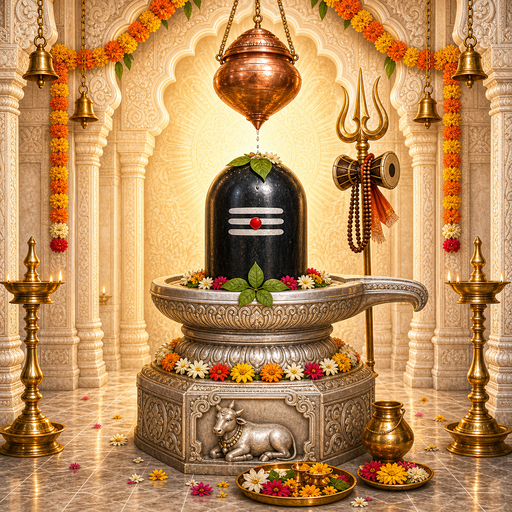
Monday is regarded as the day of Shiva-Parvati, and Amavasya as the tithi of ancestor remembrance. With both falling on the same day, it's regarded as a "doubly auspicious period" — favourable for both Shiva worship and ancestor tarpan. This weekday-based naming is consistent across the tradition — Somvati (Monday), Shanishchari (Saturday).
Some sources hold that in the Mahabharata, Bhishma Pitamaha explained the significance of this tithi to Yudhishthira — describing how bathing in a sacred river brings the bather wellbeing and prosperity, and peace to one's ancestors. However, the exact parva or verse for this claim isn't available — so it's presented only as "it is said," not as a settled scriptural basis.
Most sources hold that the coincidence of Amavasya and Monday occurs roughly once or twice a year — which is why this day is known as a "rare convergence."
The legend
According to the popular vrat-katha, an extremely virtuous girl from a poor Brahmin family could not be married off because of her family's poverty. A sage foretold that she would be widowed on the very day of her wedding. As a remedy, the sage told her to devotedly serve a washerwoman named Sona, who lived nearby and was known for her devotion and piety. The girl began going to Sona's home secretly every dawn to serve her. Pleased with her service and humility, Sona applied her own kumkum to the girl's forehead — believed to symbolically transfer her own good fortune/merit.
The girl was later married, and the prophecy came true — her husband died on the day of the wedding (or soon after). She ran to Sona for help; Sona told her to wait for the next Amavasya falling on a Monday, and to circle a peepal tree 108 times on that day. After performing this ritual, the merit of the vrat is said to have revived her husband.
Versions differ in minor details — some describe using pieces of brick instead of puja items due to poverty, while others describe circling the tree holding sugar in hand. There's also some variation in exactly who performs the circumambulation (the girl herself, or Sona) — but the core story remains the same across sources.
A completely separate story thread is also current — the Mahabharata's Bhishma-Yudhishthira episode (noted above under Significance). This is a different legend, and the two shouldn't be blended together.
A definite Puranic/scriptural origin for the Sona-the-washerwoman story isn't available — it's likely a modern/oral vrat-katha tradition (similar to the Sixteen Mondays or Vat Savitri stories), and isn't assumed to be an ancient scripture-based tale.
Who observes it
Married women primarily observe this vrat for their husband's long life and wellbeing. Other family members (especially men, in the tarpan ritual) also take part as part of ancestor remembrance/shraddha. It isn't limited to married women only — any devotee moved by devotion to Shiva and to one's ancestors may observe this vrat/bathing-and-charity.
Puja vidhi
- Rising before sunrise and bathing in a sacred river or at home.
- A fasting sankalp (for married women, for the husband's long life).
- Worship of the peepal tree — offering milk, water, flowers, akshata, and sandal paste.
- Wrapping raw cotton thread around the tree.
- Circling the tree 108 times — the central act in the vrat-katha.
- Ancestor tarpan (offering water) and, where possible, a shraddha ritual.
- Charity (grain, clothing, etc.).
Since Somvati Amavasya recurs an irregular number of times a year, there's no separate, specific udyapan (closing) ritual for this vrat — a fixed-count udyapan rule (like the Sixteen Mondays vrat) doesn't appear to apply here.
What you need
Milk, water (Ganga water if available), flowers, akshata, sandal paste, raw cotton thread, a lamp with wick and ghee/oil, water and sesame for tarpan, grain/clothing for charity. This list matches the general materials for Amavasya/Shiva worship — there's no Somvati-specific item.
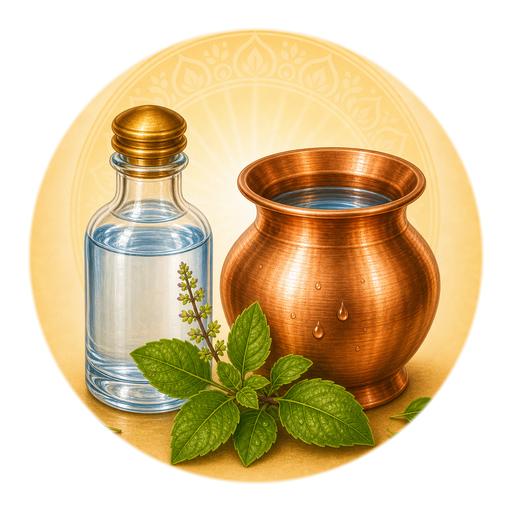 Water (Ganga water)
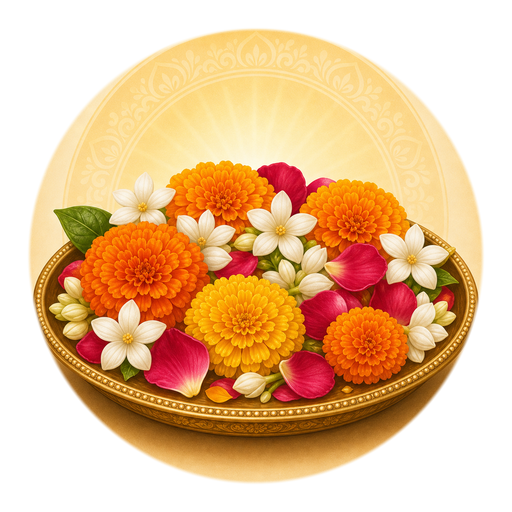 Flowers
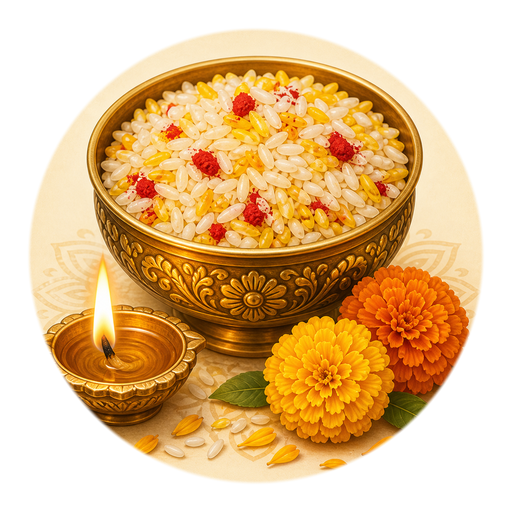 Akshata
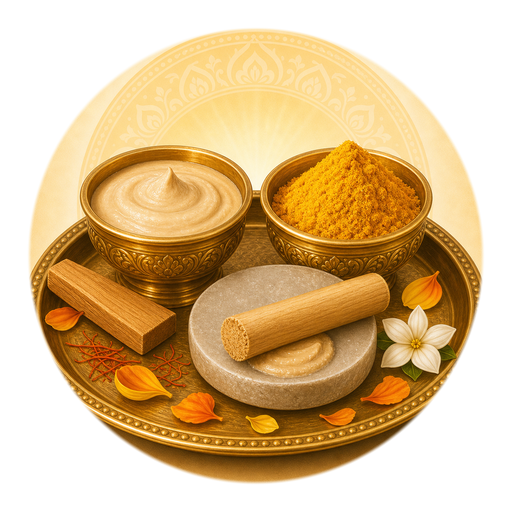 Sandal paste
 Raw cotton thread
 Lamp (wick and ghee/oil)
 Clothing (for charity)
Fasting
Fasting style varies by household — some keep a nirjala (waterless) fast, others eat only phalahar (fruit) or a single meal a day; follow whatever your family observes.
Mantra
There's no specific, named mantra or stotra for Somvati Amavasya — the usual Shiva-worship mantras are used.
Regional customs
Marathi-specific tradition largely repeats the pan-India practice (peepal tree, 108 circumambulations, married women) — there's no distinct Maharashtra-specific custom. It's fair to say this is a general Indian tradition, observed the same way in Maharashtra.
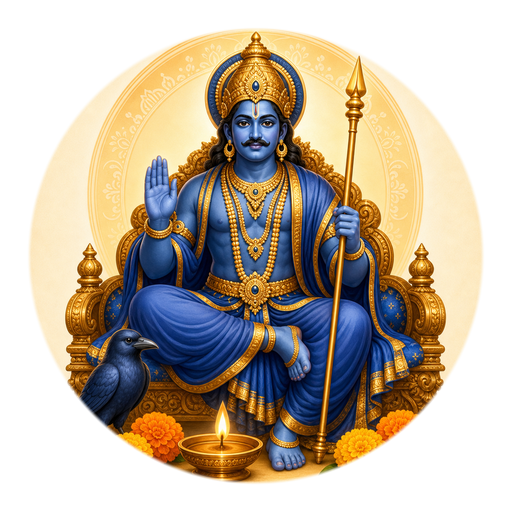
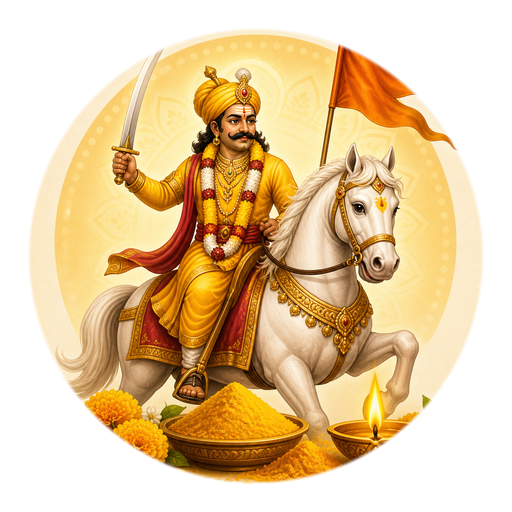
Exception: Somvati Amavasya is regarded as a "signature festivity" for two Maharashtrian temples — Jejuri Khandoba and Shani Shingnapur — but the exact festivity details belong on those temple pages; only a cross-link is given here.
Good to know
- A general tradition holds that the peepal tree shouldn't be touched or circled after sunset.
- Take care with safety at crowded bathing spots/pilgrimage sites.
- Fasting should be decided based on health condition — pregnant, elderly, and unwell individuals should consult a doctor.
FAQ
- What is Somvati Amavasya?
- Amavasya falling on a Monday is called Somvati Amavasya.
- When does Somvati Amavasya fall in 2026?
- Per the panchang, 16 February, 15 June, 13 July, and 9 November 2026 — but only 15 June and 9 November are undisputed occurrences (see the date section note above).
- How many times a year does Somvati Amavasya occur?
- Most sources say roughly once or twice a year — for 2026, 15 June and 9 November are the two undisputed occurrences.
- Why is the peepal tree worshipped on Somvati Amavasya?
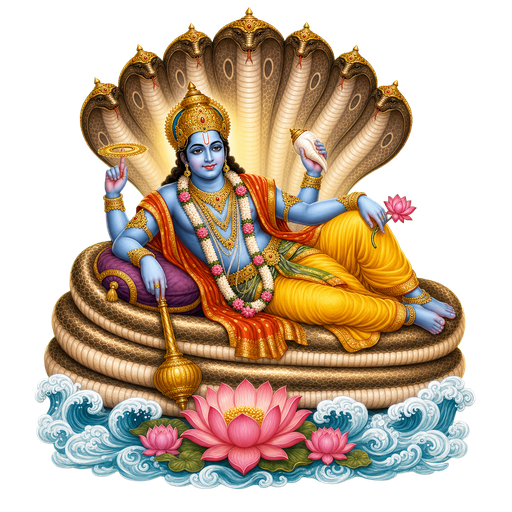
- Tradition holds that Vishnu/Lakshmi/ancestors reside in the peepal tree; the vrat-katha itself centres on circling the peepal tree.
- Who should observe the Somvati Amavasya vrat?
- Primarily married women, for their husband's long life; other family members may also take part as part of ancestor tarpan.
- What's the difference between Somvati Amavasya and a regular Amavasya?
- A regular Amavasya falls every month; the one falling on a Monday is the special "Somvati" type — regarded as more auspicious as it combines Shiva's day with the ancestor tithi.
- Why are 108 circumambulations performed on Somvati Amavasya?
- This is the central ritual in the Sona-the-washerwoman vrat-katha — the story holds that this very act revived the husband.