Lakshmi Panchami
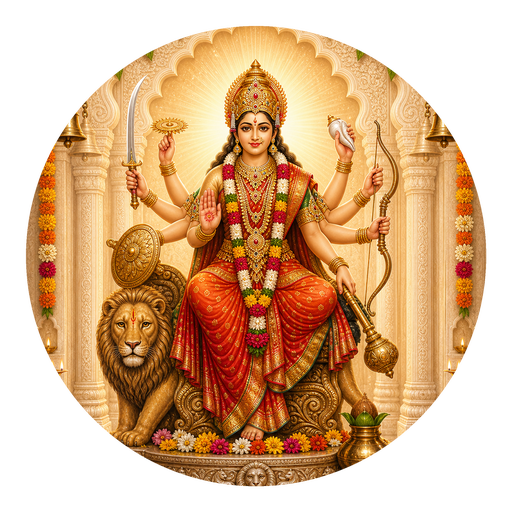
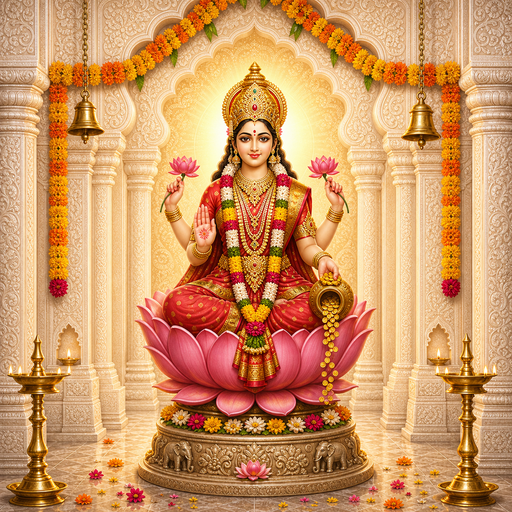
Chaitra Shukla Panchami is known as "Lakshmi Panchami" or "Shri Panchami" — a standalone tithi-vrat dedicated to Goddess Mahalakshmi, the deity of wealth and prosperity. This year (2026) it falls on Monday, 23 March.
This year's dates (2026)
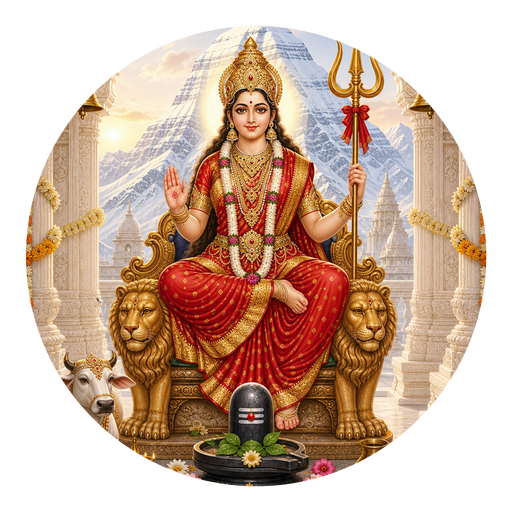
This day also happens to be day 5 of that year's Chaitra Navratri (Chaitra Navratri runs 19–27 March) — but Lakshmi Panchami has its own name, its own tithi identity, and its own legend, separate from the Navratri Devi-mahatmya story. It simply falls within the same Navratri window, much like Ram Navami, which is treated as its own occasion.
Worth noting: the name "Shri Panchami" is also used for Vasant Panchami (the Saraswati-puja festival in the Magh month) — that is a different tithi and a different deity, not this Chaitra Lakshmi vrat. The Shri Panchami on this page should always be identified with "Chaitra" or "Lakshmi" to avoid confusion.
Significance
Chaitra Shukla Panchami is regarded as a "Kalpadi tithi" — a day considered, in Vedic timekeeping, to mark the start of a kalpa (a great cosmic cycle). Because it falls in the very first week of the Hindu/Marathi new year (which begins on Chaitra Shukla Pratipada), worshipping Lakshmi on this day is considered especially auspicious.
By tradition, Goddess Mahalakshmi is regarded as the embodiment of the four purusharthas — dharma, artha, kama, and moksha. The vrat's core purpose is described as prosperity, good fortune, and the fulfilment of one's wishes. The day is said to hold special significance for the trading and business community, with puja performed both at home and at the workplace.
The legend (katha)
This day is said to be linked to the Samudra Manthan (Churning of the Ocean) legend — as the devas and demons churned the cosmic ocean, halahal poison appeared first (which Lord Shiva consumed), followed in turn by various jewels and objects, and finally Goddess Mahalakshmi appeared, seated on a lotus, according to one telling.
A second, independent account does not tie the tithi to the churning legend at all, describing it instead simply as a "Kalpadi tithi" — the tithi marking the start of a new kalpa — with the Lakshmi puja's purpose linked to the auspicious start of the new year. These two accounts are not contradictory; they simply place emphasis differently on the same occasion.
Samudra Manthan is itself a widely accepted Puranic legend; but the specific link to Chaitra Shukla Panchami is a traditional telling rather than a settled scriptural detail.
Who observes it
Devotees of Goddess Lakshmi — especially families seeking prosperity, and the trading/business community — are recorded as observing this day. In some places, newly married couples are also said to follow a special puja/temple-visit custom (see Regional customs below).
Puja vidhi
The commonly cited sequence (consistent across more than one source):
- Bathe at dawn and take a resolve (sankalp) to fast for the day.
- Worship an image or idol of Goddess Lakshmi — offering flowers, lamps (oil or ghee), incense, kumkum-turmeric, and naivedya (food offering).
- Recite the Shri Sukta and chant Lakshmi mantras.
- Perform the aarti and distribute prasad; give to those in need.
One Marathi source adds further detail — offering a garland of red lotus or lotus-seed beads, performing abhishek and kumkum-archan on a Shri Yantra, and lighting a cow-ghee lamp near the threshold and the tulsi plant in the evening.
What you need (samagri)
Red lotus or lotus-seed-bead garland, a Shri Yantra or image of Lakshmi, kumkum-turmeric, flowers, an oil or ghee lamp, incense, naivedya (sweets/fruit), and rice/white cloth/sugar for charitable giving.
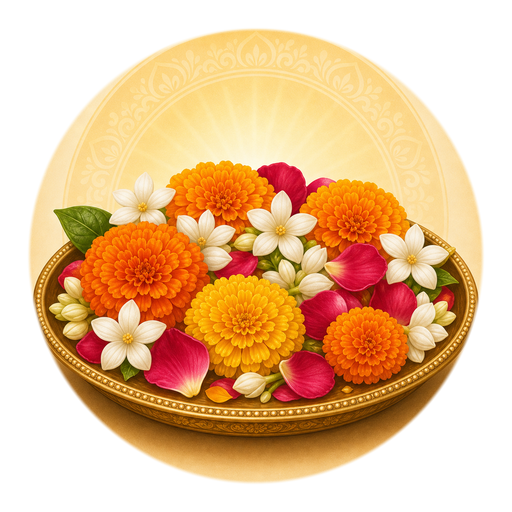 Red lotus / flowers
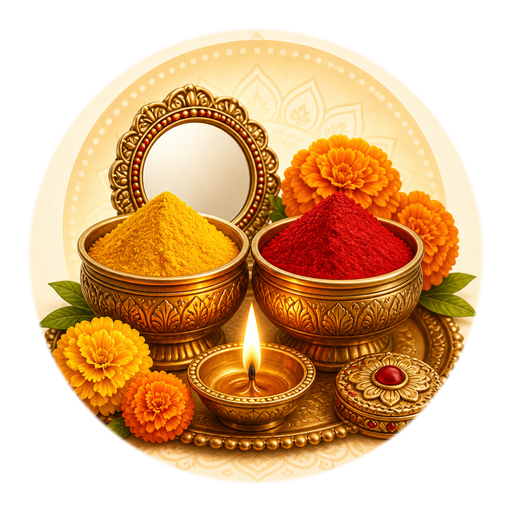 Kumkum-turmeric
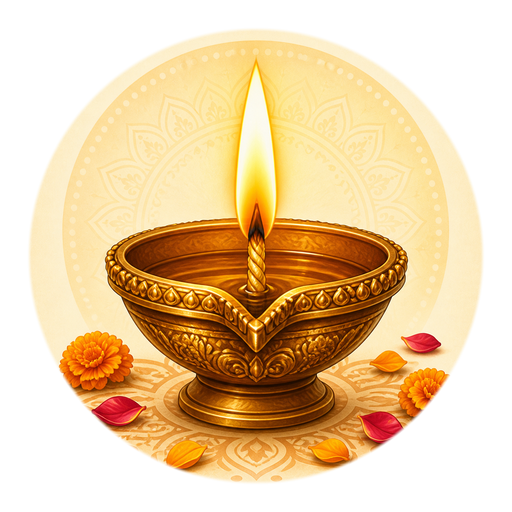 Oil or ghee lamp
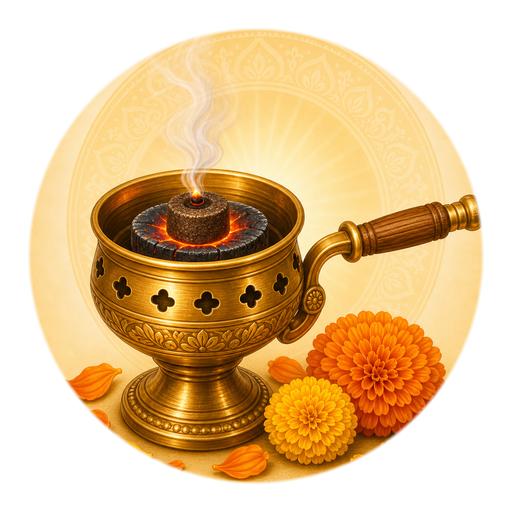 Incense
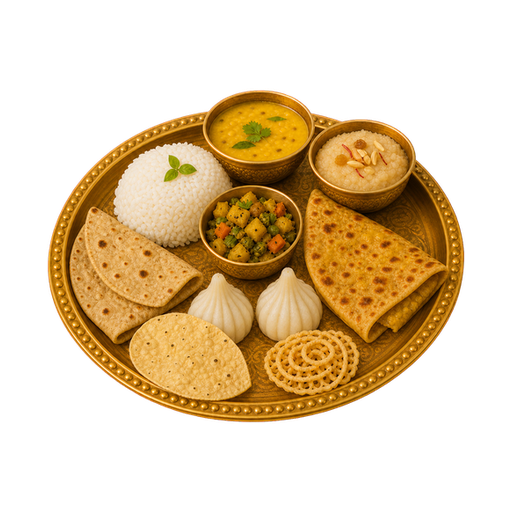 Naivedya (sweets)
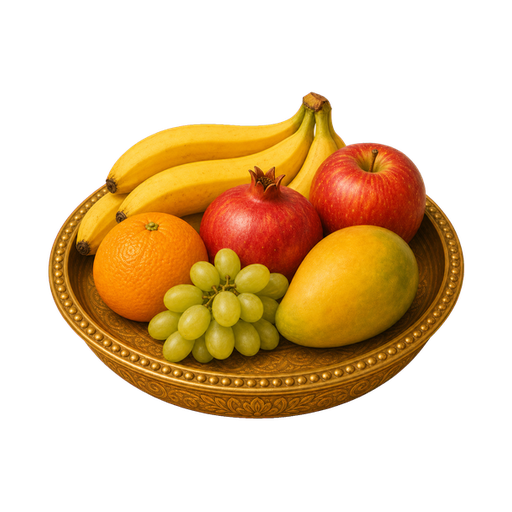 Fruit
Fruit White cloth (for charity)
Fasting & food (upvas)
The day-long fast typically allows only fruit, milk, and sweets, broken after the evening puja. The exact fasting rules can vary by family and tradition — follow them according to what suits your health; those with diabetes, pregnant women, and elders should decide in consultation with a doctor.
Mantra & aarti
Reciting the Shri Sukta and chanting Lakshmi mantras is described as the centrepiece of the puja. Only its meaning is given here, not the full text of the mantra.
Regional variations
In some places, newly married couples visit the temple for darshan dressed in yellow. This appears to be a local or family-specific custom rather than a general Maharashtra practice.
In this connection, "Shri Panchami" is also noted as the name used for Vasant Panchami — an independent confirmation of the name-confusion flagged above.
Good to know
- When searching or writing about "Shri Panchami," always attach "Chaitra" or "Lakshmi" — otherwise it can be confused with Vasant Panchami (Magh, Saraswati puja).
- Observe the fast according to your health — those with diabetes, pregnant women, and elders should decide in consultation with a doctor.
- The exact sequence of the puja vidhi can vary by family and regional tradition — don't treat it as universal.
FAQ
- When is Lakshmi Panchami in 2026?
- Monday, 23 March 2026 — Chaitra Shukla Panchami.
- Are Shri Panchami and Lakshmi Panchami the same?
- Yes, Chaitra Shukla Panchami is known by both names — it is a day dedicated to Goddess Lakshmi.
- Why is there confusion between Shri Panchami and Vasant Panchami (Magh)?
- The name "Shri Panchami" is also used for Vasant Panchami (Saraswati puja) in the Magh month — but those are two different tithis/months; the Shri Panchami on this page falls in Chaitra.
- How is Lakshmi Panchami related to Chaitra Navratri — is it part of it?
- By date it falls on day 5 of Chaitra Navratri, but it isn't part of the Navratri Devi-mahatmya story — it is a standalone Lakshmi vrat that happens to fall in the same window, much as Ram Navami also falls in that window yet is treated as its own occasion.
- What is a Kalpadi tithi?
- A tithi associated, in Vedic timekeeping, with the start of a "kalpa" (a great cosmic cycle) — Chaitra Shukla Panchami is regarded as one such Kalpadi tithi.
- How should Lakshmi Panchami's vrat be observed?
- Bathe at dawn and fast for the day, worship Goddess Lakshmi with flowers, lamps, kumkum, and naivedya, recite the Shri Sukta, perform the aarti, and give in charity where possible.