Skanda Sashti
Skanda Sashti is a Shukla Paksha Shashthi vrat dedicated to Kartikeya (Skanda, Murugan, Subrahmanya) — the elder son of Shiva and Parvati, and commander of the devas — observed every month. By tradition, the Skanda Sashti in the month of Kartik is regarded as the largest — in 2026, it falls on 15 November (Sunday), when Soora Samharam is celebrated to commemorate Kartikeya slaying the demon Surapadma with his Vel. This panchang, however, records the name "Skanda Sashti" directly only on 15 December in Margashirsh (the day known in Maharashtra as Champa Shashti); both dates are given below. As devasenapati, Kartikeya defeated the demons Surapadma and Tarakasura with his Vel, freeing the gods — this is what's remembered.
This year's dates (2026)
- ★ Principal occasion — Soora Samharam; Sunday. The panchang doesn't record a separate 'Skanda Sashti' name for this day — it's identified by the tithi rule15 Nov
- The panchang records the name 'Skanda Sashti' on this day; but in Maharashtra this day is chiefly observed as Champa Shashti (Khandoba) — a shared tithi, not the same festival15 Dec
- Monthly Shukla Shashthi24 Jan
- Monthly Shukla Shashthi23 Feb
- Monthly Shukla Shashthi24 Mar
- Monthly Shukla Shashthi22 Apr
- In the Adhik month — observance varies by tradition22 May
- Monthly Shukla Shashthi; the panchang also separately records 'Aranya Shashthi' on this day20 Jun
- Monthly Shukla Shashthi; the panchang also records 'Kumar Shashthi' (Kumar = Kartikeya) on this day19 Jul
- Monthly Shukla Shashthi18 Aug
- Monthly Shukla Shashthi17 Sep
- Monthly Shukla Shashthi (during Navratri)16 Oct
Significance
Skanda Sashti is the celebration of devasenapati Kartikeya's slaying of demons (Soora Samharam) — the victory of divine power and discernment over arrogance/unrighteousness. Shashthi is regarded as Kartikeya's tithi; hence Subrahmanya/Murugan devotees fast and worship on every Shukla Shashthi, especially in the month of Kartik. In South India (especially Tamil Nadu), this is regarded as a major festival; a 6-day Soora Samharam drama is said to be celebrated at Tiruchendur.
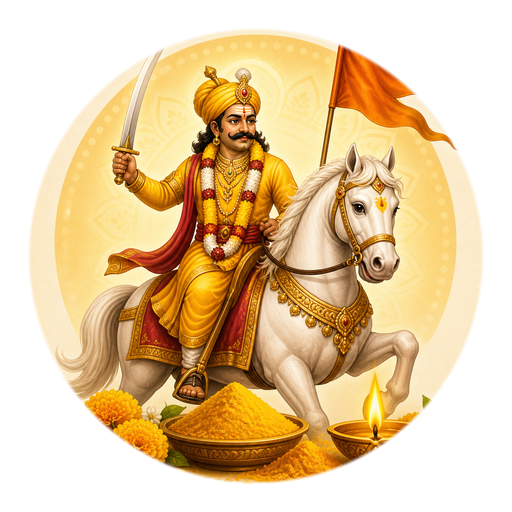
In Maharashtra, the Shukla Shashthi of Margashirsh is Champa Shashti (said to be named for the champa flower, held dear to Kartikeya), which local folk tradition has linked to Khandoba — Champa Shashti is a separate Khandoba festival, with a different deity and legend.
The legend
The demons Tarakasura (and his brothers/commanders Simhamukha and Surapadma) conquered heaven on the strength of a boon; the gods, in distress, turned to Shiva, since only a son of Shiva could slay Tarakasura. From Shiva's radiance (his third eye/fire) came six sparks — raised by the six Krittikas (mothers) — whom Parvati united into the six-faced Kartikeya; he became commander of the devas.
By legend, in a six-day war, one demon-commander was defeated each day; on the sixth day (Shukla Shashthi), Kartikeya is said to have slain Surapadma with his Vel — hence the vrat is called "Shashthi" and this event is known as "Soora Samharam," said to be celebrated in dramatic form at Tiruchendur. Surapadma is also said to have become a mango tree in the ocean, which Kartikeya split with his Vel — one half becoming a peacock (Kartikeya's vahan, "Paravani") and the other half a rooster (his flag).
Surapadma's fate is also told differently across versions — most versions describe his slaying, while some devotional versions have Surapadma surrender upon seeing the Vel, with Kartikeya said to mercifully take him into service in peacock/rooster form. Neither version is treated here as final.
Who observes it
Kartikeya/Murugan/Subrahmanya devotees — especially in South India (Tamil Nadu, Karnataka) and devotees connected to Murugan temples. Those observing the vrat for children or their long life; and devotees worshipping for courage, relief from enmity, and (by belief) remedy for Mangal dosha. How widely a standalone Skanda Sashti vrat is observed in Maharashtra is uncertain — in Margashirsh, this day is chiefly observed as Champa Shashti.
Puja vidhi
- Fasting: a fast from sunrise to sunset; some keep it waterless, others eat only fruit. In the Tamil tradition, a 6-day fast (Pratipada to Shashthi) is observed.
- Puja: worship of a Kartikeya/Murugan murti or the Vel (spear); chanting the "Kanda Sashti Kavasam" and "Om Sharavana Bhava." In some places, the Soora Samharam legend/drama is performed in the evening.
- Parana: the fast is broken after sunset on Shashthi (or the next day) — per tradition.
What you need
A Kartikeya/Murugan murti or image, a Vel (spear) symbol, flowers (said to be, by folk tradition, because Kartikeya is fond of the champa flower), a lamp, incense, and naivedya/fruit. Puja items vary by tradition.
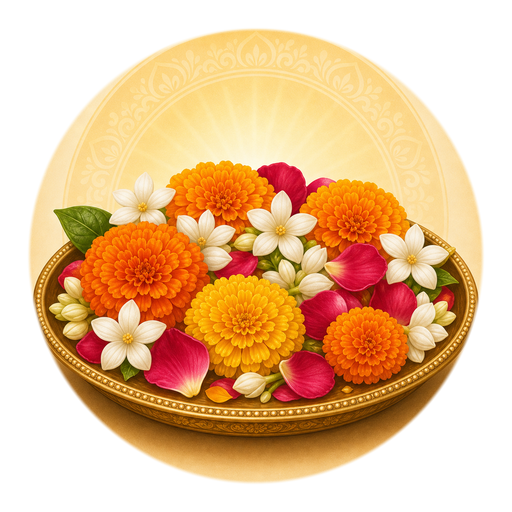 Flowers (champa/chafa)
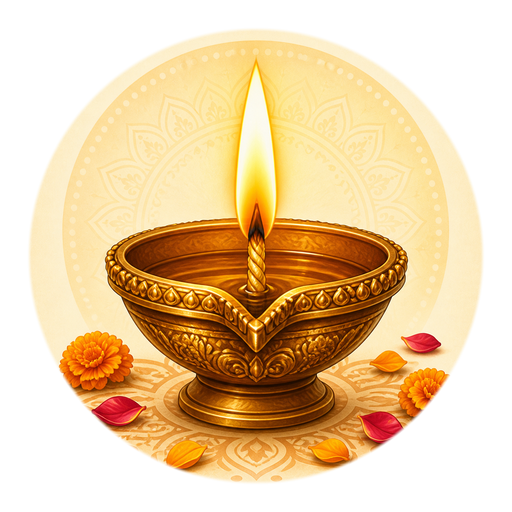 Lamp
Lamp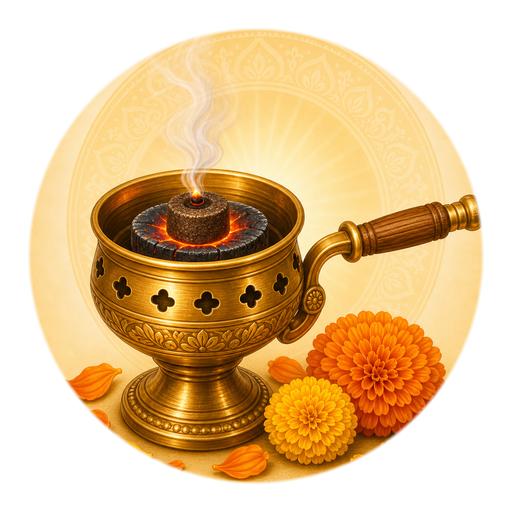 Incense
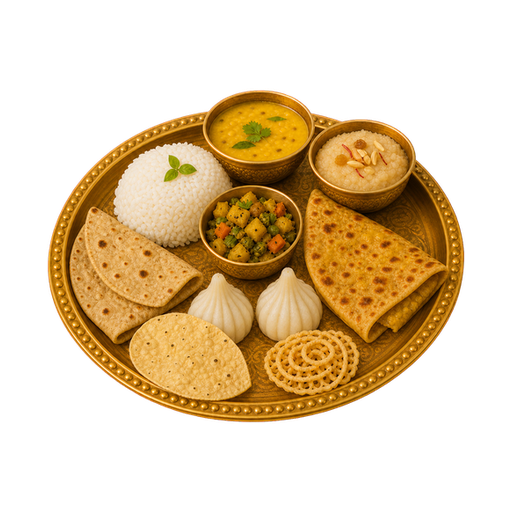 Naivedya
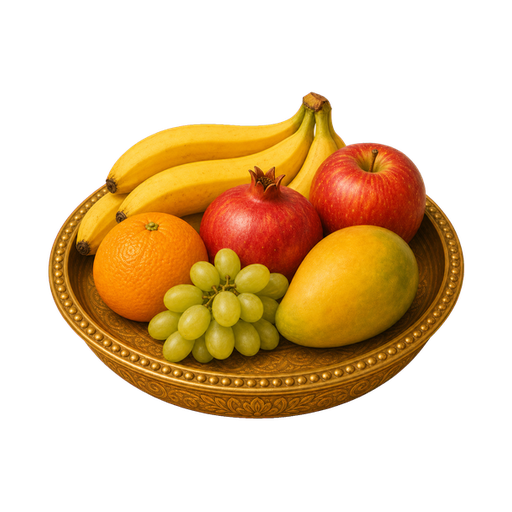 Fruit
FruitFasting
A fast from sunrise to sunset is the main rule; waterless or fruit-only, per tradition. A simple sattvic meal follows after sunset/parana. In the Tamil 6-day vrat, a light daily fast culminates in parana on the sixth day (after Soora Samharam) — this isn't a universal practice, and can vary per your own tradition.
Mantra & stotra
The bija mantra "Om Sharavana Bhava" (born in the reed-grove) is Kartikeya's root bija mantra.
Kanda Sashti Kavasam — a famous Tamil protective hymn in Murugan devotion, composed by Devaraya Swamigal (19th century). It is a kavach/protection prayer addressed to Kartikeya for the devotee's all-round protection.
Regional customs
Tamil Nadu (the main region): at Tiruchendur (and the other Arupadaiveedu Murugan shrines — Palani, Tiruttani, and others), a 6-day Soora Samharam drama and a major pilgrimage are said to be celebrated on Kartik's Skanda Sashti.
Maharashtra: Margashirsh's Shukla Shashthi is Champa Shashti — linked in local folk tradition to Khandoba. See the Champa Shashti and Jejuri Khandoba pages for Jejuri/Khandoba detail. How widely a standalone Skanda Sashti vrat is observed in Maharashtra is uncertain.
Vidhi and fasting vary by lineage/regional tradition — this can differ by household/local tradition.
Good to know
- The tithi-based date changes every year — this page is evergreen; Kartik is the principal instance, Margashirsh is Champa Shashti.
- Avoid confusing this with Champa Shashti: Skanda Sashti (the Kartikeya vrat) and Champa Shashti (the Khandoba festival) have different deities and legends — don't call them "the same." Margashirsh's Shukla Shashthi is a tithi they share.
- Tradition differences: fasting (one day vs. 6 days), vidhi, and kavach recitation vary by region/tradition.
- Mangal-dosha remedy/children's well-being is a matter of belief — not presented here as a guaranteed result.
FAQ
- What is Skanda Sashti?
- A Shukla Paksha Shashthi vrat dedicated to Kartikeya (Skanda, Murugan, Subrahmanya) — observed every month; the one in Kartik (Soora Samharam) is the largest.
- When is Skanda Sashti in 2026?
- The principal occasion is 15 November 2026 (Sunday) — Kartik Shukla Shashthi, Soora Samharam; Margashirsh Shukla Shashthi falls on 15 December 2026 (Champa Shashti in Maharashtra).
- Are Skanda Sashti and Champa Shashti the same?
- No — they share a tithi, not the festival itself. Both fall on a Shukla Shashthi, but Skanda Sashti is the Kartikeya vrat (pan-Indian); Champa Shashti is the Khandoba festival (Maharashtra, Margashirsh).
- Which deity is worshipped?
- Kartikeya/Murugan/Subrahmanya — the elder son of Shiva and Parvati, and commander of the devas (not Khandoba).
- How is the Skanda Sashti vrat observed?
- A fast from sunrise to sunset, worship of Kartikeya, chanting "Om Sharavana Bhava" and the Kanda Sashti Kavasam; parana after sunset — per tradition.
- What is Soora Samharam?
- Kartikeya is said to have slain the demon Surapadma with his Vel; by tradition this happened on the sixth day, and it's said to be celebrated in dramatic form at Tiruchendur.
- What is the Kanda Sashti Kavasam?
- A famous Tamil protective hymn in Murugan devotion (Devaraya Swamigal, 19th century) — a kavach prayer to Kartikeya for the devotee's all-round protection.
- What are the benefits of this vrat?
- Per devotees' belief: courage, relief from enmity, remedy for Mangal dosha, and well-being of children — this is belief-based, not a guaranteed result.