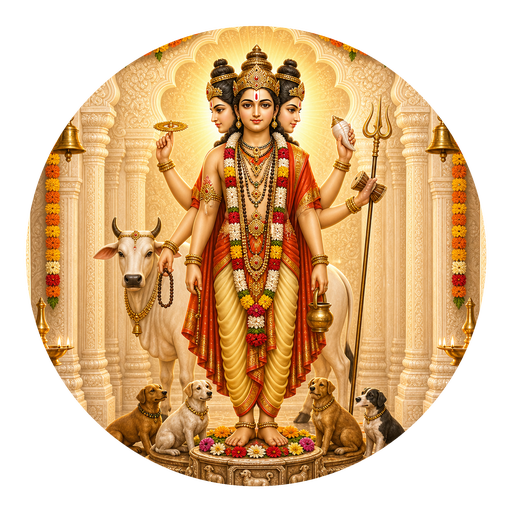
Datta Jayanti (Shri Dattatreya Jayanti)
Shri Datta (Dattatreya) is regarded as the combined form of the Trimurti — Brahma, Vishnu, and Mahesh — and a symbol of guru-tattva (the guru principle); the son of sage Atri and Sati Anasuya. Datta Jayanti falls on Margashirsh Purnima; Datta's birth is held to have occurred in the evening, during the pradosh period, under the Mrig nakshatra, which is why the puja is performed in the evening. This year (2026): Wednesday, 23 December.
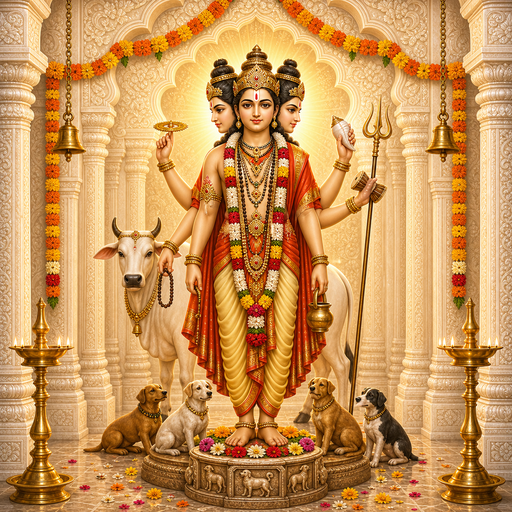
This year's dates (2026)
Maharashtra observes this day with great devotion. The Datta kshetras of Audumbar, Narsobawadi, and Ganagapur hold special significance, preceded by Gurucharitra saptah (a seven-day recitation) and Datta Navratri.
Significance
Since Datta is the combined form of three deities, worshipping Datta is regarded as worship of the Trimurti; he is considered the Adi-Guru (the first guru) or Avadhuta, and the embodiment of guru-tattva.
Datta is held to have learned from 24 gurus in nature — the earth (patience), the bee, the python, the ocean, and others. This story, from the Yadu-Avadhuta dialogue in the Bhagavata Purana, makes Datta a symbol of the teaching "learn from everyone."
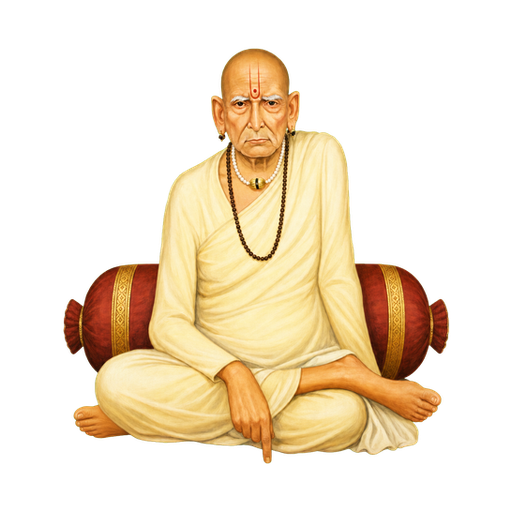
An important text in this guru lineage is the Shri Gurucharitra (roughly 15th century, composed by Saraswati Gangadhar); it describes the lives of Shripad Shrivallabh (the first avatar) and Narasimha Saraswati (the second avatar).
By tradition, worship of Datta is believed to bring peace in life; some sources also mention that it "reduces pitru-dosh" (an ancestral affliction) — by tradition, not as an established fact.
The legend (katha)
Sage Atri's wife, Sati Anasuya, was known for her extraordinary devotion to her husband. Narada praised her chastity before Saraswati, Lakshmi, and Parvati. The three goddesses wished to test her, and sent their own husbands — Brahma, Vishnu, and Mahesh — to her ashram in the guise of wandering ascetics, who set her an impossible condition. Anasuya, through the power of her penance, turned the three into infants and completed the condition by nursing them — her devotion remained unbroken. Pleased, the gods offered her a boon; Anasuya asked, "Become my own sons." From this, Datta's birth is held to have occurred — on Margashirsh Purnima, in the evening, under the Mrig nakshatra.
Tradition diverges on how the divine essence was divided among them; no single version is treated as final. In some versions, all three deities entered Anasuya's womb combined as a single form — this became the three-faced (trimukhi) Dattatreya. In other versions, Anasuya bore three sons: Chandra/Som (Brahma's portion), Dattatreya (Vishnu's portion), and Durvasa (Shiva's portion); of these, Dattatreya, as Vishnu's portion, later came to be regarded as the combined guru-form of all three principles.
Who observes it
Especially Datta devotees and families within the Datta sampradaya; in many households it is observed as a kuladharma (family custom). It is widely observed across Maharashtra, and anyone can take part.
Puja vidhi (how to perform)
The order below is a general practice; details vary by tradition.
- An early morning bath and purification, followed by an upvas or sankalp (resolve).
- Installing an image or idol of Shri Datta (preferably on a red cloth), with a copper vessel of water nearby.
- Performing shodashopachar or panchopachar puja for Datta — offering sandalwood paste, flowers, akshata, incense, a lamp, camphor, and naivedya.
- Reciting the aarti and a Datta stotra; chanting the guru mantra one mala (rosary round).
- The main puja, performed in the evening during the pradosh period (around moonrise), since this is when Datta's birth is held to have occurred.
- A rangoli at the doorstep; Datta temples hold bhajan, kirtan, and a palkhi procession.
Where a Gurucharitra saptah is observed, the recitation concludes on Datta Jayanti with a mahaprasad or food-offering; the exact concluding rite varies by tradition.
What you need
An image or idol of Datta, a red cloth, a copper vessel or kalash of water, sandalwood paste, akshata, turmeric-kumkum, flowers, tulsi, bel leaves, incense, an oil or ghee lamp, camphor, sunthavda (a dry-ginger and sugar preparation) and jaggery-fruits for naivedya, and the Gurucharitra text for recitation.
 Red cloth
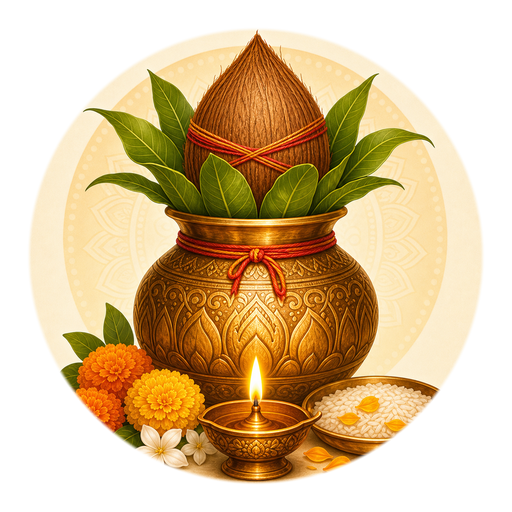 Copper vessel/kalash of water
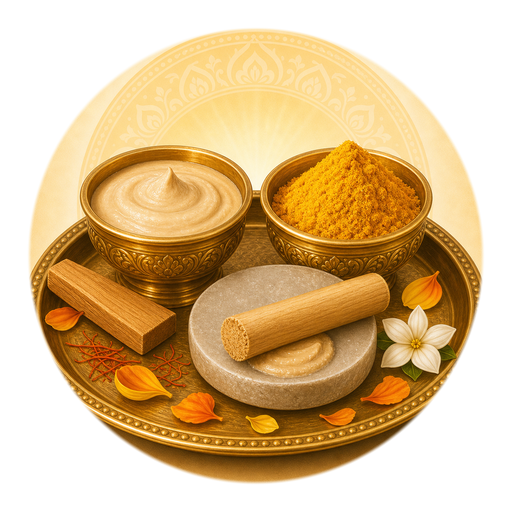 Sandalwood paste
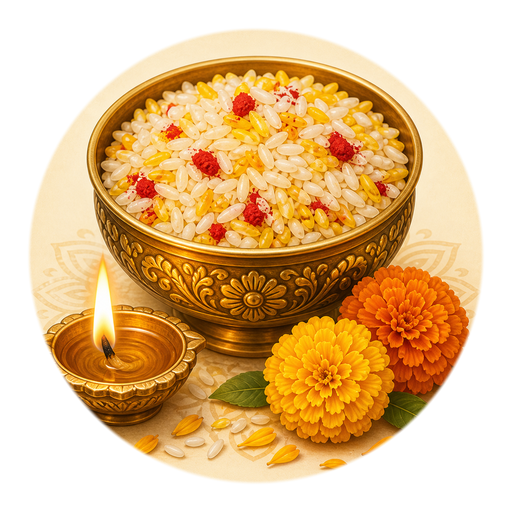 Akshata
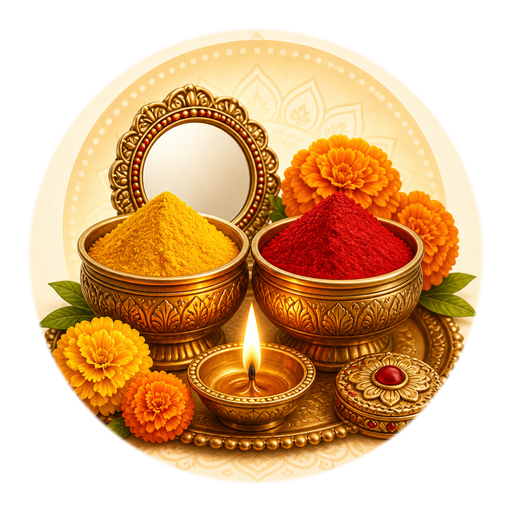 Turmeric-kumkum
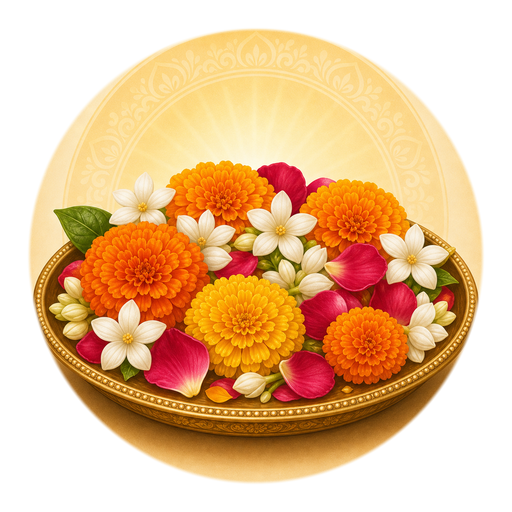 Flowers
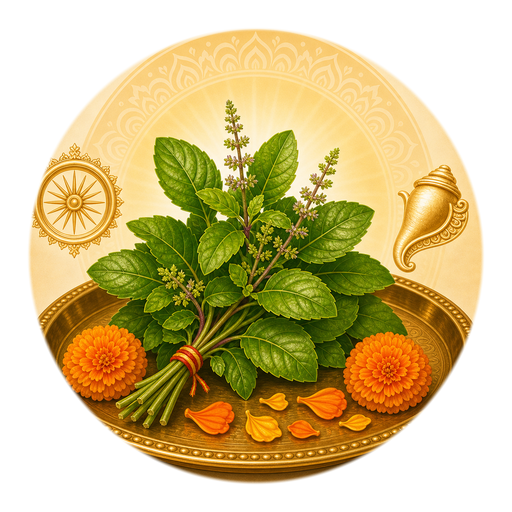 Tulsi
Tulsi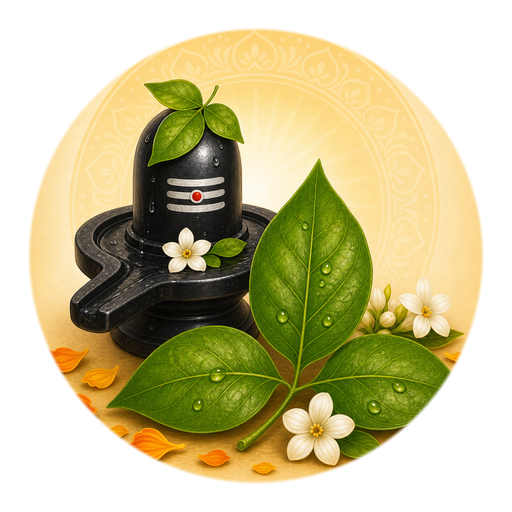 Bel leaves
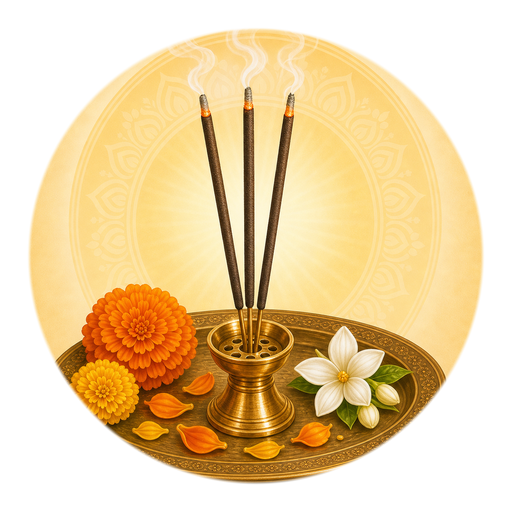 Incense sticks
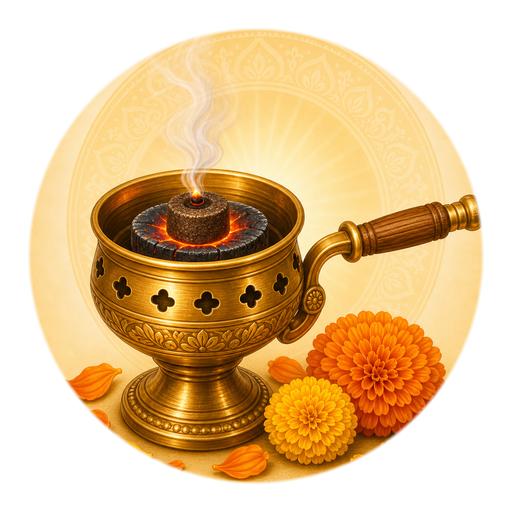 Dhoop (incense)
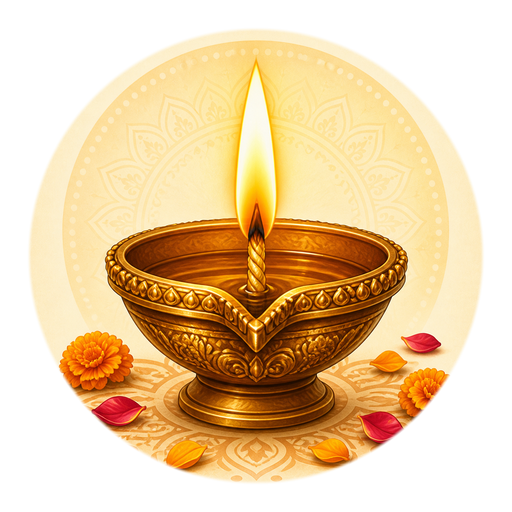 Oil or ghee lamp
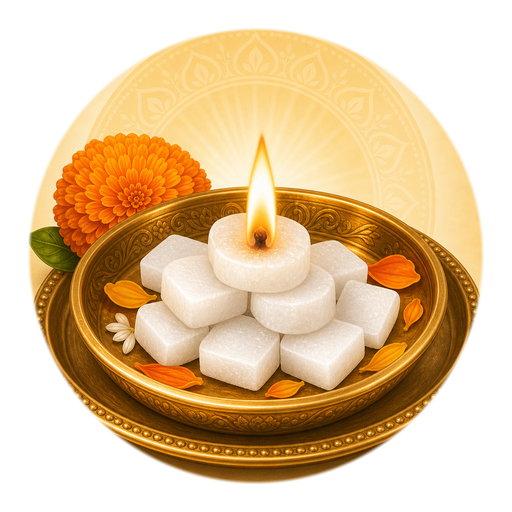 Camphor
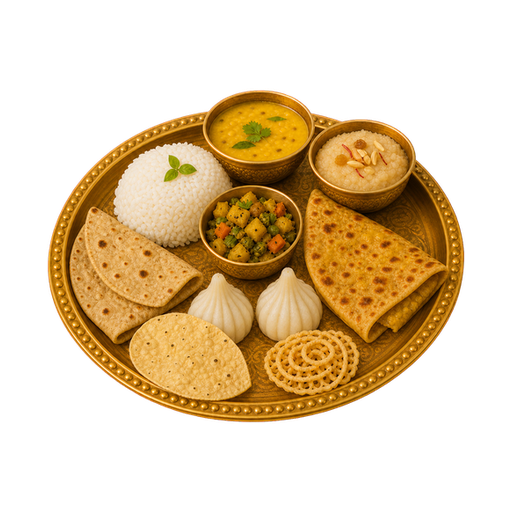 Sunthavda (naivedya)
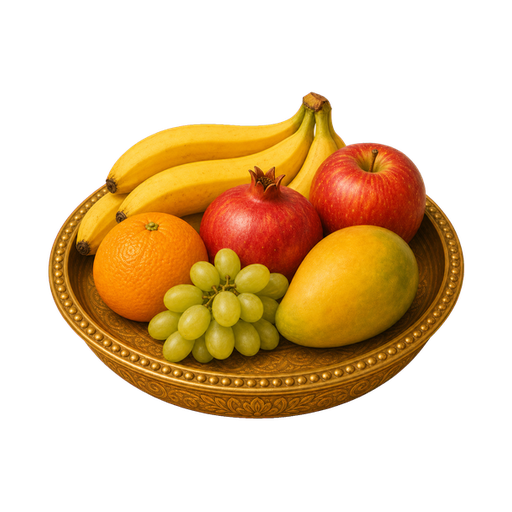 Jaggery and fruits
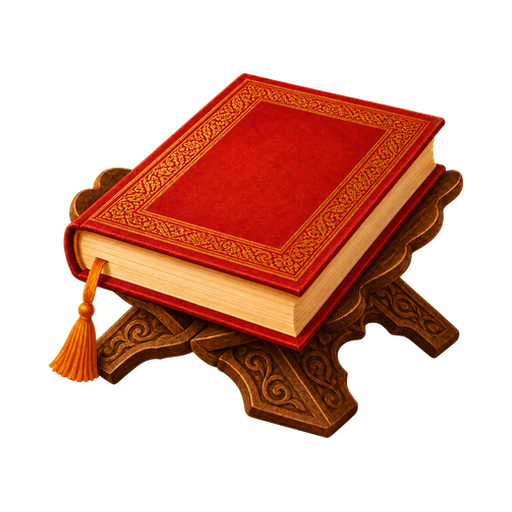 Gurucharitra text
Fasting & food
Many devotees observe a day-long fast on Datta Jayanti, breaking it after the evening puja. The rules for Gurucharitra recitation or its seven-day saptah vary by tradition — sovale-ovale (ritual purity), sattvic food, a fixed time and place, celibacy, sleeping on the floor, and not breaking the reading midway are commonly mentioned general rules.
Mantra & aarti
The guru mantra or japa "Om Draam Dattatreyaya Namah" is a seed-mantra saluting Datta, chanted one mala during recitation or japa. The popular refrain "Digambara Digambara Shripadavallabha Digambara" invokes Datta and his avatars. The aarti's opening line runs "Jai Dev Jai Dev Jai Shri Gurudatta…" — its sense is an invocation of victory and surrender to Guru Datta.
Regional variations
- Gurucharitra saptah: a seven-day recitation of the Gurucharitra before Datta Jayanti, concluding on the day itself.
- Datta Navratri: many families observe Datta Navratri as a kuladharma. The start tithi varies by tradition — some sources say it begins on Margashirsh Shukla Ashtami.
- Datta kshetras: major celebrations are held at Audumbar (Sangli, on the Krishna river), Narsobawadi or Nrusinhwadi (Kolhapur district), and Ganagapur (Karnataka — a site of devotion for Marathi devotees).
- Prasad: distributing sunthavda (dry ginger and sugar) prasad is a distinctly Maharashtrian custom.
- Maniknagar (Manik Prabhu): a seven-day festival is also held here during this period.
Good to know
- The date comes from the panchang only — 23 December in 2026; if a web source shows a different date, that reflects their own panchang.
- The puja is done in the evening, during pradosh — since this is when Datta's birth is held to have occurred; a claim of "main puja in the morning" wouldn't be accurate.
- The katha and Datta Navratri's start tithi vary by tradition.
- Mantra/aarti — meaning and opening lines only; full text pending rights review.
- Darshan/yatra timings for the Datta kshetras aren't given here — check each temple's own page.
FAQ
- When is Datta Jayanti in 2026?
- Wednesday, 23 December 2026 (Margashirsh Purnima).
- On which tithi, nakshatra, and time is Datta's birth held to have occurred?
- Margashirsh Purnima, Mrig nakshatra, in the evening during pradosh.
- Who is Shri Datta?
- The son of Atri and Anasuya; regarded as the combined form of Brahma, Vishnu, and Mahesh, and a symbol of guru-tattva.
- What does "Datta's 24 gurus" mean?
- Datta is held to have learned from 24 things in nature (the earth, the bee, the ocean, and others) — the teaching to "learn from everyone," from the Bhagavata Purana.
- When should Gurucharitra saptah start, and how long does it run?
- A seven-day recitation before Datta Jayanti, concluding on the day itself (starting 16 December in 2026).
- What is Datta Navratri?
- A Navratri observed as a family custom before the Jayanti; its start tithi varies by tradition.
- How is the puja done at home?
- Place an image on a red cloth, offer sandalwood paste, flowers, akshata, incense, lamp, camphor, recite the aarti-stotra and chant the guru mantra; perform the puja in the evening, during pradosh.
- What prasad is made?
- The traditional sunthavda (dry ginger and sugar), along with jaggery and fruits.
- Which are the main Datta kshetras?
- Audumbar, Narsobawadi, and Ganagapur.