Tukaram Beej
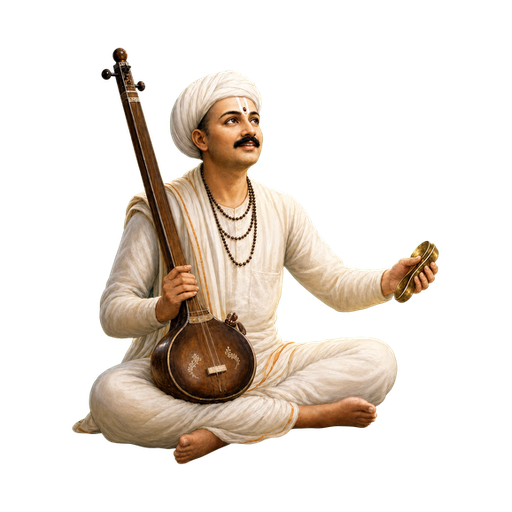
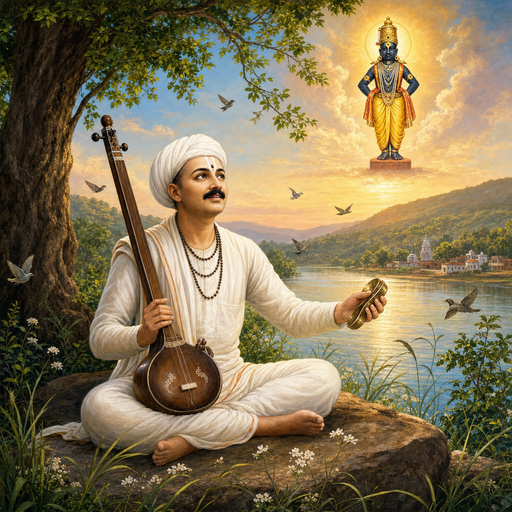
Tukaram Beej is the memorial day of Sant Tukaram Maharaj, the 17th-century Warkari poet-saint from Dehu (Pune district), marking his sadeha vaikuntha-gaman — departing to Vaikuntha in bodily form. It falls on Phalgun Krishna Dwitiya. In 2026, the date is 5 March (Thursday). The observance is mainly kirtan, bhajan, abhang singing, and a palkhi procession — besides Dehu, separate Beej observances take place at Dorlewadi, Kanherkhed, and Kheradevangi.
This year's dates (2026)
Significance
In the Warkari/bhakti tradition, a punyatithi (death anniversary) is treated as an occasion for gratitude and remembrance, not mourning — the day's core is remembering the bhakti philosophy and social teaching drawn from Tukaram's Gatha (more than four thousand abhangs). Since vaikuntha-gaman is understood as attaining moksha, the day is presented as a celebration of liberation rather than one of grief.
Alongside the main observance at Dehu, local Beej celebrations in many towns across Maharashtra reflect Tukaram's wide, village-level influence within the Warkari tradition — an important, often-overlooked aspect of this festival. The exact form of the celebration can vary by household or local tradition.
Vaikuntha-gaman
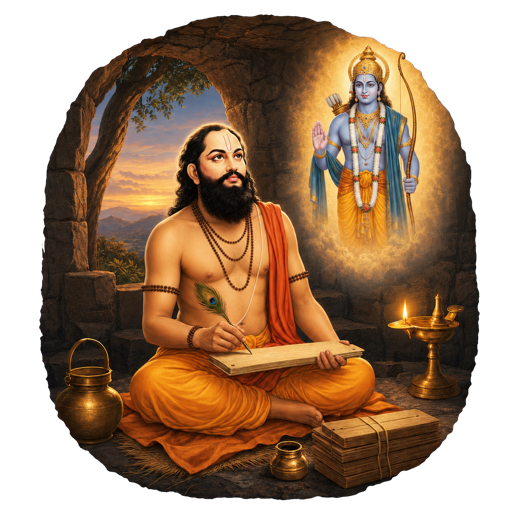
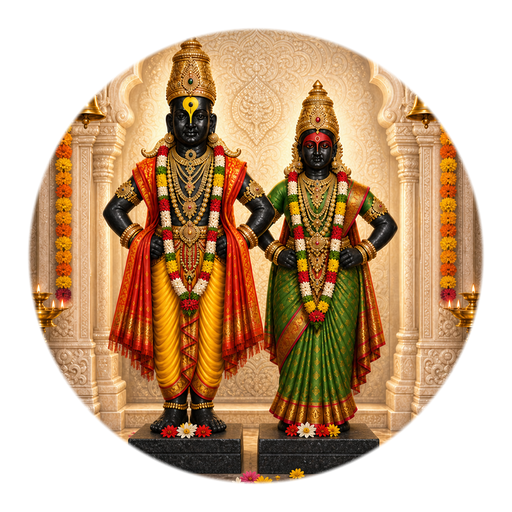
Tukaram Maharaj was a devoted follower of Vitthal and the author of the abhang Gatha — a resident of Dehu (Pune district). Tradition holds that he departed to Vaikuntha in bodily form (sadeha vaikuntha-gaman) on Phalgun Krishna Dwitiya in Shake 1571 (roughly 1649-1650 CE) — meaning not an ordinary death or a samadhi, but a belief that he went to Vaikuntha along with his physical body. The place is known in Dehu as Vaikunthasthan — not a samadhi, an important distinction. Sources give both 1649 and 1650 as the Gregorian-year equivalent; the same discrepancy is noted on the detailed Dehu page.
This is believed to have happened under a nandurki tree in Dehu, at around two minutes past noon. Folk belief holds that the same nandurki tree still moves at that same moment every year — this is presented here as a matter of belief, not established fact; it has also been noted that some educated and progressive sections of society are sceptical of this.
Tradition records that Tukaram departed for Vaikuntha while chanting Vitthal's name during his final kirtan, saying as he left, "Aami jaane amuchya gaava, amucha Ramram ghyaava" ("We go now to our own village, accept our final salutations") — this line is widely known and repeated.
Site-specific detail on Vaikunthasthan, the Gatha Mandir, and more is on the Dehu page — not repeated here.
Who observes it
Mainly devotees of the Warkari tradition, followers of Vitthal, and readers/students of Tukaram's Gatha. There's no restriction of caste, gender, or age — any devotee can observe the day through abhang singing, listening to kirtan, or reading the Gatha. Ordinary Marathi families, too, often listen to or recite Tukaram's abhangs on this day.
How it is observed
This isn't a step-by-step puja ritual in the vrat sense — it's mainly a collective devotional-memorial observance. At the main Dehu celebration, the day begins with a dawn Kakad Aarti and puja-abhishek at the main temple; Tukaram's paduka (sandals) are carried in a palkhi in a procession from the main temple to the Vaikuntha-gaman temple, accompanied by bhajan-kirtan with taal-mridang and chanting of the name. In the afternoon, devotees gather near the nandurki tree, hoping to witness it move as tradition holds it does. Well-known kirtankars and scholars also give discourses during this period.
At local Beej celebrations such as Dorlewadi, the form includes a pandal, lighting, a kirtan festival, bullock-cart races, wrestling, and cultural programmes — these are extensions in the style of a local fair, not part of the religious core.
Puja items
The main celebration uses items such as the paduka, taal-mridang, garlands/flowers, and a samai/niranjan lamp. There's no fixed list of household puja items — this is primarily a collective kirtan-bhakti observance, not one with a defined set of items for home worship.
Fasting and dietary rules
There's no formal fasting rule — millions of devotees travel to Dehu, but this is in the nature of a pilgrimage, not a vrat-fasting observance. A sevaiyan (vermicelli) offering is made on Rangapanchami, the concluding day of the observance week. Household or local tradition may follow different rules.
Mantra and aarti
Aarti Tukarama (composed by Rameshwar) is a traditional, public-domain aarti associated with Tukaram. The full aarti (romanized) is given below, with its meaning; the Devanagari original is on the Marathi (mr) version of this page.
Meaning: Rameshwar reveres Tukaram as a form of the sadguru, saluting his abhangs by invoking the Indrayani river episode — "just as Ram made stones float in the ocean, so too Tukoba's abhangs were kept safe in the water."
"Ram Krishna Hari" is the core chant of Warkari nama-smaran — tradition holds that Tukaram himself received this very mantra from his guru in a dream. "Dnyanoba Mauli Tukaram" is the general call-and-response chant used in palkhi processions, not a composition attributed to any single author — it's a collective Warkari practice.
Regional customs
- Dehu (Pune district): the main and largest celebration — full detail on the Dehu page.
- Dorlewadi (Baramati taluka, Pune district): has its own Tukaram temple and, as of 2026, roughly a sixty-seven-year-old independent local tradition — a pandal, kirtan festival, bullock-cart races, and wrestling. Large numbers of devotees gather here every year.
- Kanherkhed (Koregaon taluka) and Kheradevangi (Kadegaon taluka, Sangli district): these too hold a Beej observance.
- Pandharpur: the day is observed with special enthusiasm here too, though not on the scale of Dehu.
The exact form of celebration varies by village and local association — don't assume one uniform picture applies everywhere.
2026 date
| Date | Day | Tithi |
|---|---|---|
| 5 March | Thursday | Phalgun Krishna Dwitiya |
Good to know
- Tukaram Beej is not Tukaram Jayanti — Beej marks vaikuntha-gaman (Phalgun Vadya Dwitiya, March), while Jayanti marks his birth (Magh Shukla 5 / Vasant Panchami, January). Don't confuse the two.
- Large crowds gather at places like Dehu and Dorlewadi — travellers should plan around local traffic and crowding; detailed traveller tips are on the Dehu page.
- The vaikuntha-gaman episode and the nandurki-tree belief are matters of faith — approach them with balanced, even-handed language.
FAQ
- What is Tukaram Beej, and when is it?
- The memorial day of Sant Tukaram Maharaj's sadeha vaikuntha-gaman, on Phalgun Krishna Dwitiya. In 2026, it falls on 5 March (Thursday).
- Why is Tukaram Beej observed?
- As a remembrance of Tukaram's bhakti legacy and his attainment of moksha (sadeha vaikuntha-gaman) — it's treated as a day of gratitude, not mourning.
- How did Tukaram Maharaj depart to Vaikuntha in bodily form?
- Tradition holds that he departed under a nandurki tree in Dehu at around 12:02 in the afternoon, along with his physical body — this is a matter of faith.
- How is Tukaram Beej observed?
- Through kirtan, bhajan, abhang singing, a paduka-palkhi procession, and dindi — no fixed puja ritual or fasting rule was found.
- What is the difference between Tukaram Beej and Tukaram Jayanti?
- Beej marks vaikuntha-gaman (Phalgun Vadya Dwitiya, March); Jayanti marks his birth (Magh Shukla 5 / Vasant Panchami, January — 23 January in 2026).
- Why is the nandurki tree in Dehu famous around Tukaram Beej?
- Folk belief holds that the tree moves at around 12:02 in the afternoon every year on Beej, tied to the belief that the vaikuntha-gaman happened under this very tree.
- Is there a fast observed on Tukaram Beej?
- No formal fasting rule was found; devotees undertake a pilgrimage to Dehu for kirtan and darshan, but this isn't in the nature of a vrat fast.
- Where else is Tukaram Beej observed besides Dehu?
- Dorlewadi (Baramati taluka, Pune district) has its own roughly sixty-seven-year-old tradition; Kanherkhed (Koregaon taluka) and Kheradevangi (Kadegaon taluka, Sangli district) also hold a Beej observance.