Varaha Jayanti
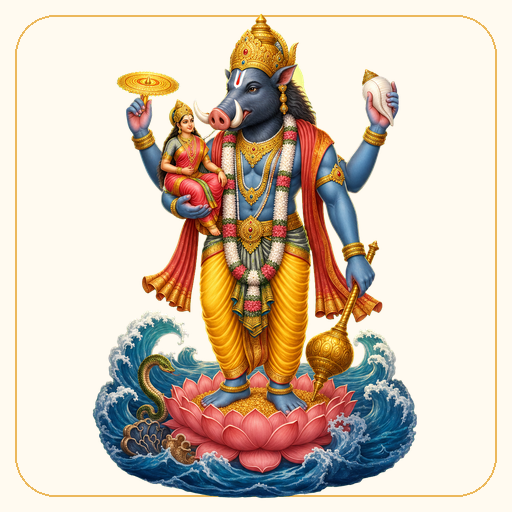
Varaha Jayanti marks the anniversary of Lord Vishnu's Varaha (boar) avatar — Vishnu's third avatar (after Matsya-Kurma, before Narasimha). This Jayanti falls on Bhadrapad Shukla Dwitiya/Tritiya (Dwitiya at sunrise, with Tritiya prevailing through the day); in 2026, it falls on Sunday, 13 September. According to the Puranas, when the demon Hiranyaksha carried the earth-goddess Bhudevi down to the ocean floor, Vishnu took the form of Varaha, killed Hiranyaksha, and lifted Bhudevi back up on his tusks — a legend of creation being rescued and restored.
This year's dates (2026)
Varaha is an avatar of Vishnu, not a historical or Puranic person — so, like Kurma Jayanti and the other avatar Jayantis, this page stays legend-centred and brief. Multiple Puranic versions (the Vishnu Purana, Bhagavata Purana, Varaha Purana, and others) place their emphasis differently — no single version is presented here as final or original.
Significance
Varaha is the third of Vishnu's ten avatars — regarded as an important stage in the series of avatars Vishnu is believed to take from time to time to protect creation.
The central legend: Hiranyaksha forcibly carried the earth down to the ocean floor; Vishnu took the form of Varaha and, after a prolonged battle, killed Hiranyaksha and lifted Bhudevi out of the ocean on his tusks, restoring the order of creation.
The emphasis differs by Purana: some Puranas (Brahmanda, Vayu) treat this as a creation event (with Brahma and Vishnu together lifting the earth); others (Linga, Kurma) centre it on the demon's slaying; the Bhagavata Purana gives a more elaborate account that includes the background of Hiranyaksha's curse.
A devotional meaning: the divine strength that supports creation in a crisis; in some traditions, Varaha is regarded as a symbol of the yagna (sacrificial rite) itself — his four legs representing the Vedas, his tusks the sacrificial post. (This is a devotional meaning, not presented here as an astrological or result-granting claim.)
The legend — Hiranyaksha and Bhudevi
The common thread below is drawn from different Puranas (the Vishnu Purana, Bhagavata Purana, Varaha Purana).
The demon Hiranyaksha — son of Kashyapa and Diti, brother of Hiranyakashipu — performs severe austerities and obtains a boon that he cannot be killed by any god, human, or animal. (In the Bhagavata Purana tradition, he and Hiranyakashipu are regarded as the first demon-births of Vishnu's gatekeepers Jaya-Vijaya under a curse — some versions don't include this curse background.)
Emboldened by the boon, Hiranyaksha forcibly seizes the earth-goddess Bhudevi and hides her at the bottom of the ocean — creation is thrown into danger. At the gods' request, Vishnu takes the Varaha (boar) form, enters the ocean, and searches for Bhudevi. A long battle with Hiranyaksha follows — the duration and the weapons used are described differently across versions (the Padma Purana speaks of a hundred divine years of battle, the Harivamsha of the use of the Sudarshan chakra, and the Shiva Purana describes the demon's army being destroyed by spittle/tusks); Hiranyaksha is eventually killed. Varaha then lifts Bhudevi up from the ocean floor on his tusks — creation is restored.
Differences (in some versions): Varaha's origin is, in some accounts, a direct manifestation of Vishnu; in the Matsya and Harivamsha Puranas, however, he is described differently — emerging from Brahma's nostril at the size of a thumb, then growing to the size of an elephant, and then a mountain. The exact details of the battle — its duration and the weapons used — also vary by Purana; no single figure is treated as settled here.
Who observes it
Vishnu devotees and those within the Vaishnava tradition observe Varaha Jayanti as a Vishnu-avatar Jayanti. In Maharashtra, this is not a widespread festival — like Kurma Jayanti, it is chiefly a panchang-level day.
Puja vidhi
These are mostly general Vishnu-vrat practices; no solid, independent reference for an ancient ritual specific to Varaha was found. A morning bath, clean clothing; worship of a Vishnu/Varaha image or a Shaligram; a panchamrit abhishek and naivedya; chanting 'Om Namo Bhagavate Vasudevaya'/'Om Varahaya Namah'; recitation of the Vishnu Sahasranama; and charity. No distinct, standardised udyapan ritual for Varaha Jayanti was found.
A Vishnu/Varaha image or Shaligram, a kalash, tulsi leaves, yellow flowers, sandalwood paste, panchamrit, an incense-lamp, and naivedya — an indicative list; regional variation is possible.
Those observing the vrat may keep a fast (optional, by tradition) — no mandatory rule specific to Varaha was found; this can vary by household/local tradition.
Mantra
Commonly chanted: 'Om Namo Bhagavate Vasudevaya,' the Varaha-specific 'Om Varahaya Namah,' and the Vishnu Sahasranama. These are ancient, widely used Vishnu mantras. No independent, widely used Varaha aarti was found in research.
Regional customs
Maharashtra has almost no distinct custom of its own for Varaha Jayanti — this is a minor panchang entry.
Several historical sculpture sites are associated with the Varaha avatar — Khajuraho (Madhya Pradesh, home to a large monolithic statue from roughly the 9th-10th century), the Udayagiri caves (Madhya Pradesh, roughly 4th century), Eran (Madhya Pradesh), Mahabalipuram (Tamil Nadu), Badami (Karnataka), and Ellora (Maharashtra). These are historical/archaeological sculpture sites — they are not presented here as active darshan or pilgrimage centres; anyone wishing to visit should treat them as heritage sites, and no darshan timings are claimed here.
Historically, Varaha worship peaked during the Gupta era (roughly the 4th-6th century CE) and was adopted as a royal emblem by several dynasties (the Chalukyas, Gurjara-Pratiharas, Cholas, and the Vijayanagara empire) — this historical context is informative and shouldn't be confused with the scale of active worship today.
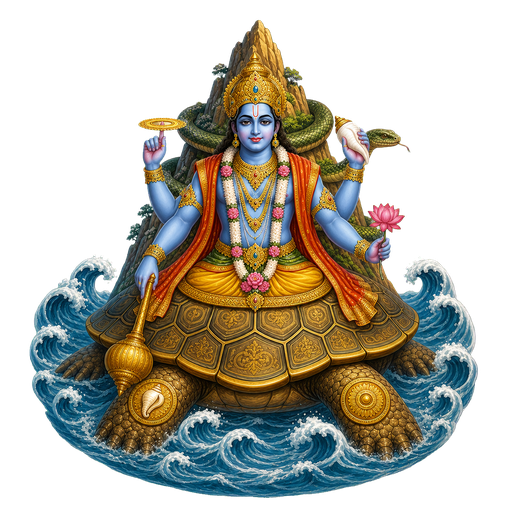
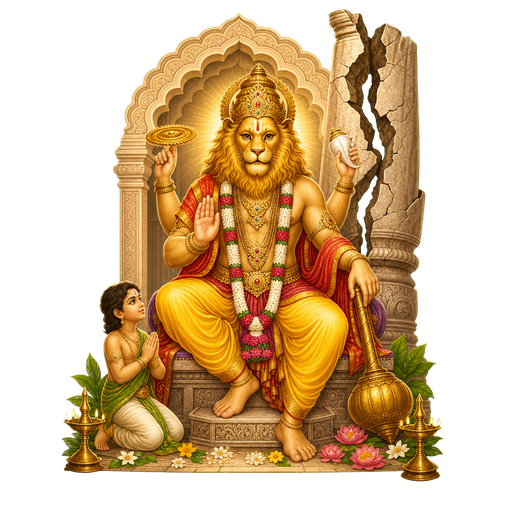
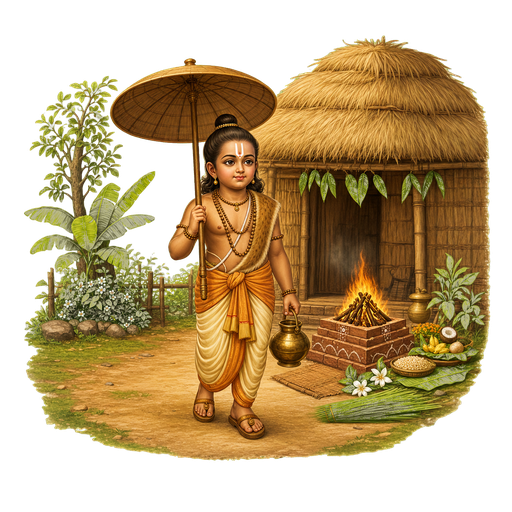
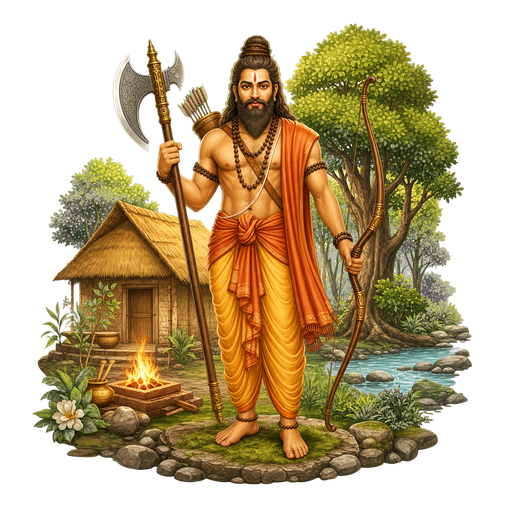
Kurma Jayanti, Narasimha Jayanti, Vamana Jayanti, and Parshuram Jayanti are parallel Jayantis within the dashavatar series — on different tithis, in remembrance of different avatars.
Good to know
- Note the tithi-naming difference — Dwitiya at sunrise, Tritiya through the day; both are correct, neither should be treated as the sole "right" one.
- Varaha is an avatar, not a historical person — the same purely legendary genre as Kurma Jayanti/Narasimha Jayanti.
- Treat the historical sculpture sites (Khajuraho, Udayagiri, and others) as heritage sites to visit — don't plan around them as active darshan centres.
FAQ
- When is Varaha Jayanti in 2026?
- Sunday, 13 September 2026 (Bhadrapad Shukla Dwitiya/Tritiya).
- What is the Varaha avatar / why did Vishnu take the form of a boar?
- To rescue Bhudevi, whom the demon Hiranyaksha had hidden at the bottom of the ocean, and to restore the order of creation.
- Which avatar of Vishnu is Varaha?
- The third avatar (after Matsya-Kurma, before Narasimha).
- Who was Hiranyaksha, and how was he killed?
- Son of Kashyapa and Diti, brother of Hiranyakashipu; he grew arrogant after obtaining a boon of invincibility; he was killed in battle with Vishnu in his Varaha form.
- What is Bhudevi's connection to the Varaha avatar?
- Varaha lifted Bhudevi, whom Hiranyaksha had forcibly carried to the ocean floor, back up on his tusks.
- What should be done on Varaha Jayanti?
- Bathing, worship of Vishnu/Varaha, chanting 'Om Varahaya Namah'/the Vishnu Sahasranama, and charity — by tradition, optional.
- Which temples/sites are famous for the Varaha avatar?
- Khajuraho, the Udayagiri caves, Eran, Mahabalipuram, Badami, and Ellora — but these are chiefly historical sculpture sites, less so active pilgrimage centres.