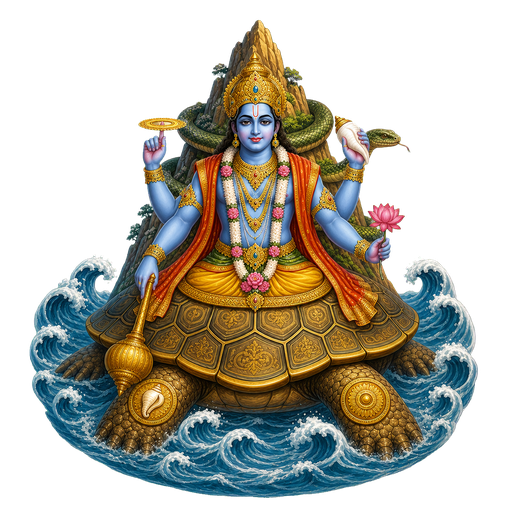
Narasimha Jayanti
Narasimha Jayanti marks the day Lord Narasimha — Vishnu's fourth avatar — manifested, on Vaishakh Shukla Chaturdashi, to slay the demon Hiranyakashipu and protect his devotee Prahlad. In 2026, this tithi falls on Thursday, 30 April. Narasimha manifested at sunset, so the evening puja is considered the most important part of this day.
This year's dates (2026)
Significance
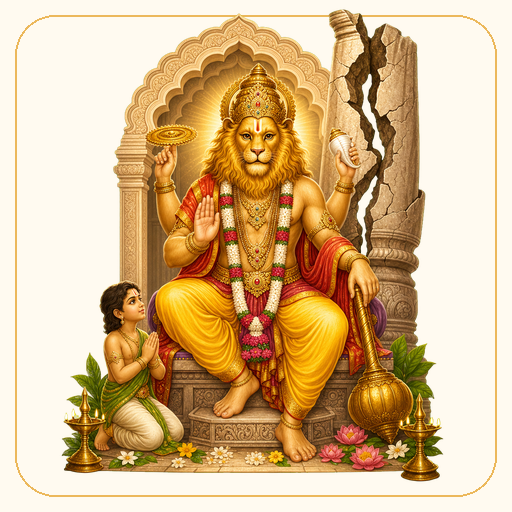
Narasimha is Vishnu's fourth avatar — half lion, half man. By voiding every single condition of a boon, he slew Hiranyakashipu — which is why Narasimha is regarded as the deity who protects dharma through the seemingly impossible, and who dispels fear.
The avatar appeared neither by day nor by night, but exactly at twilight (sunset) — to void the boon's "not day, not night" condition. That's why the main puja for this Jayanti is performed in the evening, and when Chaturdashi spans two calendar days, the day on which it covers midday/evening is the one used for the puja.
Prahlad, who kept unwavering devotion to Vishnu even in the face of his father's cruelty, is regarded as a symbol of selfless devotion — this is the moral core of the legend. Holika Dahan/Holi also traces back to this same family story.
The legend
Hiranyakashipu was a powerful demon king — enraged that his brother Hiranyaksha had been killed by Vishnu — who obtained a boon from Brahma through severe austerity. The boon's conditions were: he could not be killed by a human or an animal, by a god or a demon, or by any being created by Brahma; not by day or by night, not indoors or outdoors, not by any weapon, and not on earth or in the sky.
Emboldened by the boon, he began calling himself a god; but his son Prahlad remained an unwavering devotee of Vishnu — despite many forms of persecution, Prahlad was protected. When asked, "Is Vishnu everywhere?", Prahlad said "Yes"; an enraged Hiranyakashipu struck a pillar, and from it, Narasimha (man-lion) emerged.
At twilight, at the threshold (neither indoors nor outdoors), on his lap (neither on earth nor in the sky), with his claws (not a weapon) — voiding every single condition — Narasimha slew Hiranyakashipu. After the slaying, Prahlad's loving prayer calmed Narasimha's wrath; Prahlad was granted a boon and the kingdom.
In some versions, Holika (Hiranyakashipu's sister, who had a boon making her immune to fire) tries to burn Prahlad while holding him on her lap, but she herself is burned instead, and Prahlad survives — this episode connects to Holika Dahan/Holi. The exact list of the boon's conditions also varies slightly across sources — the core remains the same, but no single condition should be treated as fixed.
Who observes it
Narasimha devotees and Vaishnavas — the Sri Vaishnava tradition, in particular, fasts until evening; those seeking protection from fear also worship on this day. A major celebration is held at Narasimha kshetras (such as Nira Narsingpur). This vrat is considered kamya (wish-fulfilling) — it isn't binding on everyone.
Puja vidhi
- An early-morning bath is taken; a sankalp (preferably at midday) is made for the fast and puja.
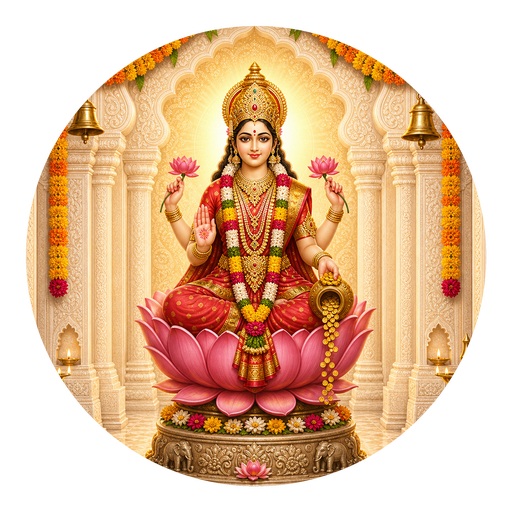
- The puja spot is purified with Ganga water; a kalash with a bowl of rice is placed on a chaurang; a Lakshmi-Narasimha murti/image is installed.
- The main puja is performed in the evening (around sunset) — sandal paste, akshata, yellow flowers, tulsi leaves, incense-lamp, and a ghee lamp are offered; the chant "Om Narasimhaya Namah" is recited.
- The Narasimha legend/stotra is recited or listened to; naivedya is offered.
- Parana (breaking the fast) is traditionally done the next morning after Chaturdashi ends — check the 30 April day page for the exact time.
In some traditions, a separate udyapan is also performed for this vrat; the details vary by family and tradition.
What you need
A kalash and chaurang, rice (akshata), a Lakshmi-Narasimha murti/image, sandal paste, yellow flowers/garland, tulsi leaves, incense sticks, a ghee lamp, naivedya (fruit/panchamrit), and Ganga water. The list of items varies by tradition.
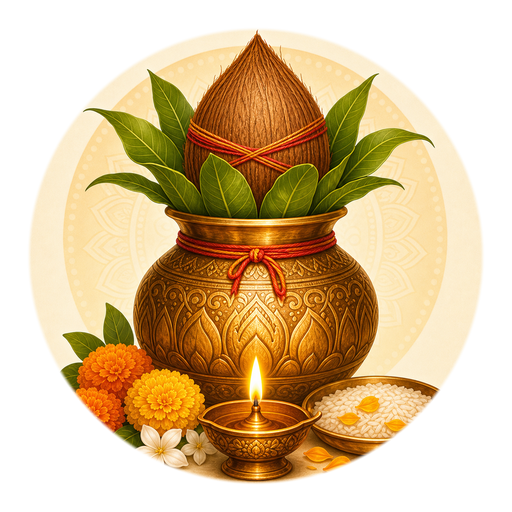 Kalash
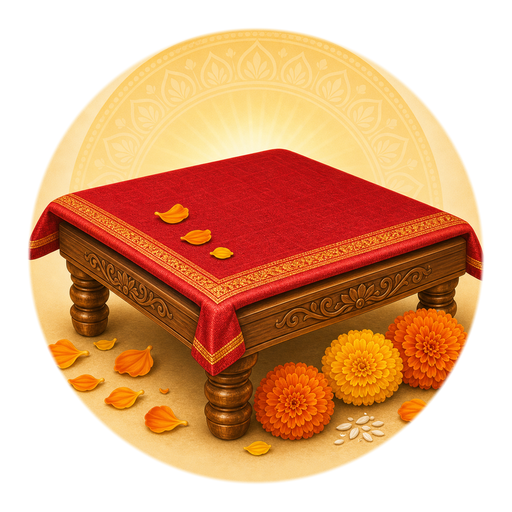 Chaurang (low stool)
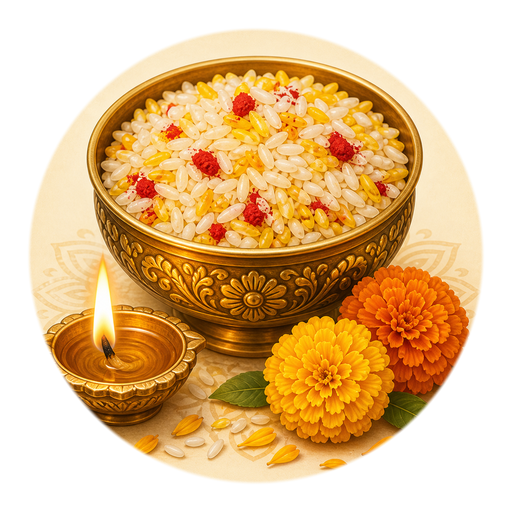 Rice (akshata)
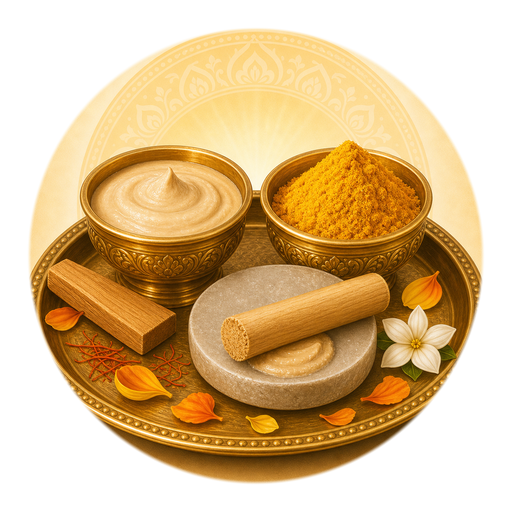 Sandal paste
 Yellow flowers
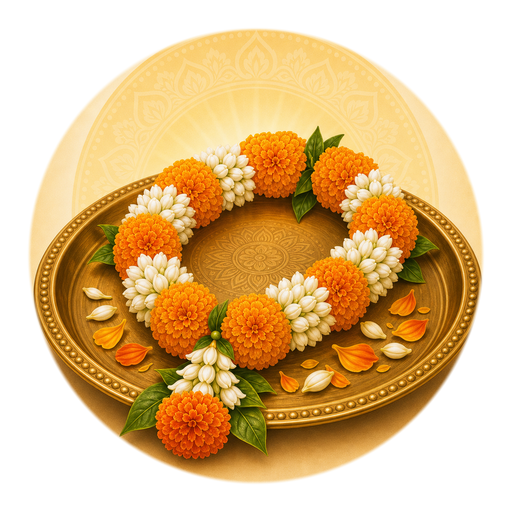 Garland
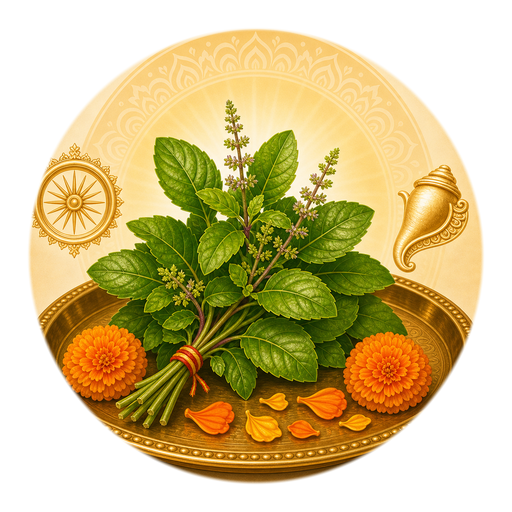 Tulsi leaves
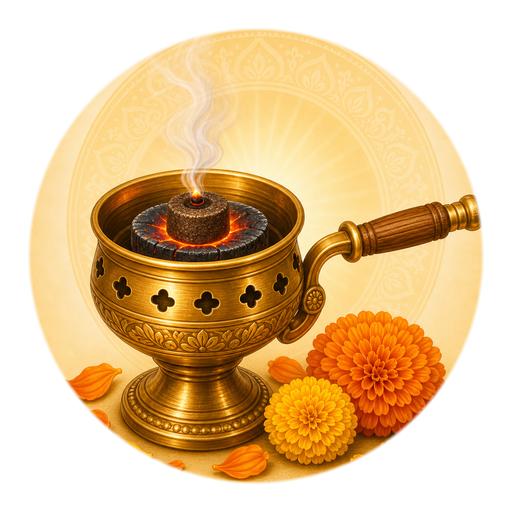 Dhoop (incense)
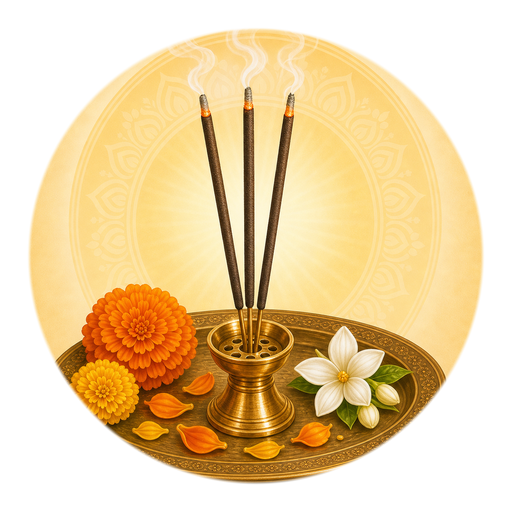 Incense sticks
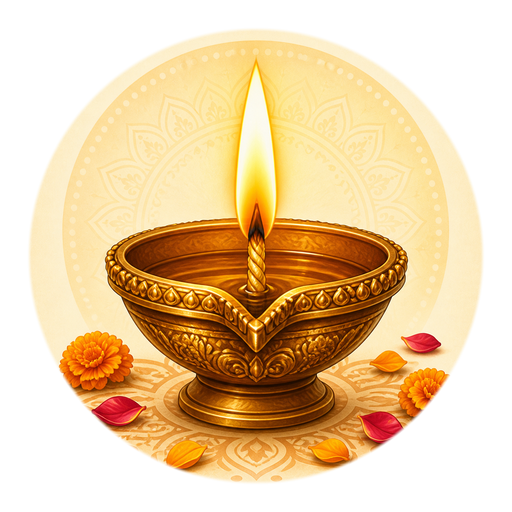 Ghee lamp
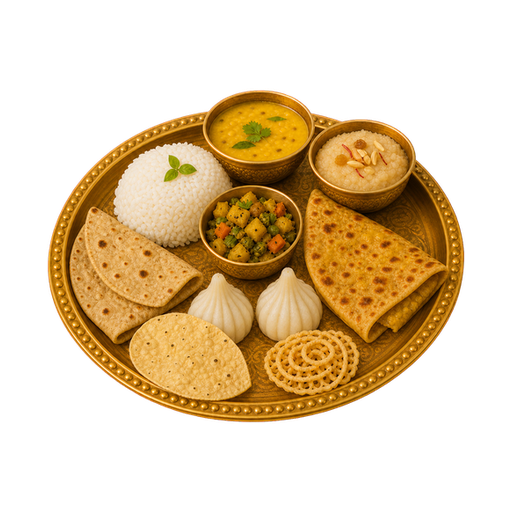 Naivedya
 Fruit
Fruit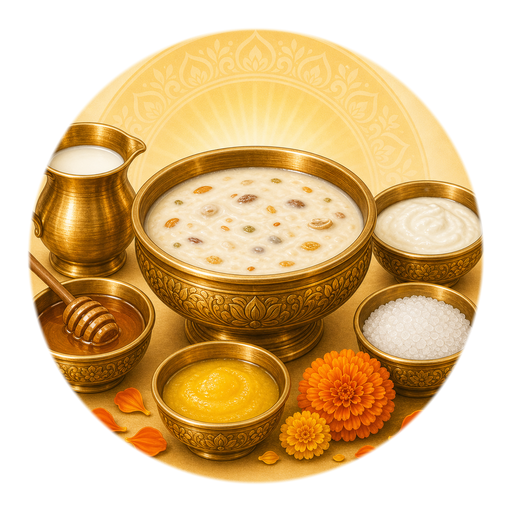 Panchamrit
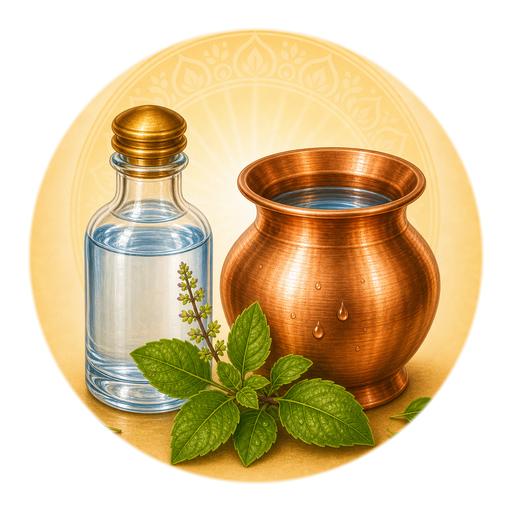 Ganga water
Fasting
The rules are treated as similar to Ekadashi — a single meal the day before, and abstaining from grains on the fasting day. Fruit and fasting-friendly foods are permitted per tradition. Parana is traditionally done the next morning after Chaturdashi ends.
A strict waterless fast isn't manageable for everyone — adjust according to health and medical advice.
Mantra & stotra
The seed/name mantra "Om Narasimhaya Namah" — a remembrance of Narasimha's name — is chanted a set number of times (for example, 108) in some traditions, though this count isn't a universal rule. Its meaning is simply "salutations to Narasimha."
The Narasimha Kavach and the Shri Narasimha Stotra are well known for protection. Their full text isn't included here; the meaning and the recognisable opening line are given instead.
Regional customs
Among Maharashtra's Narasimha kshetras, Nira Narsingpur (Indapur taluka, Pune district; at the confluence of the Nira and Bhima rivers) is the principal site — the deity is Shri Lakshmi-Narasimha; the murti is of black shaligram stone, with Hiranyakashipu on his lap, in the form of "Jwala Narasimha," set in an underground chamber at river level. A legend holds that Narasimha settled into a sand murti made by Prahlad. A major celebration is held here on Narasimha Jayanti.
Maharashtra has several other Narasimha kshetras too — Sangli/Narsingpur (an underground sanctum), Ranjani, Pingali, Verul, and others.
In some places/traditions, a nine-day Narasimha Navratra is observed from Vaishakh Shukla Shashthi to Chaturdashi (in 2026, it began on 22 April) — this isn't universal, and is chiefly followed at Narasimha kshetras or in certain traditions.
Narsobachi Wadi (Nrusinhwadi) is a Datta (Narasimha Saraswati) site — it shouldn't be confused with Narasimha-avatar kshetras.
Good to know
- Perform the puja in the evening — Narasimha manifested at twilight; this is the distinctive feature of this festival.
- If a strict fast is too demanding, adjust it according to health (on medical advice).
- Exact puja-muhurat/parana times are place-dependent and change every year — check the 30 April day page for these.
- Narsobachi Wadi is a Datta site, not a Narasimha-avatar site — avoid confusing the two.
FAQ
- When is Narasimha Jayanti in 2026?
- Thursday, 30 April 2026 (Vaishakh Shukla Chaturdashi).
- What is Narasimha Jayanti?
- The day Vishnu's fourth avatar, Narasimha, manifested — marking the slaying of the demon Hiranyakashipu and the protection of his devotee Prahlad.
- Which avatar of Vishnu is Narasimha?
- The fourth (among the Dashavatara).
- How were the conditions of the boon voided?
- At twilight (neither day nor night), at the threshold (neither indoors nor outdoors), on his lap (neither earth nor sky), with his claws (not a weapon), in a man-lion form (neither human nor animal).
- Why is the puja performed in the evening?
- Because the avatar manifested at sunset, the evening puja is considered the most important part of the observance.
- How should the vrat/fast be observed?
- Like Ekadashi — a single meal the day before, abstaining from grains on the day itself, and parana the next day.
- What is Maharashtra's major Narasimha kshetra?
- Nira Narsingpur (Pune, at the Nira-Bhima confluence), among several others.