Vamana Jayanti (Vamana Dwadashi)
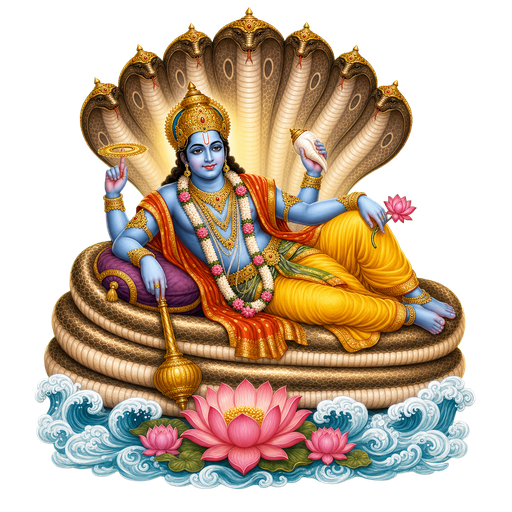
Vamana Jayanti (Vamana Dwadashi) marks the birth anniversary of Lord Vishnu's fifth avatar — the Vamana avatar — celebrated on Dwadashi in the Shukla paksha of Bhadrapad. Vamana is Vishnu's 5th avatar (Dashavatara) and the first avatar of the Treta Yuga (after Narasimha) — regarded as Vishnu's first avatar in human (dwarf) form. He was born to the sage Kashyapa and Goddess Aditi — hence Vamana is one of the Adityas, Indra's younger brother (Upendra). In 2026, this tithi falls on Wednesday, 23 September. The day before (22 September) is Parivartini Ekadashi — a separate vrat; don't confuse the two.
This year's dates (2026)
Significance
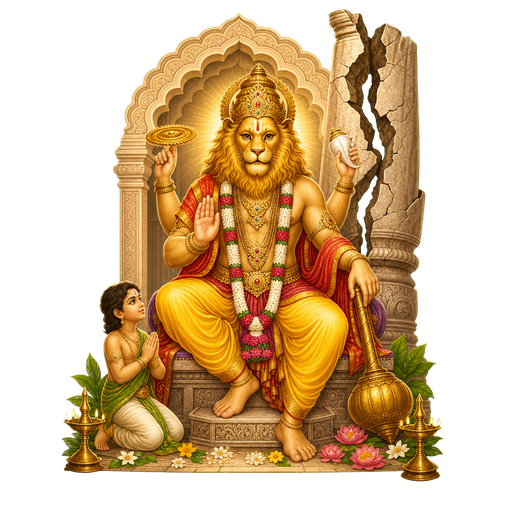
After Matsya, Kurma, Varaha, and Narasimha, Vamana is the 5th Dashavatara and the first of the Treta Yuga — Vishnu's first avatar in human form. This Jayanti marks the remembrance of that avatar's descent.
By tradition, Vamana was born on Bhadrapad Shukla Dwadashi during Shravan Nakshatra, at midday (Abhijit muhurat) — when Shravan Nakshatra coincides with Dwadashi, it's considered especially auspicious, and the Jayanti's significance increases (in 2026, Shravan Nakshatra does coincide).
After the demon king Bali conquered the three worlds, Vishnu took the form of Vamana to restore the gods' (Indra's) heavenly kingdom and to dispel Bali's pride — but he also honoured Bali's generosity and devotion (granting him rule of Patal). This theme — that humility and devotion are supreme — is the core of this Jayanti.
By belief, worship/observance of the Vamana vrat is said to cleanse sin, bring Vishnu's grace, and fulfil wishes; Bali's legend teaches the renunciation of ego and humility.
Vamana Jayanti (Dwadashi) falls in the final stretch of Ganeshotsav — just two days before Anant Chaturdashi/visarjan (Chaturdashi, 25 September). The day before is Parivartini Ekadashi (Ekadashi).
The legend — Vamana-Bali and Trivikrama
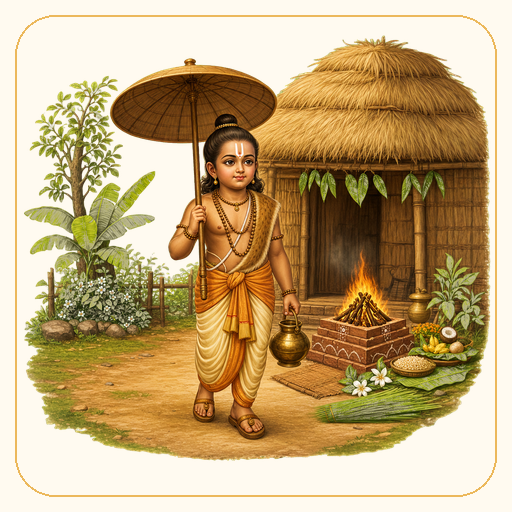
The demon king Bali (a descendant of Prahlad, a Vishnu devotee but ambitious) conquered the three worlds; the gods (Indra) lost their heavenly kingdom. To protect the gods, Vishnu took the Vamana (dwarf-Brahmin) avatar, born to Aditi and Kashyapa.
During a yajna/charity occasion, the young Vamana approaches Bali and asks for three paces of land as alms; ignoring his guru Shukracharya's warning, Bali grants the wish. Vamana immediately takes on the cosmic Trivikrama form — with one step covering the earth, and the second covering heaven and the higher realms. No place remains for the third step; Bali humbly offers his own head. Vishnu places the third step on Bali's head and sends him to Patal/Sutal loka.
Pleased with Bali keeping his word, his generosity, and his devotion, Vishnu grants him rule over Patal; some versions also describe a boon of always being present at his door as a gatekeeper. The message: the destruction of ego, alongside the glorification of humble devotion. Within this narrative tradition, the legend is said to have been told by Lord Krishna to King Yudhishthira.
The Vamana legend appears across many scriptures — the Rigveda, various Brahmanas, the Mahabharata, and the Puranas (especially the Bhagavata) — no single text is presented here as "the" definitive source. Some versions explicitly describe Vishnu remaining at Bali's door as a gatekeeper; others simply say "he was granted rule of Patal" — the core (the grant of a kingdom, alongside the glorification of humility) remains the same, with the gatekeeper detail noted only as appearing "in some versions." Bali is also known as "Mahabali," especially in Kerala tradition.
Who observes it
Vishnu/Vaishnav devotees — Vamana Jayanti is chiefly a Vaishnav avatar-jayanti; Vishnu devotees and many Vaishnav families worship/observe a vrat for the Vamana form. For those who observe avatar-jayantis (Ram Navami, Narasimha, Parshuram, Krishna Janmashtami), Vamana Jayanti is one in that series. Because of the legend's sentiment (the destruction of ego, humble devotion, cleansing of sin), this vrat is observed with that intent.
Fasting is optional — a waterless fast isn't suitable for everyone; if a strict fast isn't advisable for health or medication reasons, follow your doctor's or an expert's guidance rather than a fixed diet.
Puja vidhi
- A bath is taken on the morning of Dwadashi, followed by a sankalp for the Vamana puja/vrat.
- After cleaning the shrine/chaurang, a Vamana (gold/clay) murti or Vishnu image is installed, followed by a panchopachar/shodashopachar puja — a panchamrit abhishek, sandal paste-akshata, tulsi leaves, yellow flowers, incense-lamp (ghee), and fruit-naivedya.
- The Vishnu chant ("Om Namo Bhagavate Vasudevaya") and Vishnu Sahasranama are recited; the Vamana legend is heard, along with bhajans and aarti; naam-remembrance continues through the day.
- By tradition, rice, curd, and mishri (rock candy) are donated on this day; food, clothing, and silver are also considered meritorious to donate.
- Many devotees keep a night vigil (hari-naam bhajan).
- In the evening, or at the appropriate time, the vrat is broken with prasad after the puja and legend are heard; the exact timing depends on the tithi/tradition — check the 23 September day page for these.
Since Vamana Jayanti is an annual birth-jayanti vrat, a separate udyapan ceremony is not generally observed.
The panchang separately records "Dadhi-daan, Ksheer-vrat, Shravan-upavas" on this same day — these are co-observances tied to the Shravan-Dwadashi yog; treat this as "on this day, Dadhi/Ksheer-daan and Shravan-upavas are also prescribed for Shravan Dwadashi" as a co-occurring detail, not as a mandatory part of the Vamana puja itself.
What you need
A Vamana (dwarf-Brahmin) murti or a Vishnu image/Shaligram, a chaurang or wooden plank, a kalash, rice, clean cloth, sandal paste-turmeric-kumkum-akshata, tulsi leaves, yellow flowers/garland, incense-lamp-nirajan (ghee), panchamrit (for the abhishek), fruit-naivedya, the Vishnu Sahasranama/legend text, and rice/curd/mishri, food-cloth-dakshina for charity.
 Chaurang (wooden plank)
 Kalash
 Clean cloth
 Sandal paste
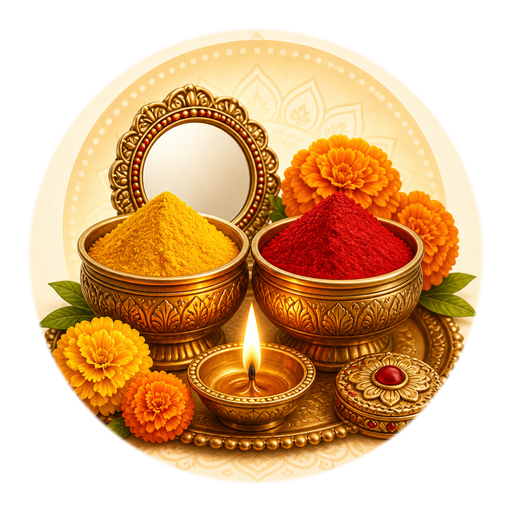 Turmeric-kumkum
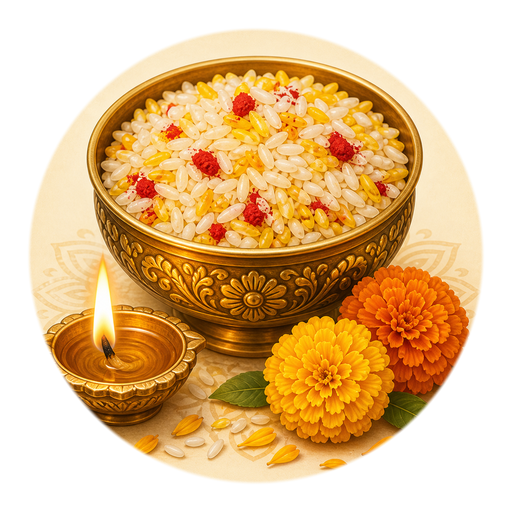 Akshata
 Tulsi leaves
 Yellow flowers
 Garland
 Incense
 Lamp
Lamp Niranjan (ghee lamp)
 Panchamrit
 Fruit
Fruit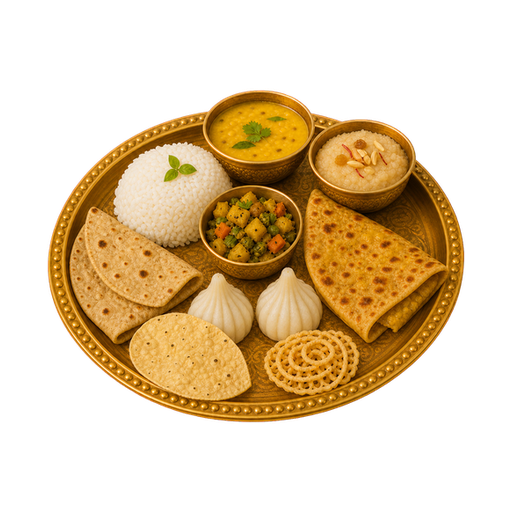 Naivedya
 Vishnu Sahasranama / legend text
 Dakshina
Fasting
Some devotees keep a strict fast (waterless or water-only), others eat only fruit (milk, fruit, sabudana-type fasting foods). Grain, rice, legumes, onion-garlic, and tamasik/non-vegetarian food are avoided. The fast is broken the next day, or at the appropriate time, with prasad after the puja and legend — check the 23 September page for the exact timing.
Mantra & stotra
The main Vishnu chant "Om Namo Bhagavate Vasudevaya" (a twelve-syllable Vishnu mantra; meaning: salutations to Bhagavan Vasudeva) is chanted during the Vamana puja. Recitation of the Vishnu Sahasranama (Vishnu's thousand names) is also prescribed.
Regional customs
Maharashtra: Vamana Jayanti is a pan-India Vaishnav avatar-jayanti. No independent source was found describing a distinct, widely prevalent public festival custom (a major pilgrimage/specific naivedya) tied to this day in Maharashtra, so no such claim is made here. This page's contextual distinctiveness is the Ganeshotsav bracket (two days before Anant Chaturdashi visarjan) and the preceding day's Parivartini Ekadashi.
In some traditions — especially Kerala's Onam — the Vamana avatar is connected to Bali's (Mahabali's) legend; by belief, Vishnu granted Bali the boon of visiting his subjects once a year, and Onam is regarded as that occasion of return. This "annual return" detail is contested — Wikipedia itself notes that no such account is found in the Mahabharata. So this is recorded here lightly, as "in some traditions/per the Kerala Onam legend," not as a universal fact. No independent source was found showing the Onam custom is observed in Maharashtra.
In North India, Vishnu puja is performed as "Vamana Dwadashi"; the neighbouring Parivartini/"Jalzhulani/Dol Gyaras" Ekadashi custom (water-play with the deity's murti) is prevalent.
Good to know
- A waterless fast isn't for everyone — the elderly, pregnant women, nursing mothers, small children, diabetics, patients, and those on regular medication should take the fruit-alternative option or seek expert advice; stay well hydrated.
- The puja sequence, fasting strictness, and charity customs vary by household/local tradition.
- Ekadashi vs. Dwadashi: per this panchang and the classical rule, Vamana Jayanti falls on Dwadashi (23 September); Parivartini Ekadashi (22 September) is a separate fasting vrat. Some traditions/sources instead call Parivartini Ekadashi itself "Vamana Jayanti/Vamana Ekadashi" — since both share the Vamana-Bali legend, this naming split reflects a genuine difference in tradition, not an error.
- The "midday/Abhijit muhurat" is the traditional account; the exact clock-time muhurat for that date depends on the panchang — check the 23 September page.
FAQ
- When is Vamana Jayanti in 2026?
- Wednesday, 23 September 2026 (Bhadrapad Shukla Dwadashi, Shravan nakshatra).
- What is Vamana Jayanti?
- The birth anniversary of Lord Vishnu's fifth (Vamana) avatar, celebrated on Bhadrapad Shukla Dwadashi.
- Which avatar of Vishnu is Vamana?
- Vishnu's 5th Dashavatara and the first of the Treta Yuga (after Narasimha); his first avatar in human (dwarf) form.
- Are Vamana Jayanti and Parivartini Ekadashi the same?
- This page places Vamana Jayanti on Bhadrapad Shukla Dwadashi (23 September), per both the classical rule and the panchang. Parivartini Ekadashi is the preceding day's Bhadrapad Shukla Ekadashi (22 September), a separate fasting vrat. Because both share the Vamana-Bali legend, some traditions/sources call Parivartini Ekadashi itself "Vamana Jayanti/Vamana Ekadashi" — a genuine difference in tradition, which is why the two are kept as distinct pages here.
- What is the legend of the Vamana avatar?
- Vamana asked King Bali for three paces of land, then in his Trivikrama form covered the three worlds in two steps and placed the third on Bali's head, sending him to Patal — pleased with Bali's devotion and generosity, he granted him rule there.
- Who is worshipped on Vamana Jayanti?
- Vishnu's Vamana form (murti/image) is worshipped with a panchopachar/shodashopachar puja — chanting the Vishnu Sahasranama, offering tulsi and yellow flowers, and a panchamrit abhishek.
- How should the Vamana Jayanti vrat be observed?
- A morning bath and sankalp, worship of Vamana, a fast avoiding grain (waterless or fruit-only), hearing the legend and bhajans, charity (rice/curd/mishri), and breaking the fast in the evening or at the appropriate time.