Gokulashtami / Krishna Janmashtami
Gokulashtami marks the birth of Bhagwan Shri Krishna, fixed by the tithi Shravan Krishna paksha Ashtami (the eighth day of the waning fortnight of Shravan masa). Krishna is believed to have been born at midnight (Nishith kaal) under the Rohini nakshatra, so devotees keep an upvas (the fast) and a night vigil on Ashtami, perform the birth puja at midnight, and do parana (break the fast) the next day (Navami). In 2026 this falls on Friday, 4 September. In Maharashtra the next day — 5 September — is celebrated with great energy as Dahi Handi / Gopalkala. For the exact midnight-puja time in a given year, see this site's today's panchang and the 4 September day page.
This year's dates (2026)
- Krishna Janmashtami / Gokulashtami — upvas & midnight (Nishith) puja (Friday)4 Sep
- Dahi Handi / Gopalkala — day two of the same festival (kala & handi) (Saturday)5 Sep
Significance
Gokulashtami = Krishna Janmashtami = Janmashtami — one and the same festival, with different names (also called Ashtami Rohini yoga, or Shri Jayanti).
Gokulashtami is one of the major festivals of the Shravan masa — alongside Nag Panchami and Narali Purnima / Raksha Bandhan. Shri Krishna is the eighth avatar (purnavatar) of Bhagwan Vishnu — the teacher of the Gita, the hero of the childhood leelas of Gokul and Vrindavan, and the lord of Dwarka — and so is revered across India.
The core belief is that Krishna was born at midnight, on the Ashtami tithi under the Rohini nakshatra; that is why the focus of the puja and the vigil is the Nishith kaal (midnight). The festival is special at Gokul, Mathura, Vrindavan, Dwarka and Jagannath Puri; in Maharashtra, the public celebration of Dahi Handi and Gopalkala gives it a distinct identity.
The tithi is the real identity; the Gregorian date is only that year's detail. The what / why / how and the katha live on this page (evergreen); but the exact timings for a given year — the Nishith puja window, the Ashtami/Rohini end times, the parana time and that day's Rahukaal — are date-bound and belong on the 4 September day page.
A note (specific to 2026): the general rule is only that Janmashtami falls on the day when Ashtami is strong at Nishith kaal, and the Rohini nakshatra yoga is considered especially auspicious. It is not the case that Ashtami and Rohini coincide exactly at midnight every year; the precise timings shift year to year and are best read on the day page.
The legend (katha)
There is one main Puranic story (its sources are the Bhagavata Purana — 10th canto, the Harivamsha and the Vishnu Purana — ancient and public-domain). Its shared thread is told respectfully below; the details differ across versions, so no single version is presented as the "final" one.
Kamsa, the tyrant king of Mathura, received a prophecy that the eighth child of his sister Devaki and her husband Vasudeva would be his end. In fear, he imprisoned Devaki and Vasudeva and began killing their children one by one.
At midnight on Shravan Krishna Ashtami, the eighth child — Shri Krishna — was born. At that moment the guards fell asleep and the prison doors opened on their own. Vasudeva carried the newborn Krishna across the (rain-swollen, flooding) Yamuna to Nanda and Yashoda in Gokul, and brought the newborn girl from there back to Kamsa. Krishna then grew up in Gokul in the love of Yashoda and Nanda; Balaram was his elder brother.
In some versions details such as the role of Yogamaya, Sheshnag holding a canopy over Vasudeva's head, and the Yamuna parting to make way are told; these details differ from source to source, so they are best taken in the form "in some versions it is said that…".
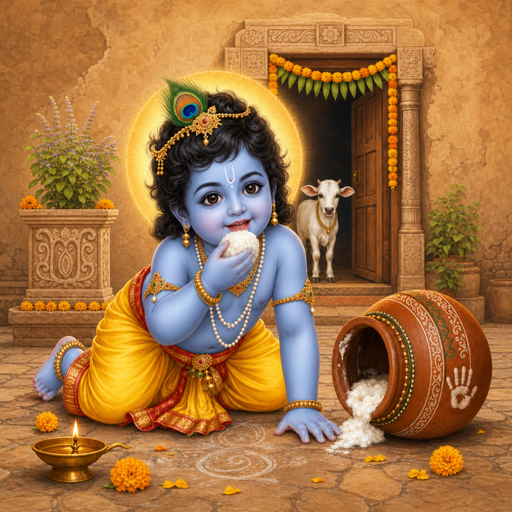
The companion story of Gopalkala: while grazing the cows along the Yamuna, Krishna and his companions would pool everyone's tiffins together to make a kala (a mixture) and share it; the child Krishna would also steal butter and curd from house to house. In imitation of these childhood leelas, the day after Janmashtami is celebrated as kala and Dahi Handi. (Kala literally means "to mix together.")
Who observes it
Krishna devotees — women, men and whole families — keep the upvas and a night vigil on Ashtami and perform the birth puja at midnight. Dahi Handi / Gopalkala, on the other hand, is a social and public celebration — held by Govinda troupes (young men and women), mandals, and neighbourhood by neighbourhood.
Puja vidhi (how to perform)
The general sequence is below; the exact mantras, sankalp and steps vary by family and by the priest's tradition, so it should not be taken as the only "rule."
- On Ashtami (or from the midnight of Saptami), after a purifying bath, take the upvas sankalp (the vow of the fast).
- Perform shodashopachar puja of a murti or image of the child Krishna (and Devaki); where that is not possible, panchopachar.
- A night-long vigil — Krishna katha, recitation of the Bhagavata Purana, bhajan-kirtan, and dance and song.
- The moment of Krishna's birth at midnight (Nishith kaal) — abhishek / bath of the infant Krishna, clothes and ornaments, the palna (cradle), aarti and mahanaivedya.
- Parana the next day (Navami) — breaking the fast after the uttar-puja / mahanaivedya.
As this is an annual tithi festival, it has no fixed "udyapan" the way a vrat series does. The main puja is at midnight; the exact Nishith time for a given year shifts by city, so check it on the 4 September day page.
What you need (samagri)
A murti or image of the child Krishna and a palna (cradle), haldi-kunku, akshata and gandha, flowers and tulsi, dhoop-deep and niranjan, panchamrut (milk, curd, ghee, honey, sugar) for the abhishek, butter-sugar and fruit for the naivedya, clothes and ornaments, and the aarti items. (The samagri varies a little by region and family tradition.)
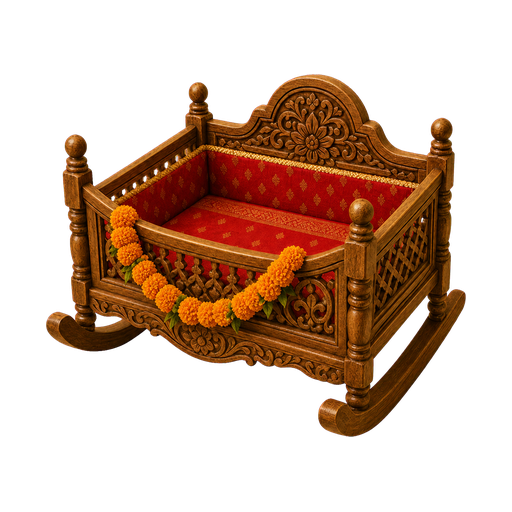 Palna (cradle)
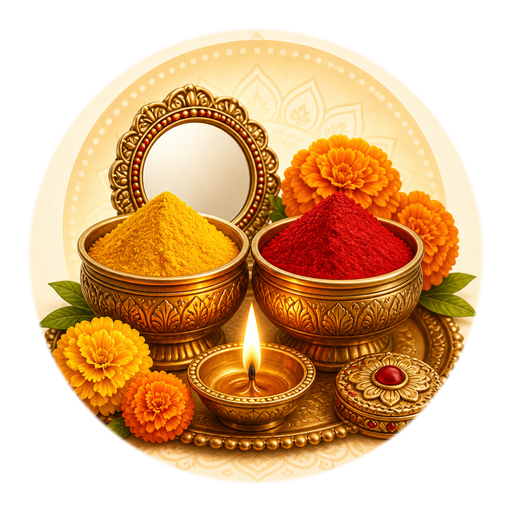 Haldi-kunku
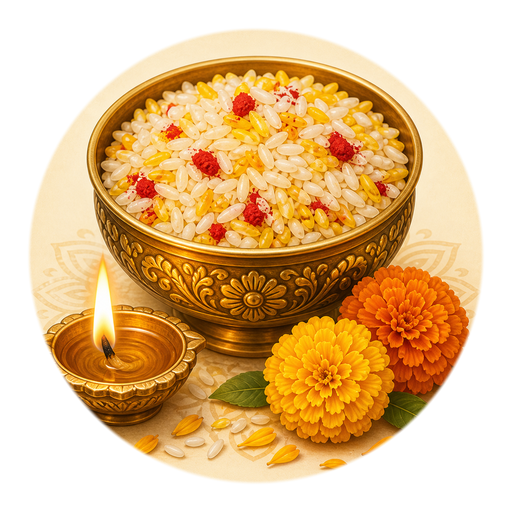 Akshata
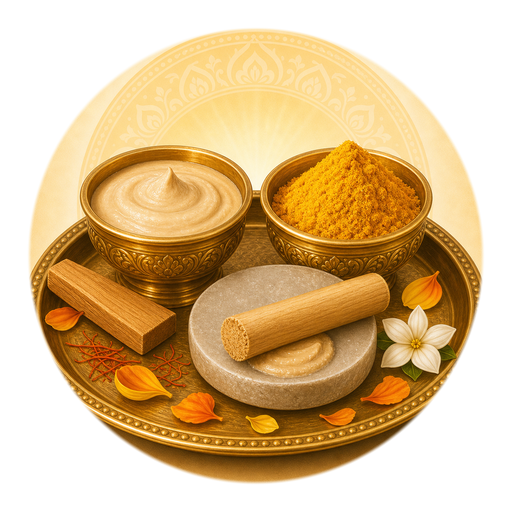 Gandha
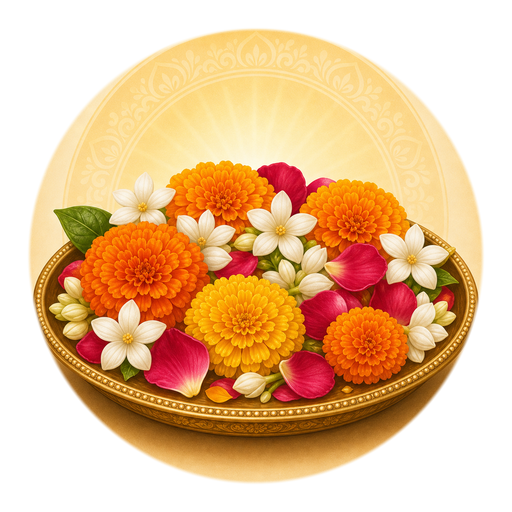 Flowers
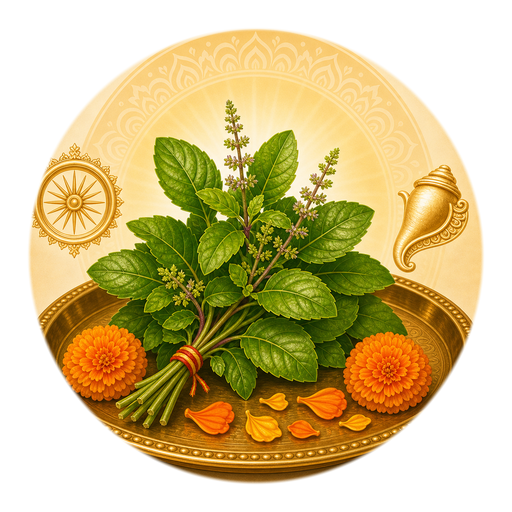 Tulsi
Tulsi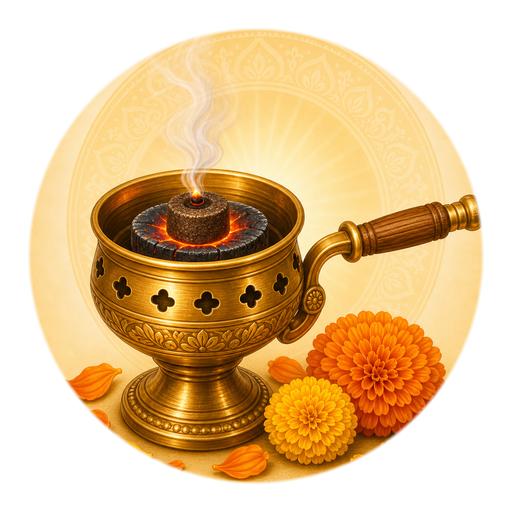 Dhoop
Dhoop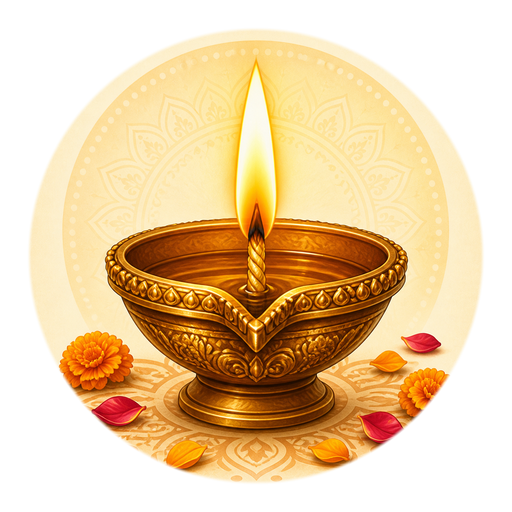 Deep (lamp)
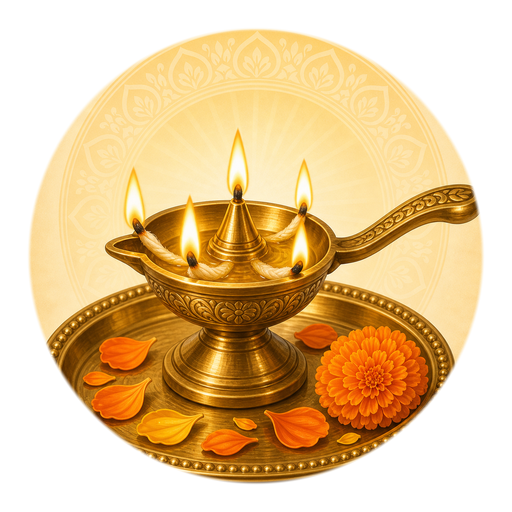 Niranjan
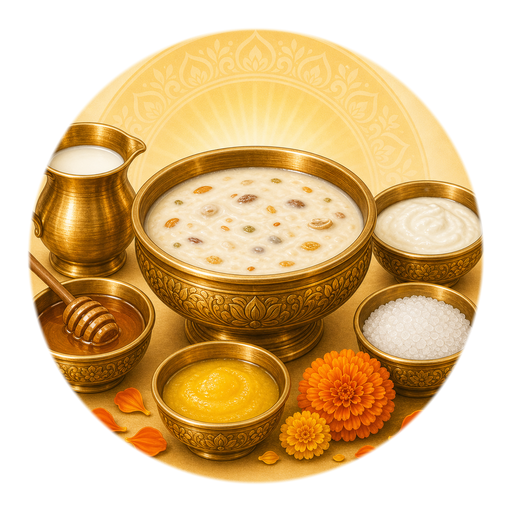 Panchamrut
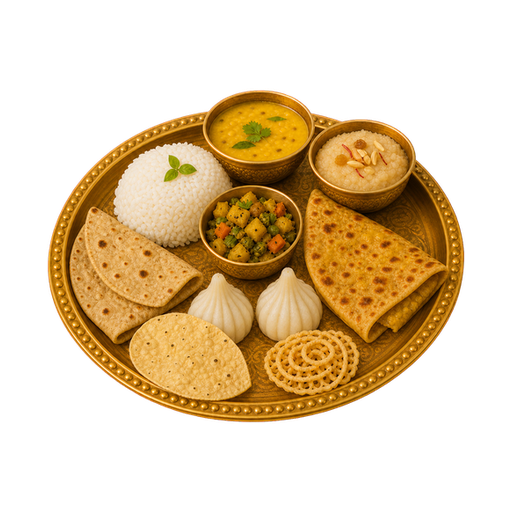 Naivedya (butter-sugar)
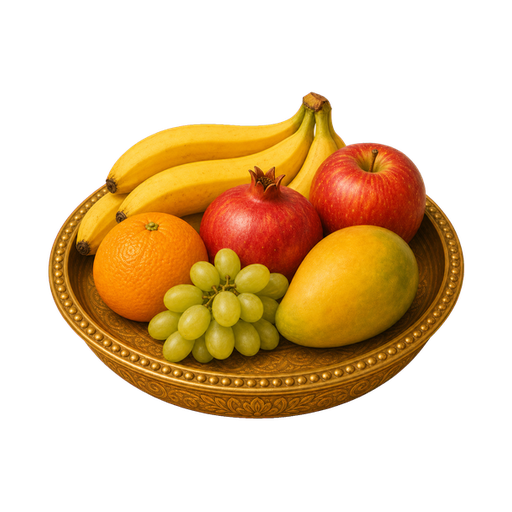 Fruit
Fruit Clothes
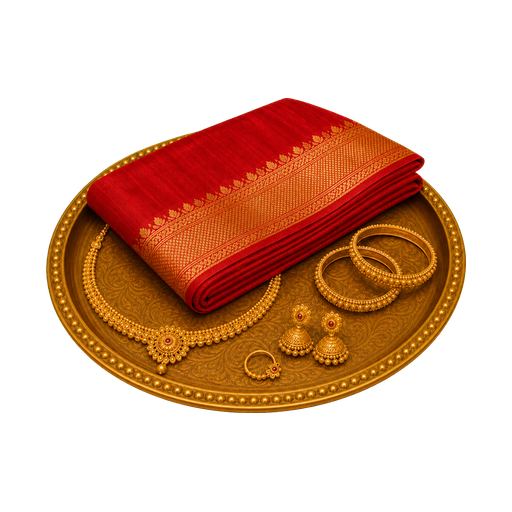 Ornaments
Fasting & food (upvas)
- On Ashtami people keep either an ekbhukt (one meal) or a full / waterless (nirjal) upvas, along with the night vigil.
- Parana is on the next day (Navami) — traditionally after both the Ashtami tithi and the Rohini nakshatra have ended (after sunrise), or during the day once one of them has ended.
The strictness of the upvas (nirjal / phalahar / ekbhukt) and the exact parana time vary by family and by sampradaya (tradition), so treat these as your household's custom rather than a universal rule. If Janmashtami falls on a Monday, it coincides with the Shravani Somvar fast and the question of "which to break first" arises — but in 2026 Janmashtami is on a Friday, so this clash does not occur this year.
Mantra & aarti
The dwadashakshar mantra (traditional / Puranic): "Om Namo Bhagavate Vasudevaya" — its meaning (in brief): salutations to Bhagwan Vasudeva (Shri Krishna). This is a well-known jap mantra of Krishna worship.
Krishna aarti — "Ovalu Aarti Majhya Madan Gopala" (by Eka Janardani / Sant Eknath) — sung after the midnight puja on Janmashtami, and daily in homes.
Regional variations (Maharashtra)
In Maharashtra the strength of this festival is Dahi Handi / Gopalkala (day two, 5 September 2026):
- A handi filled with curd, butter and poha (flattened rice), tied up high, is broken by Govinda troupes who build a human pyramid (thar); the cry "Govinda ala re ala" is raised. This is an imitation of the child Krishna's butter-stealing leela.
- In Mumbai, Thane and Pune there are large competitions, prizes, and political and Bollywood participation.
- The prasad of Gopalkala: poha, jowar/grain puffs (lahya), curd, buttermilk (taak), butter, sugar/jaggery, chana dal, cucumber and pieces of fruit — all mixed together into a kala.
Dahi Handi regulation — an evolving position (do not take any one rule as final):
- 2014 (Bombay High Court): human-pyramid height ≤ 20 feet / 4 tiers, and a minimum age of 18 for Govindas; the state government barred participation by children under 12.
- 2016 (Supreme Court): the High Court's order was upheld; relaxation was refused.
- 2017 (Bombay High Court): participation by children under 14 was barred; and it noted that placing limits on height/age is within the remit of the state legislature, not the court.
- 2022 (Maharashtra government): Dahi Handi was declared an "adventure sport", with insurance cover for Govindas, an announcement of eligibility for government jobs under sports reservation, and a year-round Pro Govinda competition.
Other regions (for the record): North India has Raslila and Mathura-Vrindavan; Gujarat/Rajasthan have Makhan Handi, garba/raas and Pushtimarg; the South has kolam and painted footprints; the East/Northeast have Sattriya and Manipuri Raslila. Amanta vs Purnimanta naming: in Maharashtra (amanta) this tithi is Shravan Krishna Ashtami; in the North's purnimanta tradition the same tithi is called Bhadrapad Krishna Ashtami — the same day, only the month-name differs.
Good to know
- Dahi Handi safety: falls from high tiers have caused serious and even fatal injuries. Do not put small children on high tiers; use safety equipment and insurance, and observe the age limits.
- The rules change: the height/age/insurance rules have shifted with court and government decisions (2014 to 2022) — check the current year's rules.
- Fasting and health: a waterless or strict fast should be undertaken by the elderly, diabetics and pregnant women only on medical advice; keep well hydrated during the night vigil.
- Smarta / Vaishnava date difference: in some homes or temples Janmashtami may fall on a different day; the Maharashtra-tradition date is the primary one here, and this difference is noted in the FAQ below.
FAQ
- When is Gokulashtami / Krishna Janmashtami in 2026?
- Friday, 4 September 2026 (Shravan Krishna Ashtami, Rohini nakshatra). Dahi Handi / Gopalkala is the next day — 5 September 2026 (Navami).
- On which tithi and nakshatra was Shri Krishna born?
- On Shravan Krishna Ashtami, at midnight, under the Rohini nakshatra — as per belief.
- Are Gokulashtami and Janmashtami the same?
- Yes. Gokulashtami, Krishna Janmashtami and Janmashtami are names of one and the same festival (also called Ashtami Rohini yoga / Shri Jayanti).
- How and when should the Janmashtami puja be done?
- Keep the upvas and a night vigil on Ashtami; at midnight (Nishith kaal) perform the birth puja, abhishek and palna-aarti of the infant Krishna. Where shodashopachar is not possible, panchopachar. (The exact time for a given year is on the day page.)
- When and how should the Janmashtami fast be broken?
- Traditionally parana is done the next day (Navami) after the Ashtami tithi and Rohini nakshatra have ended; the strictness and the time vary by family and sampradaya.
- When is Dahi Handi, and why is it celebrated?
- On the day after Janmashtami (5 September 2026). In imitation of the child Krishna's butter-stealing leela, a handi tied up high is broken by Govinda troupes who build a human pyramid.
- What is Gopalkala?
- Kala means "to mix together." It is a prasad made by mixing poha, curd, grain puffs (lahya), buttermilk and fruit — drawn from the story of Krishna and his companions pooling their tiffins.
- Why do Smarta and Vaishnava traditions observe Janmashtami on different days?
- Because the rules for fixing the tithi and nakshatra differ, some traditions can be a day apart (the Smarta tradition looks for a strong Ashtami+Rohini at Nishith kaal, while the Vaishnava/ISKCON tradition never keeps it on Saptami and prefers Ashtami/Navami with Rohini). The Maharashtra-tradition date is the primary one here; 5 September is the Dahi Handi / Navami day, not a "Vaishnava Janmashtami." Confirm the exact date with your own temple or sampradaya.
- What are the rules on Dahi Handi pyramid height and Govindas' age?
- These rules have changed with court and government decisions (2014 High Court: ≤ 20 feet / 4 tiers, age 18 → 2017 High Court: under-14 barred → 2022: adventure sport with insurance). Check the current year's rules with local authorities before you take part.