Pithori Amavasya
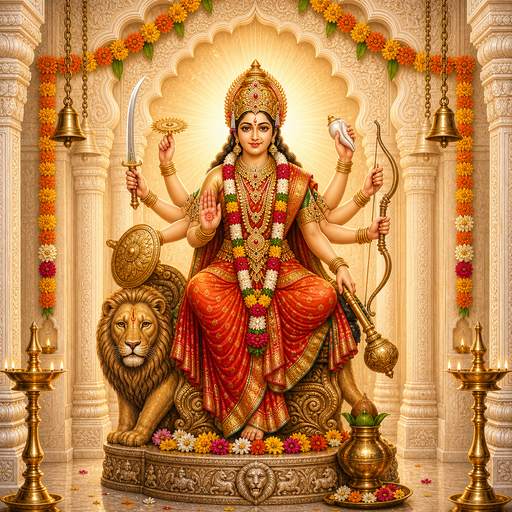
Pithori Amavasya falls on Shravan Krishna Amavasya (the amanta name used in Maharashtra and Gujarat; purnimanta regions call it "Bhadrapad Amavasya") — it's a vrat mothers observe for their children's health and long life, praying to the 64 Yoginis and Sapta Matrikas, which is why it's also called "Mother's Day." This year (2026): Thursday, 10 September. The same day is also, statewide, Bail Pola — a separate farming-gratitude festival that shouldn't be confused with this one.
This year's dates (2026)
Significance
This is a vrat of maternal devotion and a wish for one's children's long life — mothers seek the blessing of the 64 Yoginis and Sapta Matrikas for their children's health and prosperity; it's believed that observing this vrat keeps children safe and healthy. This is a faith-based belief, not a medical claim.
"Pith" means flour — in earlier times, images of the 64 goddesses (and, in some traditions, Durga as well) were shaped from flour and worshipped, which is where the name "Pithori" comes from.
Some sources also refer to a goddess named "Pithori Devi" within this group — whether she's a distinct deity separate from the 64 Yoginis, or simply a collective name for the flour images themselves, isn't made clear in any source.
English sources also know this same day as "Kushotpatini" or "Kushagrahani Amavasya" — by these external sources, the kusha grass needed for a full year of shraddha rites is gathered on this day under specific rules; after the Bhadrapad full moon, that same grass is used for Agastya's tarpan, marking the start of Pitru Paksha. This date's panchang also separately carries a "Darbhaharan" label. This is only preparation for the coming Pitru Paksha, not Sarvapitri Amavasya itself (which falls on a different date, about a month later).
The order of worship, materials, and fasting rules vary by family and region.
The legend
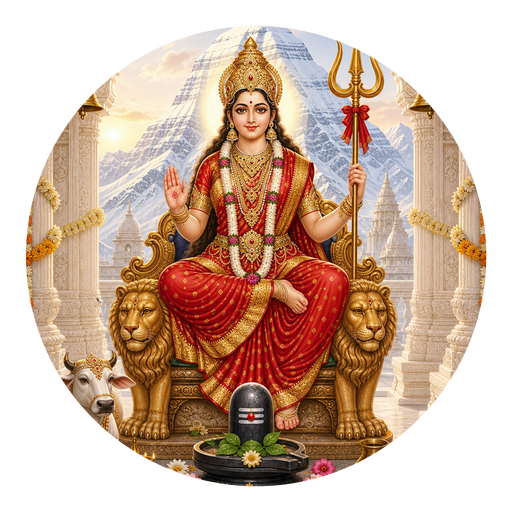
In the home of a poor but devout Brahmin, his father's shraddha was performed every year on Shravan Amavasya. On that very day, year after year, his daughter-in-law would go into labor and the newborn child would die — this happened for several years in a row (six to seven years, depending on the source), repeatedly disrupting the shraddha rite. Enraged, her father-in-law eventually drove her out of the house, into the forest, with her dead child. In the forest, the wife of a forest spirit gave her shelter and told her to hide near a Shivling. That same night, naga maidens, celestial maidens, and seven apsaras came to worship at that Shivling; hearing her story, they brought her dead children back to life and taught her this vrat of the 64 Yoginis, telling her to spread it among mortals. She returned home with her living children; the family, including her father-in-law, was reconciled, and the vrat is believed to have become established from then on. This is a widely told folk legend.
Sources vary on the type of tree in the legend — some versions say a bel tree, others a banyan tree; both are recorded here, with neither treated as settled.
Sources also vary on the protagonist's name — Marathi sources leave her unnamed, simply describing the six-to-seven-year series of childbirth deaths; one English source, however, names her "Videha" and says eight sons died.
Who observes it
Mainly married women (suvasini) and mothers — observing this vrat for their children's health, long life, and well-being. Anyone can perform general charity and tarpan, but the vrat's main focus remains mothers. It's observed across India — as "Bhadrapad Amavasya" in purnimanta regions, and as "Shravan Amavasya"/"Pithori Amavas"/"Matru Amavasya" in Maharashtra and Gujarat (amanta).
Vrat vidhi
The sequence below is a general one compiled from multiple sources — the exact order and mantras vary by family tradition.
- A morning bath (with Ganga water mixed in, where possible) is taken, followed by a day-long fast.
- In the evening, after bathing, eight kalash are set up and worshipped along with whole grains.
- Images of the 64 goddesses (and, in some traditions, Durga as well) are shaped from flour and worshipped — this is where the name "Pithori" comes from.
- Kheer-puri (in some regions, puran-poli or other sweets) is offered as naivedya.
- There's a special custom of carrying a covered plate of naivedya on one's head and asking, "Who is the guest?" — the child present answers by saying their own name, and that same food is then given to them as a blessing (van).
- Turmeric, kumkum, and flowers are offered, followed by an aarti.
In some traditions, pitru-tarpan or shraddha is also performed on this day (the general rule for Darsha Amavasya) — the detailed tarpan procedure is on the Pitru Paksha page. This is an annual, one-day vrat.
Puja samagri
Flour (for the images), rice-ghee-milk (for the kheer), turmeric, kumkum and akshata, flowers and garlands, besan (for ornaments, in some traditions), a 108-bead cotton thread, eight kalash, pictures of the 64 goddesses where available, and a lamp with aarti materials. This list is general — it varies by family and region.
Fasting / dietary rules
Married women (suvasini) fast through the day and take the naivedya (kheer-puri) only after the evening bath and puja. The exact rules — waterless versus fruit-based fasting — aren't clearly or consistently given across sources; this can vary by family and local tradition.
Mantra / aarti / stotra
No specific, widely-recognized mantra or stotra is established for Pithori Amavasya — it varies by tradition. A stavan to the 64 Yoginis and Sapta Matrikas is mentioned in several sources, but its full text isn't available in any of them — only the meaning and purpose are given.
Regional customs
In Maharashtra and Gujarat (the amanta reckoning), this is considered Shravan Amavasya; in the rest of India (the purnimanta reckoning), the same tithi is known as "Bhadrapad Amavasya" — the same day, not a separate occasion. In Maharashtra and Gujarat, it's also called "Pola Amavasya," "Matru Amavasya," or simply "Pithori Amavas."
In Maharashtra, the statewide festival of Bail Pola also falls on this same day — household accounts often describe mothers giving their children a blessing (van) right after worshipping the bulls, and media coverage frequently covers both in the same story. But these are two conceptually separate festivals/vrats — one a farming-gratitude festival, the other a maternal vrat — and shouldn't be merged; detailed Bail Pola information is on its own page.
Pithori Amavasya also shouldn't be confused with the Jivitputrika (Jitiya) vrat — Jitiya falls on Ashwin Krishna Ashtami, observed mainly in Bihar, Jharkhand, and Uttar Pradesh (a waterless fast). Both fall under the broad category of "a mother's vrat for her children," but the tithi, region, and puja structure differ — they aren't the same vrat.
This year's date
| Date | Day | Tithi | Nakshatra | Note |
|---|---|---|---|---|
| 10 September | Thursday | Shravan Krishna Amavasya (Chaturdashi until 10:33 AM, then Amavasya) | Magha (ends 2:04 PM) | The panchang names this day 'Darsha Pithori Amavasya'; the same day also carries Pola/Vrishabh Pujan, Matrudin, Brihaspati Pujan, and Darbhaharan |
This is the only occurrence in 2026. On 11 September, the Amavasya tithi continues until the morning (8:56 AM), but that's the "second sunrise day" of the same Amavasya, not a separate new occasion.
Good to know
- Three separate threads, one day: 10 September brings together three conceptually distinct threads — Pithori Amavasya (a mother's vrat), Bail Pola (a farming-gratitude festival), and Darsha Amavasya/Darbhaharan (preparation for the coming Pitru Paksha) — don't take all three as the same thing.
- Don't confuse it with the Jitiya vrat — the tithi, region, and puja structure differ (see above).
- Don't confuse it with Sarvapitri Amavasya either — that falls on a separate tithi about a month later, marking the close of Pitru Paksha.
- Pregnant and nursing mothers, and anyone with a health concern, should decide the form of their fast on medical advice.
FAQ
- When is Pithori Amavasya in 2026?
- Thursday, 10 September 2026 (Shravan Krishna Amavasya, amanta).
- Why is Pithori Amavasya observed?
- Mothers worship the 64 Yoginis and Sapta Matrikas for their children's health, long life, and well-being — which is why it's also called "Mother's Day."
- Why is it called "Pithori" Amavasya?
- In earlier times, images of the 64 goddesses were shaped from flour (pith) and worshipped, which is how it got the name "Pithori."
- Why do Pithori Amavasya and Bail Pola fall on the same day?
- In Maharashtra (by the amanta reckoning), both fall on Shravan Amavasya, but they're conceptually separate — Pola is the farmers' bull-gratitude festival, while Pithori is the mothers' vrat for their children. Detailed Bail Pola information is on its own page.
- Are Pithori Amavasya and Jivitputrika (Jitiya) vrat the same?
- No. Jitiya is observed on Ashwin Krishna Ashtami, mainly in Bihar, Jharkhand, and Uttar Pradesh; Pithori falls on Amavasya, centered on worship of the 64 Yoginis. The two are separate vrats.
- How is the worship of the 64 Yoginis performed on Pithori Amavasya?
- By setting up eight kalash, shaping images from flour, and offering kheer-puri as naivedya; children are asked "who is the guest?" and given a blessing (van) in response.
- Who should observe the Pithori Amavasya vrat?
- Mainly married women (suvasini) and mothers — for their children's health and well-being.
- Why is Pithori Amavasya also called "Mother's Day"?
- Since this is primarily a vrat observed by mothers for their children's well-being, it's also called "Mother's Day."
- Does Pithori Amavasya fall in Shravan or Bhadrapad?
- Maharashtra and Gujarat (amanta reckoning) treat it as Shravan Amavasya; the rest of India (purnimanta reckoning) knows the same tithi as Bhadrapad Amavasya — the same day, just a difference in naming.
- What happens in the Pithori Amavasya vrat katha?
- A Brahmin family's daughter-in-law loses her children year after year; in the forest, near a Shivling, celestial maidens and apsaras bring her children back to life out of compassion and teach her the vrat of the 64 Yoginis — that's the core of this popular legend.