Kaal Bhairav Jayanti
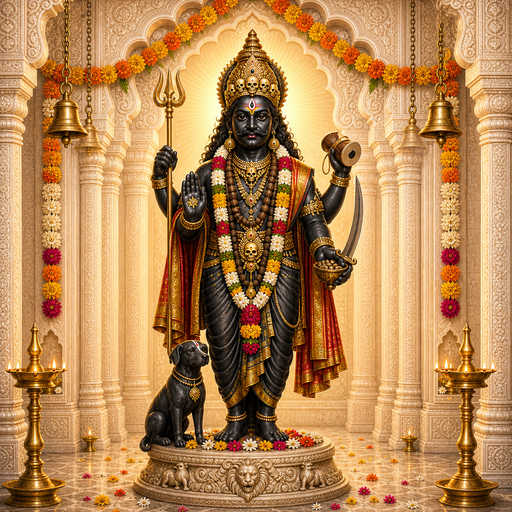
Kaal Bhairav is Lord Shiva's fierce form — dark-complexioned, riding a dog, regarded as the "Guardian of Kashi." Kaal Bhairav Jayanti falls on Margashirsh Krishna Ashtami (the festival's common purnimanta name; Kartik Krishna Ashtami per this site's amanta panchang) — the day Kaal Bhairav is believed to have manifested on earth. In 2026, this Jayanti falls on Tuesday, 1 December. Only one Kaal Bhairav Jayanti occurs each year.
This year's dates (2026)
Kalashtami falls every month on Krishna Ashtami; the Margashirsh Kalashtami is the annual Kaal Bhairav Jayanti — the most significant one.
Significance
Kaal Bhairav is regarded as Shiva's form presiding over fear, kaal (time/death), and punishment — worshipped as the "protector/guardian" who punishes wrongdoers and protects devotees. This worship is undertaken for protection from fear, negativity, and misfortune.
Kaal Bhairav has a deep connection with Kashi — he is believed to have been freed from the sin of Brahmahatya in Kashi, and from then on became Kashi's guardian ("Kotwal"). This is the origin of the tradition of visiting Kaal Bhairav before Kashi Vishwanath darshan. The line "Kashikapuradhinathakalabhairavam Bhaje" in the Kalabhairava Ashtakam expresses exactly this.
Kaal Bhairav holds a special place in Tantric and Shaiva traditions (Kashmir Shaivism, Vijnana Bhairava Tantra); eight forms known as Ashta Bhairava are also recognised.
In Maharashtra, Kaal Bhairav/Bhairavnath is the grama devata (village guardian deity) of many villages.
The legend
According to the principal version, Brahma once grew arrogant — declaring himself the supreme creator deserving sole worship, speaking disrespectfully to Shiva as an equal. To destroy this pride, Kaal Bhairav manifested from Shiva's own body. Kaal Bhairav severed Brahma's fifth head, which brought upon him the sin of Brahmahatya. To atone for this sin, he wandered with the skull stuck to his hand; upon reaching Kashi, the sin of Brahmahatya vanished and the skull fell away. From then on, Kaal Bhairav became the guardian ("Kotwal") of Kashi.
Some versions, however, hold that Bhairava manifested from Shiva's blood, to slay the demon Andhakasura — a different origin story altogether. Both traditions are current — some legends hold that Kaal Bhairav manifested to destroy Brahma's pride, while others hold it was to slay Andhakasura.
Who observes it
Shiva devotees and Kaal Bhairav worshippers — those seeking protection from fear, misfortune, and enemies. In Maharashtra, many families and villages for whom Bhairavnath is the kuladaivat or grama devata observe this day especially. Anyone may participate.
Puja vidhi
A bath is taken before sunrise, followed by purification and a sankalp (vow); some keep a fast. A Kaal Bhairav murti or image (along with a Shiva lingam) is installed, and a mustard-oil lamp is lit before it. Sandal paste, flowers, bel leaves (on the lingam), dhoop-deep (incense and lamp), and naivedya are offered. The Shri Kalabhairava Ashtakam and Bhairav mantras are recited with focus. Feeding a black dog — regarded as Kaal Bhairav's vahana — milk, curd, and sweets is considered a special act.
Some traditions perform the puja at night (nishith kaal), though this is not observed everywhere.
What you need
A Kaal Bhairav image or murti (and a Shiva lingam), mustard oil and a lamp, sandal paste, unbroken rice, turmeric-kumkum, flowers, bel leaves, incense, camphor, naivedya (jaggery, sweets, fruit; in some places jalebi, urad dal, coconut), milk-curd-sweets for a black dog, and the Kalabhairava Ashtakam text.
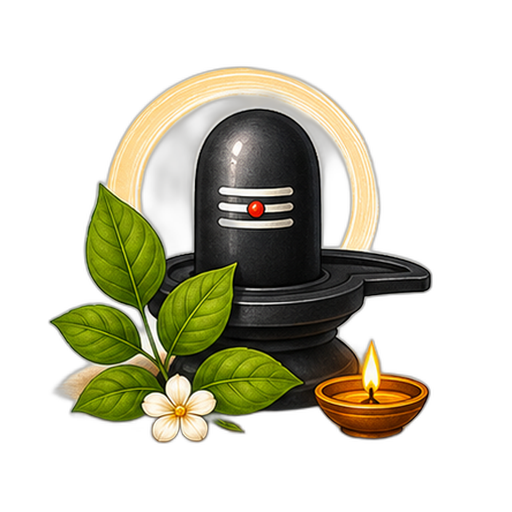 Shiva lingam
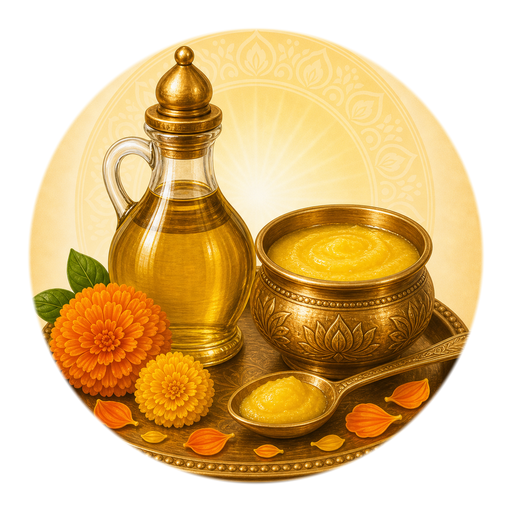 Mustard oil
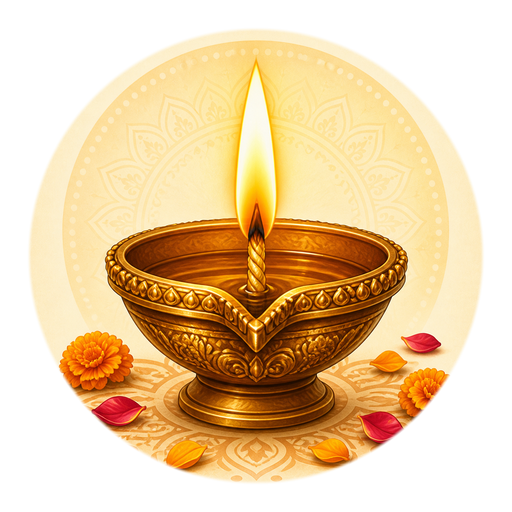 Lamp
Lamp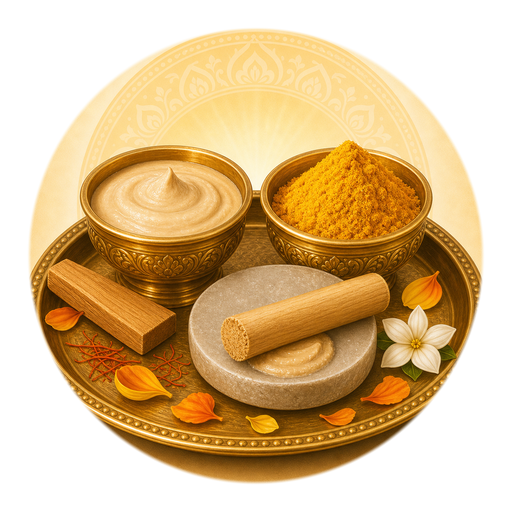 Sandal paste
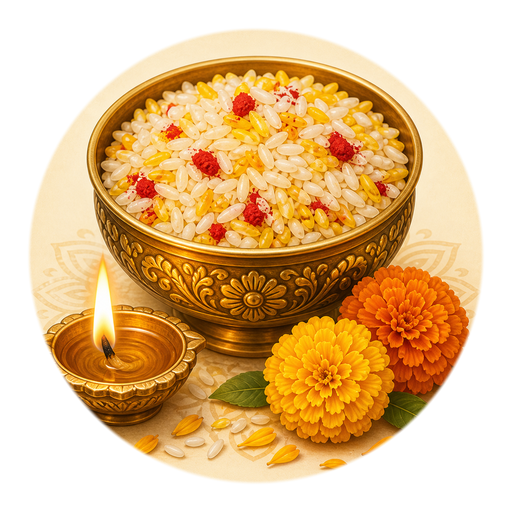 Unbroken rice (akshata)
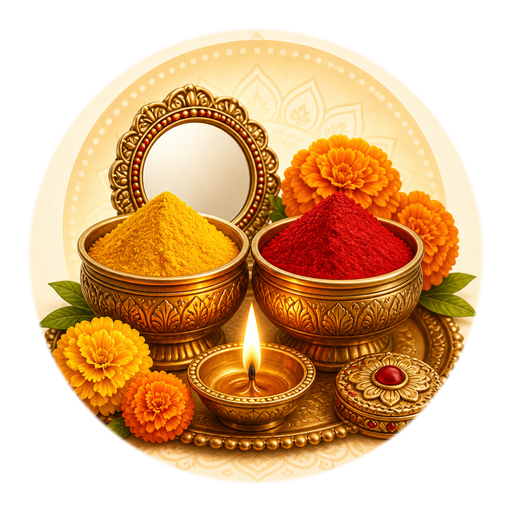 Turmeric-kumkum
 Flowers
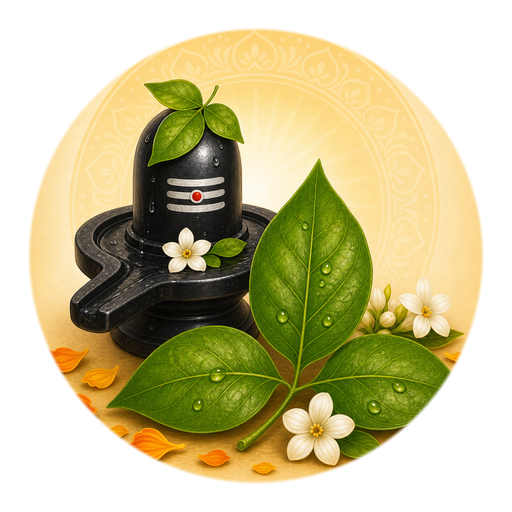 Bel leaves
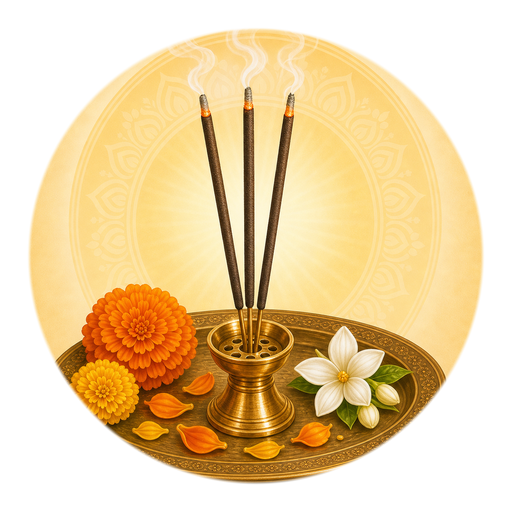 Incense stick
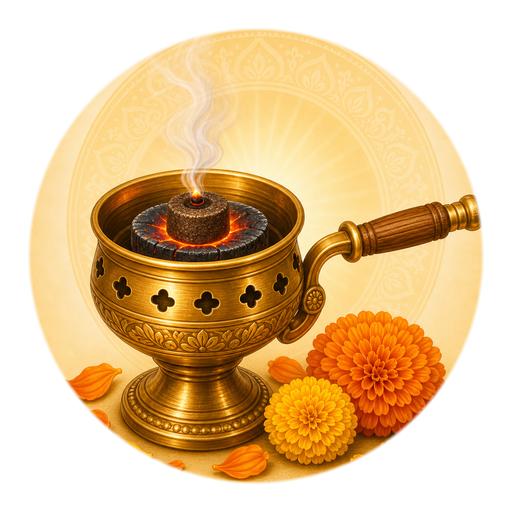 Dhoop (incense)
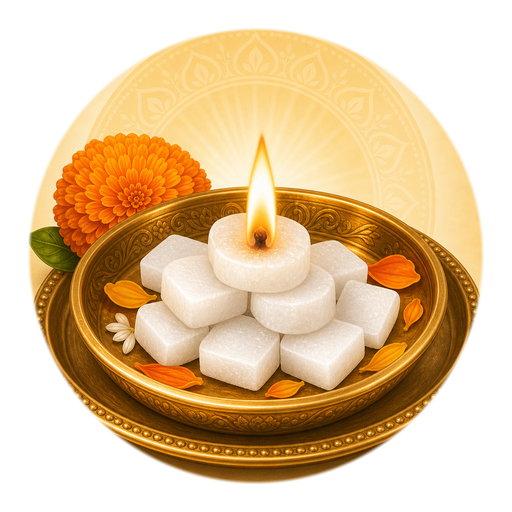 Camphor
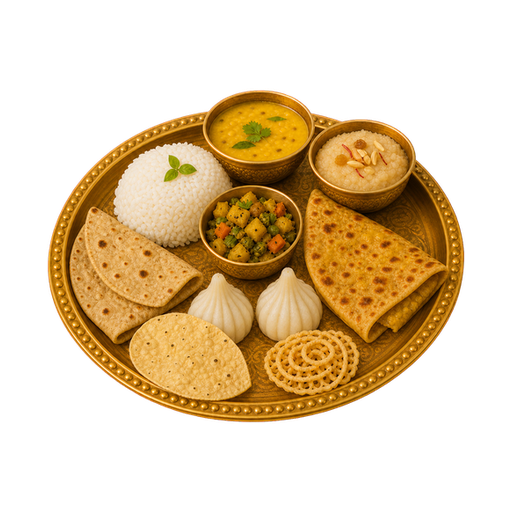 Naivedya (jaggery, sweets, fruit)
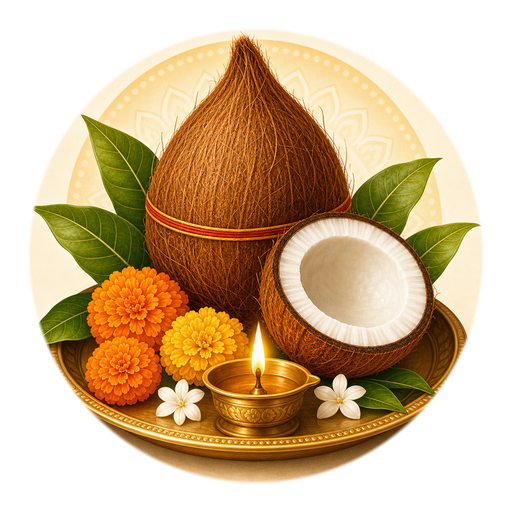 Coconut
 Kalabhairava Ashtakam text
Fasting
Many devotees keep a day-long fast on Kaal Bhairav Jayanti/Kalashtami, breaking it after the puja. The monthly Kalashtami fast follows the household's/local tradition — details vary, it is not a universal rule.
Mantra & stotra
The Shri Kalabhairava Ashtakam opens with the line "Devarajasevyamanapavananghripankajam…" — an eight-verse hymn attributed to Adi Shankaracharya (around the 8th century); each verse's refrain is "Kashikapuradhinathakalabhairavam Bhaje." Meaning: salutations to Kaal Bhairav, Lord of Kashi; recited for the removal of fear and sin. "Om Kalabhairavaya Namah" is a simple seed-mantra also chanted.
Regional customs
Bhairavnath or Kaal Bhairav is the guardian deity of countless villages across Maharashtra — worshipped as the grama devata and kshetrapal (guardian of the region). Many "Bhairavnath yatras" take place year-round (for instance, at Harihareshwar/Shingve/Wadgaon Darekar on this very Jayanti day) — these yatras are local and scattered through the year, not tied to Kaal Bhairav Jayanti itself.
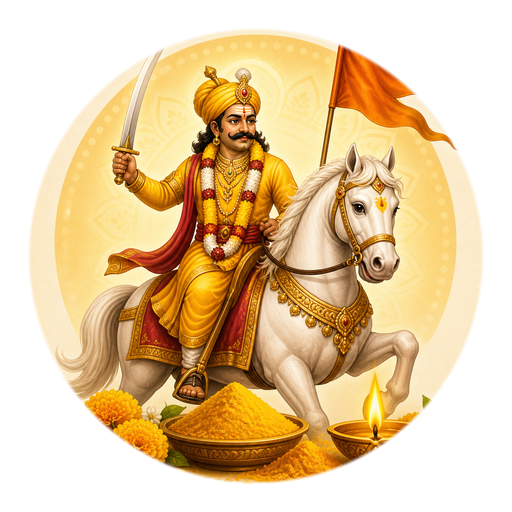
Maharashtra's popular kuladaivat Khandoba, known by his classical name Martand Bhairava, is regarded as linked to Shiva's Bhairava form.
Marathi pilgrims also make a point of visiting Kaal Bhairav (the Kotwal) during a Kashi pilgrimage.
Good to know
- The date follows the panchang (2026 = 1 December). Depending on the panchang tradition or regional calculation used, the date may vary slightly elsewhere.
- Kalashtami falls every month; the Margashirsh Kalashtami is the annual Jayanti — keep this distinction in mind.
- Both the legend (Brahma's pride vs. Andhakasura) and the Khandoba-Bhairava identity are tradition-dependent — neither should be treated as a single universal rule.
- Relief from fear/enemies/negative energy is a matter of belief, not a medical or astrological guarantee.
FAQ
- When is Kaal Bhairav Jayanti in 2026?
- Tuesday, 1 December 2026 (Margashirsh Krishna Ashtami; Kartik Krishna Ashtami per this site's panchang).
- Who is Kaal Bhairav?
- Lord Shiva's fierce form — dark-complexioned, riding a dog, regarded as the "Guardian of Kashi."
- Why is Kaal Bhairav called the 'Guardian of Kashi'?
- He is believed to have been freed from the sin of Brahmahatya in Kashi, after which he became its guardian — this is why Kaal Bhairav darshan is done before Kashi Vishwanath darshan.
- What's the difference between Kalashtami and Kaal Bhairav Jayanti?
- Kalashtami falls on Krishna Ashtami every month; the Margashirsh Kalashtami is the annual Kaal Bhairav Jayanti (the main one).
- What is Kaal Bhairav's vahana?
- A dog — which is why black dogs are fed milk, curd, and sweets.
- How is the puja performed at home?
- A mustard-oil lamp before the murti/lingam, bel leaves and flowers, dhoop-deep (incense and lamp), recitation of the Kalabhairava Ashtakam; milk and curd offered to a black dog.
- Who composed the Kaal Bhairav Ashtakam?
- Adi Shankaracharya (at Kashi) — an eight-verse hymn to Kaal Bhairav, recited for the removal of fear and sin.