Maghi Ganesh Jayanti
Maghi Ganesh Jayanti is Lord Ganesha's birth anniversary, falling on Magh Shukla Chaturthi — in this form, Ganesha is chiefly known as Mahotkat Vinayak. In 2026, this tithi falls on Thursday, 22 January. The day is also called Tilkund Chaturthi, Varad Chaturthi, and Gauriganesh Chaturthi. Compared to the widely known Ganesh Chaturthi in Bhadrapad, Maghi Jayanti is less known across most of India, but it is observed with special devotion in Maharashtra, the Konkan coast, and Goa.
This year's dates (2026)
Significance
Per Ganesh Puranic tradition, Magh Shukla Chaturthi is linked to Ganesha's Mahotkat Vinayak avatar legend. In Maharashtra and Konkan, this day is celebrated as Ganesha's birth anniversary with special devotion.
Ganesh Chaturthi, Vinayaki Chaturthi, and Maghi Ganesh Jayanti are easy to confuse, since all three relate to the same deity but mark different occasions:
| Occasion | Tithi | When | Nature |
|---|---|---|---|
| Ganesh Chaturthi | Bhadrapad Shukla Chaturthi | August/September | Public Ganeshotsav, Parthiv puja — the best-known celebration nationwide |
| Maghi Ganesh Jayanti | Magh Shukla Chaturthi | January/February | Mahotkat Vinayak avatar Jayanti — especially observed in Maharashtra, Konkan, Goa |
| Sankashti Chaturthi / Sakat Chauth | Magh Krishna Chaturthi | January/February (after Shukla) | A vrat kept by mothers for their sons' well-being (North Indian), parana after moonrise — an entirely separate observance from Ganesh Jayanti |
Different Puranic traditions/occasions associate both Bhadrapad and Magh with a Ganesha manifestation. Some accounts call Maghi "the true birthday" and Bhadrapad "only a vrat," but most traditions link both tithis to a Ganesha manifestation.
As with Ganesh Chaturthi and Vinayaki Chaturthi, Maghi Ganesh Jayanti also follows the madhyahna-vyapini (midday-prevailing) tithi principle — meaning the main puja is performed at midday, not in the morning.
The legend — Mahotkat Vinayak
The Shiva-Parvati/Gajamukh legend on the Ganesh Chaturthi page, the moon-curse legend on the Vinayaki Chaturthi page, and the Mahotkat Vinayak legend below are three entirely separate storylines.
Two demon brothers, Narantak and Devantak, obtained a boon from Shiva that made them so powerful that no god, demon, or human could kill them. Their tyranny tormented the three worlds. Since Shiva himself had granted the boon, the gods could not approach him — so they prayed to Ganesha instead. Ganesha promised to be born to the sage Kashyapa and his wife Aditi (mother of the gods). Because this birth came from the intense (utkat) prayers of gods, sages, and humans alike, the child was named Mahotkat. Once grown, Mahotkat slew both Narantak and Devantak, freeing the three worlds from fear.
Some versions differ on Mahotkat's weapons, vehicle, and number of arms — these details don't affect the story's core, so no single figure should be treated as settled. By tradition, this story is linked to Magh Shukla Chaturthi.
Who observes it
Any Ganesha devotee — especially families in Maharashtra and Konkan who give Maghi Jayanti as much importance as Bhadrapad's Ganesh Chaturthi. Ashtavinayak devotees and those connected to the Morgaon and Siddhatek temples also visit for special darshan on this day.
Puja vidhi
- An early-morning bath is taken with til-utane (a sesame paste) — mixing sesame into the bathwater is a common practice.
- The Ganesha murti or image is installed on red or yellow cloth; the main puja's auspicious window is considered to be midday.
- After prana-pratishtha, the Ganpati Atharvashirsha or a stotra is recited.
- Til-gul ladoo or sesame modak are offered as naivedya — this is where the name "Tilkund" comes from. Durva grass, flowers, incense, and a lamp are also offered.
- The puja closes with aarti; in some traditions, a day-long fast is kept, with a meal at night.
The exact clock-time of the midday window varies by date and city — only the general midday rule is given here; check the 22 January day page for the exact time.
What you need
A Ganesha murti/image (turmeric, vermilion, or clay — sometimes cone-shaped), red/yellow cloth, durva grass, flowers, unbroken rice, incense-lamp, camphor, til-gul ladoo and sesame modak, fruit and coconut. This is a general list — details can vary by tradition.
 Red/yellow cloth
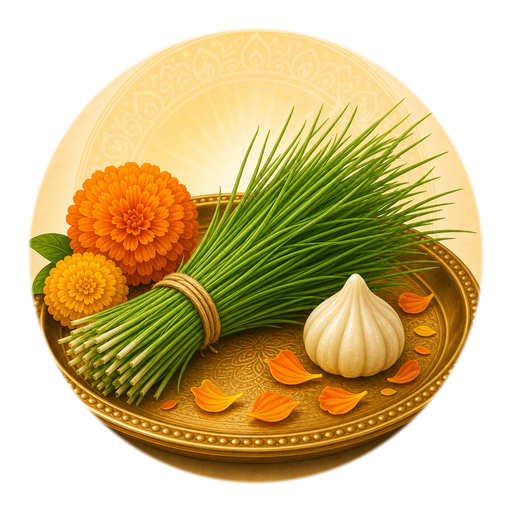 Durva grass
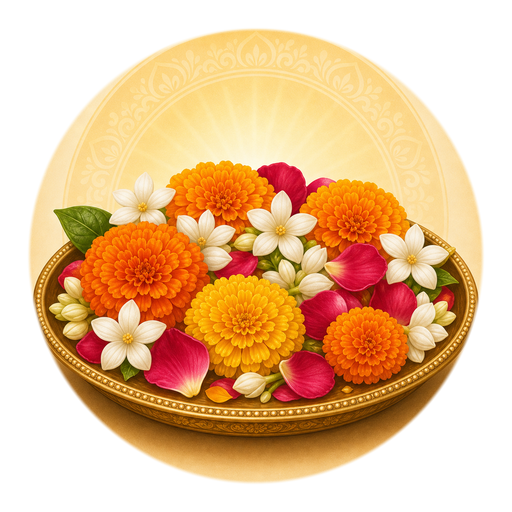 Flowers
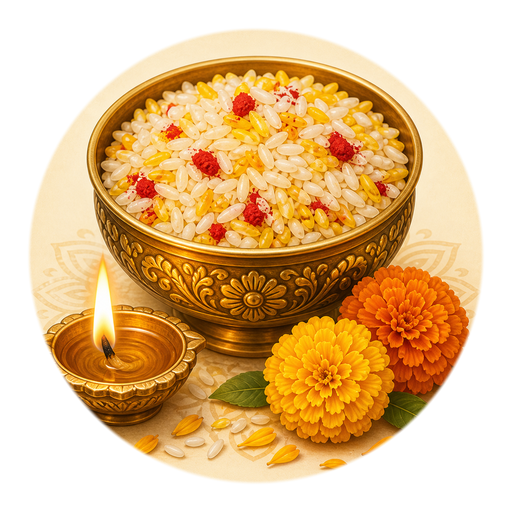 Unbroken rice (akshata)
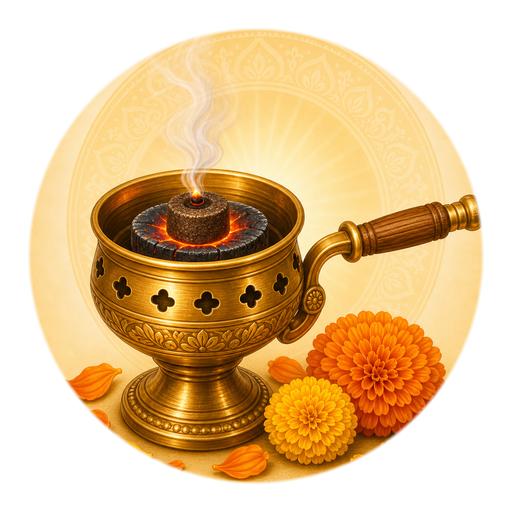 Incense
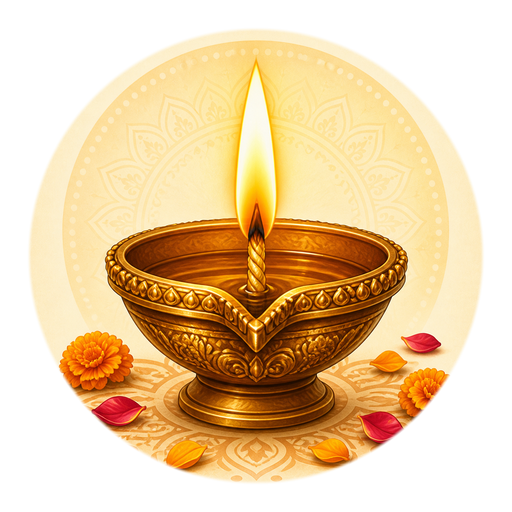 Lamp
Lamp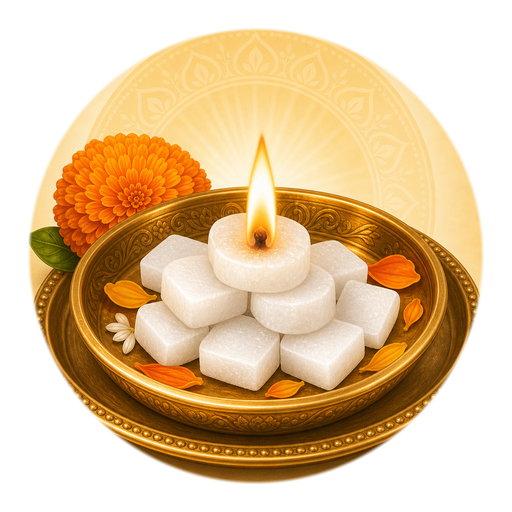 Camphor
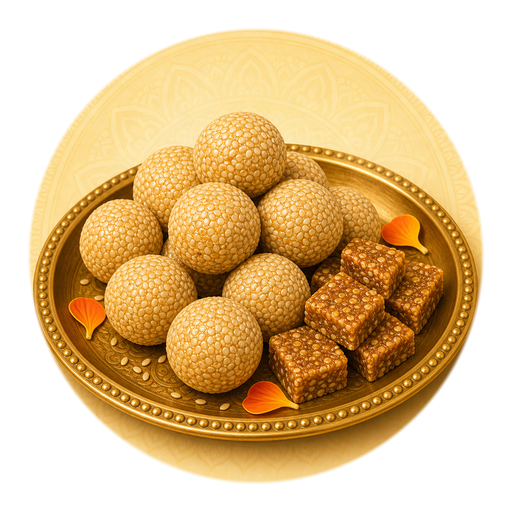 Til-gul ladoo
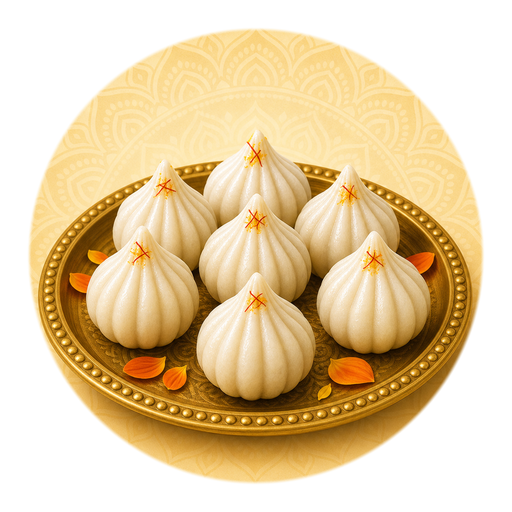 Sesame modak
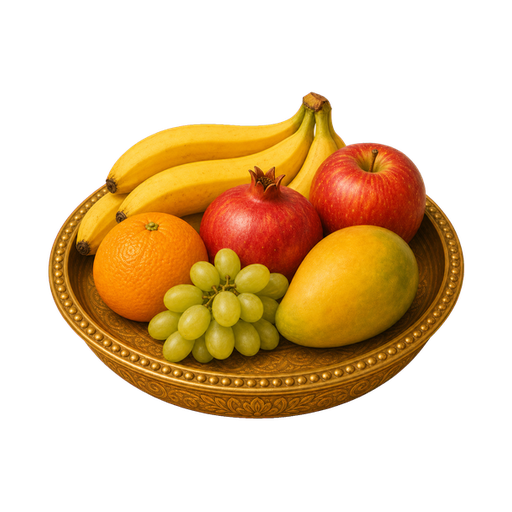 Fruit
Fruit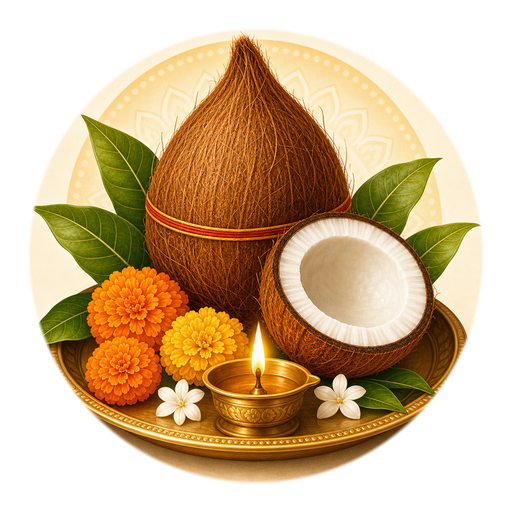 Coconut
Fasting
A day-long fast followed by a night meal is the traditional practice; some devotees eat only fruit. Strictness varies by family and regional tradition — there's no universal rule. Sesame is the day's central food item, valued traditionally for warmth and nutrition during the winter season too.
Mantra & stotra
The root mantra "Om Gam Ganapataye Namah" — a salutation to Ganesha — is chanted on this day. The Ganpati Atharvashirsha is also recited; and the Vakratunda stotra's recognisable opening line is "Vakratunda Mahakaya…" — meaning that Ganesha, with his curved trunk and vast form, radiant as the sun, grants success free of obstacles in every undertaking.
Regional customs
Compared to the rest of India, Maghi Ganesh Jayanti is chiefly observed in Maharashtra, Konkan, and Goa — it remains relatively less known than Bhadrapad's Ganesh Chaturthi.
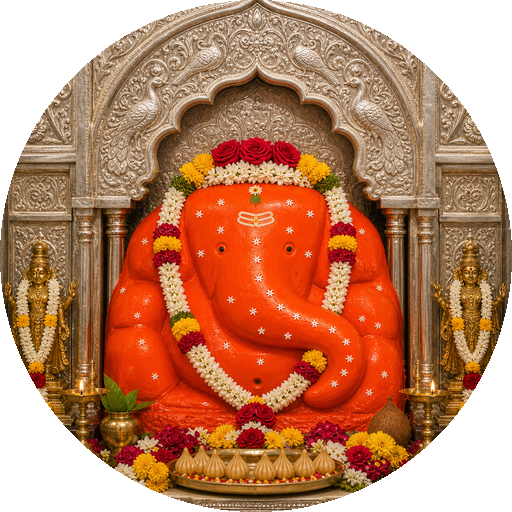
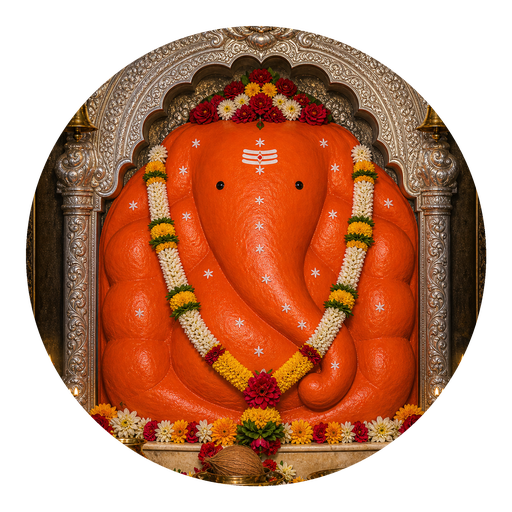
Within the Ashtavinayak circuit, the temples at Morgaon (Mayureshwar) and Siddhatek (Siddhivinayak) record special crowds and puja on this day. Morgaon is traditionally held to be Mayureshwar's manifestation-tithi.
Ganpatipule, Konkan's self-manifested Ganesha temple, can also be mentioned for regional reference.
The til-gul naivedya also ties into the region's winter food culture — consistent with the til-gul tradition of Makar Sankranti, which falls in the same Magh season.
Good to know
- Those fasting — especially people with diabetes, pregnant women, the elderly, and children — should take exemptions on medical advice; stay well hydrated during the winter season.
- Crowds can build up at Ashtavinayak temples, especially Morgaon and Siddhatek, on this day — plan darshan in advance.
- This is Tilkund Chaturthi (Shukla paksha) — don't confuse it with Sankashti Chaturthi/Sakat Chauth, which falls in the same Magh month's Krishna paksha (a separate, North Indian observance).
FAQ
- What is Maghi Ganesh Jayanti?
- Lord Ganesha's birth anniversary, falling on Magh Shukla Chaturthi — also called Tilkund Chaturthi; chiefly observed in Maharashtra, Konkan, and Goa.
- What's the difference between Maghi Ganesh Jayanti and Ganesh Chaturthi?
- Ganesh Chaturthi falls on Bhadrapad Shukla Chaturthi (September, the public Ganeshotsav); Maghi Ganesh Jayanti falls on Magh Shukla Chaturthi (January/February). Different Puranic traditions associate both tithis with a Ganesha manifestation.
- When is Maghi Ganesh Jayanti in 2026?
- Thursday, 22 January 2026 (Magh Shukla Chaturthi, Shatabhisha nakshatra).
- Why is Maghi Ganesh Jayanti called Tilkund Chaturthi?
- Because of the custom of offering til-gul ladoo and sesame modak as naivedya, and bathing with a til-utane paste on this day — hence "Tilkund" (sesame-based).
- How is Maghi Ganesh Jayanti's puja performed?
- Bathing, installing the murti, the main midday puja, til-gul naivedya, and aarti — the detailed sequence varies by tradition.
- Are Maghi Ganesh Jayanti and Sankashti Chaturthi the same?
- No. Maghi Ganesh Jayanti falls in Shukla paksha (22 January 2026); Sankashti Chaturthi/Sakat Chauth is a separate, North Indian vrat falling on Magh Krishna Chaturthi (a fast kept by mothers for their sons' well-being).
- What naivedya is offered on Maghi Ganesh Jayanti?
- Chiefly til-gul ladoo and sesame modak, along with durva grass, flowers, and fruit-coconut.