Ashtavinayak
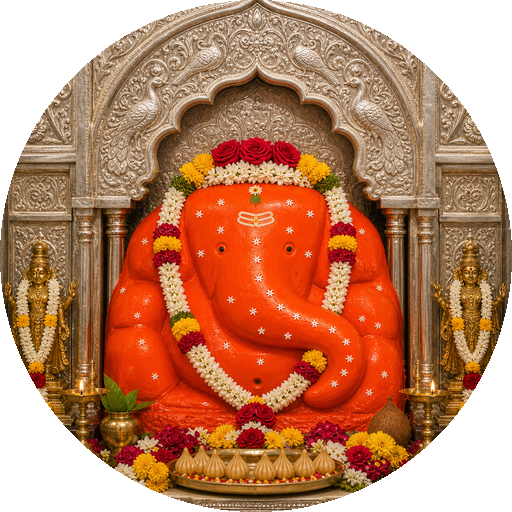
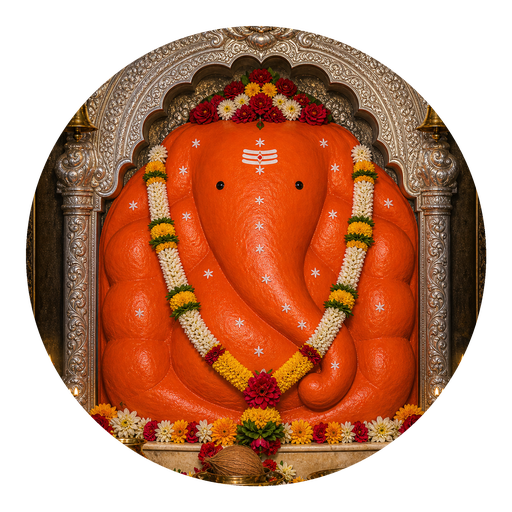
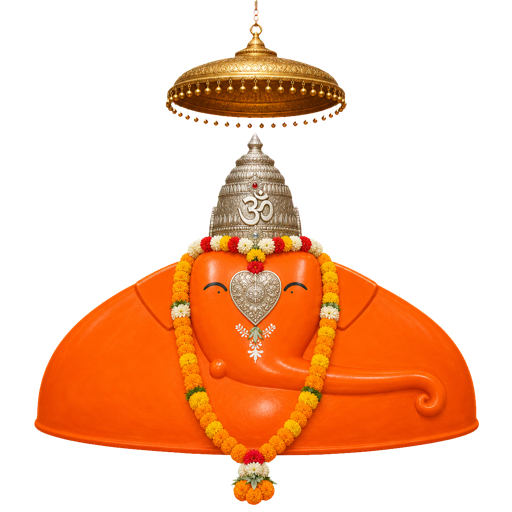
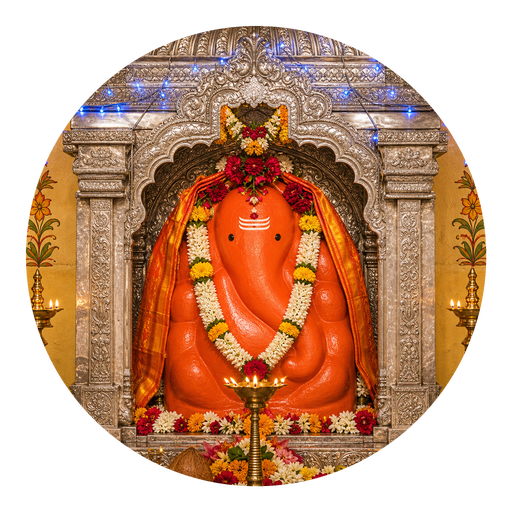
Ashtavinayak means Maharashtra’s eight ancient and revered Shri Ganesh temples — “Ashtavinayak” is Sanskrit for “eight Ganeshas”. The eight temples are spread across three districts — 5 in Pune, 2 in Raigad and 1 in Ahmednagar (Ahilyanagar). The traditional yatra (pilgrimage) begins at Morgaon (Mayureshwar) and, after all eight darshan, concludes with a second visit to Morgaon. This is a hub page — the eight Ganpatis, the yatra order and the route in one place; each temple’s full detail lives on its own page.

This year's dates (2026)
- Maghi Ganesh Jayanti / Vinayak Chaturthi (Ganpati’s birth celebration)22 Jan
- Shri Ganesh Chaturthi (main festival)14 Sep
- Anant Chaturdashi (Ganeshotsav concludes / visarjan)25 Sep
- Angarki Sankashti Chaturthi (Tuesday — heavy crowds)6 Jan
- Angarki Sankashti Chaturthi (Tuesday)5 May
- Angarki Sankashti Chaturthi (Tuesday)29 Sep
Ashtavinayak darshan is regarded as the most prestigious pilgrimage for Ganesh devotees in Maharashtra. On the big Ganesh days these temples draw huge crowds — especially Ganesh Chaturthi and Sankashti Chaturthi.
Deity & significance
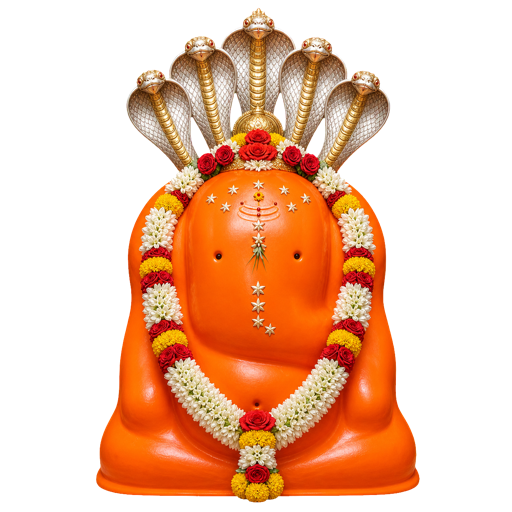
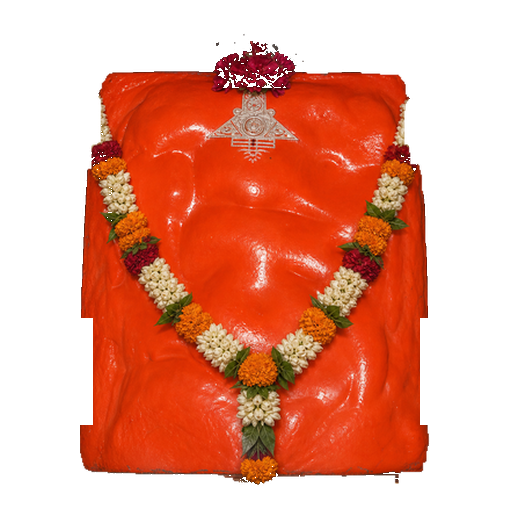
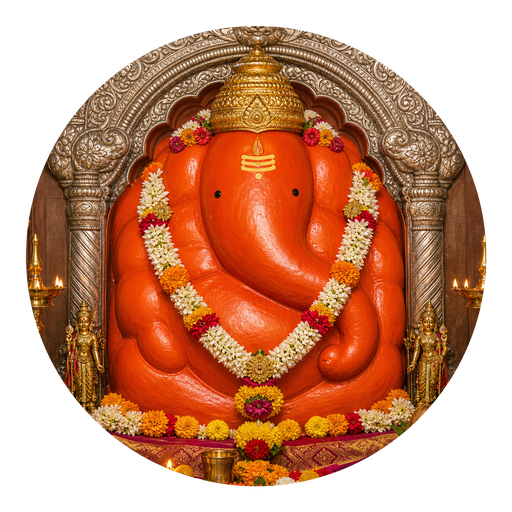
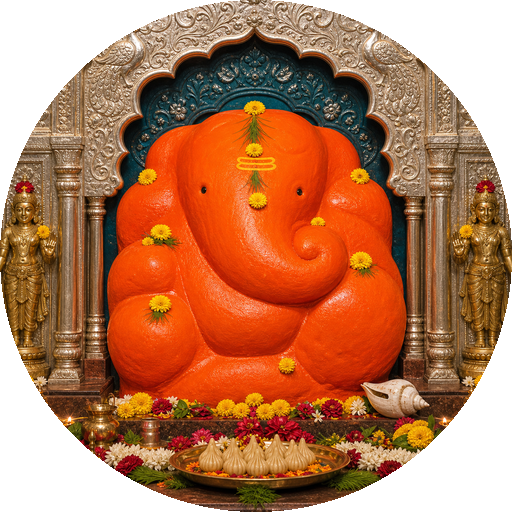
Deity — Shri Ganesh: the Vighnaharta (remover of obstacles) and the deity of intellect, learning and prosperity. Across the Ashtavinayak, Ganpati is worshipped in eight distinct forms and names — Mayureshwar, Siddhivinayak, Ballaleshwar, Varadvinayak, Chintamani, Girijatmaj, Vighneshwar and Mahaganpati.
What makes Ashtavinayak special is that these are not just eight separate temples — the yatra is considered “complete” only when all eight are visited together. In that sense Ashtavinayak is a single darshan-sankalp (a vow to complete the full pilgrimage), not eight unrelated stops.
Svayambhu murtis (versions differ): by some accounts, of these eight only three murtis — Moreshwar, Siddhivinayak and Mahaganpati — are held to be svayambhu (self-manifested rather than carved); by other accounts, all eight murtis are called svayambhu. Both versions exist in tradition.
History & legend
Ashtavinayak, as a concept, is rooted in tradition as the collective worship of Ganesha’s eight forms. Devotees hold that at these eight places Ganpati resides in a jagrut (living, awakened) form and responds to a devotee’s call.
Purana attribution (uncertain): sources differ on which Purana describes the Ashtavinayak — some references point to the Mudgal Purana, others to the Ganesha Purana; both versions exist in tradition.
The eight temples at a glance (one line each):
| # | Ganpati (form) | Village | District | Distinctive feature | Temple page |
|---|---|---|---|---|---|
| 1 | Mayureshwar / Moreshwar | Morgaon | Pune | The first and most important temple of the yatra; the peacock-mounted form; the legend of slaying the demon Sindhu; on the banks of the Karha river | Morgaon Mayureshwar |
| 2 | Siddhivinayak | Siddhatek | Ahmednagar (Ahilyanagar) | The only murti with the trunk to the right, among the eight; on a hillock by the Bhima river | Siddhatek Siddhivinayak |
| 3 | Ballaleshwar | Pali | Raigad | The only temple known by a devotee’s name (Ballal) | Pali Ballaleshwar |
| 4 | Varadvinayak | Mahad | Raigad | A murti said to be found in a nearby lake; a nandadeep said to burn continuously | Mahad Varadvinayak |
| 5 | Chintamani | Theur | Pune | The kuladaivat of the Peshwa Thorle Madhavrao | Theur Chintamani |
| 6 | Girijatmaj | Lenyadri | Pune | The only hill Ashtavinayak; set inside a cave of an ancient Buddhist cave-complex | Lenyadri Girijatmaj |
| 7 | Vighneshwar / Vighnahar | Ozar | Pune | A golden kalash (dome); the name “Vighna” from the demon Vighnasura legend | Ozar Vighneshwar |
| 8 | Mahaganpati | Ranjangaon | Pune | The legend that Shiv worshipped Ganesh here before slaying the demon Tripurasura | Ranjangaon Mahaganpati |
About the order: the eight temples above are listed in the shastrokta (traditional / scriptural) order. This order is taken as the religious standard; by tradition, this is the order that is followed.
⚠️ Note on districts: some popular pages list the districts wrongly (e.g. Siddhatek as “Amravati”, or Theur/Ozar/Ranjangaon as “Ahmednagar”). The correct distribution: 5 Pune (Morgaon, Theur, Lenyadri, Ozar, Ranjangaon) · 2 Raigad (Pali, Mahad) · 1 Ahmednagar/Ahilyanagar (Siddhatek).
Architecture
The architecture of the Ashtavinayak temples varies from place to place; a few notable features:
- Girijatmaj (Lenyadri): a rock-cut shrine inside a cave of an ancient Buddhist cave-complex; the only hill Ashtavinayak — reached by climbing a flight of steps.
- Vighneshwar (Ozar): a temple with a golden kalash (dome).
- Varadvinayak (Mahad): a nandadeep said to burn continuously.
The architectural details of the remaining temples (Hemadpanti construction, deepmala, sabhamandap, fortification, and so on) are covered in full on each temple’s own page — they are not consolidated here on the hub.
Festivals & yatra
On the big Ganesh days all eight Ashtavinayak temples take on special importance. The festivals below are fixed by the tithi; this year’s (2026) dates are taken from this site's panchang calendar, and each date links to that day’s panchang page. The tithi is the lasting identity; the Gregorian date changes each year.
| Festival | Tithi (rule) | This year’s date (2026) | Note |
|---|---|---|---|
| Shri Ganesh Chaturthi (main) | Bhadrapad Shukla Chaturthi | Mon, 14 Sep 2026 | The biggest festival; huge crowds at all eight temples → Ganesh Chaturthi |
| Maghi Ganesh Jayanti / Vinayak Chaturthi | Magh Shukla Chaturthi | Thu, 22 Jan 2026 | Ganpati’s birth celebration; special importance at the Ashtavinayak |
| Anant Chaturdashi (conclusion) | Bhadrapad Shukla Chaturdashi | Fri, 25 Sep 2026 | Ganeshotsav visarjan day |
| Angarki Sankashti Chaturthi | Krishna Chaturthi + Tuesday | 6 Jan · 5 May · 29 Sep | A Sankashti falling on a Tuesday — heavy crowds at Ganesh temples → Sankashti Chaturthi |
| Monthly Sankashti Chaturthi | Every Krishna Chaturthi | (through the year) | Each month’s Sankashti — details on the Sankashti Chaturthi page |
| Vinayak Chaturthi | Every Shukla Chaturthi | (through the year) | The chaturthi in each Shukla paksha — a day of Ganesh worship |
(Dates can shift a little by place and year; for the exact local time, see that day’s panchang page.)
The yatra order — keep two things clearly separate:
1. The traditional / shastrokta order (single, the religious standard): Morgaon → Siddhatek → Pali → Mahad → Theur → Lenyadri → Ozar → Ranjangaon → back to Morgaon. In the spirit of “a pilgrimage should end where it began,” the yatra starts at Morgaon and concludes at Morgaon.
2. The practical travel route (convenient planning — not a different “order”): By geography, devotees split the days for convenience. One common plan:
- Starting from Pune: Theur → Morgaon → Siddhatek → Ranjangaon (on one side).
- Starting from Mumbai: Pali → Mahad → Lenyadri → Ozar (on the other side).
- Roughly 4 temples per day, with the night halt at Pune — so the yatra is done in about one-and-a-half to three days.
Darshan & aarti timings
Because this is a hub page, the darshan/aarti timings of all eight temples are not consolidated here. Check each temple’s exact darshan and aarti timings on its own page — and verify with the temple trust before you go, since timings change during festivals and by season. Do not treat any private booking/tour website as the temple trust.
Special rituals
- The complete yatra (Morgaon → … → Ranjangaon → back to Morgaon) is itself taken as the main darshan-sankalp; after all eight darshan, the yatra concludes with a second darshan at Morgaon.
- On Ganesh Chaturthi, Maghi Ganesh Jayanti and Angarki Sankashti, many temples hold a special abhishek and mahapuja. The exact ritual at each temple follows that temple’s own tradition.
How to reach
- Base city — Pune: all eight temples are at convenient distances from Pune; most yatras are Pune-centred.
- Districts: Pune (Morgaon, Theur, Lenyadri, Ozar, Ranjangaon), Raigad (Pali, Mahad) and Ahmednagar/Ahilyanagar (Siddhatek).
- Coming from Mumbai: Pali–Mahad in Raigad and Lenyadri–Ozar near Junnar on one side; the Pune-belt Morgaon–Theur–Siddhatek–Ranjangaon on the other — split the days accordingly.
- Exact distances and road routes change over time; check an up-to-date map before travelling.
Nearby
- Lenyadri / Ozar area (Junnar): Shivneri Fort (the birthplace of Chhatrapati Shivaji Maharaj) is close by — easy to add to the yatra.
- Other nearby places are listed on each temple’s own page; only the highlight is noted here.
Travel tips
- Duration: roughly one-and-a-half to three days, depending on your plan.
- Busy days: Ganesh Chaturthi (14 Sep 2026), Maghi Ganesh Jayanti (22 Jan 2026) and Angarki Sankashti (Tuesday) — expect very heavy crowds; plan accordingly.
- Darshan timings change during festivals → check the relevant temple’s timing before you go.
- If travelling in summer, carry water and a cap, and watch out for the heat; Lenyadri involves a climb of steps, so older family members should take it slowly.
Mantra & aarti
Mool jap-mantra — Om Gam Ganapataye Namah. This is the seed (beej) mantra of Ganpati worship; it means “salutations to Ganpati.” The full jap-mantra:
Om Gam Ganapataye Namah.
Aarti — Sukhkarta Dukhharta (from the Samarth Ramdas tradition; sung in Marathi homes). It praises Ganpati as the giver of happiness and the remover of sorrow and obstacles, and prays that his mere darshan fulfils the heart’s wishes. Its recognizable opening line is “Sukhkarta Dukhharta, varta vighnachi…”.
At the aarti’s close and throughout the yatra, devotees raise the chant “Ganpati Bappa Morya, Mangalmurti Morya.”
Good to know
- Ashtavinayak is a hub — the identity, order and route are here; each temple’s full sthala-purana, architecture and exact timings are on that temple’s own page.
- Remember the districts: 5 Pune · 2 Raigad · 1 Ahmednagar — these are stated wrongly in some places.
- Verify darshan timings and yatra planning with the temple trust before you go; a private tour website is not the temple trust.
FAQ
- What is Ashtavinayak? Which are the eight Ganpatis?
- Ashtavinayak means Maharashtra’s eight ancient and revered Ganesh temples; “Ashtavinayak” = “eight Ganeshas”. The eight forms are Mayureshwar (Morgaon), Siddhivinayak (Siddhatek), Ballaleshwar (Pali), Varadvinayak (Mahad), Chintamani (Theur), Girijatmaj (Lenyadri), Vighneshwar (Ozar) and Mahaganpati (Ranjangaon).
- What is the traditional order of the Ashtavinayak yatra?
- Morgaon → Siddhatek → Pali → Mahad → Theur → Lenyadri → Ozar → Ranjangaon → back to Morgaon. This shastrokta order is taken as the religious standard.
- How many days does the Ashtavinayak yatra take?
- Roughly one-and-a-half to three days, at about 4 temples per day. The duration varies with your plan and starting city.
- Which districts are the Ashtavinayak temples in?
- 5 in Pune (Morgaon, Theur, Lenyadri, Ozar, Ranjangaon), 2 in Raigad (Pali, Mahad) and 1 in Ahmednagar/Ahilyanagar (Siddhatek).
- Where does the yatra start and end?
- It starts at Morgaon (Mayureshwar) and, after all eight darshan, concludes with a second visit to Morgaon.
- Which is the most important of the Ashtavinayak temples?
- Morgaon (Mayureshwar) — regarded as the first and most important temple of the yatra; the pilgrimage both begins and ends here.