Siddhatek Siddhivinayak
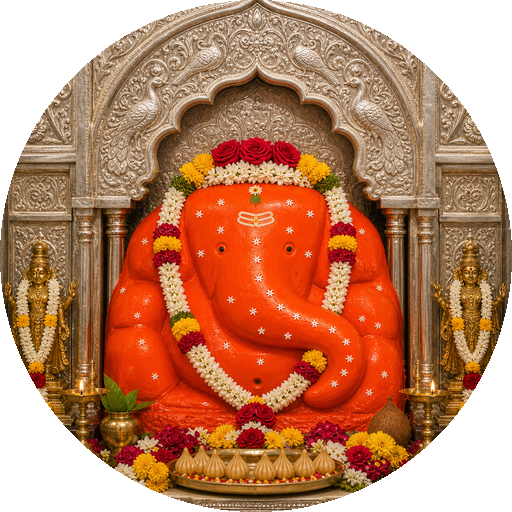
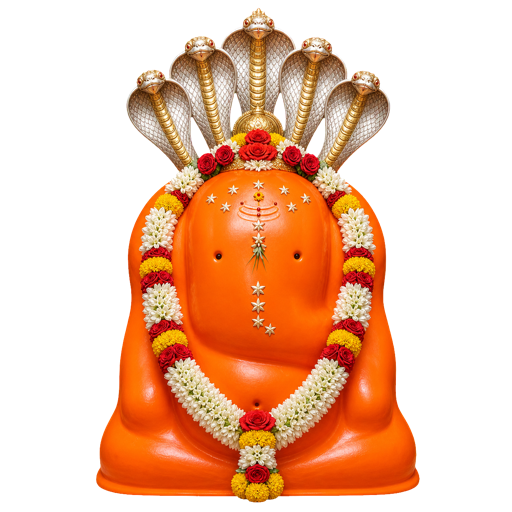
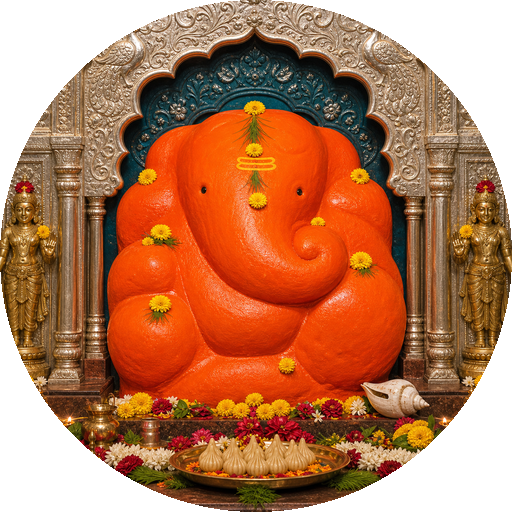
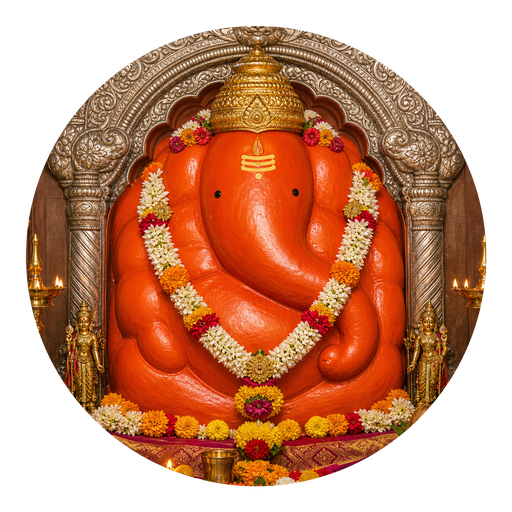
Siddhatek's Siddhivinayak is an ancient Ganesh kshetra (sacred site) on a small hill by the Bhima river — and one of the Ashtavinayak, Maharashtra's eight swayambhu (self-manifested) Ganesh temples. It is the only right-trunk Ganpati in the Ashtavinayak, and a right-trunk deity is traditionally held to be strict and “awake,” so devotees come here with special care and devotion. As per the legend, Bhagwan Vishnu worshipped Ganesh on this very hill and gained siddhi (spiritual accomplishment), which gives the site its name “Siddhatek” and the deity the name “Siddhivinayak.” The present temple is believed to have been built by Ahilyabai Holkar; this is the only Ashtavinayak kshetra in Ahmednagar (Ahilyanagar) district.
This year's dates (2026)
- Shri Ganesh Chaturthi — Ganeshotsav begins (madhyanha chaturthi)14 Sep
- Shri Ganesh Jayanti, Vinayak Chaturthi (Maghi Ganesh Jayanti)22 Jan
- Angarki Sankashti Chaturthi (moonrise 9.20 pm)6 Jan
- Angarki Sankashti Chaturthi (moonrise 10.19 pm)5 May
- Angarki Sankashti Chaturthi (moonrise 8.13 pm)29 Sep
Deity & significance
The Ganesh here is worshipped as Siddhivinayak — “the Vinayak who grants siddhi (success, accomplishment).” Devotees come for the removal of obstacles and for success in their work, and the name is said to be specially tied to the murti's right trunk.
The right trunk — the key distinction.
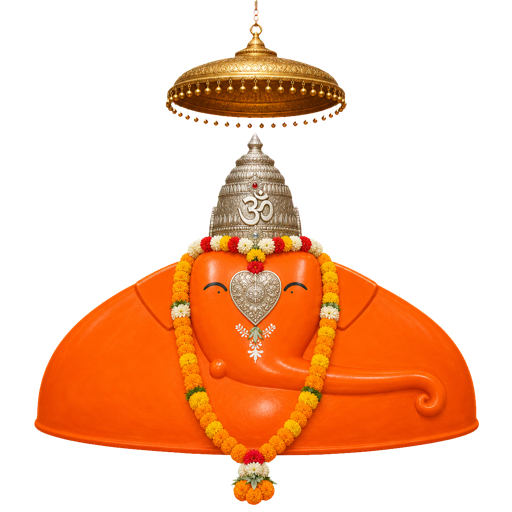
This is the only Ganpati in the Ashtavinayak whose trunk turns to the right (a Ganesh murti's trunk usually turns to the left). A right-trunk Ganesh is traditionally considered strict / “awake” (kadak, jagrut), and so a strict sovale (ritual-purity) discipline is said to be observed here in the puja and darshan.
This is a statement of folk belief and tradition — in the sense of “it is believed / as per custom”; do not take it as a universal or final ritual rule. Verify the exact sovale rules with the temple trust.
Place in the Ashtavinayak.
The pilgrimage to Maharashtra's eight swayambhu Ganesh kshetras is called the Ashtavinayak; Siddhatek is one of them and the only Ashtavinayak kshetra in Ahmednagar (Ahilyanagar) district. By the shastrokta (scriptural) order Siddhatek is second — matching the district administration's official site, which calls it the “second Ganpati.” By the common pilgrim travel route (Morgaon → Theur → Siddhatek), however, most sources reckon it third.
The full Ashtavinayak yatra guide and the details of the other kshetras are on a separate page; the scriptural order and the practical travel route are both given at the end of this page.
History & legend
Construction history.
The present temple and the main garbhagriha (sanctum) are believed to have been built or renovated by Ahilyabai Holkar (the queen of Indore) in the late 18th century. The Peshwa sardar Haripant Phadke is also linked to the kshetra — by some accounts he built the nagarkhana (drum-house), by others he built the road/path up the hill. Exactly which differs slightly by source, but both Haripant Phadke's building connection and the kshetra's Peshwa-era importance are recorded in many places.
The sthala-purana (site legend).
The story behind the name Siddhatek is tied to two asuras (demons), Madhu and Kaitabha, and it has two distinct layers — which is best presented honestly as it stands.
The shared thread.
At the beginning of creation two mighty asuras, Madhu and Kaitabha, arose and began to obstruct Brahma's work of creation; to destroy them, Bhagwan Vishnu fought them for many years — this much appears in most versions.
The Ganapatya site-version (tied to this kshetra).
As per the Ganapatya tradition's version (linked to the Mudgala Purana), Vishnu could not easily defeat these asuras. Shiv then pointed out that before the battle Vishnu had not remembered or worshipped Ganesh. So Vishnu worshipped Ganesh on this very hill and gained siddhi, and only then slew Madhu and Kaitabha — which is why the kshetra came to be called “Siddhatek” and the deity “Siddhivinayak,” so the story goes.
The original Devi-Mahatmya version (a separate layer).
In the Devi-Mahatmya of the Markandeya Purana, however, this same Madhu-Kaitabha story runs a little differently — there, while Vishnu lay in yoga-nidra (cosmic sleep), Brahma praised Mahamaya (the goddess of yoga-nidra); as the goddess withdrew from Vishnu, he awoke, fought for five thousand years, and by a stratagem took the asuras onto his thighs and slew them. In this original version there is no mention of worshipping Ganesh or of gaining siddhi.
In the original Devi-Mahatmya, Vishnu slays the asuras himself, whereas the Ganapatya tradition ties the story to the Siddhatek kshetra, saying Vishnu first worshipped Ganesh and gained siddhi. Verify the authoritative version with the temple trust or a standard text.
Architecture
- Facing & style: The temple faces north and is built in black stone; the main sabhamandap is of black stone, with another sabhamandap said to have been added later.
- Garbhagriha: By some accounts the garbhagriha is about 15 feet high and 10 feet wide (this is the sanctum's measurement, not the murti's height).
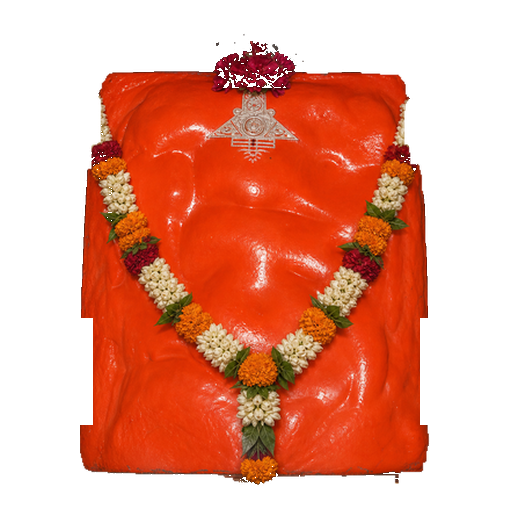
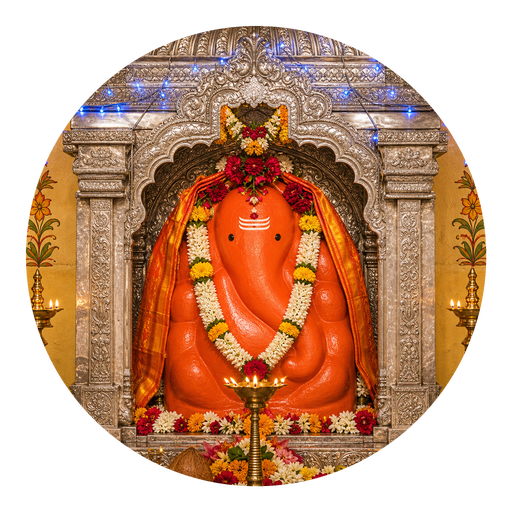
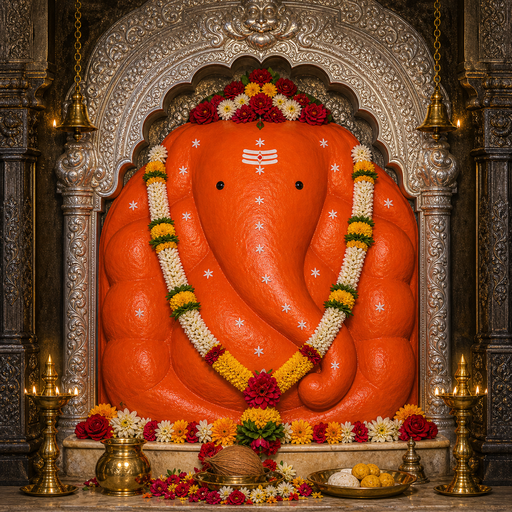
- The murti: A swayambhu elephant-faced stone murti, facing north, about 3 feet tall (by some accounts × 2.5 ft wide). Its right trunk is the standout feature.
- The hill & the pradakshina layout: Because the murti/temple is attached to the hill, devotees have to make the pradakshina (circumambulation) around the whole hill — it goes around the hill rather than the sanctum, so it is fairly long (a few kilometres). Its exact length and the number of rounds differ across sources (see ‘Special rituals’ below).
- Sanctum-building: the garbhagriha by Ahilyabai Holkar; the nagarkhana/path by Haripant Phadke (see History above).
Festivals & yatra
Each festival below is fixed by tithi; the Gregorian dates are taken as-is from this site's panchang records, and each date links to that day's panchang page. These are all general Ganesh tithis — their meaning and vidhi are covered in detail on the Ganesh Chaturthi and Sankashti Chaturthi pages. If Siddhatek has its own annual yatra/palkhi date, confirm it with the temple trust.
| Festival / yatra | Tithi (rule) | This year's date | Occasion |
|---|---|---|---|
| Shri Ganesh Chaturthi / Ganeshotsav | Bhadrapad Shukla Chaturthi (madhyanha) | Mon, 14 Sep 2026 — nakshatra Chitra | Ganeshotsav begins; large crowds at the kshetra |
| Maghi Ganesh Jayanti / Vinayak Chaturthi | Magh Shukla Chaturthi | Thu, 22 Jan 2026 — nakshatra Shatataraka | Ganesh Jayanti; special darshan |
| Angarki Sankashti Chaturthi | Krishna Chaturthi + Tuesday | 6 Jan · 5 May · 29 Sep 2026 | Rare and specially auspicious; large crowds |
Monthly Sankashti Chaturthi (every Krishna Chaturthi) and Vinayak Chaturthi (every Shukla Chaturthi) also carry special importance for darshan at a Ganesh kshetra like Siddhatek. These fall every month (about twenty-four a year), so they are not all listed here — look up each month's exact date on that day's panchang page and on the Sankashti Chaturthi page.
Note: These dates fall differently each year because the identity is the tithi — the Gregorian date is only that year's detail. Because of the strict, “awake” right-trunk deity, Sankashti/Angarki and Ganesh Jayanti are said to draw special crowds here; but these are general Ganesh tithis — their meaning and vidhi are covered on the Ganesh Chaturthi and Sankashti Chaturthi pages.
Darshan & aarti timings
Darshan and aarti timings change during festivals and Sankashti — confirm with the temple trust's official schedule before you go, especially on Ganesh Chaturthi, Maghi Ganesh Jayanti and Angarki Sankashti.
Special rituals
- The hill pradakshina (a special practice): Because the murti is attached to the hill, devotees make the pradakshina around the whole hill — it goes around the hill, not the sanctum, so it is fairly long. But its exact length and the number of rounds do not agree across sources: some say “seven times around the hill,” some “one pradakshina of about five kilometres around the whole hill,” and some “about one kilometre per round”; a few hold that “five pradakshinas are fruitful.” Because the murti is attached to the hill, the pradakshina must be made around the whole hill (a few kilometres); verify the exact route and number of rounds with the temple trust.
- Strict sovale: Since a right-trunk Ganesh is held to be strict, a strict sovale (ritual purity) is said to be observed here in the puja and darshan. This is a statement of tradition and local custom — do not take it as a universal rule; verify the exact rules with the temple trust.
- Daily puja & vidhi: abhishek, puja, alankar and naivedya are the daily and festival rituals; verify the exact sequence, mantras and schedule with the temple trust.
Mantra & aarti
A simple jap-mantra for Ganpati: Om Gam Ganpataye Namah — meaning: salutations to Ganpati (this is Ganesh's bija-mantra, seed-mantra).
The best-known aarti sung at Siddhatek and every Ganesh temple is Samarth Ramdas's “Sukhkarta Dukhharta.” It is sung morning and evening and at darshan. In meaning, it praises Ganpati as the giver of happiness and the remover of sorrow and obstacles, describes his beautiful shendur-adorned form, and prays that he protect the devotee in every difficulty. Its recognizable opening line is “Sukhkarta Dukhharta, varta vighnachi…”.
How to reach
- Location: Siddhatek, Tal. Karjat, Dist. Ahmednagar (Ahilyanagar) — on the banks of the Bhima river, on a hill.
- By rail: the nearest station is Daund — by some accounts about 19 km from Siddhatek; Daund is towards Pune, across the Bhima river. The district administration's site suggests the Daund/Ahmednagar stations.
- By air: Pune Airport is the most convenient; the district site also suggests Pune, Shirdi and Chhatrapati Sambhajinagar (Aurangabad) as options.
- By road: state (ST) buses and private vehicles — via Pune / Ahmednagar / Daund. You have to cross the Bhima river to reach Siddhatek.
⚠️ The exact distance, route and river crossing (bridge/boat) differ slightly across sources — confirm with a map and with the temple trust before travelling.
Nearby places
- Nearby Ashtavinayak kshetras — Theur Chintamani and Ranjangaon Mahaganpati — are the adjacent stops on Siddhatek's route (check distances on a map).
- Daund (railway junction) and Pune — travel bases with food and stay.
- Other local tirthas/ghats in the area — for light tourism; check distances on a map.
Travel tips
- River & hill: you have to cross the Bhima river to reach Siddhatek, and the temple is on a hill. Since the pradakshina is around the whole hill (a few kilometres), carry enough time, water and comfortable footwear.
- Crowds: Ganesh Chaturthi, Maghi Ganesh Jayanti and Angarki Sankashti draw large crowds — plan ahead; take special care of elders and small children.
- Sovale/dress: given the strict sovale tradition, keep to modest, sattvik dress and follow the temple's instructions.
- Timings change: darshan timings, special darshan and the pradakshina rules change as per the temple trust's official notice — verify before travelling. Follow photography rules too.
Ashtavinayak — scriptural order & travel route
The scriptural (shastrokta) order of the eight Ashtavinayak kshetras is taken to be as below, with Siddhatek second:
- Morgaon — Mayureshwar · Tal. Baramati, Dist. Pune
- Siddhatek — Siddhivinayak (this page) · Tal. Karjat, Dist. Ahmednagar
- Pali — Ballaleshwar · Dist. Raigad
- Mahad — Varadvinayak · Dist. Raigad
- Theur — Chintamani · Dist. Pune
- Lenyadri — Girijatmaj · Dist. Pune
- Ozar — Vighneshwar · Dist. Pune
- Ranjangaon — Mahaganpati · Dist. Pune
Note: the scriptural order above places Siddhatek second, which matches the Ahmednagar district administration's official site. On the actual pilgrimage, however, the order changes with distance and convenience — pilgrims setting out from Pune usually take Morgaon → Theur → Siddhatek → Ranjangaon → Ozar → Lenyadri → Mahad → Pali, in which Siddhatek comes third; this common travel sequence is why most sources call it the third. The yatra closes by returning to Morgaon. (The exact route changes depending on where you begin.)
Good to know
- Siddhatek's Siddhivinayak is the only right-trunk Ganpati in the Ashtavinayak; the only Ashtavinayak kshetra in Ahmednagar district.
- The katha has two layers (the Ganapatya siddhi-version vs the original Devi-Mahatmya), and the Ashtavinayak order and the pradakshina count differ across sources — do not treat any single version or figure as final.
- Darshan/aarti timings, yatra dates and the pradakshina rules should be verified with the temple trust.
- Avoid mixing up the dates: Bhadrapad Ganesh Chaturthi (Sep) ≠ Maghi Ganesh Jayanti (Jan, Magh Shukla Chaturthi) ≠ the monthly Sankashti/Vinayak Chaturthi.
- Do not use copyright temple photos/logos on the page, and make no “official association” claim.
FAQ
- Where is the Siddhatek Ganpati temple?
- On the banks of the Bhima river, on a hill — Siddhatek (Tal. Karjat, Dist. Ahmednagar / Ahilyanagar). It is the only Ashtavinayak kshetra in Ahmednagar district.
- Which is the right-trunk Ganpati in the Ashtavinayak?
- Siddhatek's Siddhivinayak — the only right-trunk Ganpati in the Ashtavinayak; because of the right trunk it is said to be strict/“awake.”
- How did Vishnu gain siddhi at Siddhatek?
- As per the Ganapatya site-legend, to slay the asuras Madhu and Kaitabha, Vishnu worshipped Ganesh on this very hill and gained siddhi (hence “Siddhatek” / “Siddhivinayak”). In the original Devi-Mahatmya, however, Vishnu slays the asuras himself — the story has two distinct layers.
- How large is the Siddhatek pradakshina?
- Because the murti is attached to the hill, the pradakshina must be made around the whole hill (a few kilometres). Its exact length and the number of rounds differ across sources (seven times / about five km / about one km per round) — so verify it with the temple trust.
- Who built the Siddhatek temple?
- The main garbhagriha is believed to have been built by Ahilyabai Holkar (in the late 18th century); the nagarkhana/path is linked to the Peshwa sardar Haripant Phadke.
- How far is Siddhatek from Daund and how do you reach it?
- By some accounts about 19 km from Daund station. By rail via Daund, by road via ST buses / private vehicles, and by air via Pune — you have to cross the Bhima river to reach Siddhatek. (Check the distance on a map.)
- What are the Siddhatek Ganpati darshan timings?
- Darshan and aarti timings change during festivals and Sankashti — confirm with the temple trust's official schedule before you go.