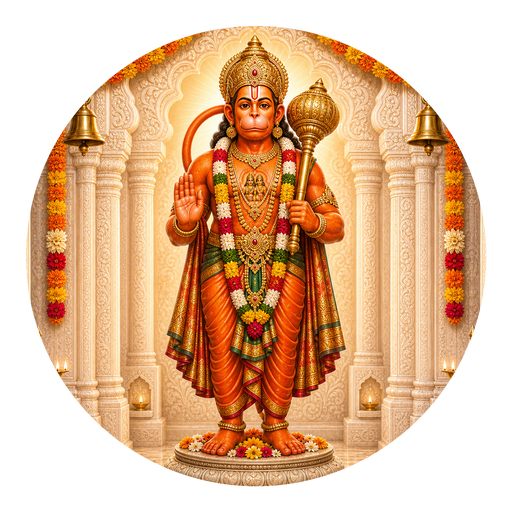
Aditya Ranubai Vrat
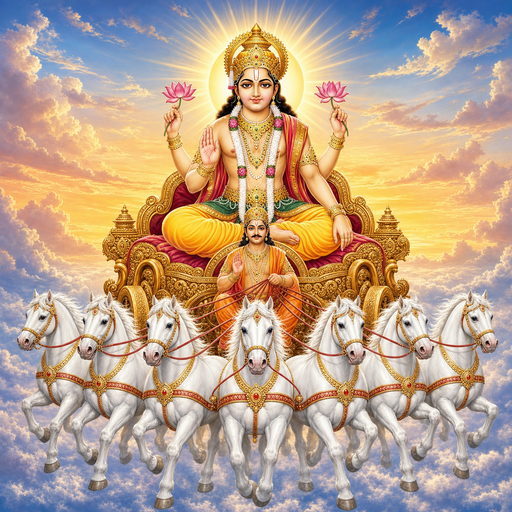
Sundays in the month of Shravan are regarded as dedicated to the worship of Surya/Aditya — some traditions mark every Sunday, while others observe only the first (or the first Sunday after Nag Panchami) with the "Aditya Ranubai" vrat/puja and a reading of its katha; the exact count and chosen Sunday vary by tradition. In 2026, Shravan brings four Sundays — 16, 23, 30 August and 6 September. Only the last of these (6 September) carries "Aditya Poojan" as its primary panchang label; the other three Sundays are occupied by other, unrelated events in the panchang. The puja involves an image of Surya, a hexagon drawing, and a six-knot thread, along with a kheer offering and a reading of the Aditya Ranubai katha — primarily a women's vrat, especially prevalent in the Khandesh region.
This year's dates (2026)
- The first Shravani Sunday — the panchang's primary label is Nag Chaturthi Upvas16 Aug
- The second Shravani Sunday — the panchang's primary label is Putrada Smart Ekadashi; per the Kanbai-Ranbai rule, this is 'the first Sunday after Nag Panchami'23 Aug
- The third Shravani Sunday — the panchang's primary label is Rashtriya Laghu-Udyog Din (a public holiday)30 Aug
- The fourth (last) Shravani Sunday — the only day the panchang uses 'Aditya Poojan' as its primary label6 Sep
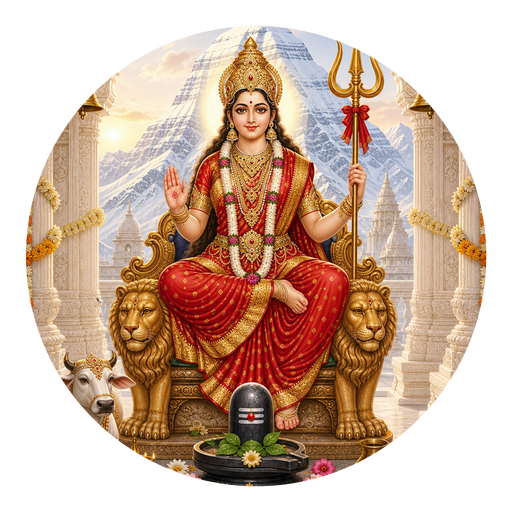
⚠️ Ranubai's identity — an open question: popular Marathi vrat guides uniformly describe Ranubai as "Surya's wife," while Marathi Wikipedia and cultural articles instead identify Khandesh's "Kanbai-Ranbai" as Radha and Chandravali (an Ahir-community tradition, nature/cattle deities) — without any stated connection to Surya. Ranubai's identity differs between these two traditions.
Deity and significance
Shravan is regarded as a month of vrats; each weekday is assigned its own deity — Shiva on Monday, Mangalagaur on Tuesday, Budh/Vitthal on Wednesday, Brihaspati on Thursday, Jivati Devi on Friday, a Brahmin/Ashwattha Maruti on Saturday, and Aditya Ranubai on Sunday. Surya/Aditya is one of the principal deities of panchayatan puja; Sunday is considered especially suited to Surya worship — this is a general, pan-Indian Hindu tradition that has been placed into Shravan's weekday cycle.
Ranubai's identity — two distinct traditions:
- The popular vrat-guide account: many popular vrat articles state directly that "Ranubai is Surya's wife," alongside the Atpat Nagar katha.
- The Marathi Wikipedia/cultural-article account: the Ahir community of Khandesh is said to have worshipped "Kanbai and Ranbai" for around 4,000 years (an unverified traditional claim, with no historical or archaeological corroboration found) — these deities are regarded as Radha and Chandravali (Rukmini), connected to Krishna's Ahir/cowherd lineage, with no stated connection to Surya. This deity is worshipped for nature and cattle-wealth, and is installed at home in the form of a coconut (shrifal).
In classical puranic tradition, Surya's wives are Sanjna (Saranyu) and Chhaya; the name "Ranubai" does not appear in the puranas — so the "Surya's wife" claim may rest on folk tradition or a modern simplification rather than classical scripture. Wikipedia writes "Ranbai," while popular articles use "Ranubai" — this may point to two separate textual traditions. Both traditions may be branches of the same broader Shravani-Sunday tradition.
The vrat katha
A common core (consistent across several versions): in Atpat Nagar, a Brahmin regularly went to the forest to gather kindling, flowers, and grass; there he met naga-kanyas/deva-kanyas who were observing the Aditya Ranubai vrat. He learned the vrat from them, and through his own observance, attained prosperity.
The Brahmin had two daughters — one married to a king, the other to a minister. About twelve years later, the Brahmin visited his daughters and told them about the vrat and its katha — one daughter listened with faith, while the other (now a queen) paid no attention. As a result, the one who listened attained prosperity, while the one who ignored it lost her husband and her wealth, falling into poverty. In the end, the prosperous daughter (or the repentant queen) spread the vrat further — ordinary people, such as a firewood seller, a gardener, an elderly woman, and a person with a disability, are said to have benefited from hearing the katha, each experiencing their own miraculous good fortune. The story traditionally closes with a line in the spirit of, "as Suryanarayan was pleased [with them], may he be pleased with all of us."
Some versions differ in detail — one version prominently includes a sub-episode in which gifts meant for the poor sister's children vanish along the way (a kind of divine test), while another version treats this lightly or omits it. It is also not clearly stated in the original story versions whether Ranubai is herself a character within the katha or Surya's wife — many modern vrat guides call her "Surya's wife."
Who should observe it
Sources describe this as primarily a vrat observed by women (particularly married women whose husbands are living). It is especially prevalent in the Khandesh region of Maharashtra, though it is also observed elsewhere as a general Shravani-Sunday practice. Participation and its exact definition vary by region and family.
Puja vidhi
A researched sequence (the core is consistent across sources, though details can vary regionally):
- Bathe at dawn on Sunday.
- Draw an image of Surya on a leaf using red sandalwood paste or sindoor (the type of leaf varies by source — bel, umbar, or vad/banyan).
- Draw a hexagon beside the image.
- Prepare a six-knot thread (dorak).
- Worship the image, hexagon, and thread together — offering flowers, incense, and sandalwood paste.
- Offer naivedya — kheer is most commonly mentioned; some sources add jaggery, coconut, roti, or ghee.
- Read or listen to the Aditya Ranubai katha — regarded as the heart of the vrat.
- Feed a woman (a married woman or a Brahmin woman, per varying sources).
The type of leaf, the exact materials, and who is fed can vary by region and family.
Puja materials
Red sandalwood paste or sindoor-kumkum, a leaf (bel, umbar, or vad/banyan — sources vary), a six-knot thread (dorak), flowers, and incense. For naivedya, kheer is most commonly mentioned; jaggery, coconut, roti or puran poli, and ghee are added in some sources — this list varies by region and family.
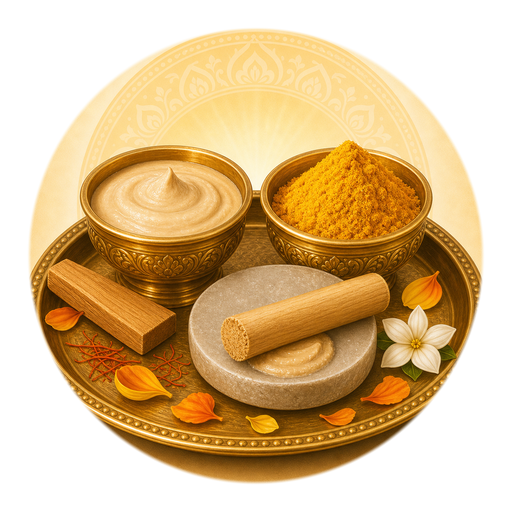 Red sandalwood paste
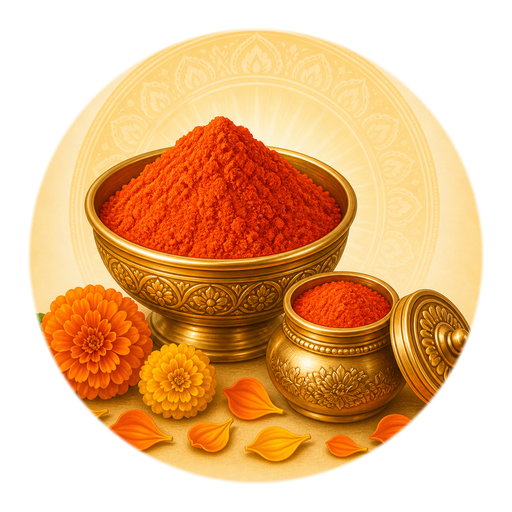 Sindoor-kumkum
 Six-knot thread (dorak)
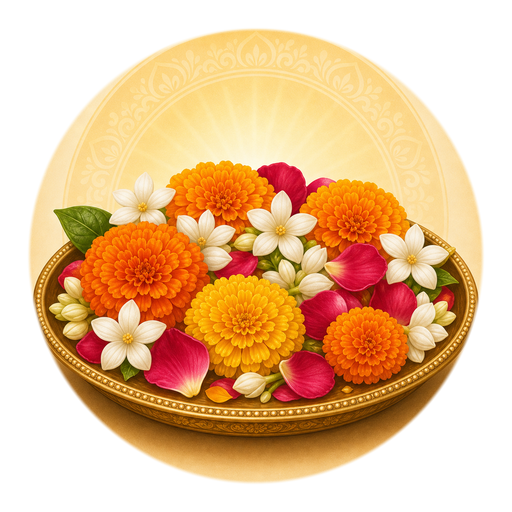 Flowers
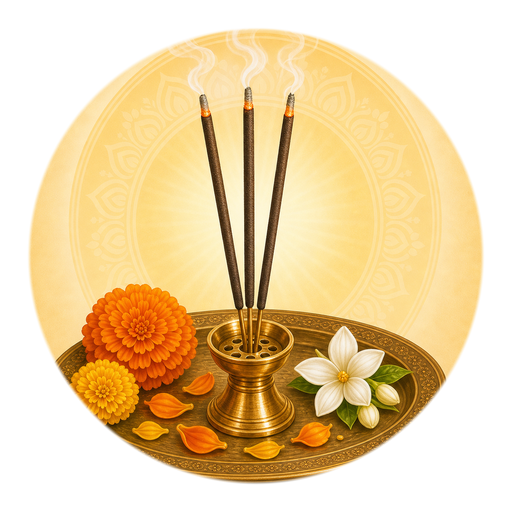 Incense
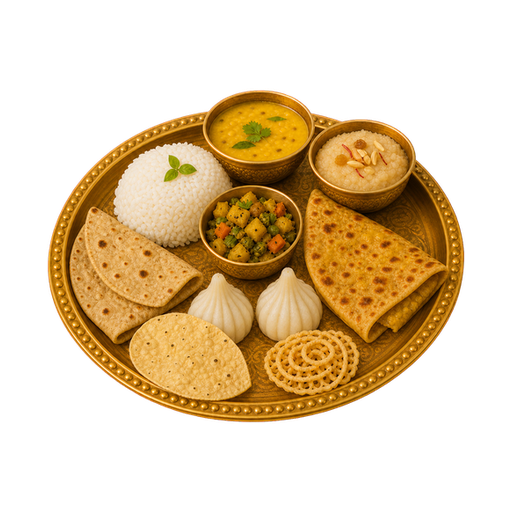 Naivedya (kheer)
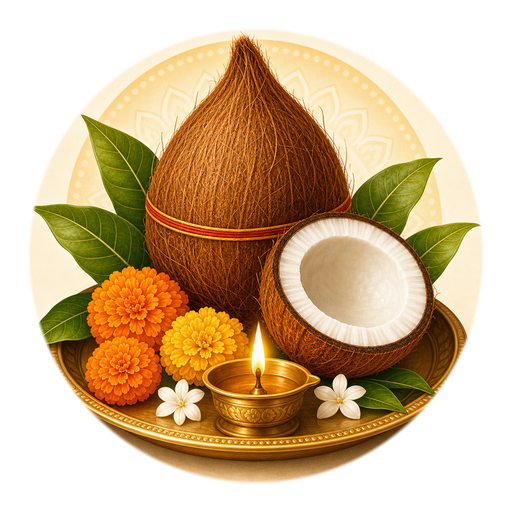 Coconut
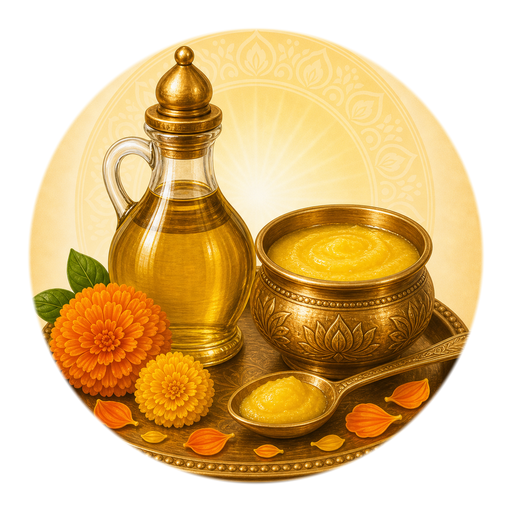 Ghee
Ghee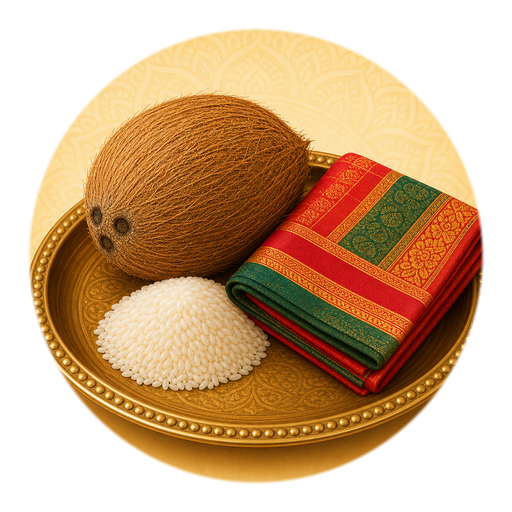 Oti items (coconut, cloth, bangles)
Fasting and dietary rules
No separate fasting rule applies to Aditya Ranubai; as with Sunday vrats generally, a single-meal or sattvic diet is common.
Mantra
The main recitation is considered to be the Aditya Ranubai katha itself — this is regarded as the heart of the vrat; no separate specific bija mantra or aarti for Aditya Ranubai was found. One source mentions the Gayatri Mantra as an alternative when the full ritual isn't possible — but this is a general Surya-worship option, not specific to Aditya Ranubai, and this mention comes from only a single source.
Regional customs
Khandesh is regarded as the center of this vrat — most sources state this clearly. Per Marathi Wikipedia, the Ahir community of Khandesh is believed to have worshipped "Kanbai-Ranbai" (Radha and Chandravali/Rukmini) for around 4,000 years — this is an unverified traditional claim, with no historical or archaeological corroboration found. The name "Khandesh" itself is popularly said to derive from "Kanubaicha Desh" (the land of Kanubai) — a folk etymology.
This Kanbai-Ranbai tradition is celebrated on the first Sunday after Nag Panchami — Kanbai is installed at home in the form of a coconut (shrifal); rot (puran poli), pulora (hanging fried sweet puris), and the custom of gifting married daughters visiting their parental home (oti bharan) are the rituals of this festival.
According to one report, Khandesh has a custom of performing a symbolic "marriage" between Ranubai and Surya before a wedding.
Sources also disagree on timing — some suggest observing "all four Sundays of Shravan, where possible," while others say "only the first Sunday," and per the Kanbai-Ranbai rule, "the Sunday after Nag Panchami" (which falls as the second Sunday in 2026) is held to be significant. The panchang itself carries the "Aditya Poojan" primary label only on the last Sunday.
Shravani Sundays — 2026 dates
Dates are taken from the panchang. The panchang's primary label reflects "the single most prominent event of that day," not "this day is not Aditya Ranubai" — even so, the panchang itself uses the "Aditya Poojan" wording only on 6 September.
| Order | Date | Tithi | Panchang's primary label |
|---|---|---|---|
| First Shravani Sunday | 16 August | Shravan Shukla Chaturthi | Nag Chaturthi Upvas |
| Second Shravani Sunday | 23 August | Shravan Shukla Ekadashi | Putrada Smart Ekadashi (per the Kanbai-Ranbai rule, this is "the Sunday after Nag Panchami") |
| Third Shravani Sunday | 30 August | Shravan Krishna Dwitiya | Rashtriya Laghu-Udyog Din (a public holiday) |
| Fourth (last) Shravani Sunday | 6 September | Shravan Krishna Dashami | Aditya Poojan (the panchang's only direct-match label) |
Good to know for 2026
This year's coincidences: the first Sunday (16 August) coincides with Nag Chaturthi Upvas; the second (23 August) with Putrada Smart Ekadashi (and, per the Kanbai-Ranbai rule, "the Sunday after Nag Panchami"); the third (30 August) with Rashtriya Laghu-Udyog Din (a public holiday); and the fourth (6 September) with the panchang's own "Aditya Poojan" label. These are this year's coincidences — they change annually and are not part of the vrat's own definition.
Don't confuse this with North Indian Sawan/Shravan: under the purnimanta system (North India), Shravan falls on different dates; Maharashtra's amanta system runs from 13 August to 11 September.
Health note: general fasting advice — those with diabetes, who are pregnant, or elderly should take exemptions on medical advice.
FAQ
- What is the Aditya Ranubai vrat?
- A vrat observed on the Sundays of Shravan, dedicated to the worship of Surya/Aditya — it involves a puja with an image of Surya, a hexagon, and a six-knot thread, along with a reading of the Aditya Ranubai katha.
- Who is Ranubai?
- Sources offer two accounts — popular Marathi articles call her "Surya's wife"; Marathi Wikipedia identifies Khandesh's "Kanbai-Ranbai" as Radha and Chandravali (an Ahir-community tradition), with no stated connection to Surya. There is no definitive answer.
- How many Sundays fall in Shravan?
- Four in 2026 — 16, 23, 30 August and 6 September.
- Who should observe the Aditya Ranubai vrat?
- Primarily women (particularly those whose husbands are living); it is especially prevalent in Khandesh, though also observed elsewhere. Practice varies by tradition.
- How is the Aditya Ranubai puja performed?
- After bathing, an image of Surya, a hexagon, and a six-knot thread are drawn/prepared on a leaf and worshipped together, followed by a kheer offering, a reading of the katha, and feeding a woman — details vary by region.
- What is the story of the Aditya Ranubai vrat?
- The story of a Brahmin's two daughters in Atpat Nagar — the one who listens to the vrat katha with faith attains prosperity, while the one who ignores it falls into poverty; the vrat is eventually spread further. Versions of the story can differ.
- What should be eaten while fasting on a Shravani Sunday?
- No separate dietary rule applies; a general sattvic or single-meal approach is common.
- Are Kanbai-Ranbai and Aditya Ranubai the same?
- This cannot be said for certain. Both are connected to Shravani Sundays and Khandesh, but the name spelling and the deity's identity (Surya's wife versus Radha-Chandravali) differ. They may be two branches of one broader tradition.