Mailar Khandoba — Sri Mailar Mallanna Temple (Adimailar, Karnataka)
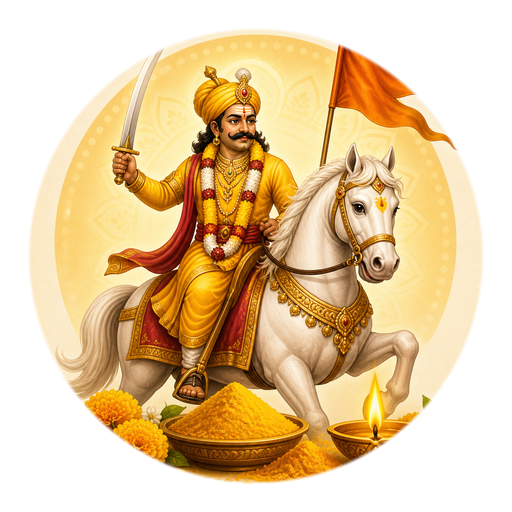
Mailar Khandoba, also known as Mailar Mallanna, is an extremely ancient site of Khandoba (Martand Bhairav) — located at Adimailar, Khanapur village, Bhalki taluka, Bidar district, Karnataka, about 15-20 kilometres from Bidar town. By the Malhari Mahatmya, the foundational Sanskrit text on Khandoba, this very site (then called Premapuri) is regarded as where Khandoba first manifested — hence the name "Adimailar." The chief priests belong to the Kuruba (Kannada shepherd) community — paralleling the Dhangar tradition in Maharashtra.
Deity and significance
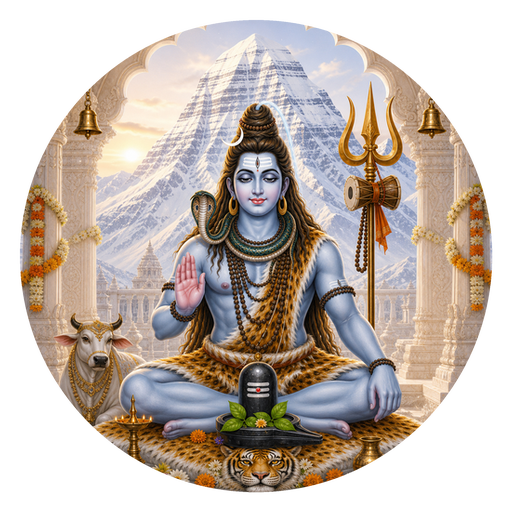
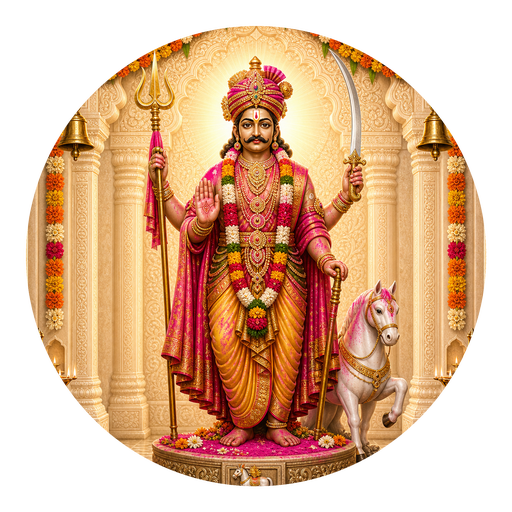
Khandoba = Martand Bhairav = Mailar Mallanna — a form of Shiv himself, worshipped here as a self-manifested Shivling. As at other Khandoba sites (Jejuri and others), the underlying deity here too is regarded as a composite folk form of Shiv-Bhairav-Surya.
The "Adimailar" identity sets this site apart from Jejuri and other sites — it is regarded as the birthplace of the Malhari Mahatmya text and Khandoba's original site. This is the original village among Khandoba's principal Jagrut Kshetras, with Jejuri as the final stage.
The chief priests are from the Kuruba community (Kannada shepherds) — there is a cultural/occupational parallel with the Dhangar community in Maharashtra (Khandoba is a shepherd-community kuldaivat on both sides).
Inscriptions from 1063 and 1148 CE mention the folk deities "Mailara" and his consort "Malavva" — suggesting that Mailara worship was established in Karnataka by the 11th-12th century, even before the Malhari Mahatmya text itself.
History and legend
The foundational text is the Malhari Mahatmya — a Sanskrit work that presents itself as part of the "Kshetra-Kanda" section of the Brahmanda Purana, though it is not included in the standard Purana editions. Its composition is dated to roughly between the 13th and 14th or 16th centuries — one source says "1260-1398," another says "1260-1540."
The core of the Mani-Malla legend is pan-Khandoba — a detailed account is given on the Champashashti page. In brief: the brothers Mallasura (Malla) and Manikasura (Mani) received a boon of invincibility from Brahma and wreaked havoc across the three worlds; Shiv took the form of Martand Bhairav and slew them; as he died, Mallasura offered his white horse and asked for a boon — that his presence remain in every Khandoba temple — hence the name "Mailari Mallanna."
Sources show an internal inconsistency about the tithi of this incarnation — one account says Khandoba first manifested at Premapur (Adimailar) "on Champashashti, which was a Sunday," while another part of the same source says the same incarnation event took place "on Chaitra Shukla Purnima." Both tithis are recorded in different chapters/sections of the Malhari Mahatmya.
By Marathi tradition, Khandoba originally belonged to Premapuri (present-day Adimailar), from where he is said to have journeyed and settled through Naldurg → Pali (Satara district) → Jejuri. Scholar Günther-Dietz Sontheimer has proposed that the Mailar cult may have originated at Adimailar and later merged with the local Khandak (Yaksha) cult of Paithan in Maharashtra, giving Khandoba his distinctly Maharashtrian form — this is a scholarly/historical account, distinct from devotional belief.
A separate, less-widespread local legend also holds that the Shivling in the temple is one of those installed by Lord Ram on his way back from Lanka — this is a distinct tradition parallel to the Mani-Malla legend.
Architecture and layout
The temple stands at Khanapur village, Bhalki taluka, Bidar district — about 15 to 20 kilometres from Bidar town, on the Bidar-Udgir road, about 2 kilometres from Khanapur railway station.
The architectural style is Vijayanagar, and the temple is believed to have been built around the 15th century under Vijayanagar rule (the exact date is uncertain). The main sanctum holds a self-manifested Shivling in the form of Khandoba/Mailar Mallanna. Other structures include the Tuppad Malawa temple (a sub-deity), the Guptalinga temple (a name shared with Jejuri's Guptalinga — whether this is coincidence or continuity of tradition is unclear), and two pushkarni tanks. Local tradition also holds that a natural spring/tank called "Papanash" lies in front of the temple.
Main festivals and pilgrimage
No Adimailar-specific date is tagged in this site's panchang. The tithis below are general/pan-Khandoba or pan-Indian tithis (drawn from the panchang), with no site-specific record for Adimailar — all festival details should be confirmed with the temple committee.
| Festival | Tithi | Reference date (general tithi) | In short | Link |
|---|---|---|---|---|
| Mahashivratri | Magh Krishna Trayodashi/Chaturdashi | 15 February | Adimailar's most crowded festival — lakhs of devotees arrive from north Karnataka | 15 February day page → Mahashivratri |
| Dasara | Ashwin Shukla Dashami (Vijayadashami) | 20 October | May be connected to the Mailar Mallanna Jatra Mahotsav — exact local rituals/date confirmation not found | 20 October day page → Navratri |
| Margashirsh festival | Shukla Shashthi to Dashami (one source says the whole month) | 15 December (Champashashti) | Local tradition describes a different window than Jejuri's framework | 15 December day page → Champashashti |
| Weekly Sunday puja | Every Sunday | (no annual date applies) | The main puja/Rudrabhishek day; a cattle/goat/sheep market is held near the temple | — |
| Mailar Mallanna Jatra Mahotsav | Unspecified | Unknown | Recorded by name; no confirmed date/tithi found | — |
Darshan and aarti timings
The temple is officially registered with the Government of Karnataka's Hindu Religious & Charitable Endowments (HR&CE) Department (registration ID TM000031). By that record, the temple is open for darshan daily from 6 AM to 8 PM. No detailed aarti timetable (morning aarti/naivedya/night aarti, etc.) could be found anywhere — only the general darshan hours are available. The temple is also referred to as "Dakshin Kashi." Online donation, darshan booking, and virtual darshan facilities are also mentioned by the government portal.
Rituals here
Rudrabhishek (a water abhishek of the Shivling) is the main daily ritual; a havan with grains/seeds is recorded as taking place before it. Devotees are said to visit here seeking moksha, wealth, knowledge, a vehicle, or freedom from illness. Sunday is the main weekly puja day, and a goat/sheep/cattle market is held near the temple that day — underscoring a close connection with farming and pastoral communities.
Whether rituals like Jejuri's tali-bharane/waghya-murali/bhandara-throwing take place here in the same form is not clear — actual practice may vary by local temple tradition.
The pan-Khandoba invocation "Yelkot Yelkot Jai Malhar" and Khandoba aartis are prevalent across all Khandoba sites — details are given on the Jejuri Khandoba page. No separate Adimailar-specific stotra/mantra is available.
How to reach
About 15 to 20 kilometres from Bidar town, on the Bidar-Udgir road. About 2 kilometres from Khanapur railway station. The nearest major town is Bidar — a historic seat of the Bahamani/Barid Shahi dynasties, known for its fort and other heritage sites. Airport and bus-route details are not available here — travellers should confirm via local sources.
Nearby places
- Bidar town — a historic fort and other heritage sites of Bahamani/Barid Shahi architecture.
- Other Mailar/Khandoba sites in Karnataka (Devaragudda, Mrunmailar, Mailapur, Mangasuli) are in distinct, distant districts — they are not listed as "nearby places" here, to avoid confusion.
Traveller tips
Crowds are extremely heavy on Mahashivratri (lakhs of devotees) — plan for parking and timing in advance. Regular Sunday crowds and the cattle market can make roads busy. This is a rural Karnataka site — don't expect the kind of urban facilities/infrastructure found at Jejuri; check locally before travelling. The local language is Kannada, so Marathi-speaking devotees may face a language barrier with priests/locals.
Good to know
Several distinct Khandoba sites across different districts of Karnataka are known by the name "Mailar/Mailara" (Devaragudda, Mrunmailar, Mailapur, Mangasuli, and others) — this page is specifically about Adimailar/Khanapur in Bidar district, and shouldn't be conflated with those other sites. It's worth contacting the local temple administration or Karnataka's HR&CE department to confirm darshan/festival timings.
FAQ
- Where is Mailar Khandoba temple?
- At Adimailar, Khanapur village, Bhalki taluka, Bidar district (Karnataka) — about 15-20 kilometres from Bidar town.
- What is Adimailar?
- By the Malhari Mahatmya text, the site where Khandoba first manifested (then called Premapuri) — hence "Adi (original) + Mailar = Adimailar."
- What is Khandoba's original site?
- By Marathi tradition, Khandoba originally belonged to Premapuri (present-day Adimailar, Karnataka), from where he is said to have journeyed through Naldurg-Pali-Jejuri.
- What is the connection between Jejuri and Mailar?
- Both are sites of Khandoba within the same Malhari Mahatmya tradition; Adimailar is regarded as the original site, while Jejuri is regarded as the final and most renowned stage.
- Where were the demons Mani and Malla slain?
- By legend, Shiv slew them in his Martand Bhairav form; Adimailar is known chiefly as the site of incarnation/origin, not as the battlefield.
- What is the history of Mailar Mallanna temple?
- It is believed to have been built during the Vijayanagar empire (around the 15th century); its connection to the Malhari Mahatmya text and inscriptions from the 11th-12th centuries give it an ancient standing.
- What festivals are celebrated at Mailar temple?
- Mahashivratri (the biggest crowd), Dasara, the Mailar Mallanna Jatra Mahotsav, and a special puja every Sunday; exact dates should be confirmed with the temple committee.
- How far is Mailar from Bidar?
- About 15 to 20 kilometres (sources vary slightly).
- What is the Malhari Mahatmya text?
- The foundational Sanskrit text on Khandoba, presenting itself as part of the Brahmanda Purana; believed composed roughly between the 13th and 16th centuries.