Siddhivinayak Temple, Prabhadevi, Mumbai
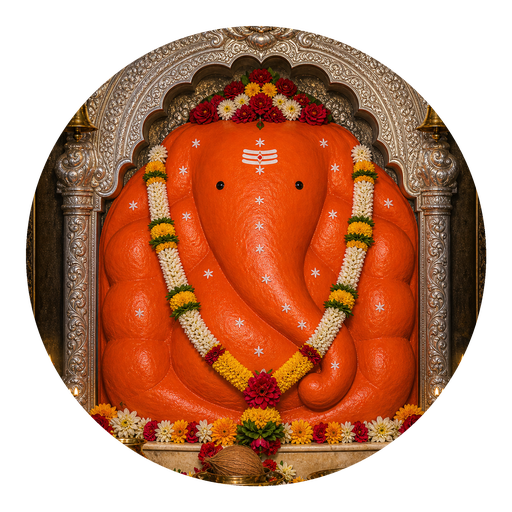
Shri Siddhivinayak (Ganpati) stands in Mumbai's Prabhadevi neighborhood, on S. K. Bole Marg. It is one of Mumbai's most-visited temples — thousands of devotees daily, and lakhs during Angarki and other festivals. The idol's trunk turns to the right, unlike most Ganesha idols, whose trunks turn left — a distinguishing feature. The original temple was built on 19 November 1801, by contractor Lakshman Vithu Patil and funded by the philanthropist Deubai Patil. Today's grand structure dates from a reconstruction in the 1990s. It is regarded as one of India's wealthiest and most-visited Ganpati temples — its roughly 1,500 kg gold-plated dome is one striking feature.
This year's dates (2026)
- Shri Ganesh Chaturthi — Ganeshotsav begins (Monday); the temple's own special puja schedule applies14 Sep
- Shri Ganesh Jayanti/Vinayak Chaturthi (Maghi) — Thursday; the temple's special puja schedule applies here too22 Jan
- Angarki Sankashti Chaturthi — Tuesday; special crowd management at this temple6 Jan
- Angarki Sankashti Chaturthi — Tuesday; special crowd management at this temple5 May
- Angarki Sankashti Chaturthi — Tuesday; special crowd management at this temple29 Sep
⚠️ Not part of the Ashtavinayak: this temple is not one of the eight Ashtavinayak pilgrimage sites (all located in Pune/Ahmednagar/Raigad districts — a separate, similarly-named temple at Siddhatek is one of those eight). Even so, many people mistakenly believe otherwise, since this temple's own sanctum doors and pillars are carved with images of all eight Ashtavinayak forms.
Deity and significance
The meaning of the name: "Siddhivinayak" combines siddhi (accomplishment/success) and Vinayak (a name of Ganpati) — a Ganpati who grants siddhi/success to devotees; it is popularly described as the "wish-fulfilling Ganpati."
The right trunk — its meaning: per the temple's own description, the idol's most distinctive feature is its rightward-turned trunk — most Ganesha idols have a leftward trunk. By tradition, a right trunk is believed to represent siddhi and a stricter spiritual discipline, while a left trunk is linked to worldly prosperity.
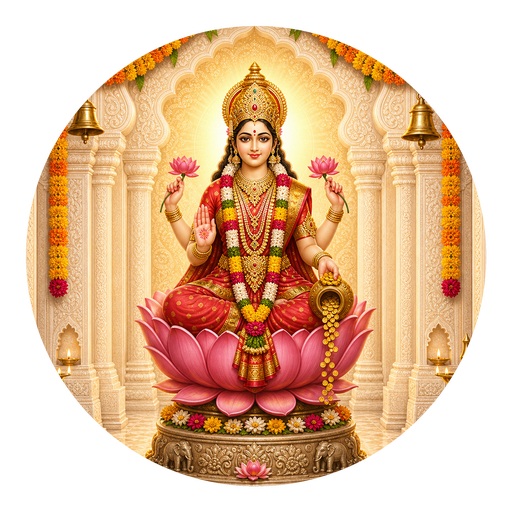
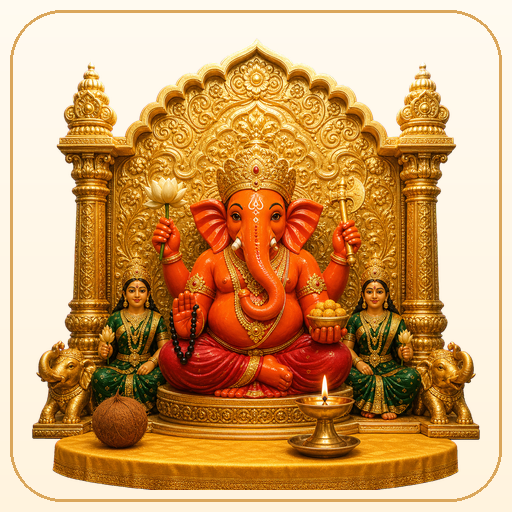
Riddhi-Siddhi: the deities Riddhi (on the left — prosperity/wealth) and Siddhi (on the right — spiritual power/wisdom) flank the idol on both sides. One temple employee has described them, in an interview, as Ganesha's attendants rather than wives — a personal view, not a universally held one.
Economic and social standing: it is widely described as one of Mumbai's wealthiest temple trusts. The trust is also active in social initiatives such as medical aid, a dialysis center, education, and a library.
History and legend
Documented, paper-trail history: the original, small temple structure was built on 19 November 1801, by contractor Lakshman Vithu Patil, with financial backing from Deubai Patil. Their exact relationship is described differently across sources — one calls them husband and wife, while another describes Deubai as an independent philanthropist and Lakshman Vithu as a separate contractor — so no firm relationship is stated here.
Regular worship at the temple was established in 1936 by Govindrao Phatak, under the guidance of Sant Jambhekar Maharaj. In 1952, a small Hanuman shrine was built within the temple premises for a Hanuman idol discovered during the widening of Sayani Road (near Elphinstone Road).
Reconstruction: the foundation was laid on 27 April 1990 by the then Chief Minister, Sharad Pawar; the grand structure took shape over the 1990s (the exact year of completion varies slightly across sources, between 1993 and 1994).
Legend (multiple versions): Deubai Patil was childless; she is said to have taken the initiative and provided funds to build the temple, out of a wish that no other woman should suffer the grief of childlessness. Following the temple's construction, a popular belief grew that Siddhivinayak blesses childless couples with children. In some versions, Ganesha is said to have appeared to Deubai in a dream and directed her to build the temple.
No source describes this idol as "swayambhu" (self-manifested), as is claimed for the Siddhatek idol — this idol should be understood as one that was sculpted and consecrated.
Architecture
The original structure: the earliest building was small, made of brick, with a domed spire.
Today's structure (from the 1990s reconstruction): a five-storey building — the ground floor holds a spacious assembly hall and sanctum; the upper floors house a kitchen, administrative offices, and a digital library.
The gold dome (the main highlight): the main dome is plated with approximately 1,500 kg of gold. A height of roughly 12 feet is reported. The sanctum ceiling is also gold-plated, and colored lighting on the dome is said to change through the evening.
The gold doors: the temple's doors bear ornate gold-leaf panels crafted from about 35 kg of gold (valued at roughly ₹14 crore), donated by an anonymous devotee from Delhi.
Ashtavinayak carvings (the source of the confusion): the wooden sanctum doors and pillars are carved with images of all eight Ashtavinayak forms — this is exactly why many people mistakenly believe this Mumbai temple is one of the eight.
Other features: a Hanuman shrine stands within the premises (since 1952); an octagonal renovation of the sanctum is reported to have taken place in January 2020.
Main festivals and yatra
Dates are taken from the panchang — all of these are general Ganesh-related tithis; no separate yatra date specific to Mumbai's Siddhivinayak appears in the panchang.
| Festival | Tithi | 2026 date | Note |
|---|---|---|---|
| Shri Ganesh Chaturthi/Ganeshotsav | Bhadrapad Shukla Chaturthi | 14 September (Monday) | A general festival — see Ganesh Chaturthi for more. The temple's own special puja schedule (10:45 AM to 1:30 PM) applies. |
| Shri Ganesh Jayanti (Maghi)/Vinayak Chaturthi | Magh Shukla Chaturthi | 22 January (Thursday) | See Maghi Ganesh Jayanti for more. The temple's special puja schedule applies here too. |
| Angarki Sankashti Chaturthi (three times in 2026) | Krishna Chaturthi + Tuesday | 6 January, 5 May, and 29 September (all Tuesdays) | See Sankashti Chaturthi for more. This temple sees especially massive crowds on Angarki, with dedicated crowd management — see below. |
| Monthly Sankashti/Vinayaki Chaturthi | Krishna/Shukla Chaturthi every month | Monthly (about 24 times a year) | See Sankashti Chaturthi and Vinayaki Chaturthi for more. The temple's own schedule separately notes "Vinayaki Chaturthi." |
| Weekly Tuesday darshan | Every Tuesday | No fixed date | Tuesday is regarded as Ganpati's special day; the temple offers extended pre-dawn darshan and a separate schedule every Tuesday. |
No annual yatra date specific to Mumbai's Siddhivinayak was found in the panchang — so no such separate date is given here.
Darshan and aarti timings
The timings below come from the official trust's website — but schedules can change, so verify the current timing with the official site/temple before you travel.
Regular days (Wednesday to Monday): Kakad Aarti 5:30 to 6:00 AM; morning darshan 6:00 AM to 12:00 PM; naivedya 12:05 to 12:30 PM; afternoon darshan 12:30 to 7:00 PM; evening Dhoop Aarti 7:00 to 7:10 PM; evening darshan 7:10 to 7:20 PM; evening aarti 7:30 to 8:00 PM; night darshan 8:00 to 9:50 PM; Shej Aarti at 9:50 PM.
Tuesday (special schedule): extended pre-dawn darshan 3:15 to 4:45 AM; Kakad Aarti 5:00 to 5:30 AM; night puja 9:00 to 10:10 PM, with extended darshan until 11:30 PM; Shej Aarti at 11:45 PM (the checkpoint closes at 11:30 PM).
Festival-special: on Bhadrapad Ganesh Chaturthi, Maghi Ganesh Jayanti, and Vinayaki Chaturthi, an extended special puja runs from 10:45 AM to 1:30 PM. Sankashti Chaturthi rituals are held about 90 minutes before moonrise.
Special rituals here
Online/personalized darshan registration: the trust's digital services platform/mobile app offers online puja registration, personalized darshan registration, and ashirvachan puja booking. Live darshan (streaming) and daily updates are also available via a WhatsApp channel.
Angarki-special arrangements: separate queues for women, senior citizens, and people with disabilities; a pandal on a nearby ground (with lighting, fans, and drinking water); around 20 free air-conditioned shuttle buses between Dadar station and a nearby hall; free water/tea service — these details are based on observations from one specific Angarki day (January 2026), and may not be identical every year.
An annual special ritual (an example, not a firm annual rule): in January 2026, the temple was closed for a few days after Angarki Sankashti for an annual ritual/sindoor-lepan, during which a replica idol was on view for darshan, with regular darshan resuming after a purification ritual. This is not stated here as a fixed annual rule.
The exact sequence of daily puja, abhishek, and adornment rituals, along with their mantras, should be verified with the temple committee — no authoritative sequence is publicly documented.
Mantra and aarti
The most familiar bija mantra in Ganpati worship — "Om Gan Ganapataye Namah" — meaning "salutations to Ganpati." No rights-verified, complete text of any Siddhivinayak-specific stotra or aarti is publicly available, so no full text is given here.
How to reach
Address: S. K. Bole Marg, Prabhadevi, Mumbai 400028.
By rail: Dadar (a major junction on both the Western and Central lines) is the nearest major station — about 2.5 km, per the official district source. Some sources note that Prabhadevi/Parel stations are closer, and that the "Siddhivinayak" metro station on Metro Line 3 is very close. Verify the exact distance and best station before you travel.
By air: about 12 km from Chhatrapati Shivaji Maharaj International Airport.
By road: easily reached from Dadar (West) by taxi, auto-rickshaw, or BEST bus.
Nearby places
- Mahalaxmi Temple, Mumbai — another very famous Devi temple in Mumbai, in a relatively nearby area.
- The Dadar/Shivaji Park area — a transit hub and railway junction.
Good to know before you go
- Expect large crowds on Tuesdays, Angarki Sankashti, Ganesh Chaturthi, and Maghi Ganesh Jayanti — the temple offers special queues/shuttle service especially on Angarki; consider arriving early or booking an online/personalized darshan slot.
- Darshan/aarti timings and festival-special schedules can change — verify with the official site/temple before you travel, especially since Tuesdays and festivals differ from the regular schedule.
- The temple asks visitors to keep mobile phones switched off, dress modestly, and remove footwear at the designated spot.
- Avoid a common mix-up: Mumbai's Siddhivinayak is not the same as the Siddhatek Siddhivinayak of the Ashtavinayak (a different temple, a different district). Likewise, Bhadrapad Ganesh Chaturthi, Maghi Ganesh Jayanti, monthly Sankashti/Vinayaki Chaturthi, and Angarki Sankashti are all distinct tithis.
FAQ
- Where exactly is the Siddhivinayak temple in Mumbai?
- In the Prabhadevi neighborhood, on S. K. Bole Marg, near Dadar.
- Is the Siddhivinayak temple part of the Ashtavinayak?
- No. The Ashtavinayak is a pilgrimage of eight temples across Pune/Ahmednagar/Raigad districts (which includes a separate "Siddhivinayak" temple at Siddhatek). Mumbai's Siddhivinayak is independent, but the confusion arises because its own doors and pillars are carved with Ashtavinayak images.
- Which side does the Siddhivinayak idol's trunk face, and what does it mean?
- To the right — unlike most Ganesha idols. By tradition, a right-facing trunk is believed to represent siddhi/strict spiritual discipline.
- Who established the Siddhivinayak temple, and when?
- The original temple is believed to have been built on 19 November 1801, by contractor Lakshman Vithu Patil and the philanthropist Deubai Patil.
- How much does the Siddhivinayak temple's gold dome weigh?
- Approximately 1,500 kg of gold is recorded as plating the main dome.
- What are the darshan timings at the Siddhivinayak temple?
- On regular days, roughly 5:30 AM to 9:50 PM; extended hours on Tuesdays (from 3:15 AM into the late night) — but timings can change, so check with the official site.
- Why is there such a huge crowd at Siddhivinayak on Angarki Sankashti Chaturthi?
- Angarki (a Sankashti that falls on a Tuesday) occurs only two or three times a year and is considered more auspicious than an ordinary Sankashti — lakhs of devotees visit, and the temple arranges special queues and free shuttle buses.
- How do I reach the Siddhivinayak temple — which is the nearest railway station?
- Dadar is the nearest major railway junction (about 2.5 km away); from there, you can reach the temple by taxi, auto, or bus. Verify the exact distance and alternative stations before you travel.