Bhadrapad Purnima (Proshthapadi Purnima)
The full moon of Bhadrapad month (the last tithi of the Shukla paksha) — Saturday, 26 September in 2026. "Bhadrapad Purnima" and "Proshthapadi Purnima" (Sanskrit Proushthapadi) are both commonly used names for the same day. On this day, the general Purnima practices of moon worship and Satyanarayan puja are observed. This tithi falls right next to Pitru Paksha/Mahalaya — Mahalaya begins the very next day — and a Purnima-shraddha is performed on this day itself. However, the formal Pitru Paksha begins from Pratipada, not from Purnima.
This year's dates (2026)
Significance
Hindu months are named after the nakshatra the moon occupies on that month's Purnima (for example, Chaitra corresponds to the Chitra nakshatra) — the name "Bhadrapad" is believed to come from the Bhadrapada (Purva/Uttara) nakshatra. This year (2026), the moon is indeed in Purva Bhadrapada nakshatra on this Purnima — directly visible in the panchang's own record.
The exact relationship to Pitru Paksha: The formal Pitru Paksha begins from Pratipada and runs through Sarvapitri Amavasya; the "Purnima-shraddha" performed on Bhadrapad Purnima is not a formal part of Pitru Paksha — it is a separate rite performed for ancestors who died on the Purnima tithi specifically, one that happens to be a parvan shraddha immediately preceding/adjacent to Pitru Paksha. The panchang itself shows this too — Proshthapadi Purnima falls on 26 September, while Mahalaya begins (Pratipada) on 27 September — distinct dates.
Satyanarayan puja is an extremely common practice performed across India (including Maharashtra) on any Purnima, Ekadashi, or other auspicious occasion — Bhadrapad Purnima is no exception, but it is not a distinguishing feature of this particular tithi.
Anant Chaturdashi falls the very day before (25 September), marking the conclusion of Ganeshotsav with the public immersion of the idols — the Ganpati immersion does not happen on Bhadrapad Purnima itself; it is already concluded the day before.
In Gujarat, this tithi ("Bhadarvi Poonam") sees a major three-day fair (Teras-Chaudas-Poonam) at the Ambaji Shaktipeeth temple, with lakhs of devotees undertaking a pilgrimage on foot — this is an example from outside Maharashtra, not a local custom.
Legend
Several versions of this legend circulate. The most frequently cited legend directly tied to Bhadrapad Purnima is the Uma-Maheshwar vrat katha — but sources diverge on both its tithi and its central figure.
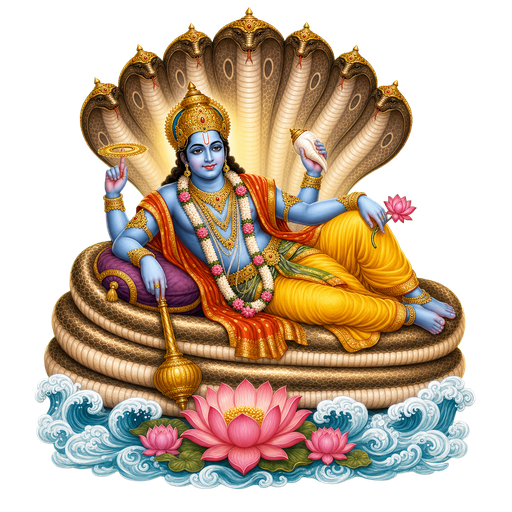
The shared core is this — a deity (Vishnu, in both versions) loses his prosperity/grace due to a curse; as penance, he is instructed to worship Shiv-Parvati (Uma-Maheshwar) on Bhadrapad Purnima; after performing the vrat, everything lost is restored.
In one version, sage Durvasa gifted Vishnu a garland of bel leaves he had received from Shiv; when Vishnu placed it around the neck of his mount Garuda, Durvasa considered this disrespectful and cursed Vishnu — that he would lose the company of Lakshmi, the Kshirasagar (ocean of milk), and Shesha. As penance, Durvasa himself is said to have prescribed the Uma-Maheshwar vrat on Bhadrapad Purnima; after performing it, Vishnu regained everything. In another version, Vishnu is said to have worshipped Shiv and the Moon as penance for the curse, which is how the tradition connects to Satyanarayan vrat — the details differ slightly, but the core (curse → penance vrat) is consistent.
According to some older accounts, the central figure in this vrat is not Vishnu but Indra, said to have performed it to regain Airavata/his throne in Indraloka. Accounts also differ on the tithi — the Narada Purana is said to place this vrat on Bhadrapad Purnima, while the Bhavishya Purana is said to place the same vrat on Margashirsh Shukla Tritiya (an entirely different month/tithi).
Who observes it
General devotees perform Satyanarayan puja, offer arghya to the moon, observe a fast, and give charity — as on any Purnima. Those whose ancestors died on the Purnima tithi perform their Purnima-shraddha (a parvan shraddha) on this very day — for father, grandfather, great-grandfather, and maternal-side ancestors as well. Some traditions (mainly in North Indian/Hindi-language religious media) also mention devotees observing the Uma-Maheshwar vrat — this is not a widely observed practice in Maharashtra.
Rituals
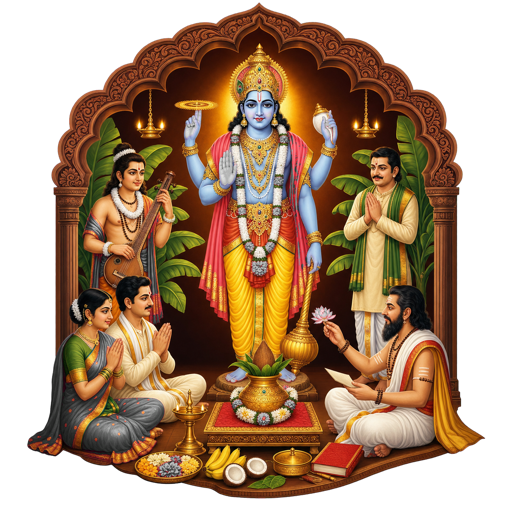
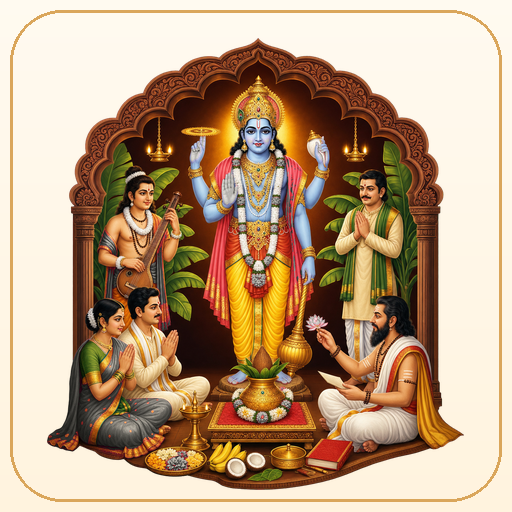
A morning bath (at a sacred river/tirtha if possible) is customary. Satyanarayan puja is a general Purnima practice — panchamrit-snan, listening to/reading the katha, and offering naivedya; the detailed ritual is on the Satyanarayan Pooja page.
By tradition, for those whose ancestors died on Purnima, the Purnima-shraddha is generally performed in the parvan-shraddha style — one common account gives the window as the Kutup/Rohin muhurat through the afternoon period. The exact procedure can vary by family/kulachar, and the exact timing varies by city/year, so timing belongs on the 26 September day page rather than here, while the exact rite is best confirmed with your family priest.
In the evening, moonrise darshan and arghya are offered. Charity — feeding the needy, and offerings/dakshina to Brahmins — is considered auspicious on both counts, Purnima and its proximity to the ancestor rites.
According to one account, in the secondary, disputed-tithi Uma-Maheshwar vrat, the sequence given is: a bath at Brahma muhurat → worship of Shiv-Parvati (with bel leaves) → an all-night vigil → feeding Brahmins/charity; this sequence can vary by tradition/kulachar. Some accounts also mention performing this for fifteen consecutive years before a concluding udyapan.
Materials for worship
Panchamrit (milk-curd-ghee-honey-sugar) and the usual materials for Satyanarayan puja (kalash, rice, banana-stalk pillars, naivedya); water/milk and a copper vessel for moon-arghya; tarpan materials for ancestors (sesame seeds, barley, darbha grass, water); bel leaves and a Shiv-Parvati image/idol for those observing the Uma-Maheshwar vrat; lamps, incense, and materials for charity.
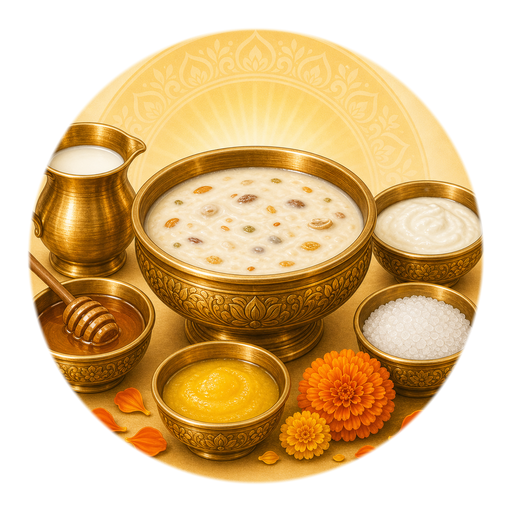 Panchamrit
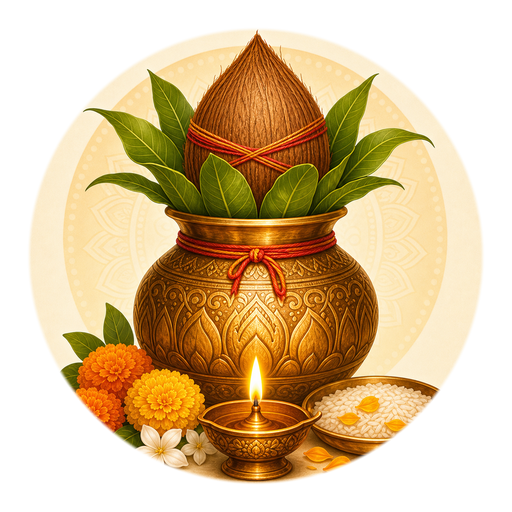 Kalash
 Banana-stalk pillars
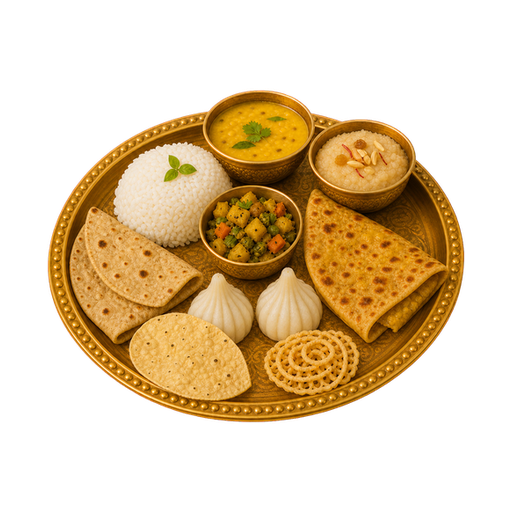 Naivedya
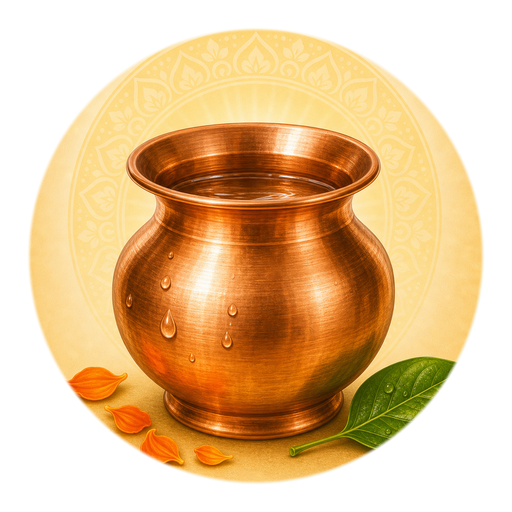 Copper vessel (for moon-arghya)
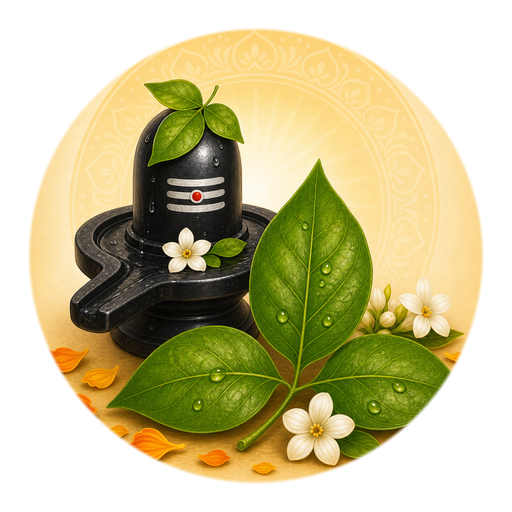 Bel leaves
 Lamp
Lamp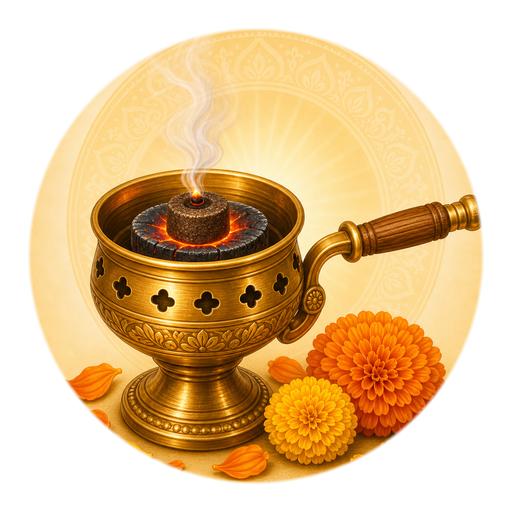 Incense
Fasting and dietary rules
The general Purnima-fasting practice applies — light snacks or fruit; some households avoid grains and salt. The strictness varies by household/local tradition. After the Satyanarayan puja, it is common to take the shira/panchamrit prasad.
Mantras, aarti, and stotras
The Satyanarayan katha/aarti is part of the general Purnima practice — for the full text, see the Satyanarayan Pooja page. An Uma-Maheshwar stotra exists; the full text is not included here.
Regional customs
In Gujarat, the Ambaji Shaktipeeth temple holds the Bhadarvi Poonam fair — a three-day (Teras-Chaudas-Poonam) event with lakhs of devotees on a foot pilgrimage; this is not a Maharashtra custom, and is noted here only for comparison/context. By tradition, it is also said that during the varshavas period, Buddhist devotees gather on this Purnima to take the eight precepts (ashtashila) and listen to dhamma. No distinct Maharashtra-specific custom or fair is associated with this tithi.
Good to know
Don't take it as settled that "Bhadrapad Purnima is the first day of Pitru Paksha" — the formal Pitru Paksha begins from Pratipada (27 September); today is the day of Purnima-shraddha, immediately preceding it. The shraddha muhurat (Kutup/Rohin/afternoon period) varies by city/panchang — see the day page for the exact timing. Household shraddha ritual practice varies by family tradition — confirm with your priest/family custom.
FAQ
- When is Bhadrapad Purnima 2026?
- Saturday, 26 September 2026 (Bhadrapad Shukla Purnima).
- Why is Bhadrapad Purnima also called "Proshthapadi Purnima"?
- Proushthapadi/Proshthapadi is a Sanskrit synonym; the name of the month Bhadrapad itself comes from the Bhadrapada nakshatra — both names are used for the same tithi.
- Is Bhadrapad Purnima the first day of Pitru Paksha?
- No, not technically. The formal Pitru Paksha begins the next day, from Pratipada (27 September), and runs through Sarvapitri Amavasya (10 October). On Bhadrapad Purnima itself, a Purnima-shraddha — adjacent to, but distinct from, Pitru Paksha — is performed.
- What is Purnima shraddha, and who should perform it?
- For those whose ancestors (father/grandfather/great-grandfather, or on the maternal side) died on the Purnima tithi, this shraddha is performed on this day.
- Who is worshipped on Bhadrapad Purnima?
- Generally the Moon and Satyanarayan (Vishnu) — as on any Purnima; some traditions (mainly North Indian) also mention Shiv-Parvati (the Uma-Maheshwar vrat), but that is not the sole or main ritual of this tithi.
- What is the connection between Bhadrapad Purnima and Anant Chaturdashi?
- Anant Chaturdashi (Ganesh visarjan/the conclusion of Ganeshotsav) falls the day immediately before this Purnima — the two are consecutive days, but the Ganpati immersion does not happen on Purnima itself; it is already concluded on Anant Chaturdashi.
- How should one fast on this day?
- The general Purnima-fasting practice (light snacks/fruit); prasad is taken after the Satyanarayan puja. The strictness varies by household.