Jyotirlinga
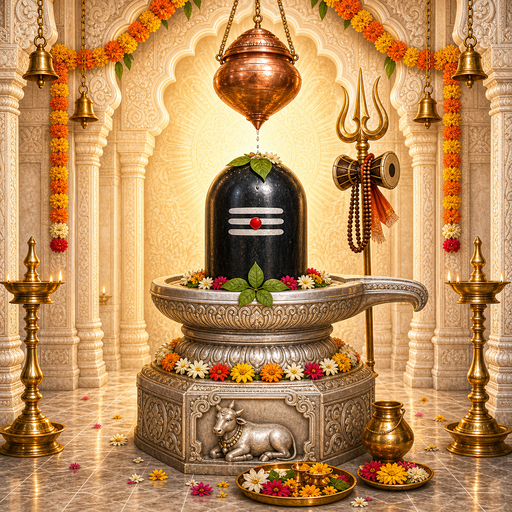
A Jyotirlinga is a svayambhu (self-manifested) form of Shiv — the legend is that when Brahma and Vishnu argued over who was greater, Shiv appeared between them as an “infinite pillar of light” (jyoti-linga). India reveres twelve principal Jyotirlingas. Of these, by Maharashtra’s own tradition and the state’s tourism, 5 Jyotirlinga lie in Maharashtra — Trimbakeshwar (Nashik), Bhimashankar (Pune), Grishneshwar (Verul, Chh. Sambhajinagar), Aundha Nagnath (Hingoli) and Parli Vaijnath (Beed). Note: the classical Dvadasha (twelve) Jyotirlinga list firmly counts only three in Maharashtra (Bhimashankar, Trimbakeshwar, Grishneshwar); the identification of the other two — Aundha as Nageshwar and Parli as Vaidyanath — is disputed.
This year's dates (2026)
- Mahashivratri — the biggest day of the year at every Jyotirlinga15 Feb
- First Shravani Somvar; Nagpanchami falls the same day17 Aug
- Second Shravani Somvar24 Aug
- Third Shravani Somvar31 Aug
- Fourth (last) Shravani Somvar7 Sep
- Tripurari Purnima (the Shiv–Tripurari connection)24 Nov
This is a hub page — the twelve-list, the five in Maharashtra, the yatra route and the shared festivals in one place; each temple’s full legend, architecture, yatra and darshan timings live on its own page. On the big Shiv days — Mahashivratri and Shravani Somvar — every Jyotirlinga draws huge crowds.
Deity & significance
Deity — Bhagwan Shiv: at every Jyotirlinga, Shiv is held to reside as a svayambhu (self-manifested) form of pure radiance. This “jagrut (living, awakened)” form is considered distinct from an ordinary Shivling — which is why the darshan of the twelve Jyotirlingas is regarded as one of the highest pilgrimages for Shaiva devotees.
The Dvadasha (twelve) Jyotirlinga — the classical list & stotra order: the order of the traditional Dvadasha Jyotirlinga stotra is —
- Somnath (Gujarat)
- Mallikarjuna (Srisailam, Andhra Pradesh)
- Mahakaleshwar (Ujjain, Madhya Pradesh)
- Omkareshwar (Madhya Pradesh)
- Vaidyanath (Deoghar, Jharkhand) — Maharashtra's tradition holds this identity is Parli Vaijnath instead (a disputed listing, see below)
- Bhimashankar (Maharashtra)
- Rameshwar (Tamil Nadu)
- Nageshwar (Darukavana/Dwarka) — Maharashtra's tradition holds this identity is Aundha Nagnath instead (a disputed listing, see below)
- Kashi Vishwanath (Varanasi)
- Trimbakeshwar (Maharashtra)
- Kedarnath (Uttarakhand)
- Grishneshwar (Maharashtra)
This same order is set to verse in the traditional Sanskrit "Dwadash Jyotirlinga Stotra" (by some traditions, composed by Adi Shankaracharya) — devotees recite it morning and evening:
Meaning (in brief): the stotra names, in order, the twelve Jyotirlingas — Somnath in Saurashtra, Mallikarjuna at Shrishailam, Mahakal and Omkareshwar at Ujjain, Vaidyanath (classically at Deoghar; Parli in Maharashtra's tradition), Bhimashankar at Dakini, Rameshwar at Setubandh, Nageshwar at Darukavana, Vishwesh (Kashi Vishwanath) at Varanasi, Tryambak (Trimbakeshwar) on the Gautami's bank, Kedar in the Himalayas, and Ghushmesh (Grishneshwar) at Shivalaya. Tradition holds that reciting it morning and evening dissolves the sins of seven lifetimes — that claim is recorded here as belief, not established fact.
In this list, three clearly fall in Maharashtra — Bhimashankar, Trimbakeshwar and Grishneshwar. Maharashtra’s tradition adds Aundha Nagnath (as Nageshwar / Darukavana) and Parli Vaijnath (as Vaidyanath) to make five.
Significance: with five Jyotirlingas in a single state, Maharashtra is a major centre of Shiv pilgrimage. The Jyotirlinga yatra — stringing these five into one trip — is what makes this hub distinctive; the twelve-list and the stotra order above serve as the evergreen reference.
History & legend
Only the shared frame + a one-line beat for each temple is given here; the full, multi-version katha lives on each temple’s own page.
The shared origin legend (common to all Jyotirlingas): Brahma and Vishnu once argued over who among them was greater. Shiv then appeared between them as an endless pillar of infinite light. Both set out to find where the pillar began and ended, and neither could reach either end — that boundless radiance is the essence of a Jyotirlinga, as the original Purana story (Shiva Purana – Koti Rudra Samhita) tells it.
Each Jyotirlinga’s own sthala-legend (one-line beat; full version on its own page) — in stotra order:
- Somnath — the moon (Chandra), weakened by Prajapati Daksha's curse, worshipped Shiv at Prabhas Kshetra; the pleased Shiv granted a boon of waxing and waning in phases, and the grateful moon enshrined the Jyotirlinga here — "Somnath" means the protector of the moon.
- Mallikarjuna — Kartikeya sulked and withdrew to Mount Krauncha; when Shiv and Parvati themselves went to meet him and he moved further away still, they remained there in radiant form.
- Mahakaleshwar — pleased by the unwavering devotion of the child-devotee Shrikhar and King Chandrasen, Shiv appeared in his fierce "Mahakal" form and slew the demon Dushan; the only south-facing (dakshinamukhi) murti among the twelve Jyotirlingas.
- Omkareshwar — Shiv manifested here as a Jyotirlinga either through Mount Vindhya's fierce penance or King Mandhata's tapasya; a clay seal is said to have taken the shape of "Om," which is also given as the origin of the name.
- Vaidyanath (Deoghar) — Vishnu's trick forced Ravan to set down the linga he'd won from Kailas, and it rooted there permanently; the name "Vaidyanath" is tied to healing/health. (Parli Vaijnath's own page tells this same name-identity through an entirely different story — the samudra-manthan/amrit legend, see below.)
- Parli Vaijnath — the legend linked to the amrit / halahal of the samudra-manthan (churning of the ocean) and to Ravan’s linga; here Shiv is revered as Vaidyanath (the divine physician / healer).
- Bhimashankar — Shiv’s slaying of a demon named Bhima (a son of Kumbhakarna); the legend that the Bhima river rose from Shiv’s sweat during that battle.
- Rameshwaram — after slaying Ravan, Ram installed a Shivling here to atone for the sin of brahma-hatya; the Ramlingam that Sita shaped from sand and the Vishwalingam Hanuman brought from Kailas are both worshipped together to this day.
- Nageshwar (Dwarka) — even while held captive by the demon Daruka, the devotee Supriya never stopped chanting to Shiv; the pleased Shiv appeared, destroyed the demon, and stayed on here as Nageshwar. (Aundha Nagnath's own page ties this same Darukavana story to itself, see below.)
- Aundha Nagnath — the ancient Darukavana, the demon Daruka’s torment, and Shiv appearing through the devotion of Supriya as ‘Nagnath’ (lord of serpents). The story of construction by the Pandavas / Yudhishthira, and the tale of the saint Namdev, are also tied to this place.
- Kashi Vishwanath — King Divodasa's rule was so righteous that even the gods, and eventually Shiv himself, had to leave Kashi; only after Brahma engineered an Ashwamedha yagna did Shiv return to Kashi for good.
- Trimbakeshwar — the sin of cow-slaying that befell the sage Gautam, and the descent of the Godavari (Gautami) river to absolve it; the Shivling here is held to be three-faced (trimukhi).
- Kedarnath — to atone for the sin of fratricide/brahma-hatya after the Mahabharat war, the Pandavas sought out Shiv, who hid in the form of a bull (or, by one account, a buffalo); when Bhim caught hold of him, the animal sank into the earth and reappeared in five places — the hump at Kedarnath — the Panchkedar legend.
- Grishneshwar — the story of a devout woman named Ghushma, who made and worshipped a clay Shivling every day; her slain son was restored to life by Shiv’s grace, and Shiv stayed there forever. (The devotee’s name varies as Ghushma↔Kusuma across versions.)
The Aundha & Parli list-divergence:
- Aundha ↔ Nageshwar: the Daruka / Darukavana story is also attached to Nageshwar in Gujarat; even Aundha Nagnath's own references acknowledge this overlapping claim. In Maharashtra, Aundha Nagnath is held to be the Jyotirlinga of Darukavana, but the classical Dvadasha list disputes this identification.
- Parli ↔ Vaidyanath: the classical list places Vaidyanath at Deoghar (Jharkhand); Maharashtra's tradition holds Parli Vaijnath to be Vaidyanath — this identification is disputed too.
Architecture
Only a comparative one-liner here; each temple’s full architectural detail lives on its own page.
The five temples in Maharashtra are chiefly in the Hemadpanti style, and many were restored in the Holkar era (18th century) — the common thread across those five. “Hemadpanti” means the Yadava-era (Hemadpant) style of mortar-less stone construction. The remaining nine span several regional styles (Nagara, Dravidian, Maru-Gurjar) — listed in stotra order below.
| Temple | Architectural feature (one line) | Temple page |
|---|---|---|
| Somnath | Maru-Gurjar/Chalukya style; stands right on the seashore; the flag is changed three times a day | Somnath |
| Mallikarjuna | Dravidian/Vijayanagar-era; four gopurams; the Sahasralinga and the steps down to Patalganga (a Krishna river bathing spot) | Mallikarjuna |
| Mahakaleshwar | Five storeys, an underground sanctum; a south-facing linga; Nagchandreshwar opens to the public only once a year (Nagpanchami) | Mahakaleshwar |
| Omkareshwar | Nagara style, five storeys; an island at the Narmada-Kaveri confluence; reached by a hanging bridge or by boat | Omkareshwar |
| Vaidyanath (Deoghar) | Nagara style, a pyramid-shaped shikhar, ~72 ft; a 22-temple complex around the main shrine; a red "gathbandhan" thread linking it to the adjoining Parvati temple | Deoghar Baidyanath |
| Parli Vaijnath | Hemadpanti, ~75–80 ft tall; a brass door on the east; an 18th-century restoration | Parli Vaijnath |
| Bhimashankar | Nagara + Hemadpanti; nestled in the Sahyadris; improvements from the Nana Phadnavis era | Bhimashankar |
| Rameshwaram | India's longest temple corridor (~1,212 pillars); on Pamban island, by the Agni Tirtha shore | Rameshwaram |
| Nageshwar (Dwarka) | An underground sanctum; a ~25-metre meditating Shiv statue on the grounds | Dwarka Nageshwar |
| Aundha Nagnath | Hemadpanti + Maratha style; Yadava period (13th century); an underground garbhagriha (sanctum) | Aundha Nagnath |
| Kashi Vishwanath | A gold-plated shikhar (Maharaja Ranjit Singh's donation); the 2021 corridor links it directly to the Ganga ghats | Kashi Vishwanath |
| Trimbakeshwar | Hemadpanti, black basalt; the trimukhi (three-faced) Shivling; the Kushavarta kund | Trimbakeshwar |
| Kedarnath | A grey-stone Himalayan temple, ~80 ft tall; a triangular svayambhu linga; Adi Shankaracharya's samadhi behind it | Kedarnath |
| Grishneshwar | Hemadpanti stone, ~44,000 sq ft; a Bhosale-era restoration and later a Holkar-era rebuild (whether the stone is black or red — check on the temple’s page) | Grishneshwar |
- Entry customs: at some Jyotirlingas (e.g. Grishneshwar) there is a local custom that men enter the sanctum bare-chested / in sovale (ritual dress); at some places devotees may touch the Shivling directly or perform jalabhishek. These rules vary from temple to temple — check the exact rule on each page and with the temple trust.
Festivals & yatra
The festivals below are fixed by the tithi and are common to all Jyotirlingas (indeed, to all Shiv temples). This year’s (2026) dates are taken from this site's panchang calendar, and each date links to that day’s panchang page. The tithi is the lasting identity; the Gregorian date changes each year.
| Festival | Tithi | This year’s date (2026) | Nakshatra | Link |
|---|---|---|---|---|
| Mahashivratri | Magh Krishna Trayodashi | Sun, 15 Feb 2026 | Uttarashadha | The biggest day of the year at every Jyotirlinga → Mahashivratri |
| First Shravani Somvar | Shravan Shukla Panchami | Mon, 17 Aug 2026 | Chitra | Heavy crowds; Nagpanchami the same day → Shravani Somvar |
| Second Shravani Somvar | Shravan Shukla Dwadashi | Mon, 24 Aug 2026 | Purvashadha | → Shravani Somvar |
| Third Shravani Somvar | Shravan Krishna Tritiya | Mon, 31 Aug 2026 | Revati | → Shravani Somvar |
| Fourth (last) Shravani Somvar | Shravan Krishna Ekadashi | Mon, 7 Sep 2026 | Punarvasu | → Shravani Somvar |
| Tripurari Purnima | Kartik Shukla Purnima | Tue, 24 Nov 2026 | Krittika | The Shiv–Tripurari connection → Tripurari Purnima |
- The Shravan window: Shravan (amanta) runs from 13 August 2026 (Shukla Pratipada) to 11 September 2026; the four Mondays above fall within it.
- Deliberately left out here: temple-specific yatras — Trimbakeshwar’s Nivruttinath yatra and the Simhastha Kumbh, Parli’s Vijaya Ekadashi, each trust’s palkhi — live on each temple’s own page; the hub does not duplicate them.
Darshan & aarti timings
- Darshan and aarti timings differ from temple to temple and change on festival days → consolidated hard timings are not given here on the hub. See each temple’s exact timing on its own page, and verify with the temple trust before you go.
- At some temples (e.g. Bhimashankar) there may be an online darshan-pass system — details on that temple’s page.
- General tip: on Mahashivratri and Shravani Somvar, expect long queues early morning and at night; plan your timing in advance.
- Do not treat any private booking/tour website as the temple trust.
Special rituals
- Abhishek (with water / milk / bel) and rudrabhishek are the main rituals at the Jyotirlingas; at some places the devotee can touch the Shivling directly or perform jalabhishek (the rule varies by temple).
- Temple-specific vidhi on each page: e.g. at Trimbakeshwar the Narayan Nagbali / Kalsarpa Shanti / Tripindi rites; at Parli, prayers connected to health and to Vaidyanath.
- This is astrological / religious guidance — it should not be presented as universal or mandatory. Treat it as “per local and family custom, under the guidance of authorised priests.”
No booking or “official priest” association is claimed here.
How to reach
The hub gives an overview of the yatra route; each temple’s exact “how to reach” lives on its own page.
- Western group (Sahyadri / Nashik–Pune): Trimbakeshwar (near Nashik) and Bhimashankar (near Pune) — easily reached from the Mumbai–Pune–Nashik triangle.
- Marathwada group: Grishneshwar (Chh. Sambhajinagar, near Ellora), Aundha Nagnath (Hingoli) and Parli Vaijnath (Beed) — these can be strung together in one trip.
- Planning distances: covering all five in one trip can take roughly six to seven days (this is a rough estimate, not a firm figure).
Exact distances and roads change over time — check an up-to-date official map before you travel.
Nearby
- Grishneshwar ↔ the Ellora caves (~1.5 km) and Daulatabad (Devgiri) Fort — can be combined in a single day.
- Trimbakeshwar ↔ Brahmagiri / Kushavarta and the Nashik–Panchavati area; Bhimashankar ↔ the Shekru sanctuary / trek.
- Parli / Aundha ↔ other Marathwada tirthas (Tuljapur, the Parbhani–Nanded belt) — can be added to the yatra.
- (Fuller nearby listings are on each temple’s own page.)
Travel tips
- Decide your route order first: splitting into a western group (Trimbakeshwar + Bhimashankar) and a Marathwada group (Grishneshwar + Aundha + Parli) makes the travel much easier.
- Busy days: Mahashivratri, Shravani Somvar and the month of Kartik bring huge crowds to every Jyotirlinga — check darshan-pass / timing in advance.
- Dress / custom: some sanctums require men to enter bare-chested; rules for women vary by temple — verify with the temple trust.
- In the monsoon, the Bhimashankar and Brahmagiri treks turn slippery; wear proper footwear and take care. Older family members should take the steps / climb slowly.
Mantra & aarti
Mool jap-mantra — Om Namah Shivaya. This is the panchakshari (five-syllable) mantra of Shiv worship; it means “salutations to Shiv.” The full jap-mantra:
Om Namah Shivaya.
Aarti — “Lavthavati Vikrala” (by Samarth Ramdas). It is traditionally sung after the puja in Shiv temples. Its meaning: Shiv is fearsome yet innocent, camphor-fair (karpur-gaura), radiant beside Parvati with garlands of flowers, and the one who drank the halahal poison of the samudra-manthan (the churning of the ocean) to become Neelkanth (the blue-throated one). Its recognizable opening line is “Lavthavati Vikrala, brahmandi mala…”.
Good to know
- The Jyotirlinga hub is a hub — the twelve-list, the five in Maharashtra and the yatra route are here; each temple’s full katha, architecture and exact timings are on its own page.
- 3 vs 5: the classical list firmly counts three; Maharashtra’s tradition/tourism counts five — the Aundha and Parli identifications are disputed and recorded here as a list-divergence.
- Verify darshan timings, yatra dates and temple-specific festivals with the temple trust before you go; a private tour website is not the temple trust.
FAQ
- How many Jyotirlinga are in Maharashtra?
- By Maharashtra’s tradition and the state’s tourism, five — Trimbakeshwar, Bhimashankar, Grishneshwar, Aundha Nagnath and Parli Vaijnath. The classical Dvadasha list firmly counts three (Bhimashankar, Trimbakeshwar, Grishneshwar); Aundha as Nageshwar and Parli as Vaidyanath is a list-divergence.
- What is a Jyotirlinga?
- A svayambhu (self-manifested) form of Shiv — the “infinite pillar of light” that appeared in the Brahma–Vishnu argument. This jagrut (living, awakened) form is considered distinct from an ordinary Shivling.
- Which are the twelve Jyotirlinga and where are they?
- Somnath, Mallikarjuna, Mahakaleshwar, Omkareshwar, Vaidyanath (Deoghar), Bhimashankar, Rameshwar, Nageshwar (Darukavana), Kashi Vishwanath, Trimbakeshwar, Kedarnath and Grishneshwar.
- Are Aundha Nagnath and Parli Vaijnath Jyotirlinga in Maharashtra?
- Maharashtra’s tradition and state tourism treat them as Jyotirlingas (Aundha as Nageshwar, Parli as Vaidyanath). But the classical list places Nageshwar at Darukavana / Dwarka and Vaidyanath at Deoghar (Jharkhand) — so this identification is a list-divergence.
- Which is the biggest festival at the Jyotirlingas?
- Mahashivratri (2026: 15 February) — the biggest day of the year at every Jyotirlinga; Shravani Somvar also brings huge crowds.
- How do you do the Jyotirlinga yatra, and how many days does it take?
- Planning it as a western group (Trimbakeshwar + Bhimashankar) and a Marathwada group (Grishneshwar + Aundha + Parli) is convenient. Covering all five in one trip can take roughly six to seven days (an estimate — verify against an official map).
- Which is the oldest Jyotirlinga in Maharashtra?
- Aundha Nagnath is held to be the oldest in Maharashtra (and by some accounts the first in India) — this is a belief / tradition, not an undisputed fact.
Related Info
 Trimbakeshwar14 Jan
 Bhimashankar15 Feb
 Grishneshwar15 Feb
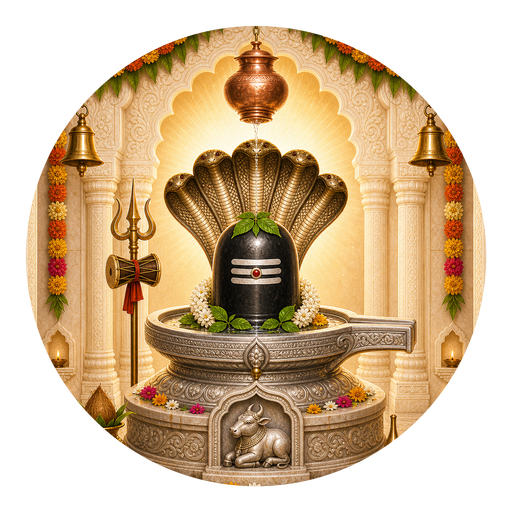 Aundha Nagnath15 Feb
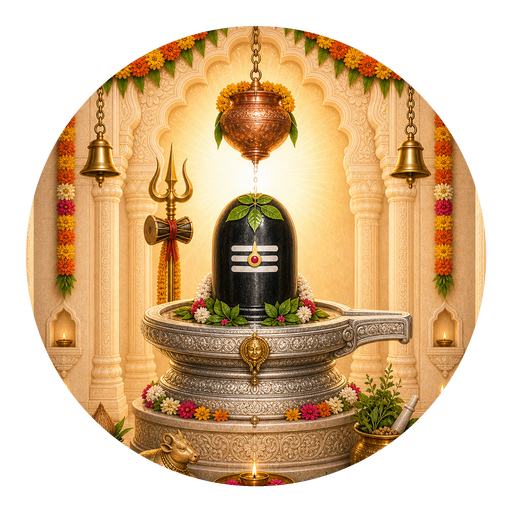 Parli Vaijnath13 Feb
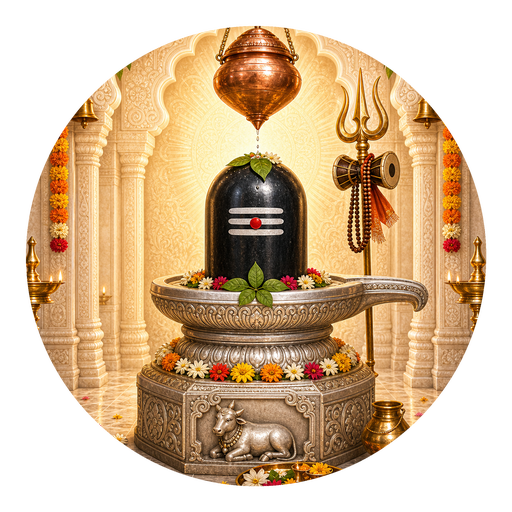 Somnath15 Feb
- Mallikarjuna Jyotirlinga (Srisailam)15 Feb
- Mahakaleshwar (Ujjain, Madhya Pradesh)15 Feb
- Omkareshwar (Madhya Pradesh)25 Jan
- Kashi Vishwanath (Varanasi, Uttar Pradesh)15 Feb
- Kedarnath15 Feb
- Rameshwaram (Tamil Nadu)15 Feb
- Dwarka Nageshwar15 Feb
- Deoghar Baidyanath Dham15 Feb
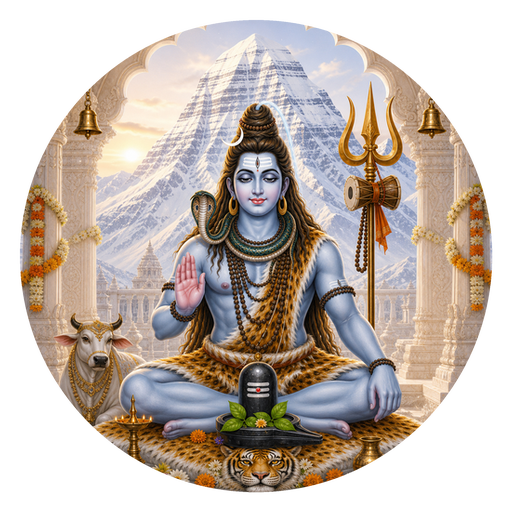 Maha Shivratri15 Feb
- Shravani Somvar17 Aug