Mangalvar Vrat (Hanuman)
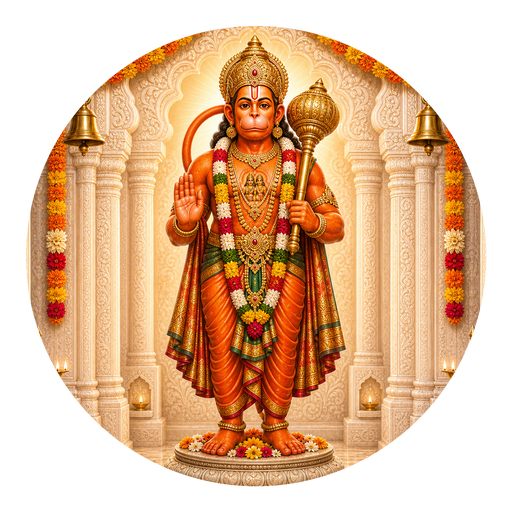
Tuesday is regarded as dedicated to Hanuman (Maruti) — many sources also connect it to the planet Mars, since the word for Tuesday itself, Mangalvar, comes from Mangal, the Marathi name for Mars. Anyone, by faith — both men and women — can observe this vrat; it's particularly suggested for those facing mangal-dosha or obstacles to marriage. This vrat isn't bound to a tithi or a masa — it applies on every Tuesday of the year (52 Tuesdays in all in 2026).
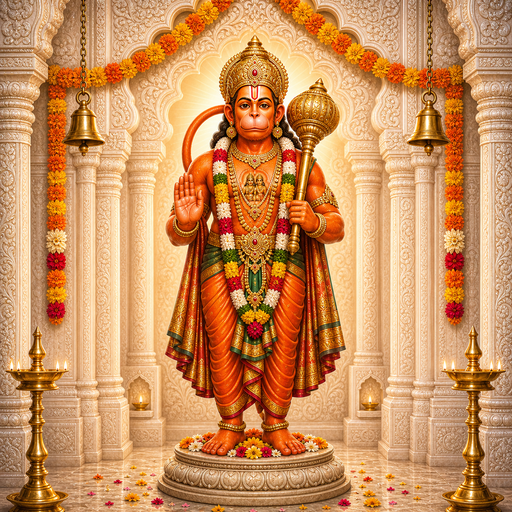
⚠️ Looking for Angaraki Sankashti Chaturthi, Bhaumpradosh, or Mangala Gauri? The site has three other distinct vrats/pages connected to Tuesday — Angaraki Sankashti Chaturthi and Bhaumpradosh combine Tuesday with a specific tithi (falling only a handful of times a year), while Mangala Gauri combines Tuesday with the Shravan masa (only the Tuesdays that fall within Shravan). This page, meanwhile, covers the simple, tithi-independent Hanuman vrat observed on every Tuesday. The difference is set out in the comparison table below.
Deity and significance
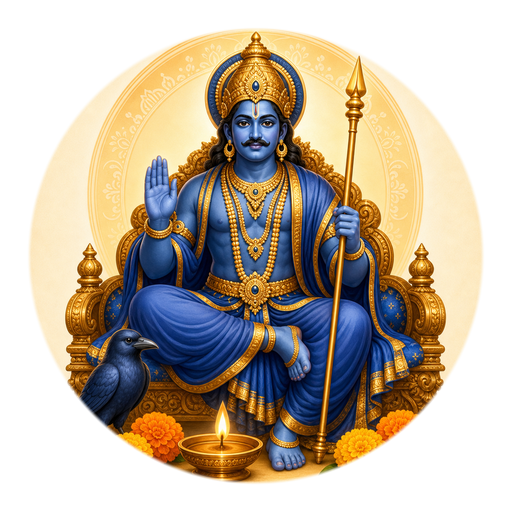
The word Mangalvar (Tuesday) comes from the planet Mangal (Mars); one name for Mars is "Angarak" — after its glowing-ember red colour — which is why red is considered auspicious on Tuesdays. Hanuman is regarded as connected to the planet Mars, so worship of Hanuman is suggested as a remedy for mangal-dosha — this is a matter of astrological belief, not a guarantee.
There's a general belief that Hanuman's grace — as a symbol of courage, protection, and devotion — comes more readily on Tuesdays. One source states that Hanuman was also born on a Tuesday — but this claim comes from a single source and doesn't match the Chaitra Purnima birth account on the Hanuman Jayanti page.
Some Marathi and Hindi sources, however, regard Tuesday as the day of the goddess (Mangalachandika) and Ganesh rather than Hanuman — describing a Devi/Ganesh-centred puja vidhi without mentioning Hanuman at all. This may seem inconsistent with this page's own emphasis on Hanuman, but the site's own weekday-deity classification reference also records a double listing of "Hanuman / Devi" for Tuesday — a genuine, documented regional difference. In some traditions Tuesday belongs to Hanuman, and in others to the goddess or Ganesh.
By tradition, observing this vrat with faith is believed to reduce fear and anxiety, build courage and strength, and ward off trouble — this is a description of religious belief, not a universal guarantee.
The vrat katha
In a certain village lived a childless Brahmin couple, deeply grieved by the absence of a child. The husband would go into the forest to perform tapasya and worship Hanuman, praying for a son, while at home the wife fasted every Tuesday — she wouldn't eat until she had offered naivedya to Hanuman.
One Tuesday, she had nothing ready to offer. She resolved to continue her fast until the following Tuesday — after six days without even water, she fainted on that next Tuesday. Moved by her devotion, Hanuman appeared and blessed her with a son, telling her to name this radiant child "Mangal."
When the husband returned home, he grew suspicious of how a child had suddenly appeared, and secretly placed the boy in a well to test him — the child emerged unharmed and smiling. That night, Hanuman appeared to the father in a dream and revealed the truth; convinced, the couple went on to observe the Tuesday vrat for the rest of their lives. Tradition holds that whoever reads or hears this story and observes the vrat regularly is freed from troubles by Hanuman's grace.
This story appears in nearly identical form across both Marathi and Hindi sources — the original composition appears to belong to the Hindi-speaking belt, and the same story has circulated in translation through Marathi media as well. No separate, distinctly Marathi Aatpat-nagar-style version — of the kind that exists for Monday or Mangala Gauri — was found for Tuesday specifically. If a household or regional tradition has a different version, it can be given priority over this account.
Who should observe it
Anyone, by faith — both men and women — can observe this vrat; sources note that "this vrat is only for men" is a common misconception. According to some sources, unmarried women observe it too.
It's particularly suggested for those with mangal-dosha or "Manglik" concerns, as well as delays or obstacles in marriage. "Observe this vrat to remove mangal-dosha" is a specific astrological claim — it's presented here as a description of belief, not as firm advice regarding a personal horoscope or Manglik matching.
Puja vidhi
The sequence below is researched — since the detail comes mainly from Hindi/pan-Indian sources, it may not match Maharashtrian household practice exactly.
- Bathe before sunrise on Tuesday; wear red clothing if possible — avoid black or white.
- Install an idol or image of Hanuman (some include Ram-Sita too) in the northeast corner of the home.
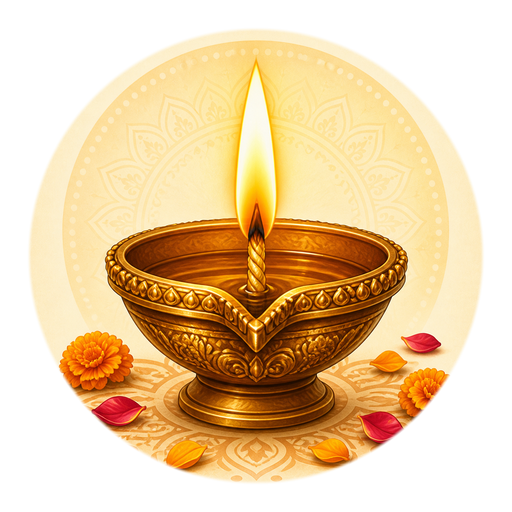
- Light an oil or ghee lamp and offer Hanuman vermilion (sindoor), oil, red flowers, and red cloth.
- Offer jaggery and chana (the simplest and most popular naivedya) or besan/boondi laddus.
- Chant the bija mantra or a Hanuman stotra (see the section below); pan-Indian practice also frequently mentions a Hanuman Chalisa or Sundarkand reading.
- Perform the aarti and distribute prasad; break the fast in the evening with a single, salt-free meal.
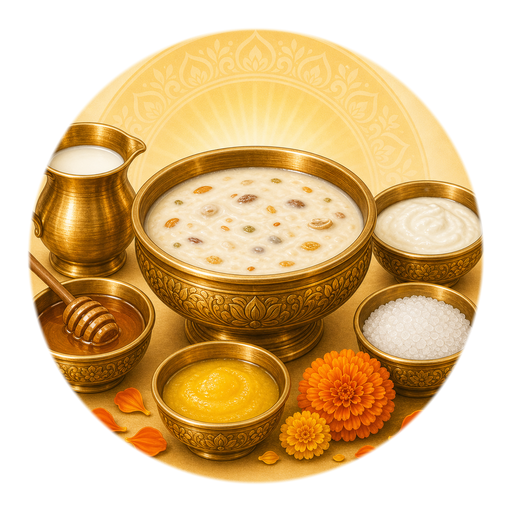
- Udyapan (closing ritual): once the chosen number of Tuesdays is complete, one source describes offering seven coconuts, panchamrit, and vermilion at a Hanuman temple, feeding the poor or Brahmins, raising a red flag at the temple, and wearing a sandalwood garland for the following seven days. Sources vary widely on how many Tuesdays to observe before closing the vrat — three, five, seven, and eleven all appear in different sources, with twenty-one the most frequently mentioned; some sources suggest sixteen, forty-five, or observing it for life. No single number is a universal standard.
The exact vidhi, direction, materials, and closing details can vary by region and family tradition — this shouldn't be taken as the one correct procedure.
Puja materials
- An idol or image of Hanuman (with Ram-Sita if possible), red cloth, red flowers, vermilion, and oil.
- Naivedya: jaggery and chana (the simple, common choice) or besan/boondi laddus, and wheat-jaggery preparations.
- A lamp (ghee or oil); for the udyapan, seven coconuts, panchamrit, a red flag, and a sandalwood garland.
(This list can vary by region and family.)
 Red cloth
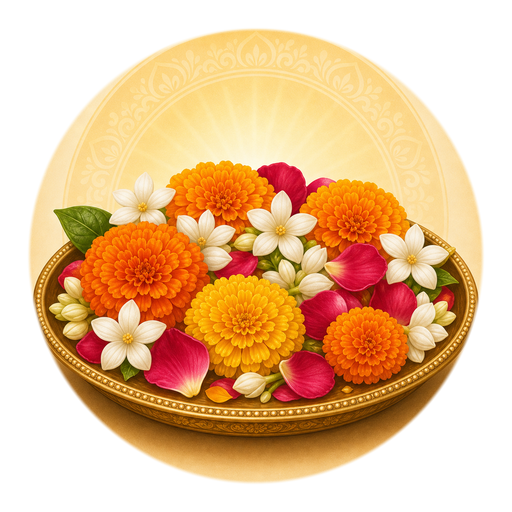 Red flowers
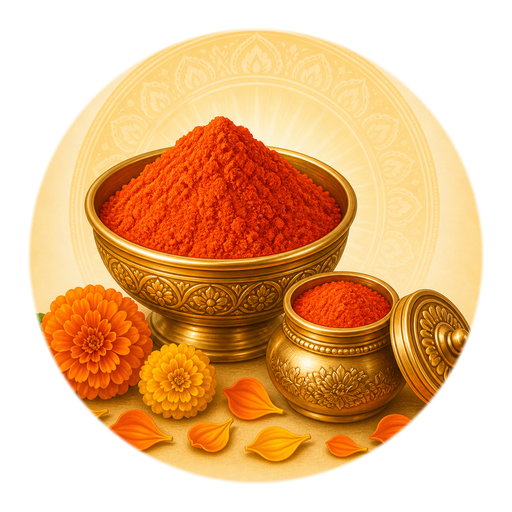 Vermilion
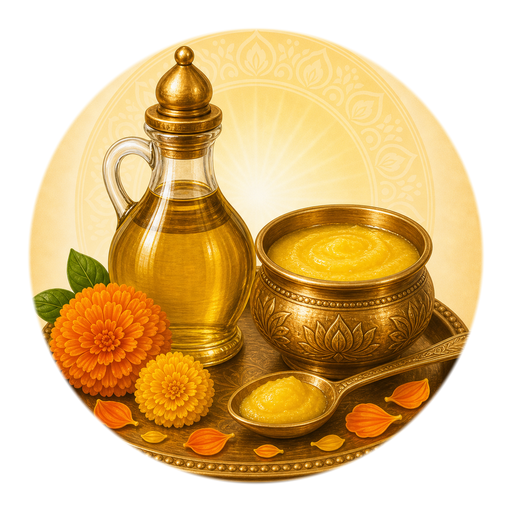 Oil
Oil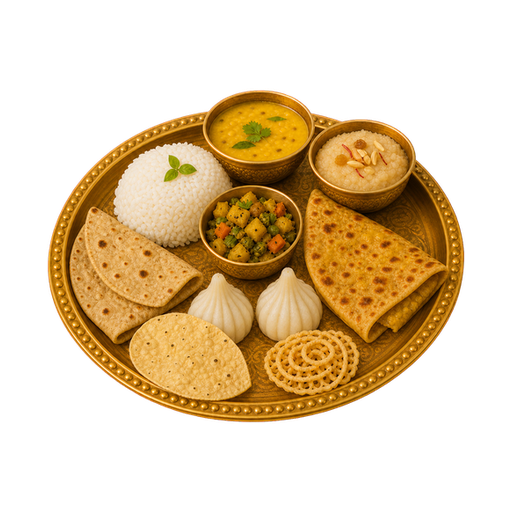 Naivedya (jaggery-chana)
 Lamp
Lamp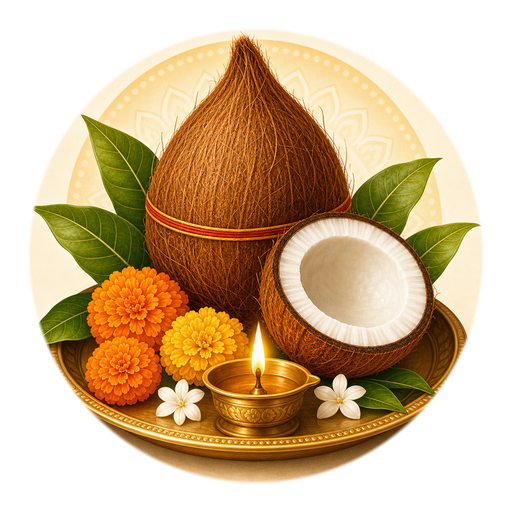 Coconuts
 Panchamrit
Fasting and dietary rules
A day-long fast, broken with a single meal in the evening or after the puja, is the common practice. Many sources say salt should be avoided entirely (plain salt, rock salt, and black salt alike), with an emphasis on sweet, simple foods. A sattvic diet typically includes milk, bananas, fruit, and cashews; some sources specifically mention lentils and beetroot for mangal-dosha — this is an astrological claim, not medical advice.
How strict the fast is, or whether it's kept waterless, varies by tradition — take an exemption based on your health.
Mantras and aarti
- Bija mantra: two forms turn up in sources — "Om Ham Hanumate Namah" (typically chanted 108 times, often starting from a Tuesday or Saturday) and "Om Shri Hanumate Namah." Both forms appear in different sources; there isn't enough evidence to settle on one as the single correct form — both are salutations to Hanuman.
- Hanuman Chalisa / Sundarkand: frequently mentioned as an extremely popular Tuesday reading in pan-Indian practice. Since the original composition (by Tulsidas) is in Hindi/Awadhi, the full text isn't included here — noting that many devotees read it on Tuesdays is treated as sufficient for this page.
- Aarti — Satrane Uddane (Samarth Ramdas): this composition is centuries old and regarded as public domain (source: the site's Aarti Sangrah reference); the full aarti (romanized) is given below, with the Devanagari original on the Marathi (mr) version of this page.
The aarti describes Hanuman's leap to Lanka in thunderous, world-shaking terms — his roar shaking the earth, sky, and sea, scattering gods and demons alike — and its refrain hails him as one whose grace banishes the fear of death itself. The second verse continues the same imagery of cosmic upheaval and closes by naming the poet, Samarth Ramdas.
Regional customs
Maharashtra has its own prominent Hanuman-devotion tradition — Samarth Ramdas's eleven Maruti temples around Satara-Karad-Kolhapur, and the Ashwattha Maruti puja observed on Shravan Saturdays, lead Marathi media to state directly that "Saturday is Maruti's favourite day." At the same time, North India shows a large-scale Tuesday-centred community tradition — most notably "Bada Mangal," the roughly two-hundred-year-old langar (community feast) tradition held on the Tuesdays of the Jyeshtha month in Lucknow. Maruti worship is well established on both Saturday and Tuesday in Maharashtra; North India shows a particularly strong Tuesday-centred community tradition.
The site has three other distinct vrats/pages connected to Tuesday — the difference is set out clearly here to avoid confusion:
| Page | Date basis | Primary deity | Character |
|---|---|---|---|
| This page — Mangalvar Vrat (Hanuman) | Tithi-independent, every Tuesday of the year (52) | Hanuman (with the Devi/Ganesh account noted alongside) | A simple weekday vrat, open to anyone |
| Angaraki Sankashti Chaturthi | Tuesday + Krishna Chaturthi tithi (a rare overlap — only 3 times in 2026: 6 January, 5 May, 29 September; the count varies year to year) | Ganpati | A tithi-based Sankashti vrat |
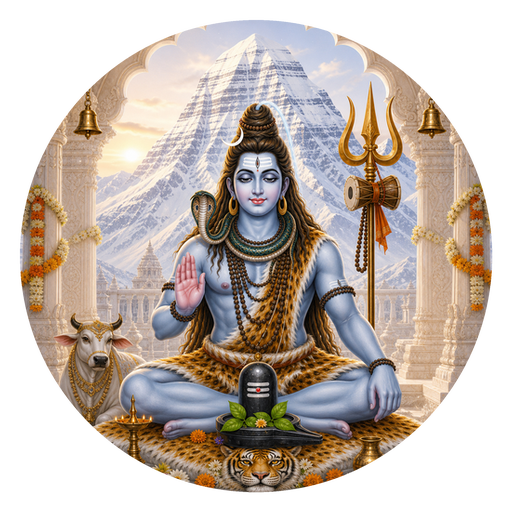
| Bhaumpradosh | Tuesday + Trayodashi tithi | Shiva | A tithi-based Pradosh vrat ("Bhaum" is another name for Mars) |
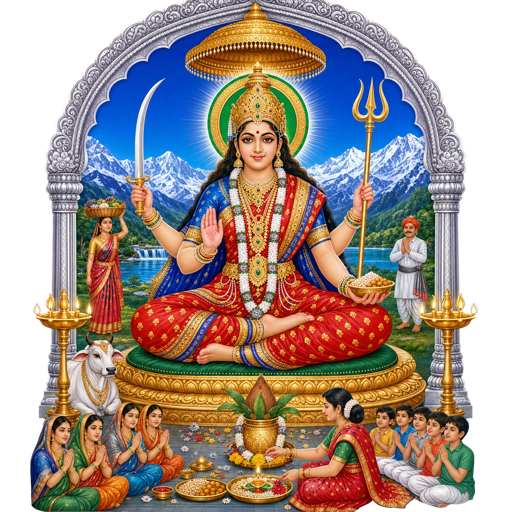
| Mangala Gauri | Only the Tuesdays in Shravan | Gauri/Devi | A newly-married women's vrat (the first five years) |
Hanuman Jayanti (Chaitra Purnima) is Hanuman's birth-anniversary festival — tithi-based, once a year; this page is weekday-based and applies year-round. A similarly tithi-independent weekday vrat can be found on the Guruvar Vrat (Datta) page.
Good to know
- Hanuman temples tend to see larger crowds on both Tuesdays and Saturdays — on an Angaraki Tuesday (6 January, 5 May, and 29 September 2026), crowds can be larger still.
- Claims like "observe this vrat to remove mangal-dosha" describe belief, not personal horoscope or legal advice.
- A salt-free or waterless fast doesn't suit everyone — those with diabetes, who are pregnant, or elderly should take an exemption on medical advice.
FAQ
- What is the Mangalvar Vrat and who is it dedicated to?
- An observance kept on every Tuesday, mainly dedicated to Hanuman (Maruti); in some traditions it's also connected to the goddess or Ganesh.
- Why is Tuesday regarded as Hanuman's day?
- The word Mangalvar comes from the planet Mars (Mangal); Hanuman is regarded as connected to Mars, and there's a belief that his grace, as a symbol of courage and protection, comes more readily on this day.
- Who should observe the Mangalvar Vrat — only men, or can women too?
- Both men and women can observe it; "only for men" is a misconception. It's particularly suggested for mangal-dosha or marriage-related obstacles.
- How is the Mangalvar Vrat puja performed?
- Bathing before sunrise, wearing red, worshipping Hanuman with vermilion, oil, and red flowers, offering jaggery-chana naivedya, chanting a mantra or stotra, and breaking the fast with a single evening meal — the exact vidhi can vary by region.
- What should be eaten or avoided while fasting on Tuesday?
- A sattvic, salt-free diet is recommended; milk, fruit, and cashews are allowed. A single meal is the common practice.
- How many weeks should the Mangalvar Vrat be observed, and how is it closed?
- Sources vary widely — three, five, seven, eleven, sixteen, twenty-one, or forty-five Tuesdays, or even a lifetime, are all suggested. Closing (udyapan) usually involves offering coconuts, panchamrit, and vermilion at a Hanuman temple, along with charity. There's no single fixed number.
- Does the Mangalvar Vrat actually reduce mangal-dosha?
- This is a widely held religious and astrological belief, without universal scientific confirmation. It should be understood as a description of belief, not personal horoscope advice.
- What's the difference between Angaraki Sankashti Chaturthi and the Mangalvar Vrat?
- Angaraki is the Sankashti Chaturthi that falls on a Tuesday — a Ganpati-centred vrat observed only a handful of times a year. The Mangalvar Vrat is weekday-based, a Hanuman vrat observed on every Tuesday of the year — the two are distinct vrats.