Somvar Vrat / Solah Somvar Vrat
the Somvar Vrat is dedicated to Lord Shiva and can be observed on any Monday of the year — there are 52 Mondays in all in 2026, and any one of them can be chosen to start or complete the vrat, with no restriction to a particular masa. Solah Somvar (Sixteen Mondays) Vrat is a more structured, stricter form of this same worship — sixteen consecutive Mondays of fasting and puja, closed with an udyapan on the seventeenth Monday. Most sources say it begins on the first Monday of Shravan; one source says it can begin on any Monday of the year.
This year's dates (2026)
- The 1st Monday — an example of the start of the chain (also coincides with Nag Panchami)17 Aug
- The 2nd Monday24 Aug
- The 3rd Monday31 Aug
- The 4th Monday — Shravan masa ends here7 Sep
- The 5th Monday14 Sep
- The 6th Monday21 Sep
- The 7th Monday28 Sep
- The 8th Monday5 Oct
- The 9th Monday12 Oct
- The 10th Monday19 Oct
- The 11th Monday26 Oct
- The 12th Monday2 Nov
- The 13th Monday — also Somvati Amavasya9 Nov
- The 14th Monday16 Nov
- The 15th Monday23 Nov
- The 16th (last fasting) Monday — the chain completes here30 Nov
- The 17th Monday — udyapan; also Masik Shivratri7 Dec
⚠️ Looking for Shravani Somvar? This page covers two connected but distinct topics — the general Somvar Vrat and the Solah Somvar Vrat — both different from Shravani Somvar (limited to the month of Shravan only, with its own Shivamuth grain sequence), a separate page.
Deity and significance
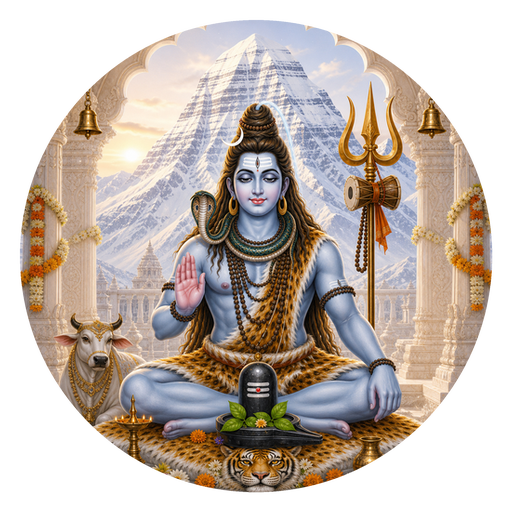
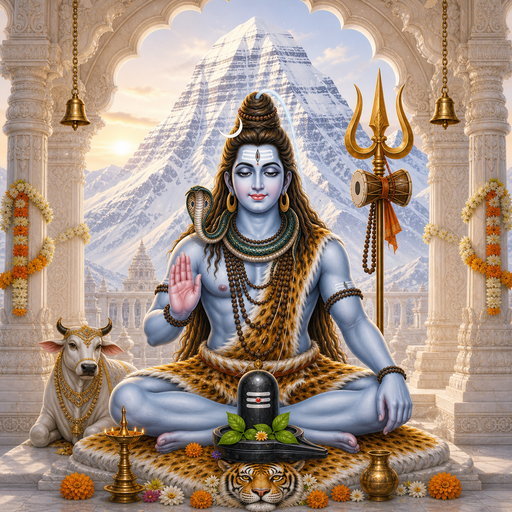
Monday is said to be connected to the moon (Som) and, through it, to Shiva — the moon rests in Shiva's matted hair, which is why Monday is regarded as especially auspicious for Shiva worship. This etymology was found mainly in Hindi-language sources — Marathi sources simply call it "Shiva's favoured day" without explaining why.
The Somvar Vrat is regarded as a simple form of Shiva worship that can be observed year-round, without waiting for any particular masa — which makes it broader in scope than Shravani Somvar (limited to Shravan alone). Solah Somvar Vrat is a resolution-bound, fixed-duration form of this same worship — a vrat kept with a specific wish in mind, observed consistently for sixteen weeks and closed with an udyapan on completion. Continuity and devotion are regarded as the heart of this vrat.
The vrat katha
Two distinct story layers are recorded on this page. The name "Aatpat Nagar" in both stories is simply the traditional opening formula of Marathi folk tales (like "once there was a king") — the two stories aren't connected to each other or set in the same town.
The first layer — traditional moral tales of the general Somvar Vrat: two distinct, public-domain traditional stories exist.
The tale of a palmful of milk on Monday — the king of Aatpat Nagar insists on filling a Shiva-linga with milk; even after the whole town pours milk over it, the linga doesn't fill, and meanwhile people's children and cattle go hungry. A poor old woman, however, first tends to her own family and cattle, and only then offers a little milk with genuine devotion — and that alone fills the linga. The moral: honest devotion, kept alongside one's responsibilities, is what pleases God — not showy excess.
The simple tale of Monday — a guru's disciple hears a mysterious voice; on the guru's advice, he welcomes the presence, and a maiden appears from it, whom he marries. Every Monday, the wife worships with devotion. On the fifth Monday, when jewels are found, the husband suspiciously asks about his wife's origins — when he goes there, all the wealth vanishes. The moral: God stands by his devotee, but suspicion breaks that grace.
The second layer — a story specific to Solah Somvar (Aatpat Nagar, a curse lifted): there was a Shiva temple in a town called Aatpat Nagar. One day, while Shiva and Parvati were playing dice, a guru present there spoke falsely about the outcome and insulted Parvati — angered, Parvati cursed him with leprosy. Some apsaras told him the remedy — the vrat of sixteen Mondays: fasting, bathing, and worshipping Shiva daily, eating only half a ser (roughly a kilogram) of a wheat-ghee-jaggery mixture (with no salt) each day. The guru observed this vrat faithfully for sixteen Mondays and was cured.
The merit of this vrat then spread further — a Brahmin who observed the same vrat for marriage had an elephant place a garland around his neck, leading to marriage with a princess; the princess (now queen) later observed the same vrat again for a child. But on the sixteenth Monday, the daughter-in-law (in some versions, the queen herself), out of embarrassment, sent money instead of the traditional churma offering — this breach brought misfortune, and she was cast out of the palace. A wandering ascetic (Gosavi) recognised the mistake and told her to perform the vrat properly again; once completed, her honour and husband were restored. The story closes with a traditional blessing in the spirit of, "may you likewise please Shankar and bring about Ram-rajya."
Exactly how the guru was related to the other characters, and who exactly broke the churma protocol, varies slightly by version — the core shape of the story (curse, the sixteen-Monday vrat, cure, the merit spreading, the protocol breach, restoration) stays consistent throughout. The retelling above is written fresh from that traditional shape.
Who should observe it
Both men and women can observe this vrat — no restriction by age or caste is mentioned, only an expectation of purity of mind and body. By popular belief, unmarried women in particular observe it hoping for a suitable life partner, married women for family happiness and their husband's wellbeing, and general devotees for prosperity, health, relief from hardship, or simply out of devotion to Shiva. These are all descriptions of popular belief, not universal guarantees.
Puja vidhi
On each of the sixteen Mondays:
- Wake before dawn, bathe, and wear clean clothes — make a resolve (sankalp) for the vrat while holding your wish in mind.
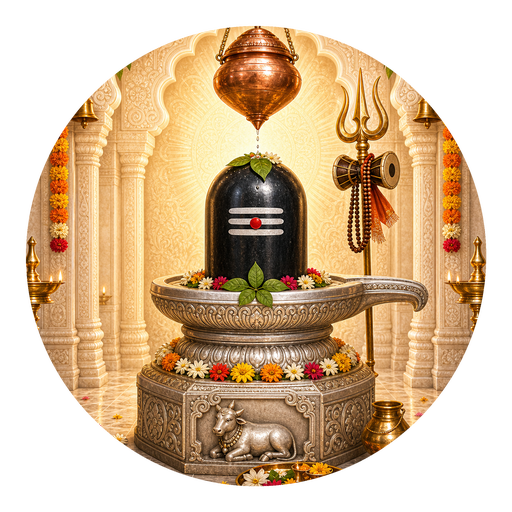
- Perform a panchopachar puja of the Shiva linga or idol — an abhishek with water/Ganga water and panchamrit, offering bel leaves and flowers, and applying a sandalwood mark.
- Keep a fast through the day — the intensity is optional (see the fasting section below).
- In the evening, read or listen to the Solah Somvar katha or mahatmya.
- Perform the aarti, offer naivedya, and break the fast — commonly with a wheat-ghee-jaggery dish (a sheera or kheer type) made without salt.
- If the sequence is broken partway through, one source suggests making a fresh resolve and starting over from the beginning.
Udyapan (on the seventeenth Monday): once the sixteen Mondays are complete, the udyapan is performed on the following (seventeenth) Monday. This includes a shodashopachar (sixteen-step) puja, preparing about five kilograms of a wheat-flour dish (a churma or sheera type) as naivedya, and dividing it into three parts — one for the deity, one for Brahmins or cows, and one for the household. Some sources also mention feeding couples and giving them dakshina. The exact amount and method vary by tradition.
The exact vidhi, direction, and details can vary by family and region — this shouldn't be taken as the one correct procedure.
Puja materials
- A Shiva linga or idol/image, bel leaves, flowers, sandalwood paste, unbroken rice.
- Water/Ganga water and panchamrit (milk, curd, ghee, honey, sugar) for the abhishek.
- Wheat flour, ghee, and jaggery for naivedya (a sheera or churma type); salt is avoided.
- Some sources, mainly in a North Indian style, also mention dhatura and bhang — some traditions use these; they're recognised as general materials for Shiva worship.
(This list can vary by tradition and region.)
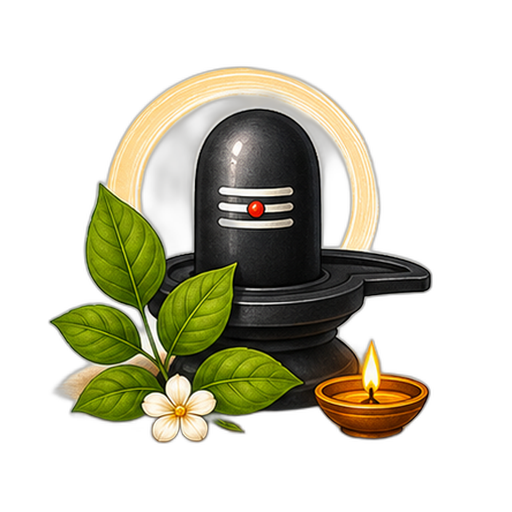 Shiva linga or idol
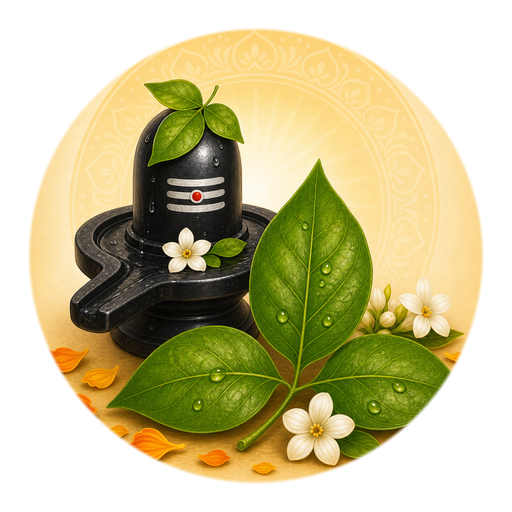 Bel leaves
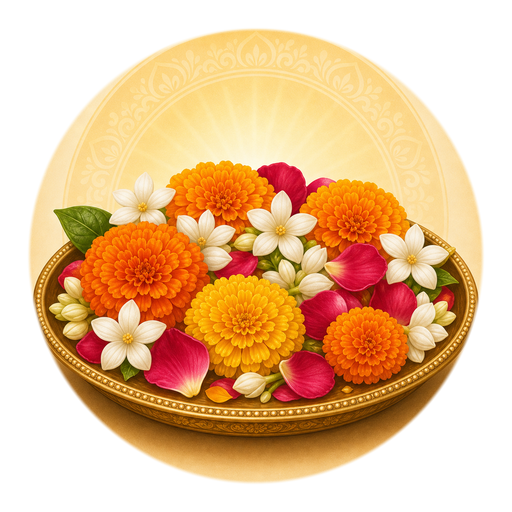 Flowers
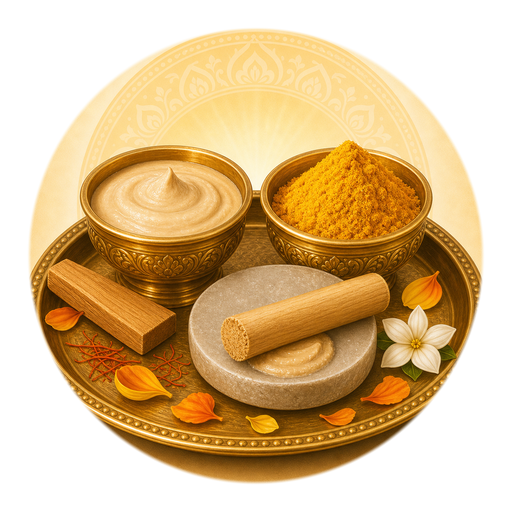 Sandalwood paste
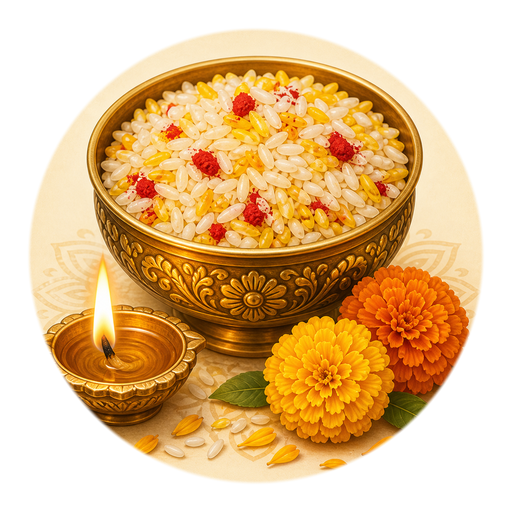 Unbroken rice (akshata)
 Water/Ganga water
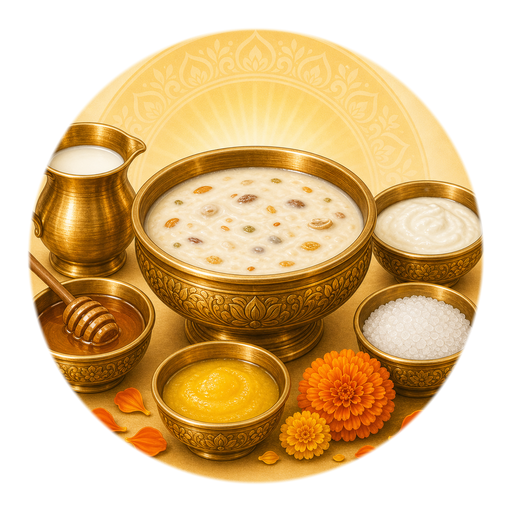 Panchamrit
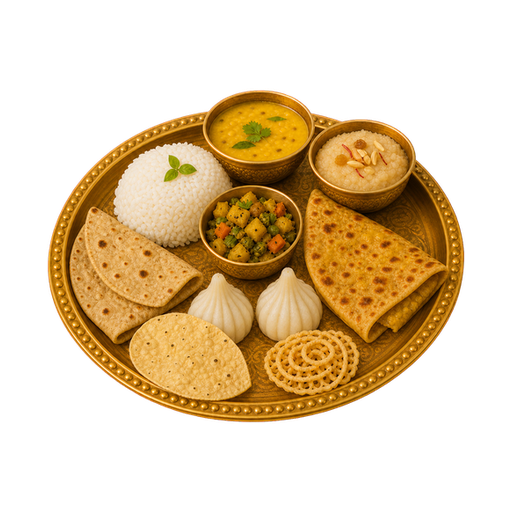 Wheat-ghee-jaggery naivedya (sheera/churma)
Fasting and dietary rules
The intensity of the fast is optional — nirjal (avoiding even water), niraahar-phalahar (fruit/milk only), or ekbhukta (a single sattvic meal) — chosen according to one's capacity. If that isn't manageable, a wheat-ghee-jaggery mixture (a sheera or kheer type) is allowed as an exemption. Salt is avoided when breaking the fast or in the naivedya. Celibacy (brahmacharya) and mental and physical purity are expected during the vrat period.
Whether to continue the fast during menstruation is purely a health decision — that should be made based on medical advice. One source suggests skipping the puja that day and not counting that Monday toward the sixteen — this is a personal custom followed by some families/traditions, not a universal rule; decide based on your own family's custom or belief.
Some practitioners are said to observe this vrat continuously for many years — but whether this is a universal tradition or one practitioner's personal cycle isn't clear.
Mantra
The root mantra, "Om Namah Shivaya" (meaning: salutations to Shiva), is the five-syllable core mantra of Shiva worship — chanted daily during this vrat. Some sources also suggest a Shiva stotra or the Shiva Chalisa as an alternative, though the full text isn't given anywhere. The aarti sung after the puja (such as Samarth Ramdas's "Lavathavati Vikraala") is already given on the Shravani Somvar page — it isn't repeated here.
Regional customs
The Marathi-language sources examined largely show the same broad, pan-Indian framework (Shiva-linga abhishek, bel leaves, the Solah Somvar katha, churma naivedya) — no distinctly different Maharashtrian ritual practice was found.
The divergence over which masa to start in (the majority Shravan-centred view versus one source's more relaxed "any Monday works") is the single biggest regional/traditional point of difference here. The exact start date of Shravan itself also varies by panchang tradition — under Maharashtra's amanta system, this falls on 17 August in 2026, while the North Indian purnimanta reckoning can give a different date. Shubh Darshika shows these example dates using Maharashtra's amanta panchang convention; other panchang traditions may give a different date.
One source notes the general principle that this vrat shouldn't begin during an adhik maas (an intercalary month) — in 2026, the adhik maas is Jyeshtha, not Shravan, so this question doesn't directly apply to this year's Shravan start, but it's worth recording as a general principle.
Solah Somvar — an illustrative 2026 chain
The table below is built following the majority tradition of starting on the first Monday of Shravan — an illustrative chain. All seventeen dates are genuine dates taken directly from the panchang, none estimated — but this isn't "the official 2026 Solah Somvar date list," since choosing the starting Monday depends on personal or family tradition.
| # | Date | Tithi | Nakshatra | Note |
|---|---|---|---|---|
| 1 | 17 August | Shravan Shukla Panchami | Chitra | The chain begins; coincides with Nag Panchami |
| 2 | 24 August | Shravan Shukla Dwadashi | Purvashadha | — |
| 3 | 31 August | Shravan Krishna Tritiya | Revati | — |
| 4 | 7 September | Shravan Krishna Ekadashi | Punarvasu | Shravan masa ends here |
| 5 | 14 September | Bhadrapad Shukla Tritiya | Chitra | — |
| 6 | 21 September | Bhadrapad Shukla Dashami | Uttarashadha | — |
| 7 | 28 September | Bhadrapad Krishna Dwitiya | Revati | — |
| 8 | 5 October | Bhadrapad Krishna Dashami | Pushya | — |
| 9 | 12 October | Ashwin Shukla Dwitiya | Swati | — |
| 10 | 19 October | Ashwin Shukla Ashtami | Uttarashadha | — |
| 11 | 26 October | Ashwin Shukla Purnima | Ashwini | — |
| 12 | 2 November | Ashwin Krishna Ashtami | Ashlesha | — |
| 13 | 9 November | Ashwin Krishna Amavasya | Swati | Also Somvati Amavasya |
| 14 | 16 November | Kartik Shukla Saptami | Shravan | — |
| 15 | 23 November | Kartik Shukla Chaturdashi | Bharani | — |
| 16 | 30 November | Kartik Krishna Saptami | Ashlesha | The last fasting Monday |
| 17 | 7 December | Kartik Krishna Chaturdashi | Vishakha | Udyapan; also Masik Shivratri |
Good to know
- Choose your fast based on your health — those with diabetes, high blood pressure, who are pregnant, or elderly should skip a nirjal or niraahar fast in favour of a phalahar or single-meal option.
- Since sixteen consecutive Mondays need to be observed, plan the starting date with travel, illness, or other likely disruptions in mind.
- Check local temple timings and expected crowds before visiting for darshan.
FAQ
- What is the Somvar Vrat?
- A simple fasting and worship vrat dedicated to Lord Shiva, observed on any Monday of the year.
- When should the Solah Somvar Vrat be started?
- Most sources say on the first Monday of the month of Shravan; some say it can begin on any Monday of the year. In 2026, the first Monday of Shravan is 17 August.
- When should the Solah Somvar Vrat be closed (udyapan)?
- On the seventeenth Monday, following the sixteen fasting Mondays. Based on the Shravan-start example, this falls on 7 December in 2026.
- Who should observe the Somvar Vrat?
- Both men and women; particularly unmarried women (for a life partner), married women (for family happiness), and general devotees of Shiva — by popular belief.
- What should be eaten during the Solah Somvar Vrat?
- A nirjal or phalahar fast if possible; if not, a single serving of a salt-free wheat-ghee-jaggery dish (a sheera or kheer type) is allowed.
- What's the difference between the Somvar Vrat and Shravani Somvar?
- The Somvar Vrat can be observed on any Monday of the year; Shravani Somvar is limited to the Mondays within the month of Shravan and follows its own rules, such as the Shivamuth grain sequence.
- What should be done if a Monday is missed during the Solah Somvar Vrat?
- One source says the sequence must be restarted from the beginning with a fresh resolve if broken — this is a single-source claim.
- What are the believed benefits of the Solah Somvar Vrat?
- By popular belief: prosperity, wish fulfilment, a suitable life partner, health, and relief from hardship — these are all descriptions of belief, not guarantees.