Santoshi Mata Vrat
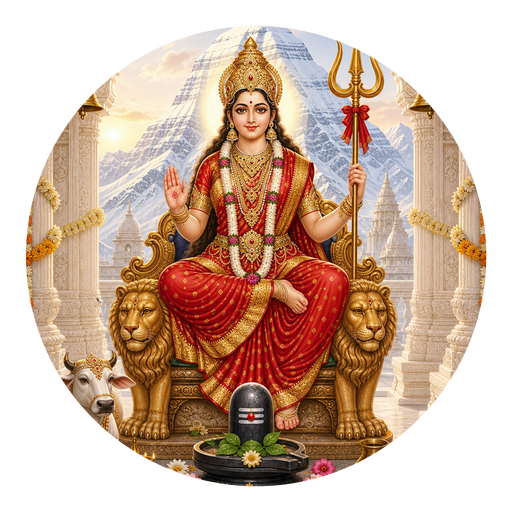
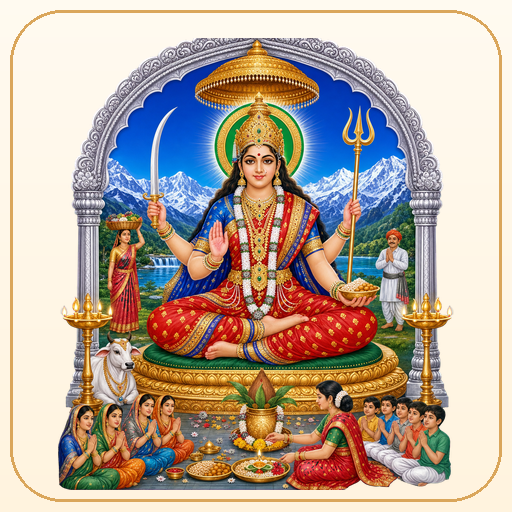
Santoshi Mata — "the goddess of contentment" — is worshipped on Fridays; popular belief holds her to be the daughter of Ganesh and Riddhi-Siddhi. The vrat has a fixed structure: sixteen consecutive Friday fasts and pujas, closed with an udyapan on the seventeenth Friday, and avoiding sour foods on the fasting Friday is its single best-known rule — some households extend this across all sixteen weeks. This vrat is widely observed across Gujarat, Rajasthan, North India, and Maharashtra alike — unlike Margashirsh Guruvar, it isn't a Maharashtra-specific practice.
⚠️ Looking for Vaibhav Lakshmi Vrat or Jivati Pujan? Santoshi Mata, Vaibhav Lakshmi, and Jivati (Jara-Jivantika) are three distinct deities, all worshipped on Fridays — but their structure and scope differ. The difference is set out in the Regional customs section below.
Deity and significance
As her name suggests, Santoshi Mata is regarded as the presiding goddess of santosh — contentment and satisfaction. One academic observation notes that, since she accepts a simple jaggery-and-chana offering rather than an elaborate one, she became especially popular among ordinary and poorer devotees. Scholar Philip Lutgendorf observes that she took particular root among urban, non-elite women, while sociologist Veena Das has described her as a gentle, trustworthy goddess offering relief from everyday stress.
Popular belief holds that Ganesh's sons Shubh and Labh wished for a sister; Ganesh (in some versions, with Riddhi-Siddhi's help) created Santoshi Mata from divine radiance — she's regarded as the granddaughter of Shiva and Parvati, and Kartikeya's niece. Sources disagree on exactly what her birth is connected to — English Wikipedia, following the film's storyline, links her birth to Raksha Bandhan, while one Marathi news source instead says she was born on a Friday, which is why she's worshipped only on Fridays. Both accounts are recorded here; neither is chosen over the other.
Two distinct story layers — worth keeping separate: this genealogy/origin account is a different thing from the Friday vrat katha given further below (the mother-in-law/daughter-in-law story). English Wikipedia also notes something significant here — the original circulating vrat-katha pamphlets did not connect the goddess to Ganesh at all. That means the "Ganesh's daughter" genealogy so widely repeated today may be a comparatively recent addition, taking root later (particularly in the film/poster-art era discussed below) rather than an ancient puranic claim.
Historical background
Santoshi Mata isn't an ancient puranic deity the way Shiva or Hanuman are in the Monday or Tuesday vrats — she's a comparatively modern goddess, and that's a well-established, genuinely interesting fact, not something to downplay. According to art historian Michael Brand's research, only about five scattered Santoshi temples existed in North India in the early 1960s; her worship spread gradually through word of mouth, pamphlet literature, and poster art.
The 1975 Hindi devotional film "Jai Santoshi Maa" took this until-then relatively little-known goddess to pan-Indian popularity within a short span. Made on a budget of barely 2.5 million rupees, the film went on to earn more than 670 million rupees at the box office — one of the most successful films of its era. Audiences reportedly went to theatres barefoot, and special Friday matinee screenings continued for years afterward. This "celluloid goddess" phenomenon has itself become a subject of sociological study (Veena Das, Philip Lutgendorf).
The vrat katha
In a certain town lived a mother with her seven sons and their wives. The six elder sons earned a living, but the youngest was considered poor and lazy — he and his wife were always left with the household's leftover, half-eaten food. When this unfair treatment came to light one day, the youngest son, hurt and angry, gave his wife a token — in some versions a ring, in others a palm-print made with cow dung — and left for another town to try his fortune. There, through honest hard work, he succeeded in trade, while the wife left behind suffered greatly at the hands of her mother-in-law and sisters-in-law — she was made to gather firewood and drink water from a cracked coconut shell.
One Friday, while out gathering firewood, she saw some women observing the Santoshi Mata vrat. Learning the method from them, she began the vrat herself — fasting, puja, a jaggery-and-chana offering, and listening to the katha. By the goddess's grace, her husband received a sign to resolve his difficulties in trade and return home; he came back, and his wife recognised him by the token she'd kept.
At the story's end, the goddess sets one more test — during the udyapan, the household's children or nieces insisted on sour tamarind, which was unknowingly mixed into the offering. This broke the vrat and brought fresh trouble. Once the mistake was recognised and the vrat completed again properly, without any sour food, the goddess was pleased and granted the full boon.
This story appears in nearly the same shape across three independent versions, in both Marathi and Hindi, even though some details differ from version to version — the nature of the token, how long the separation lasted (twelve years, in some versions), who disrupted the udyapan, and the final scene of atonement all vary slightly by version, while the core shape stays consistent.
Who should observe it
General sources say both men and women can observe this vrat — no age or caste restriction is mentioned. By popular tradition, it's particularly women — seeking the fulfilment of a wish, family happiness, or the wellbeing of husband and children — who are seen observing it most; one academic observation notes that such stories are largely shared among women within the domestic sphere. General devotees also observe it for contentment, financial stability, and family peace. These are descriptions of popular belief, not universal guarantees.
Puja vidhi
On each of the sixteen Fridays:
- Bathe before sunrise and wear clean clothes.
- Install an image or idol of the goddess in a clean place, with a water-filled kalash in front of it and a bowl of jaggery and chana placed on top of the kalash.
- Perform a panchopachar puja — offering sandalwood paste, flowers or a garland, incense, and a ghee lamp, followed by naivedya.
- Keep a single-meal fast or a full fast through the day — avoiding sour foods completely (details below).
- In the evening, read or listen to the vrat katha, followed by the aarti.
- If menstruating, one source suggests skipping that Friday and making it up later so the total still reaches sixteen — this is a single-source suggestion, not a universal rule.
Udyapan (on the seventeenth Friday): once the sixteen Fridays are complete, or the wish is fulfilled, the udyapan is performed on the following (seventeenth) Friday. This includes the usual puja, a sour-free kheer-puri offering, and feeding children. The exact headcount and composition varies by source — one source simply says "eight boys," while another gives a more detailed count of "one girl (representing the goddess), plus eight boys, plus five Brahmins, plus five married women." No single fixed number is given here — it's understood to vary by tradition.
The exact vidhi, direction, materials, and closing details can vary by region and family tradition — this shouldn't be taken as the one correct procedure.
Puja materials
- An image, idol, or picture of the goddess, yellow cloth or thread, turmeric-kumkum, sandalwood paste.
- Flowers or a garland, unbroken rice, fragrant items, incense, a ghee lamp.
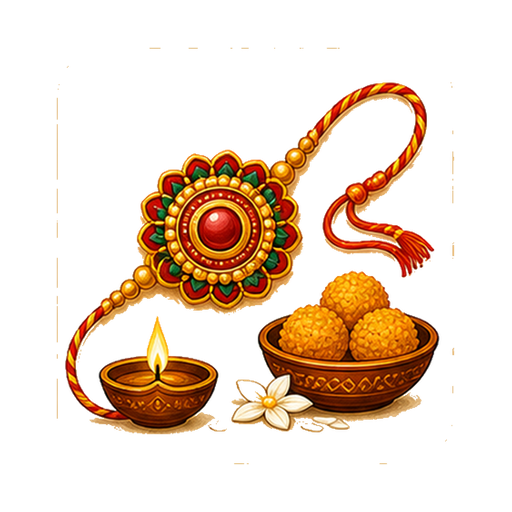
- Jaggery and roasted chana for naivedya — the simplest and most recognisable marker of this vrat.
- A water-filled kalash, a coconut, a banana leaf, gram flour, and red cloth — mentioned in some sources.
(This list can vary by tradition and region.)
 Yellow cloth
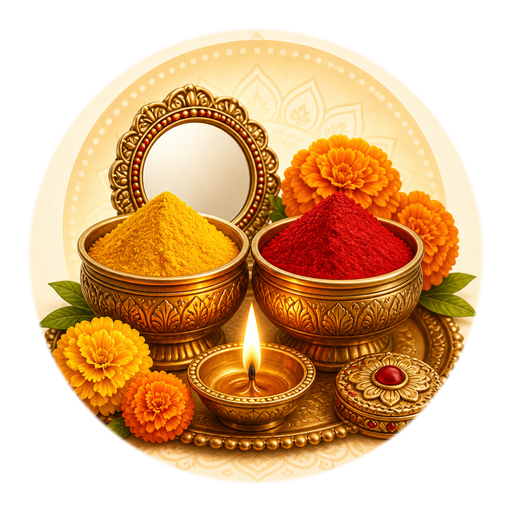 Turmeric-kumkum
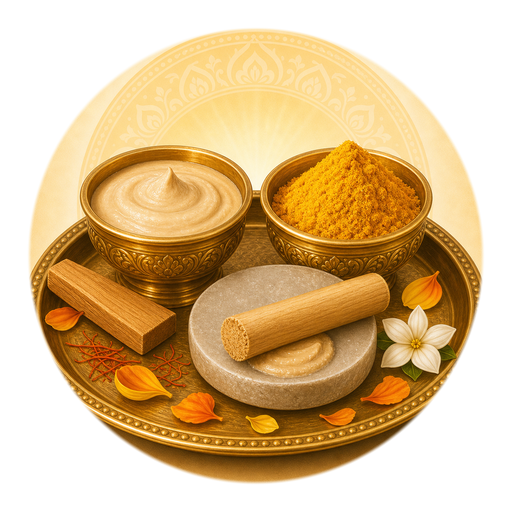 Sandalwood paste
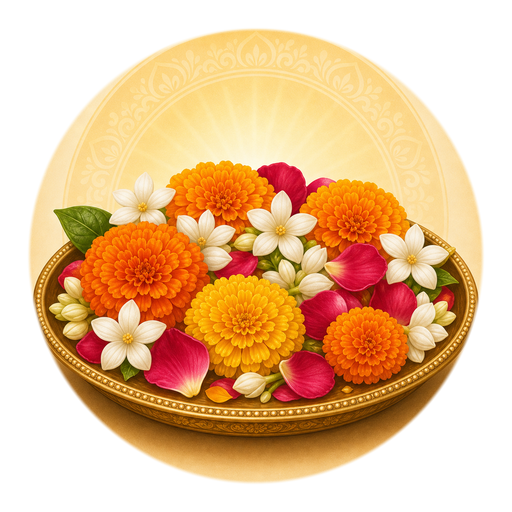 Flowers
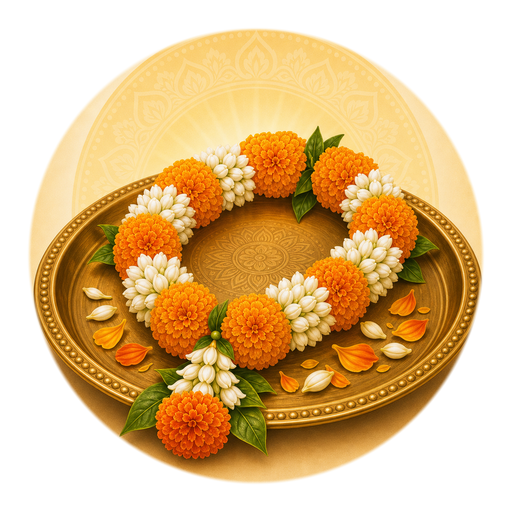 Garland
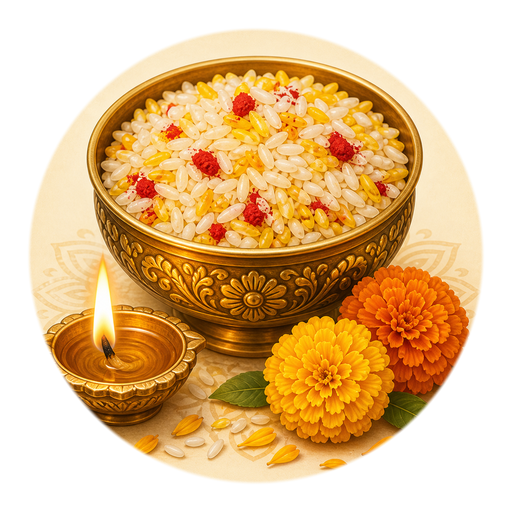 Unbroken rice (akshata)
 Incense
 Ghee lamp
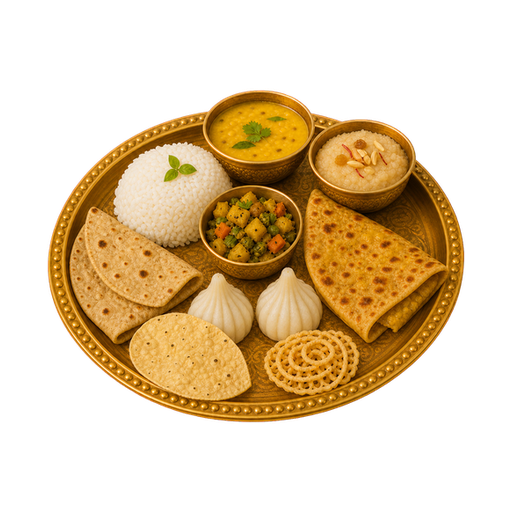 Jaggery-chana naivedya
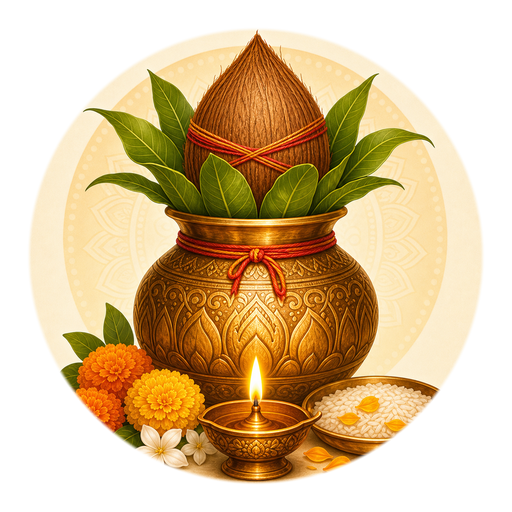 Water-filled kalash
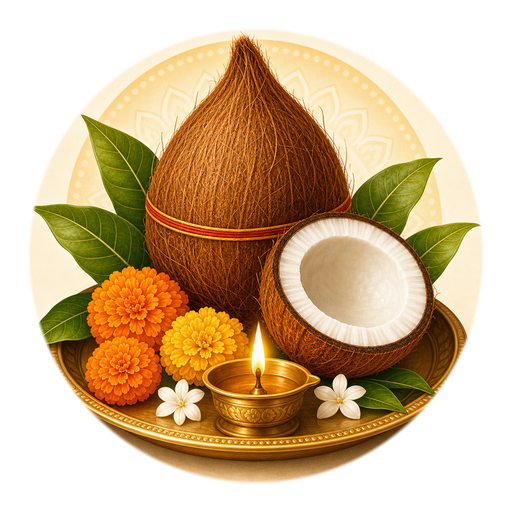 Coconut
Fasting and dietary rules
Avoiding sour foods — lemon, tamarind, curd, buttermilk, tomato, and the like — completely is the single most consistent, best-known rule of this vrat across sources. One source says even touching such foods should be avoided, not just eating them.
The exact scope of this rule isn't entirely clear — most sources limit it to Friday itself (the fasting/offering day); fewer, weaker sources extend it as personal discipline across the entire sixteen-week period. Both possibilities are recorded here rather than presented as one firm rule.
Meat, onion-garlic, and intoxicants are avoided, with an expectation of sattvic food generally. A single meal is eaten each day (when breaking the fast); the person observing the vrat should also eat the jaggery-chana prasad themselves. These are all descriptions of custom, not universal decrees — they can vary by household tradition and health.
Mantra and aarti
The opening line of the aarti is consistent across several collections — "Jaya Santoshi Mata, Maiya jaya Santoshi Mata" — followed by verses describing the goddess's form and the jaggery-chana offering. No older, fixed bija mantra of the kind found for Tuesday or Thursday vrats was found for Santoshi Mata — listening to the katha and the aarti are the main recitation elements of this vrat.
The composition date and author of this aarti aren't recorded in any source. Since worship of Santoshi Mata dates only from the 1960s onward (not a centuries-old tradition), this aarti too is more likely to belong to that same modern period — unlike the confirmed public-domain aartis composed by Ramdas or Eknath. So only the meaning and opening line are used here, not the full text.
When should it be started?
Sources give two different rules for when to start the vrat. Most sources, including English Wikipedia, say it can begin on any Friday at all — no condition on paksha or masa is mentioned. Some Hindi-language sources, however, give a clear rule that it should begin only on the first Friday of Shukla Paksha. These two claims are in tension — rather than presenting one as the single "correct" answer, both are recorded here; the choice can be made according to household tradition.
To illustrate the counting method, the table below shows one example chain of sixteen-plus-one Fridays — worked out independently from the site's own panchang data. The start date was deliberately chosen to fall on a Shukla Paksha Friday, so the example stays consistent with both start-rules noted above. This date list is not an official or recommended starting date — begin counting from whichever Friday suits you.
| # | Date | Masa-paksha-tithi | Nakshatra |
|---|---|---|---|
| 1 | 23 January | Magh Shukla Panchami | Purva Bhadrapada |
| 2 | 30 January | Magh Shukla Dwadashi | Ardra |
| 3 | 6 February | Magh Krishna Panchami | Hasta |
| 4 | 13 February | Magh Krishna Ekadashi | Mula |
| 5 | 20 February | Falgun Shukla Tritiya | Uttara Bhadrapada |
| 6 | 27 February | Falgun Shukla Ekadashi | Ardra |
| 7 | 6 March | Falgun Krishna Tritiya | Hasta |
| 8 | 13 March | Falgun Krishna Dashami | Purvashadha |
| 9 | 20 March | Chaitra Shukla Dwitiya | Revati |
| 10 | 27 March | Chaitra Shukla Navami | Punarvasu |
| 11 | 3 April | Chaitra Krishna Pratipada | Chitra |
| 12 | 10 April | Chaitra Krishna Ashtami | Purvashadha |
| 13 | 17 April | Chaitra Krishna Amavasya | Revati |
| 14 | 24 April | Vaishakh Shukla Ashtami | Pushya |
| 15 | 1 May | Vaishakh Shukla Purnima | Swati |
| 16 | 8 May | Vaishakh Krishna Shashthi | Uttarashadha |
| 17 (udyapan) | 15 May | Vaishakh Krishna Trayodashi/Chaturdashi | Ashwini |
Regional customs
The Santoshi Mata vrat isn't a Maharashtra-specific practice the way Margashirsh Guruvar or Shravani Somvar are — it's widely observed across Gujarat, Rajasthan, North India, and Maharashtra alike.
One concrete Maharashtra-related reference point: a local Hindi news source mentions a Santoshi Mata temple at Yedmakot in Gondia district, with a special celebration during Navratri. This claim rests on a single source; no official trust website was found, so no official affiliation with the temple is assumed here.
Avoid confusing this with neighbouring Friday vrats — all three are worshipped on Fridays, but the deity and structure differ:
| Page | Deity | Structure |
|---|---|---|
| This page — Santoshi Mata Vrat | Santoshi Mata (goddess of contentment) | Sixteen consecutive Fridays + udyapan on the seventeenth |
| Vaibhav Lakshmi Vrat | Lakshmi | Typically eleven or twenty-one Fridays, a different katha — its own page isn't published yet |
| Jivati (Jara-Jivantika) Pujan | Jara-Jivantika | Only the Fridays within Shravan, centred on child welfare |
Similarly tithi-independent weekday vrats also exist for Thursday and Tuesday — see Guruvar Vrat (Datta) and Mangalvar Vrat (Hanuman).
Good to know
- Because the rule against sour food is strict, other household members should also be careful not to accidentally mix sour ingredients into the offering or cooking that day — the story's central turning point comes from exactly this mistake.
- Take medical advice into account, based on your health (diabetes, pregnancy, or other conditions), before keeping a fast or a single-meal day.
- "Wish fulfilment" or "relief from trouble" describes belief, not a guarantee.
- The modern (post-1960s) origin of this vrat is a genuine, interesting piece of history.
FAQ
- What is the Santoshi Mata Vrat?
- A vrat dedicated to Santoshi Mata, observed on Fridays — sixteen consecutive Friday fasts and pujas, closed with an udyapan on the seventeenth Friday, believed to bring contentment and fulfil wishes.
- Who is Santoshi Mata?
- By popular belief, the daughter of Ganesh and Riddhi-Siddhi, and sister of Shubh and Labh — regarded as the goddess of contentment and satisfaction.
- Is Santoshi Mata really Ganesh's daughter?
- That's the popular belief, but studies note this genealogy wasn't part of the older vrat-katha tradition — it may be a later addition, particularly from the film and poster-art era.
- When should the Santoshi Mata Vrat be started?
- Most sources say it can begin on any Friday; some say it should begin only on the first Friday of Shukla Paksha — both options exist, and the choice can follow household tradition.
- What shouldn't be eaten during the Santoshi Mata Vrat?
- Sour foods — lemon, tamarind, curd, buttermilk, and the like — are avoided on the fasting Friday; some traditions extend this across all sixteen weeks. This is the vrat's single most important rule.
- How is the udyapan of the Santoshi Mata Vrat performed?
- On the seventeenth Friday, a special puja, a sour-free kheer-puri offering, and a meal for children (sometimes Brahmins and married women too) are given — the exact headcount varies by tradition.
- What's the difference between Santoshi Mata and Vaibhav Lakshmi Vrat?
- Both are observed on Fridays, but with different deities (Santoshi Mata versus Lakshmi), a different katha, and a different structure (sixteen Fridays versus typically eleven or twenty-one) — they're distinct vrats.
- How many Fridays should the Santoshi Mata Vrat be observed for?
- The traditional structure is sixteen consecutive Fridays, closed with an udyapan on the seventeenth.
- What should be done if a Friday is missed during the Santoshi Mata Vrat?
- No source gives a direct, clear rule for this. For menstruation specifically, one source suggests skipping that Friday and making it up later so the count still reaches sixteen.
- What's the connection between the film Jai Santoshi Maa and this vrat's popularity?
- The 1975 Hindi film of the same name took this until-then relatively little-known goddess to pan-Indian popularity. Evidence of her worship before the film, dating from the 1960s, also exists.