Vaibhav Lakshmi Vrat
the Vaibhav Lakshmi Vrat is dedicated to the goddess Lakshmi (in her form of prosperity and abundance) and can be observed on any Friday of the year — there are 52 Fridays in all in 2026, and it isn't bound to a particular masa. Eleven or twenty-one consecutive Fridays of fasting and puja are kept, closed with an udyapan on the final Friday.
⚠️ Avoid confusing this with two other things: (1) Vaibhav Lakshmi Vrat is not the same as South India's Varalakshmi Vratam — some sources mistakenly treat the two as identical, but the difference is explained in the Regional customs section below. (2) Maharashtra's Shravan-Friday Jivati/Jara-Jivantika Pujan is a different, child-focused tradition — it isn't connected to the Vaibhav Lakshmi Vrat.
Deity and significance
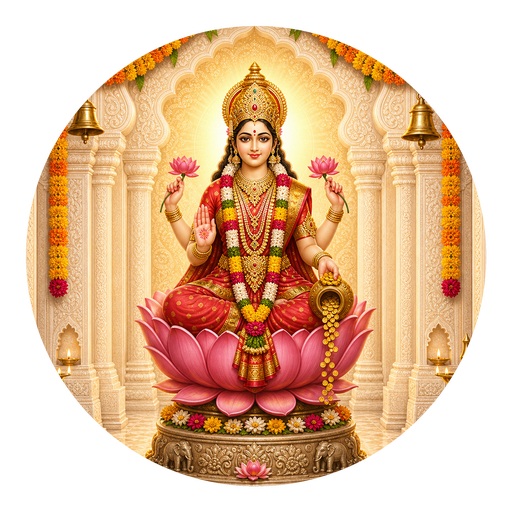
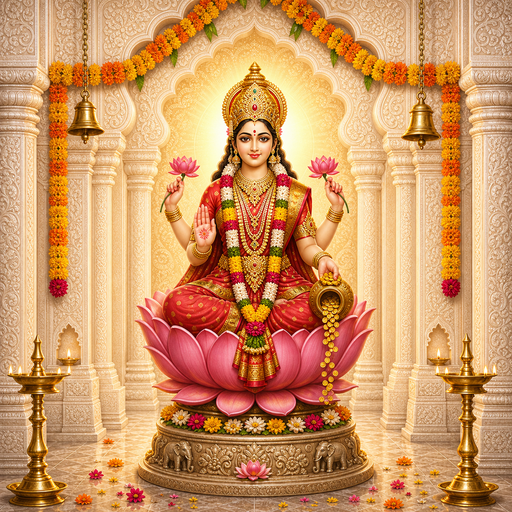
The Marathi encyclopaedia (an official government reference) records Lakshmi as the deity of the Rigveda's Shri Sukta — self-luminous, golden-hued, regarded as the presiding deity of prosperity and the destroyer of poverty. Her eight forms are recorded there as Dhana, Dhanya, Dhairya, Shaurya, Vidya, Kirti, Vijaya, and Rajya — this official set differs from the popular Ashtalakshmi stotra's set (Adi, Dhana, Dhanya, Gaja, Santana, Dhairya, Vijaya, Vidya); the two shouldn't be confused with each other.
The official encyclopaedia's entry on Lakshmi makes no mention of Friday at all — it mentions Chaitra, Bhadrapad, and Paush as her worship months, along with a special puja on Diwali's Amavasya. Friday is the day of the planet Venus (Shukra), which astrology regards as governing wealth, beauty, and pleasure. That's why Friday is considered auspicious for Lakshmi worship, according to folk-astrological tradition.
There's a widespread belief that this vrat is observed for relief from financial hardship, family discord, or career and business obstacles — it's especially popular among married women, though unmarried women and men can observe it too. Before starting the vrat, one is said to hold a specific wish or difficulty clearly in mind, and to carry it through all eleven or twenty-one Fridays — this resolution-driven (sankalp) structure is more individually focused than the Solah Somvar or Shanivar vrats.
The vrat katha
The story of a woman named Sheela turns up on several different websites, but all of these are retellings of the same modern story. It comes from a modern (roughly mid-20th-century) commercial vrat-booklet tradition, not an ancient, authorless one like Solah Somvar or Shivamuth.
In a large city lived a virtuous, devoted woman named Sheela; her husband was initially of good character. In time, he fell into bad company and became addicted — gambling and drink led the family to lose its wealth and jewellery, leaving them destitute and homeless. While Sheela endured this suffering with faith, an old woman came to her home — who was, in truth, the goddess Lakshmi herself. The old woman taught Sheela the proper observance of the Vaibhav Lakshmi Vrat, telling her that this vrat fulfils all wishes and grants wealth, children, and happiness. Sheela completed the vrat faithfully over twenty-one Fridays; her husband was freed from his addictions and turned to honest labour, the pawned jewellery was recovered, and prosperity and peace returned to the household. Seeing this transformation, the neighbouring women too began observing the vrat.
The exact list of vices, and the name of the city (in some versions "Aatpat Nagar," in others simply "a large city"), vary slightly by version — the core story stays consistent.
Who should observe it
Married women (saubhagyavati) form the most popular and most commonly mentioned group — for family happiness and financial stability. By tradition, any woman or unmarried girl, and men too, can observe this vrat, with the same claimed benefit. What exactly to do, and how strictly, varies by tradition, family, and belief — it isn't presented here as a universal obligation.
Puja vidhi
There are two versions of the puja in practice — a simple (original Marathi) version and an elaborate version — both are given below, and both are followed as valid traditions.
On each Friday (the simple/original version):
- Wake early, bathe, and wear clean, preferably red clothing.
- Practise restraint through the day — avoid lying, and avoid hurting anyone.
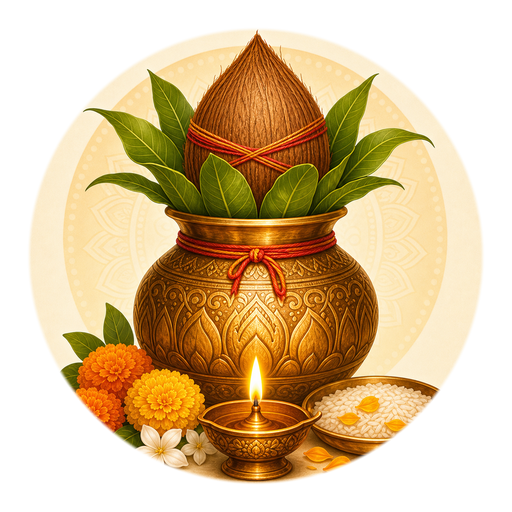
- In the evening, light a lamp and sit facing east; spread a red cloth on a low wooden seat (pat) and make a mound of rice on it; place a copper or brass kalash filled with water on top.
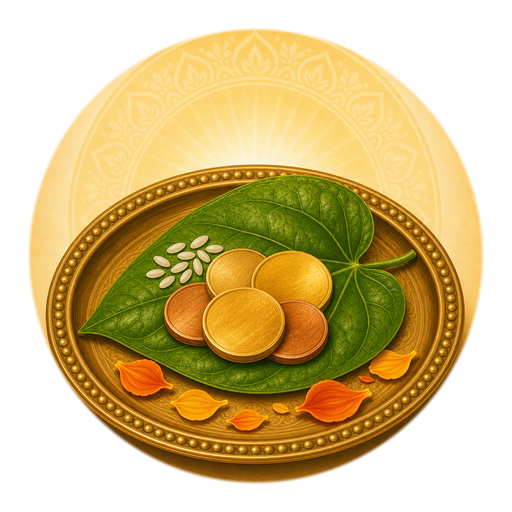
- Place a gold or silver ornament (or a coin, if unavailable) in or near the kalash; set up a Lakshmi idol or image behind the kalash.
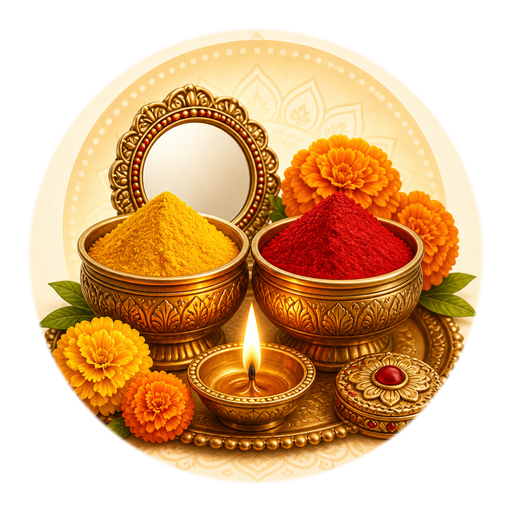
- Offer turmeric-kumkum, red flowers, sandalwood paste and unbroken rice, and a sweet naivedya (kheer or jaggery).
- Light a ghee lamp and read or listen to the vrat katha.
- Chant "Jai (Shri) Lakshmi Mata" eleven times.
- Perform the aarti; distribute prasad, first to the married women of the household and then to others; offer the kalash water to a tulsi plant and the rice to birds.
Some sources — particularly those leaning toward a more North Indian style — also include additional elements: an east-facing swastika drawn on the floor, a betel nut placed on the kalash, a Shri Yantra, a conch on the right and a bell on the left, an initial worship of Ganesh, panchamrit, and a reading of the Mahalakshmi Ashtak. This is the more elaborate version — it isn't part of the simpler version found in some other sources; treat it as a regional or family variation, not mandatory material.
Udyapan (on the eleventh or twenty-first Friday): the usual puja is completed and a coconut is broken. By tradition, eleven or twenty-one Fridays are kept; some families observe seven.
The udyapan includes inviting married women or unmarried girls, washing their feet, applying turmeric-kumkum and a tilak, and giving gifts along with a copy of the vrat-katha booklet as prasad. Typically seven such women are invited; some traditions extend this to seven, eleven, twenty-one, fifty-two, or even a hundred and one. Kheer or a sweet naivedya is offered first to the goddess, then distributed to the invited women.
The exact vidhi, materials, and numbers can vary by family and region — this shouldn't be taken as the one correct procedure.
Puja materials
- The simple/original version: red cloth, rice, a copper or brass kalash with water, a gold or silver ornament or a coin, a Lakshmi idol or image, turmeric-kumkum, red flowers, a ghee lamp, incense, sweet naivedya (kheer/jaggery), a coconut (for the udyapan).
- Additional, in the elaborate version (a regional/family variation, not mandatory): a Shri Yantra, a conch, a bell, panchamrit, betel nut.
(This list can vary by tradition and region.)
 Red cloth
 Copper or brass kalash
 Ornament or coin
 Turmeric-kumkum
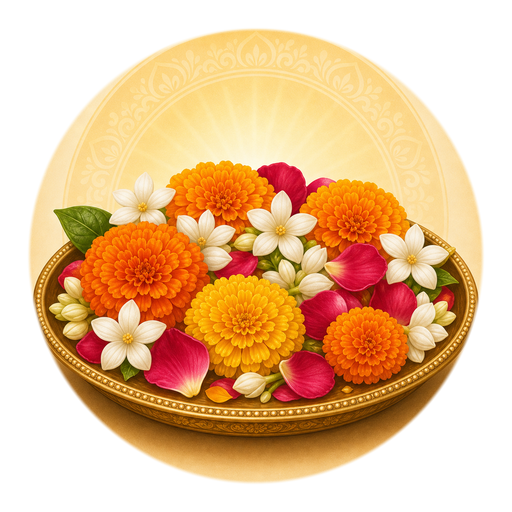 Red flowers
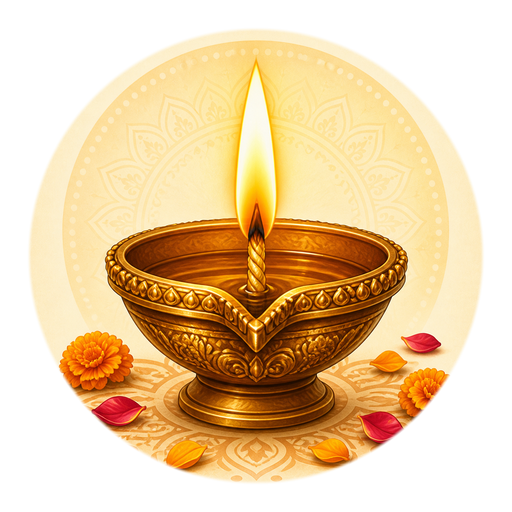 Ghee lamp
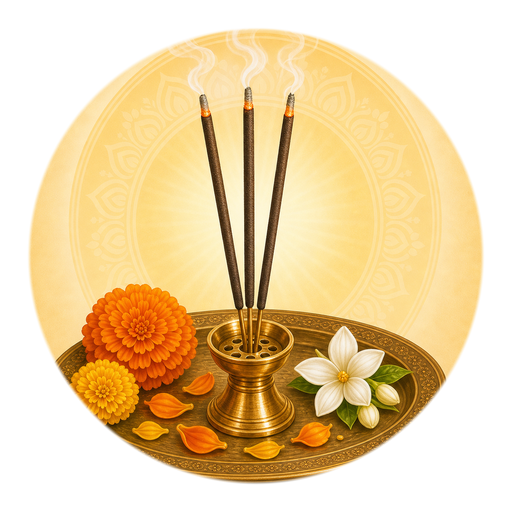 Incense
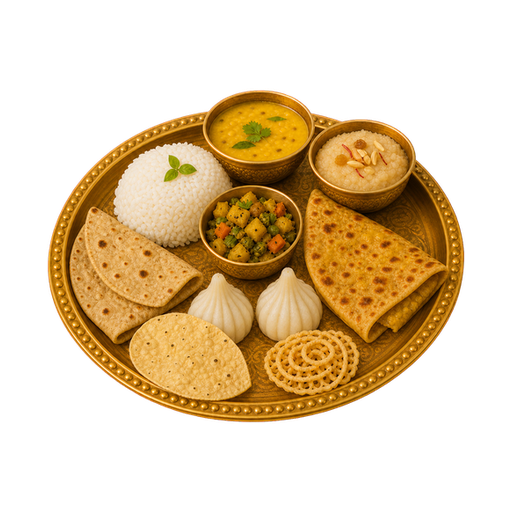 Sweet naivedya (kheer/jaggery)
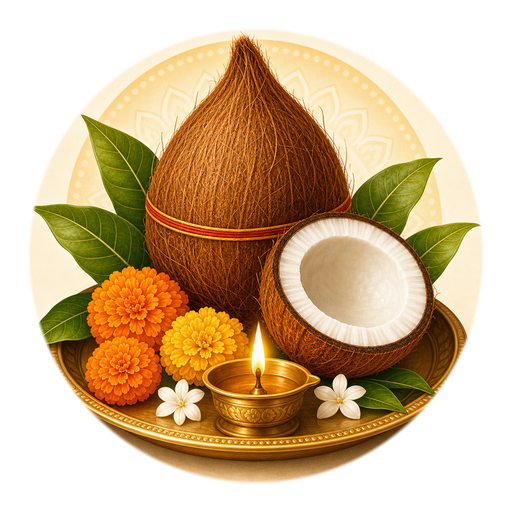 Coconut (for udyapan)
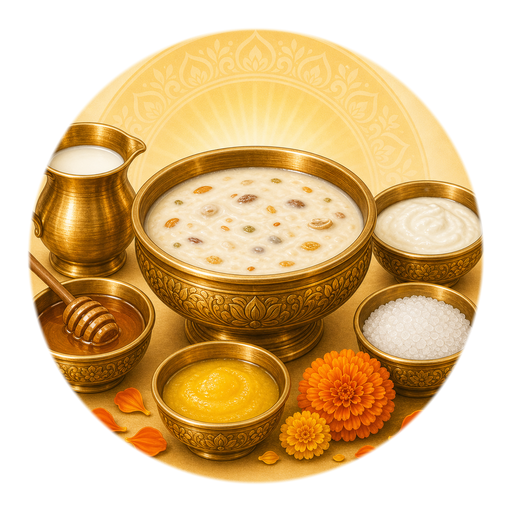 Panchamrit
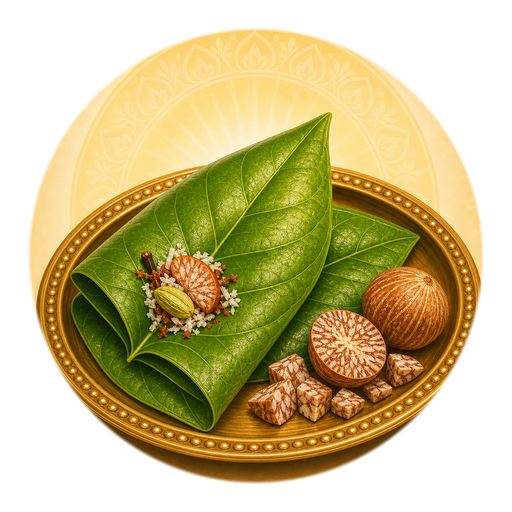 Betel nut
Fasting and dietary rules
The intensity of the fast is optional — a full or waterless fast, a fruit-only diet, a single meal, or, if that isn't manageable, two simple meals — chosen according to one's capacity and belief. Eating only after the evening puja is complete is the common practice.
If a Friday is missed due to travel, illness, or another reason, some traditions suggest skipping that week, continuing the following Friday, and making up the same number of Fridays at the end.
Whether to continue the fast during menstruation is purely a health decision — that should be made based on medical advice. If you choose to skip that Friday, the make-up approach above is a personal custom followed by some families/traditions, not a universal rule.
Those who are elderly, pregnant, unwell, or on regular medication should avoid a strict or waterless fast — choose a gentler option suited to your health.
Mantras and stotras
- A simple chant — "Jai (Shri) Lakshmi Mata": recited eleven times during the puja; a short devotional chant.
- The Lakshmi Gayatri Mantra: "Om Mahalakshmyai cha Vidmahe Vishnupatnyai cha Dheemahi, Tanno Lakshmih Prachodayat" — meaning: a prayer to know Mahalakshmi and meditate on her form as Vishnu's consort; may Lakshmi inspire us all toward good deeds.
- The Mahalakshmi Ashtak: traditionally said to have been composed by Indra, king of the gods, for release from a curse by Durvasa, and to appear in the Padma Purana. Its opening line — "Namaste'stu Mahamaye Shripithe Surapujite, Shankhachakragadahaste Mahalakshmi Namo'stute" — means, roughly, "Salutations to you, O great illusion, seated on the throne of Shri, worshipped by the gods, bearing the conch, discus, and mace, O Mahalakshmi." Firm authorship of this hymn isn't established.
- The "Om Jai Lakshmi Mata" aarti: composed later, in the same style as "Om Jai Jagdish Hare," as a 19th-century devotional aarti — the exact composer and date aren't established. Its opening line — "Om Jai Lakshmi Mata, Maiya Jai Lakshmi Mata" — means, in essence, "Victory to you, Mother Lakshmi."
Regional customs
The Vaibhav Lakshmi Vrat is a pan-Indian, popular topic — unlike Jivati or Margashirsh Guruvar, it isn't a distinctly Maharashtrian one. Its exact origin isn't clear — one synthesised source suggests it began in the Gujarat-Saurashtra region, in a small booklet from the mid-20th century, later translated into Hindi, Marathi, and English and becoming popular across Gujarat, Maharashtra, Rajasthan, and the Hindi-speaking belt — this couldn't be pinned to any single, verifiable primary source.
Varalakshmi Vratam — a different tradition: some web sources also call the Vaibhav Lakshmi Vrat "Varalakshmi Vrat." But Varalakshmi Vratam is a South Indian tradition (Tamil Nadu, Andhra Pradesh, Karnataka, Kerala) — observed once a year, on the Friday before the Shravan Purnima, with an origin traditionally linked to the Skanda Purana. This is a fundamentally different structure from Vaibhav Lakshmi's "any eleven or twenty-one Fridays, any time of year" — treating the two as the same is a widespread, well-documented mix-up.
Jivati/Jara-Jivantika Pujan — a different tradition: the Jivati/Jara-Jivantika puja observed on Shravan Fridays in Maharashtra is performed by mothers for the health and long life of their children — this is a different, distinctly Maharashtrian, Shravan-limited tradition, unrelated to the Vaibhav Lakshmi Vrat.
In 2026, only one Friday (14 August, Shravan Shukla Dwitiya) carries a separate, tithi-specific "Mahalakshmi Sthapana and Pujan" label on the panchang — this isn't part of the Vaibhav Lakshmi Vrat (which is tithi-independent).
Good to know
- Don't state firmly that eleven, twenty-one, or seven Fridays is "the only correct" number — several traditions exist, and the choice is guided by personal resolution.
- Holding a clear resolution (a wish or difficulty) in mind before starting the vrat is described in sources — this is a matter of belief, not a guarantee.
- A strict or waterless fast doesn't suit everyone — those who are elderly, pregnant, or unwell should choose a gentler option or take medical advice.
- Avoid confusing this with Varalakshmi Vratam or Jivati/Jara-Jivantika Pujan.
FAQ
- What is the Vaibhav Lakshmi Vrat?
- A vrat dedicated to the goddess Lakshmi, observed on Fridays — typically eleven or twenty-one consecutive Fridays, closed with an udyapan.
- When should the Vaibhav Lakshmi Vrat be started?
- It can be started on any Friday — there's no restriction to a particular masa or tithi; most sources simply say to begin, with faith, on any Friday.
- Should the Vaibhav Lakshmi Vrat be observed for 11 or 21 Fridays?
- Both traditions are practised — the choice is made in advance based on personal resolution and capacity; some sources also mention seven Fridays.
- How is the udyapan of the Vaibhav Lakshmi Vrat performed?
- On the final Friday, the usual puja is performed along with breaking a coconut, followed by washing the feet of typically seven married women or unmarried girls, applying turmeric-kumkum, and giving gifts and a copy of the vrat-katha booklet as prasad.
- Who should observe the Vaibhav Lakshmi Vrat?
- Mainly married women, though any woman, unmarried girl, or man can observe it too, according to sources.
- What's the difference between Vaibhav Lakshmi and Varalakshmi Vrat?
- Vaibhav Lakshmi Vrat can be observed on any eleven or twenty-one Fridays throughout the year; Varalakshmi Vratam is a South Indian tradition observed once a year, on the Friday before Shravan Purnima. Some sources mistakenly treat the two as identical.
- What should be eaten while fasting during the Vaibhav Lakshmi Vrat?
- The intensity is optional — a full fast, fruits only, a single meal, or two simple meals; eating only after the evening puja is the common practice.
- What should be done if a Friday is missed during the Vaibhav Lakshmi Vrat?
- By some traditions, skip that week, continue the following Friday, and make up the same number of Fridays at the end.
- Whose story is told in the Vaibhav Lakshmi Vrat katha?
- A widely circulating modern story about a woman named Sheela — her husband's addiction and the family's poverty, guidance in the vrat from an old woman who was really the goddess Lakshmi, and the restoration of prosperity.
- What benefits is the Vaibhav Lakshmi Vrat believed to bring?
- By popular belief: relief from financial difficulty, family peace, and progress in career or business — this is a matter of astrological belief, not a guarantee.