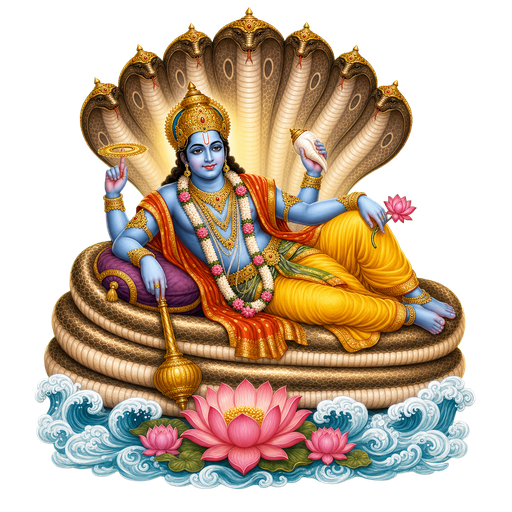
Vaikuntha Chaturdashi
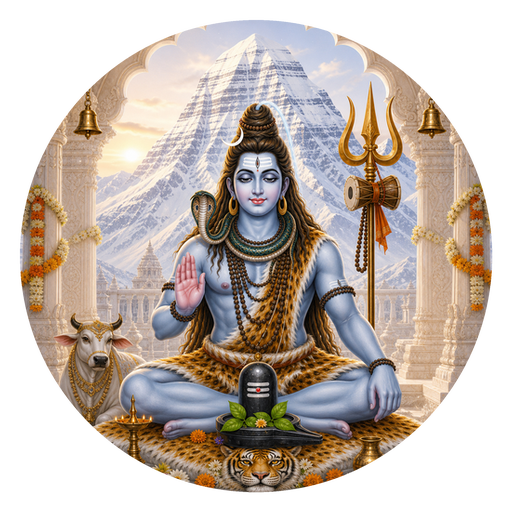
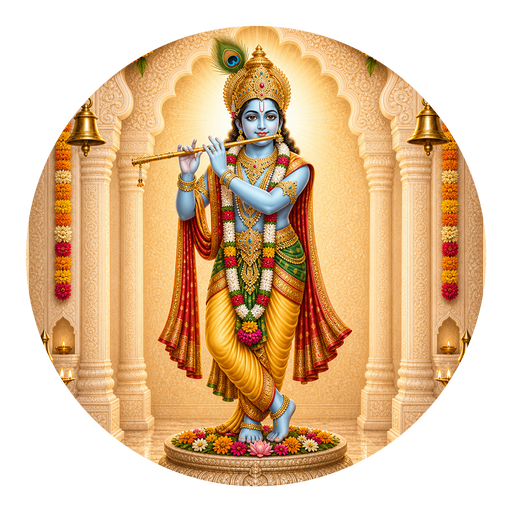
Vaikuntha Chaturdashi falls on Kartik Shukla Chaturdashi — the day before Tripurari Purnima. It's regarded as the one day of the year when both Vishnu and Shiva are worshipped together, with equal importance — hence it's also called "Harihar Bhet"/"Harihar Milan." Both deities are equally central — neither should be treated as secondary; that's this festival's defining feature. In 2026, this tithi falls on Monday, 23 November.
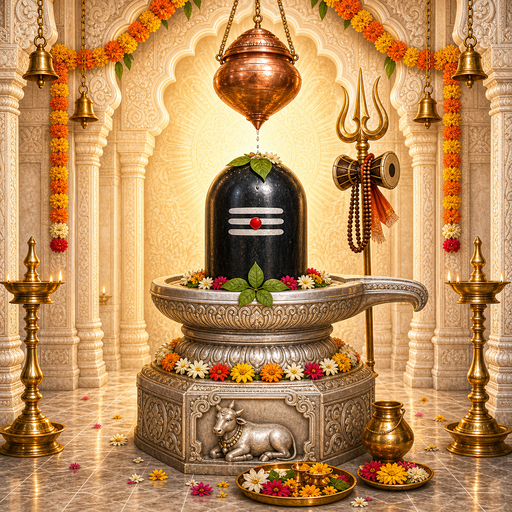
This year's dates (2026)
Significance
Per the main legend in the Shiv Purana, Vishnu worshipped Shiva at Kashi with a thousand lotuses; when one lotus fell short, he offered his own eye instead (since he is "Kamalnayan/Pundarikaksha," the lotus-eyed one) — pleased with this devotion, Shiva restored the eye and granted him the Sudarshan Chakra. This is why the day is regarded as a symbol of the unity of Vishnu and Shiva.
As Chaturmas (the period from Ashadhi Ekadashi to Kartiki Ekadashi/Tripurari Purnima) draws to a close, Shiva — who manages creation during this period — is said to hand authority back to Vishnu and depart for Kailash to perform austerity, a meeting celebrated as "Harihar Bhet." This Chaturmas-based explanation is distinct from the Shiv Purana legend. Both explanations are current by tradition.
Observing this vrat is believed to bring moksha/attainment of Vaikuntha.
Vaikuntha Chaturdashi is a distinct, separate festival from Narak Chaturdashi (Ashwin Krishna Chaturdashi, part of Diwali) and Anant Chaturdashi (Bhadrapad Shukla Chaturdashi, Ganesh visarjan) — only the tithi's name ("Chaturdashi") is shared.
The legend
Four distinct thematic threads are found — presented separately here, not blended together:
The thousand-lotus/eye-offering/Sudarshan Chakra legend (the most prevalent, Shiv Purana-based): Vishnu went to Kashi (Varanasi, at Manikarnika Ghat) to worship Shiva on Kartik Chaturdashi, vowing to offer a thousand golden lotuses. During the puja, one lotus fell short — some versions say Shiva deliberately hid one to test his devotion. Since Vishnu regarded himself as "Kamalnayan/Pundarikaksha" (lotus-eyed), he plucked out one of his own eyes and offered it instead. Pleased by this devotion, Shiva restored his eye and granted him the Sudarshan Chakra. Since this event took place on Kartik Shukla Chaturdashi, this day is known as "Vaikuntha Chaturdashi."
The Harihar Bhet/Chaturmas power-transfer legend: during Chaturmas, while Vishnu rests in yogic sleep, Shiva manages the affairs of creation. On Vaikuntha Chaturdashi, Shiva hands authority back to Vishnu and departs for Mount Kailash to perform austerity. This meeting is celebrated as "Harihar Bhet"/"Harihar Milan." This is a distinct explanation from the Shiv Purana legend.
Some sources also mention a third, regional sub-legend about a sinner named Dhaneshwar who is freed from sin by bathing in the Godavari on this day, though this appears in only one source. Some Hindi-language sources also mention this day as the "establishment day" of the Kashi Vishwanath Jyotirlinga, though no government or academic source confirms this.
Who observes it
Devotees of both Vishnu and Shiva — this is a special day especially for those who hold to "Harihar Aikya" (the unity of Hari and Hara). General worshippers who observe the vrat/fast and worship both deities in hopes of moksha or merit.
Puja vidhi
- A day-long fast is observed.
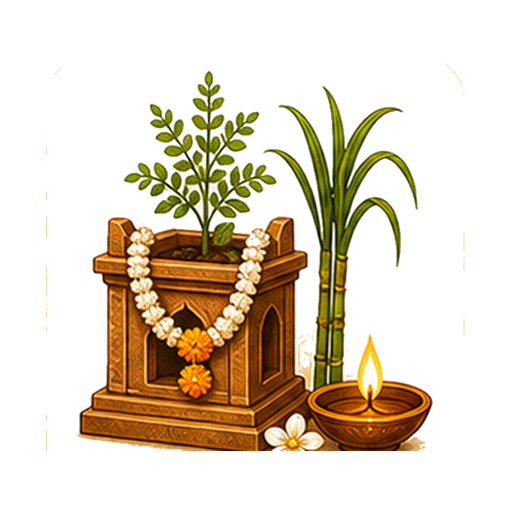
- Vishnu is worshipped — chanting the Sahasranama, and offering bel leaves (the reverse of usual practice — Vishnu is normally offered tulsi, but bel is offered on this day).
- Shiva is worshipped — chanting his 1008 names, and offering tulsi (the reverse of usual practice — Shiva is normally offered bel, but tulsi is offered on this day).
- The exact order and timing of the two pujas are described differently across traditions/temples — some hold Vishnu's puja at night and Shiva's at dawn/Brahma muhurat, while other sources describe the reverse order; no single order is treated as final here. Since the Chaturdashi tithi ends at 11:42 PM (for 2026), no fixed clock-time muhurat is given here — check the 23 November day page for the exact, location-verified timing.
- An abhishek with Ganga water/milk/curd/sandal paste/akshata is performed, along with naivedya.
The udyapan ritual can be decided per family/purohit tradition.
What you need
Lotus flowers (a symbolic offering tied to the thousand-lotus legend), bel leaves (for Vishnu), tulsi (for Shiva) — remember the swapped order, the reverse of usual practice. Sandal paste, Ganga water/holy water, milk-curd, akshata, incense-lamp-camphor, naivedya.
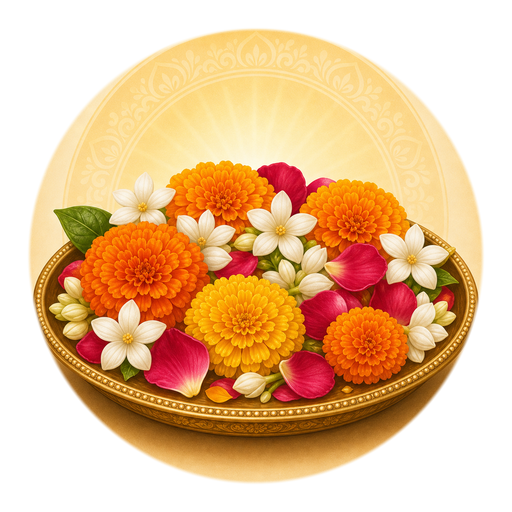 Lotus flowers
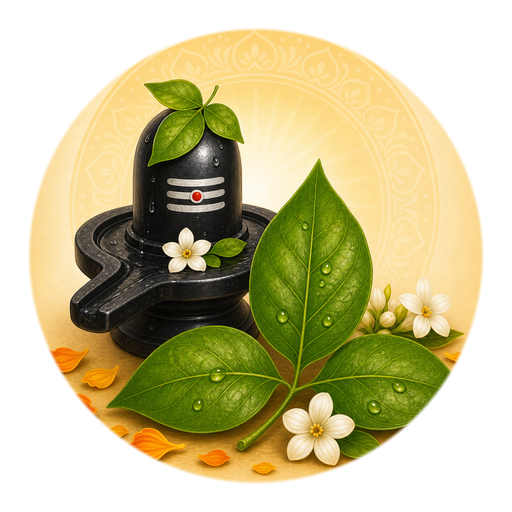 Bel leaves
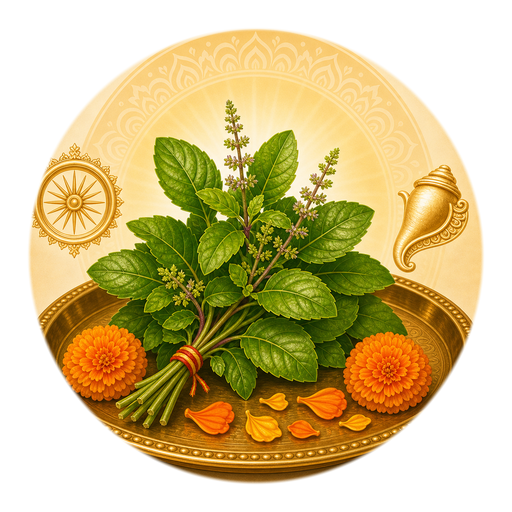 Tulsi leaves
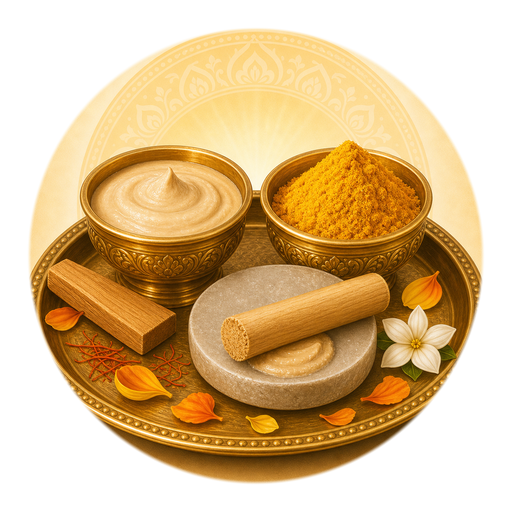 Sandal paste
 Ganga water
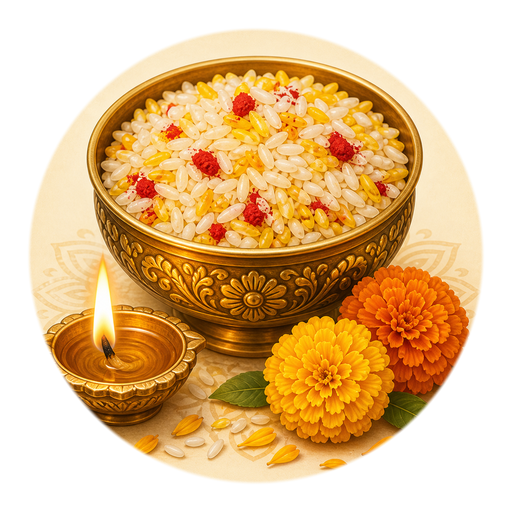 Akshata
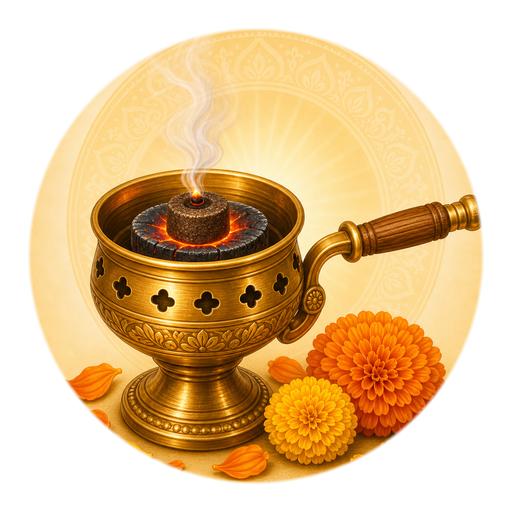 Incense
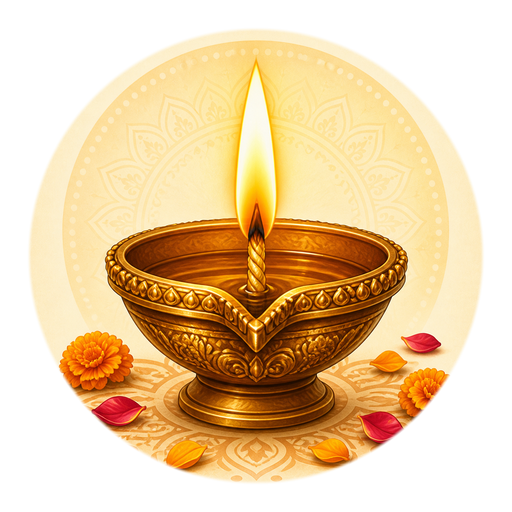 Lamp
Lamp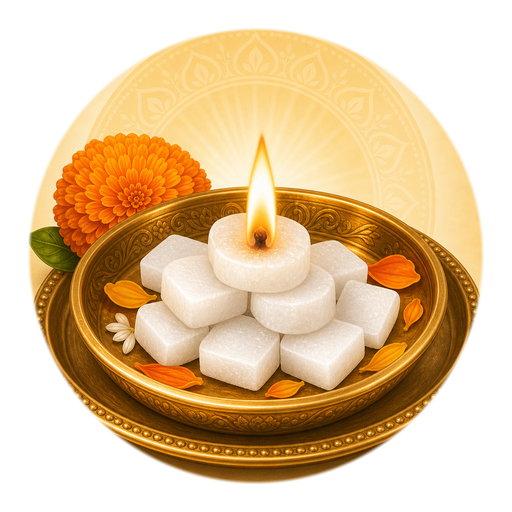 Camphor
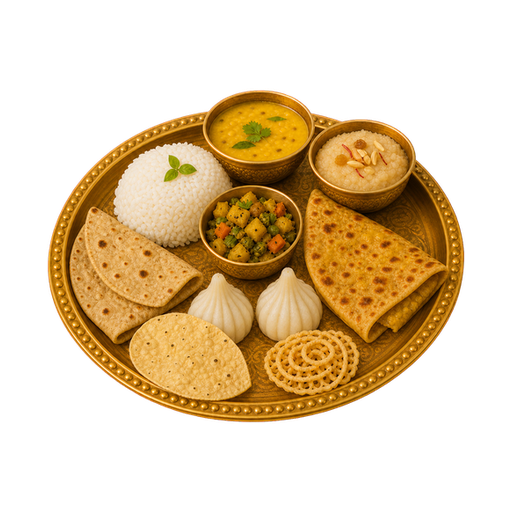 Naivedya
Fasting
A day-long fast is kept, with naivedya/parana after the night puja — the exact dietary rules (fruit-only/waterless, etc.) can vary by household/local tradition.
Mantra & stotra
The Vishnu Sahasranama (Vishnu's thousand names) and Shiva's 1008 names are chanted during the puja.
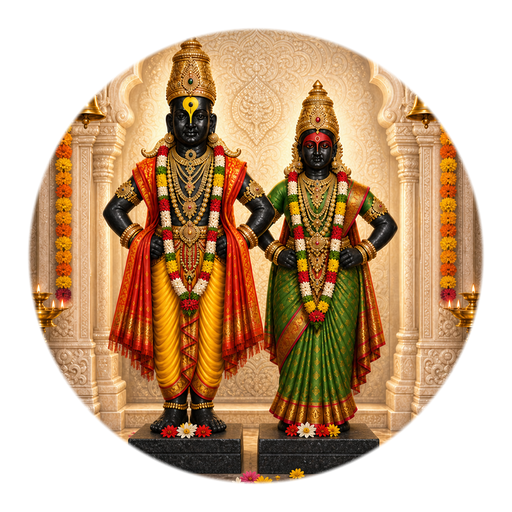
No combined "Harihar aarti" specific to this festival was found. Traditional aartis for each deity can be used instead — for Shiva, "Shankarachi Aarti — Lavathavati Vikrala" (Samarth Ramdas), and for Vishnu/Vitthal's form, "Shri Vitthalachi Aarti — Yuge Atthavis Vitevari Uba" (Namdev) or "Yei Ho Vitthale Maze Mauli" (Vishnudas Nama). These weren't originally composed for this specific festival — they are the general aartis for each deity.
Regional customs
Kalyan (Maharashtra) — Trivikram Temple: according to one source, the Peshwa-era Trivikram temple in Kalyan celebrates Vaikuntha Chaturdashi, and its murti is said to have been brought from Gujarat in the 18th century. These specifics haven't been independently corroborated, so they should be verified with the temple committee. The same source also notes the temple's practice of offering tulsi to Shankar and bel to Vishnu on this day.
Ujjain and Varanasi are also recorded as celebrating this festival on a large scale (with the Kashi Vishwanath temple giving Vishnu a special place) — but these are practices outside Maharashtra, noted here only for reference.
Good to know
- Since the puja is at midnight, consider safety and sleep schedules — an easier alternative time can be suggested for children/the elderly.
- Temples can get crowded (especially Kalyan Trivikram, Varanasi Kashi Vishwanath) — check local timing arrangements.
- Don't confuse this festival with Narak Chaturdashi or Anant Chaturdashi — all three fall on different tithis/months, in different deity contexts.
- The tulsi-bel swap is this day's specialty — remember not to offer them the usual (reversed) way out of habit.
FAQ
- When is Vaikuntha Chaturdashi in 2026?
- Monday, 23 November 2026 (Kartik Shukla Chaturdashi).
- Why is Vaikuntha Chaturdashi celebrated? (What's the legend?)
- Per the Shiv Purana, Vishnu worshipped Shiva at Kashi with a thousand lotuses; when one fell short, he offered his own eye; a pleased Shiva granted him the Sudarshan Chakra.
- Why are both Vishnu and Shiva worshipped on Vaikuntha Chaturdashi?
- This is regarded as the one day of the year when both deities are worshipped together, with equal importance — a symbol of the unity of Vishnu and Shiva.
- What is Harihar Bhet?
- One version holds that Shiva, who manages affairs during Chaturmas, hands authority back to Vishnu on this day and departs for Kailash — this meeting is called "Harihar Bhet/Milan."
- Are Vaikuntha Chaturdashi and Tripurari Purnima the same?
- No; Vaikuntha Chaturdashi is Kartik Shukla Chaturdashi (23 November 2026), while Tripurari Purnima is the following day's Kartik Shukla Purnima (24 November 2026) — two distinct, consecutive tithis.
- What's the difference between Vaikuntha Chaturdashi, Narak Chaturdashi, and Anant Chaturdashi?
- All three are different festivals: Vaikuntha Chaturdashi is Kartik Shukla Chaturdashi (Vishnu-Shiva); Narak Chaturdashi is Ashwin Krishna Chaturdashi (part of Diwali); Anant Chaturdashi is Bhadrapad Shukla Chaturdashi (Ganesh visarjan) — only the tithi's name is shared.
- Why is bel offered to Vishnu and tulsi to Shiva on Vaikuntha Chaturdashi?
- This is this day's special, reversed practice compared to usual custom — said to represent the unity/mutual respect between Vishnu and Shiva. The exact religious reason isn't found in depth in any source.
- Who should observe the Vaikuntha Chaturdashi vrat?
- Devotees of both Vishnu and Shiva; general worshippers seeking moksha or merit through the vrat.