Marleshwar
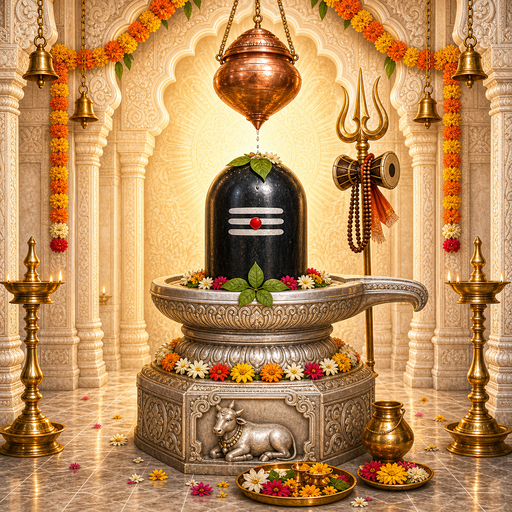
Marleshwar is a Shiv temple in a natural cave at Maral village, Sangameshwar taluka of Ratnagiri district, in the Sahyadri range — about 17-21 kilometres from Devrukh. The cave holds a Shivling regarded as self-manifested and living, alongside a second local linga called "Mallikarjun." A perennial waterfall, Dhareshwar, stands beside the temple, and many sources describe snakes living in the cave. The main annual yatra falls on Makar Sankranti — 14 January in 2026 — when Girijadevi's idol is brought in procession for a symbolic marriage with Marleshwar.
This year's dates (2026)
- Bhogi — one source says Girijadevi's palkhi sets out on this day; the main marriage ceremony follows the next day13 Jan
- Makar Sankranti — the Marleshwar-Girijadevi marriage yatra, Marleshwar's biggest and most temple-specific festival14 Jan
- Mahashivratri — a general festival, with a special crowd at Marleshwar15 Feb
- First Shravan Monday — Nag Panchami falls the same day17 Aug
- Second Shravan Monday24 Aug
- Third Shravan Monday — Sankashti Chaturthi falls the same day31 Aug
- Fourth (last) Shravan Monday7 Sep
Deity and significance
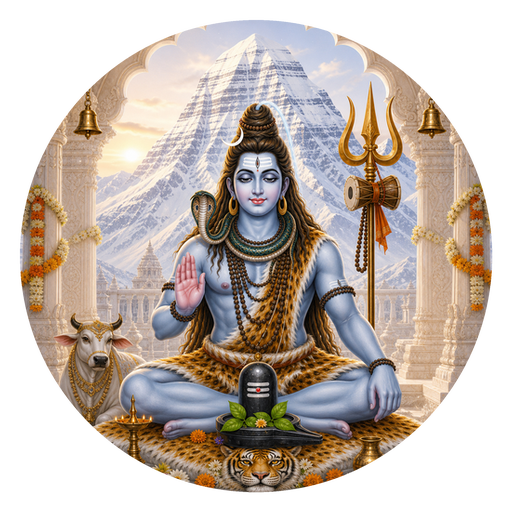
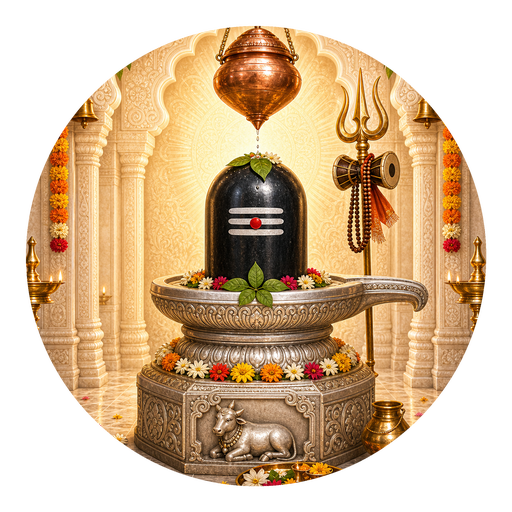
At the centre is the Marleshwar Shivling — regarded as naturally formed/self-manifested within the cave. Beside it stands a second linga called Mallikarjun, regarded in local belief as Marleshwar's "elder brother" — this is a local name, unrelated to the Mallikarjuna Jyotirlinga at Srisailam; don't conflate the two.
The presence of snakes is a distinctive feature of this site — most sources describe several snakes living in the cave; a widespread local claim holds that no devotee has ever been bitten, though this cannot be strictly verified — it is presented here as a matter of belief, not a scientific guarantee.
The cave temple, the snake legend, and the adjoining Dhareshwar waterfall together draw both religious pilgrims and nature/trekking enthusiasts to Marleshwar — one source notes that "even non-believers come here for the natural beauty."
The popular nickname "Konkan's Trimbakeshwar" appears in several tourism sources — this is only a popular comparison, with no official or institutional connection to the Trimbakeshwar Jyotirlinga trust.
History and legend
Three distinct threads appear in sources regarding Marleshwar's origin — these aren't necessarily contradictory, since they may operate at different levels (mythological, historical, and etymological).
By local tradition, this site is said to have been established by Lord Parashuram — consistent with the broader regional belief that the entire Konkan coast was created by Parashuram. This claim appears in two independent sources, but both give only a passing mention — no detailed story is found anywhere.
A consistent account (from two independent sources) holds that, owing to instability toward the end of Shilahara rule, this site fell into neglect and was lost to memory over time. A man named Anrao (Anerao) Salunke of Angavali village is said to have opened a stone-sealed cave while hunting around 1800 CE and discovered the Shiv idol inside — and this discovery happened to fall on Makar Sankranti day, which is why that date became the annual yatra day.
Two separate sources state that the name "Marleshwar" simply means "the deity of Maral (village) + Ishwar" — "the deity of Maral village" — with no founding/discovery story mentioned at all. One source, however, traces "Maral" to "marla" (defeated the enemy), tied to a historical battle — this appears in no other source.
On Makar Sankranti, the idol/palkhi of Girijadevi (a local form of Parvati, Shiv's consort) is brought in procession, and a symbolic marriage ceremony with Marleshwar (Shiv) is celebrated — regarded as a re-enactment of the Shiv-Parvati wedding; thousands of devotees attend, followed by a two-day fair. Sources vary slightly on which village Girijadevi's palkhi comes from — several villages (Kondgaon, Sakharpa/Sakharpada, Angavali, Devrukh) are mentioned, but the exact list and role division differs.
Architecture and layout
The temple is set within a natural cave — many sources describe the entrance as narrow/low, requiring a stoop or allowing only one person at a time (the exact width/height varies by source). The cave holds two Shivlingas — Marleshwar and Mallikarjun — both regarded locally as self-manifested; a small Ganesh shrine also stands near the entrance.
Electric lights are not used in the cave, only oil lamps — one source presents this as tradition/rule, while another makes the more dramatic claim that "electric lights simply don't work here"; some visitors take this as simple tradition, others as something more miraculous. Moisture and dripping water in the cave are said to create the sensation of a light rain, according to one source; a deep tank called "Gangotri" is also mentioned by a single source.
Main festivals and pilgrimage
| Festival | Tithi/type | 2026 date | In short | Link |
|---|---|---|---|---|
| Bhogi (palkhi departure) | Solar (the day before Sankranti) | 13 January | One source says Girijadevi's palkhi sets out on this day | 13 January day page |
| Makar Sankranti — Marleshwar-Girijadevi marriage yatra | Solar (not tithi-based) | 14 January | Marleshwar's biggest, most temple-specific festival — thousands of devotees, a two-day fair | 14 January day page → Makar Sankranti |
| Mahashivratri | Magh Krishna Trayodashi | 15 February | A general festival; a special crowd at Marleshwar | 15 February day page → Mahashivratri |
| Shravan Mondays (all four) | Every Shravan Monday | 17, 24, 31 August; 7 September | A general festival | Shravani Somvar |
Kojagiri Purnima, Datta Jayanti, and Tripurari/Tripuri Purnima are also mentioned as Marleshwar yatra occasions, but each comes from only a single source — noted here for reference only: Kojagiri Purnima (single-source), Datta Jayanti (single-source), and Tripurari Purnima (single-source, possibly confused with Kojagiri).
Darshan and aarti timings
The temple is generally open for darshan from around 7 AM to 7 PM, with free entry. No official temple trust website was found — so special puja fees and queue arrangements should be confirmed directly with the temple committee. Timings and crowd management are naturally different during yatra occasions (Makar Sankranti, Mahashivratri, Shravan).
Rituals here
The Makar Sankranti marriage ceremony is the most prominent special ritual here — Girijadevi's palkhi is brought and a symbolic marriage with Marleshwar is performed. The exact ritual sequence and who officiates are not detailed in any source. Sources suggest it is local custom to observe any snakes calmly without harming them if seen in the cave. Other rituals, such as abhishek and general Shiv puja, can vary by temple and region — no Marleshwar-specific ritual details (materials, mantras, fees) were found in any source, so confirm the actual practice with the temple committee before performing it.
How to reach
Via Devrukh (from Ratnagiri/Mumbai), through Hati village to Maral village — about 17-21 kilometres (most sources say around 18 km). From Kolhapur, via Amba Ghat and then Kalkada/Khadikolwan for the final stretch of about 20 kilometres. About 30-40 kilometres from Sangameshwar town; about 62-65 kilometres from Ratnagiri city. The Konkan Railway's Sangameshwar station is considered nearest (about 38 km, per one source); some sources consider Ratnagiri station equally close. The final stretch is by vehicle to the foot of the hill, followed by a climb of roughly 1 to 1.2 kilometres, an estimated 300 to 550 steps (the figure varies considerably by source). Food stalls line the path. State transport buses and private taxis are available from Devrukh/Sangameshwar/Ratnagiri.
Nearby places
- Devrukh — the main town of Sangameshwar taluka and the principal entry point toward Marleshwar.
- Karneshwar temple, Kasba Sangameshwar — an ancient Shiv temple near Sangameshwar town (regarded as over 1,600 years old); travel accounts suggest it's often visited on the same trip as Marleshwar.
- Amba Ghat — a scenic mountain pass on the Kolhapur-Ratnagiri route, along one approach to Marleshwar.
Some tourism sources list "nearby places" (Bhatye beach, Mandavi beach, Ratnadurg fort) that are actually close to Ratnagiri city (about 65 km from Marleshwar) — not genuinely near Marleshwar itself.
Traveller tips
The waterfall becomes spectacular during the monsoon (June-September), but the steps get slippery and access near the falls may be dangerous or restricted; October-March is considered the comparatively safer and more popular season. The climb involves 300 to 550 steps — senior citizens or those with physical limitations should plan time and assistance in advance. Don't panic if you see a snake — don't touch or harm it; this is the general practice among local devotees. The cave can be damp and slippery — carry appropriate footwear and water. Expect very heavy crowds on Makar Sankranti — start early, as traffic jams are likely on the ghat road.
Good to know
The Mallikarjun linga is a local name — it's unrelated to the Mallikarjuna Jyotirlinga at Srisailam, worth keeping in mind. "Konkan's Trimbakeshwar" is only a popular nickname, not an official connection. Timings and rules can change — it's worth confirming locally or with the temple committee before setting out.
FAQ
- Where is Marleshwar temple?
- In Ratnagiri district, Sangameshwar taluka, Maral village, in the Sahyadri hills; about 18 km from Devrukh.
- How far is Marleshwar from Devrukh? How do I reach it?
- About 17-21 km via Devrukh-Hati; vehicles go to the foot of the hill, followed by a climb of steps.
- How many steps does the Marleshwar cave have?
- Roughly 300 to 550 steps — plan enough time and rest breaks for the climb.
- When is Marleshwar's yatra? What is the Makar Sankranti marriage ceremony?
- Every year on Makar Sankranti (around 14 January), Girijadevi's palkhi is brought for a symbolic marriage with Marleshwar; thousands of devotees attend a two-day fair.
- Why are there snakes in the Marleshwar cave? Is it dangerous?
- Many sources describe snakes living in the cave; there is a local claim that no devotee has been bitten, but this is a matter of belief, not a scientific guarantee.
- Why is Marleshwar called 'Konkan's Trimbakeshwar'?
- A popular nickname found in several tourism sources; there is no official connection to the Trimbakeshwar trust.
- Where is the Dhareshwar waterfall? What does it look like in the monsoon?
- Right beside/behind the temple, on the Bav river; it flows year-round and becomes spectacular during the monsoon.
- Who established Marleshwar temple?
- Sources disagree — some say "established by Parashuram," others give only the name's etymology ("Maral+Ishwar"), and one or two sources tell a historical discovery story (Anrao Salunke, around 1800 CE).
- What is the Mallikarjun linga at Marleshwar temple?
- A second local linga beside Marleshwar, regarded locally as its "elder brother" — don't confuse it with the Mallikarjuna Jyotirlinga at Srisailam.
- What is the best time to visit Marleshwar?
- Roughly October to March (post-monsoon through winter); the waterfall is spectacular during the monsoon, but the climb/entry can be dangerous then.