Saphala Ekadashi
Saphala Ekadashi is the Krishna Paksha Ekadashi of the Margashirsh (Pausha) month, dedicated to Lord Vishnu/Narayan. "Saphala" means fruitful — even a fast kept unknowingly, without deliberate intent, is said to yield its full merit, which is the heart of this vrat.
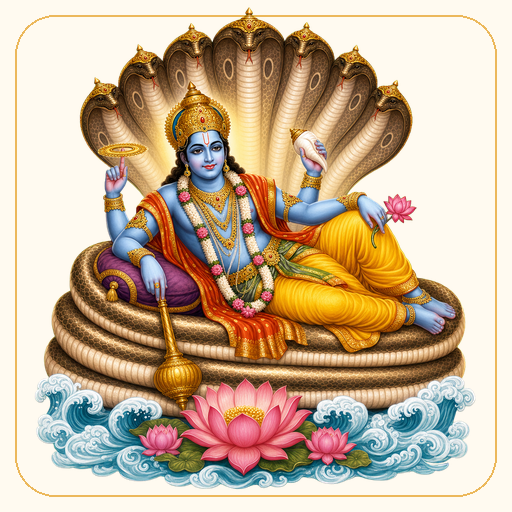
The name Saphala Ekadashi comes from "saphala" (successful, fruit-bearing). On this day Vishnu is worshipped with an offering of seasonal fruits, and devotees keep an all-night vigil. This tithi belongs to the wider tradition of Ekadashi vrat observances. By the Amanta reckoning followed in Maharashtra it falls in Margashirsh Krishna Paksha, while most North Indian (Purnimanta) panchangs call the very same day Pausha Krishna Ekadashi — one day, two month-names.
Significance
Observing Saphala Ekadashi is believed to destroy sins and grant both worldly prosperity and eventual moksha. What makes this Ekadashi distinctive is that the vrat kathā insists its merit applies whether the fast was kept deliberately, with full rites, or came about unknowingly through circumstance — either way, the full fruit (phala) is granted. That is why it is called "Saphala" — the fruitful one.
The legend (katha)
In the city of Champavati ruled a king named Mahishman, a righteous ruler with five sons. The eldest, however, turned out dissolute — given to other men's wives, squandering his father's wealth. His enraged father named him "Lumbhak" and eventually banished him from the kingdom.
Lumbhak took to the forest and lived alone; even there his conduct did not improve — he survived by robbing travelers and eating meat. On the night of Margashirsh Krishna Dashami, caught in bitter cold with no food, he took shelter under an ancient peepal tree and stayed awake the whole night, unable to sleep for the cold. The next day — Ekadashi — he remained famished and weak through the day, so that a fast fell upon him without his intending it. That evening he found some wild fruits; he offered them to Vishnu at the foot of the very same tree, and again kept an unintended night-long vigil.
The fruit of this unknowingly-kept vrat showed itself at once — a divine voice declared that his sins had been washed away. Lumbhak's form turned radiant, his mind turned toward devotion to Vishnu, and his kingdom was restored to him. He went on to rule justly for many years, was blessed with a son, and eventually handed the kingdom to that son and turned to a life of devotion.
Some versions describe only the divine voice at this moment of deliverance, while others describe a celestial chariot or a celestial horse appearing; the number of sons also varies slightly by version.
Who observes it
Devotees of Vishnu — women and men in ordinary householder life — observe this vrat. Those who keep a regular Ekadashi fast certainly observe it, but the story itself makes clear that even a fast kept unknowingly, forced by circumstance, carries the same merit — which is why this Ekadashi is seen as reassuring for anyone who ends up observing the day with faith, even without having planned to.
Puja vidhi
Keeping restraint from the night of Dashami, bathe on the morning of Ekadashi and worship Vishnu. Offer tulsi, incense and a lamp, and chant the divine names. A distinctive feature of this Ekadashi is worshipping Vishnu with an assortment of fruits — coconut, betel nut, citron/lime, pomegranate, amla (Indian gooseberry), cloves, jujube, and mango where available — offered according to one's means. Donating lamps (deepdaan) is considered especially significant on this day. Keep vigil through the night and break the fast (parana) the next day, on Dwadashi.
The exact list and availability of fruits varies by season and region — mango, for instance, is not in season everywhere in winter. Offering whichever fruits are reasonably available is considered sufficient.
Fasting & parana
The exact form of the fast — nirjala (waterless), phalahar (fruits only), or a single meal — varies by family tradition. Rice and other grains are widely avoided on Ekadashi. An all-night vigil is the general rule. A strict nirjala or prolonged fast is not suitable for everyone — those with diabetes, pregnancy, advanced age, or illness should choose phalahar or a gentler fast, ideally with a doctor's advice. Break the fast the next day, on Dwadashi tithi.
Mantra
The traditional story includes a devotional line to the effect of "may Vishnu, the Lord of Lakshmi, be pleased with these offered fruits," recited during the puja, along with chanting of Vishnu's names (such as "Om Namo Narayanaya").
Date — current status
Saphala Ekadashi occurs every year, but it does not have an exact entry in Shubh Darshika's current panchang data (January–December 2026) — because Margashirsh Krishna Ekadashi falls just outside both ends of that window (the previous occurrence was around mid-December 2025, and the next around early January 2027). So no exact Gregorian date can be given here. It generally falls around fifteen days after Mokshada Ekadashi, toward the end of the Margashirsh month — check that year's panchang for the exact date.
Good to know
- Don't worry if the full fruit list isn't available — offering whichever fruits are reasonably on hand, by season, is considered sufficient.
- This Ekadashi is known by two names, Margashirsh and Pausha — they refer to the same tithi, not two different observances.
- Check that year's panchang for the exact date — it shifts every year.
FAQ
- What is Saphala Ekadashi?
- The Krishna Paksha Ekadashi of the Margashirsh (Pausha) month — a vrat where Vishnu is worshipped with fruits. "Saphala" means fruit-bearing; even a fast kept unknowingly is believed to yield its full merit.
- Is Saphala Ekadashi in Margashirsh Krishna Paksha or Pausha Krishna Paksha?
- Both — it's the same tithi. In Maharashtra (Amanta reckoning) it falls in Margashirsh Krishna Paksha; in North Indian (Purnimanta) panchangs the same day is called Pausha Krishna Ekadashi.
- What is the vrat katha (legend) of Saphala Ekadashi?
- King Mahishman's dissolute son Lumbhak, exiled to the forest, ends up unknowingly keeping a fast and night vigil out of cold and hunger, and offers fruits to Vishnu. This unintended vrat destroys his sins and restores his kingdom.
- How is Vishnu worshipped on Saphala Ekadashi?
- With fruits reasonably available by season — coconut, betel nut, pomegranate, amla, cloves, jujube — along with tulsi, incense, a lamp, and deepdaan (lamp donation).
- When is Saphala Ekadashi this year?
- The current panchang data doesn't carry an exact date for this occurrence; it falls every year toward the end of the Margashirsh month — check that year's panchang for the precise date.
Related Info
 Mokshada Ekadashi (Gita Jayanti)20 Dec
 Putrada Ekadashi23 Aug
- Shattila Ekadashi14 Jan
- Utpanna Ekadashi (Utpatti Ekadashi)4 Dec
 Datta Jayanti (Shri Dattatreya Jayanti)23 Dec
 Margashirsh Guruvar (Mahalakshmi vrat)10 Dec
 Ashadhi Ekadashi25 Jul
- Nirjala Ekadashi (Bhimseni / Pandava Ekadashi)25 Jun
- Pandharpur Vitthal-Rukmini Temple29 Jan