Paithan — Sant Eknath Maharaj Samadhi Mandir
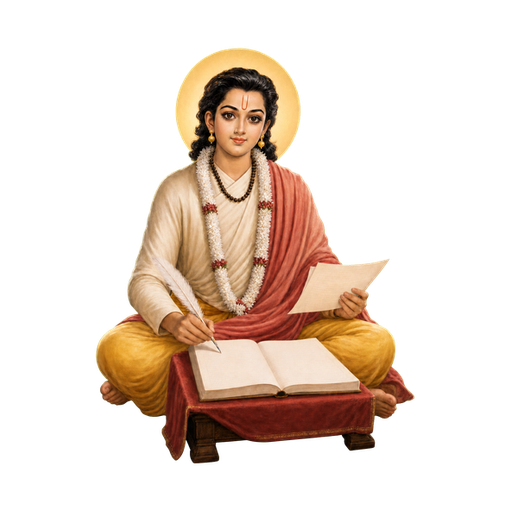
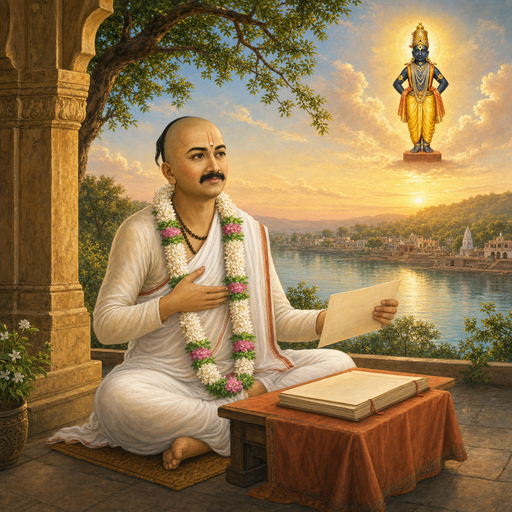
Paithan (on the banks of the Godavari, in Chhatrapati Sambhajinagar district — formerly Aurangabad) is the home town and samadhi site of the 16th-century saint-poet and social reformer Sant Eknath Maharaj. Tradition holds that he took jalasamadhi here, on the Godavari's bank, on Phalgun Vadya Shashthi (Shaka 1521). Paithan has two distinct Eknath-related sites — the riverside Samadhi Mandir and the village Nathmandir (his former residence). Every year, Eknath Shashthi / Shri Nath Shashthi Yatra is celebrated over three days — Shashthi, Saptami, and Ashtami of Phalgun Vadya — beginning on 9 March (Monday) in 2026. Eknath Maharaj is known for his literary works — Eknathi Bhagwat, Bhavarth Ramayan, and bharuds — as well as his firm stand against caste discrimination.
This year's dates (2026)
Deity and significance
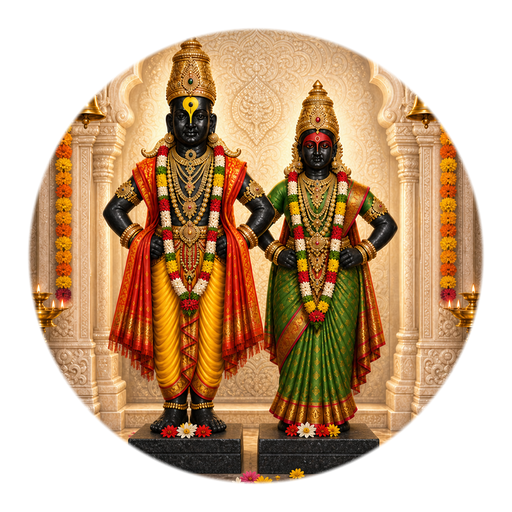
Paithan is not a deity temple in the classical sense — it is a sant-kshetra, a site centered on a revered saint: Sant Eknath Maharaj. The main deity of the village Nathmandir, however, is Shri Vijayi Pandurang, a form of Vitthal.
One source reports that Paithan also has a separate, large Datta temple — though it isn't clear whether this stands within the Samadhi Mandir or the village Nathmandir complex. This Datta-tradition thread is believed to trace back to Eknath's guru, Janardan Swami, who was himself a devotee of Dattatreya.
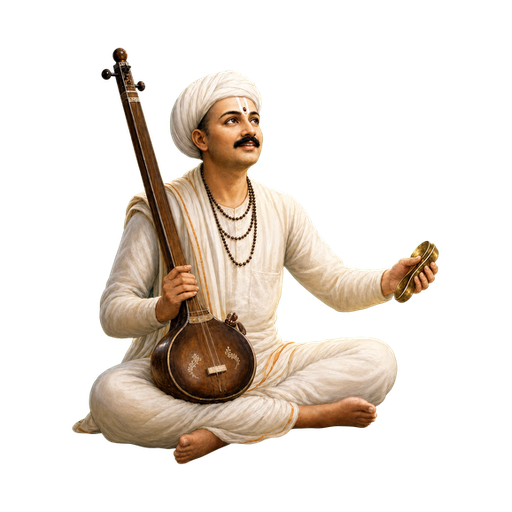
In Warkari tradition, Eknath Maharaj is regarded as the crucial link between Sant Dnyaneshwar and Sant Tukaram. A distinguishing feature of these three great Warkari sant-kshetras is that each is said to have departed life in its own distinct way — Dnyaneshwar's Sanjeevan Samadhi (Alandi), Eknath's jalasamadhi (Paithan), and Tukaram's bodily ascension to Vaikuntha (Dehu) — each should be understood on its own terms, without conflating the three.
Details of significance and belief can vary by family and local tradition — they are not presented here as universal or singular truth.
History and legend (sthal-purana)
The details below rest on sthal-purana and tradition, and are not independently verified by historical evidence.
Birth and family: born at Paithan, around 1533 CE (one source gives a minor variant, "around 1530"). His father was Suryanarayan (some sources give "Suryajipant Kulkarni" — Kulkarni being a family title). His mother was Rukmini. Both parents died while Eknath was still young; his grandfather Chakrapani and grandmother Saraswati (Saraswatibai) raised him.
Eknath was the great-grandson of Sant Bhanudas Maharaj — the same saint who, by legend, is said to have brought Pandharpur's Vitthal idol back from Vijayanagar/Hampi; this detail is already recorded separately on the Pandharpur Vitthal page.
His wife was Girijabai (of Vaijapur). Their children were a son, Hari (Pandit), and daughters Godavari and Ganga. Through his daughter, his grandson was the poet Mukteshwar (born 1573) — celebrated for his verse adaptations of the Mahabharata and Ramayana, and a significant name in Marathi literary history.
Finding his guru: at around age twelve, he went to Devgiri (Daulatabad Fort) and became a disciple of Janardan Swami, who was himself a devotee of Dattatreya. Tradition holds that after some years of sadhana, his guru directed him to return to householder life.
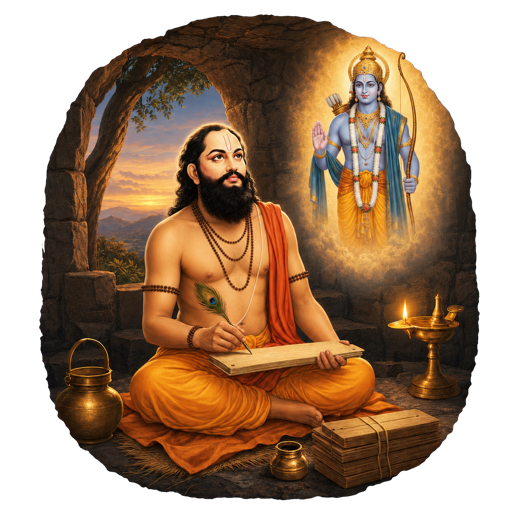
Literary works: Eknathi Bhagwat (a Marathi verse commentary on the eleventh canto of the Bhagavata Purana) and Bhavarth Ramayan (a Marathi verse composition on the Ramayana, with an estimated 25,000 to 40,000 verses) are regarded as his largest literary works. The verse-count for Rukmini Swayamvar also varies across sources. Bharuds — a folk dramatic devotional verse form using everyday occupational metaphors (a washerman, a potter, a gondhali performer, and others) to carry devotion and social commentary — number around 300, across roughly 125 themes. Thousands of abhangs in his Abhang-gatha close with the pen-name "Eka Janardani" (in his guru Janardan Swami's name).
Purifying the Dnyaneshwari: in 1583, he went to Alandi and restored Dnyaneshwar's samadhi shrine; the following year, 1584, he corrected and purified the original text of the Dnyaneshwari.
Legends (original retelling): A humble servant boy once came to Eknath's household to grind sandalwood paste for the daily puja, saying, "My name is Shrikhandya, take me into your service." This boy is believed to have actually been the Lord (Krishna) himself — held up as a living example of Eknath's own guiding principle, "see the divine in every being you encounter."
Returning from a bath in the Godavari, a man spat on Eknath repeatedly; without anger, Eknath simply bathed again each time — this happened as many as 108 times. Finally, embracing the man with affection, Eknath told him he had done nothing wrong — he had, in fact, given Eknath 108 opportunities for a sacred river bath. The story is told as a symbol of patience and forgiveness.
While carrying Ganga water from Prayag to Rameshwar, he came across a donkey suffering from thirst in the desert; even as his fellow pilgrims objected, Eknath poured out the entire Ganga water he had reserved for a Shivling to give the donkey water to drink — saying, "the divine dwells in every living being."
Eknath is said to have rescued a Mahar child suffering in the scorching heat; when some Brahmins in the village objected on grounds of touch, Eknath responded by bathing in the river. On a separate occasion, he served food prepared for a shraddha ritual for his ancestors to untouchables who came to his door — tradition holds that his ancestors themselves later appeared and partook of that very food, vindicating his action. These are held up as prominent examples of his stand against caste discrimination.
Jalasamadhi: tradition holds that on Phalgun Vadya Shashthi, Shaka 1521 (the CE conversion varies by source — 1599 or 1600 CE, on the 25th or 26th of February), at around age 66, Eknath Maharaj took jalasamadhi at the Krishnakamal Tirth on the Godavari's bank at Paithan — his soul merging into the divine. This belief appears consistently across several independent sources, but the sources are not in clear agreement on the exact physical process (whether he literally merged into the water, or took jalasamadhi followed by cremation of his remains at the same spot) — devotees hold this as a matter of faith rather than a literal physical event.
Architecture
Paithan has two distinct Eknath-related sites — these should be clearly understood as separate, not conflated:
Samadhi Mandir (riverside, the "outer Nath temple"): on the Godavari's bank, near the Krishnakamal Tirth — the jalasamadhi site. One source states that the wooden (teak) sanctum was built by Bhanudasji Maharaj Gosavi, an eleventh-generation descendant and landowner, while the main fortification wall was built by Ahilyabai Holkar — both attributions trace to the same single source, with no independent corroboration found. Layout: ancestors' samadhis on the right, descendants' on the left; the disciples Uddhav and Gavoba also have separate samadhis within the complex.
Nathmandir (in the village, Eknath's former residence): the main deity is Shri Vijayi Pandurang, along with many other murtis. Eknath's paduka (sacred footwear) are preserved here (carried during the Ashadhi Wari), along with a historic ranjan (earthen pot) tied to the Shrikhandya legend, and the spot where Eknath is said to have sat and given his teachings. All three processions of Eknath Shashthi, as well as the Ashadhi palkhi, set out from here. His descendants still live in this same area today.
Main festivals and yatra
Only Shashthi (the festival's first day) carries a Paithan-specific panchang entry in the table below. Saptami and Ashtami are, per the trust's own sources, the following two days of the same festival, but the panchang tags those two days with an entirely different, non-Paithan label — this distinction is kept clear below.
| Day | Tithi | 2026 date | Nakshatra | Note |
|---|---|---|---|---|
| Shashthi — Eknath Shashthi/Nath Shashthi Yatra begins | Phalgun Krishna/Vadya Shashthi | 9 March (Monday) | Vishakha | The panchang directly labels this day "Sant Eknath Shashthi" — this is the only panchang-confirmed date on this page. At dawn, the deity's bath, a procession from the village Nathmandir to the Samadhi Mandir, and a return with evening aarti. |
| Saptami — paduka chhabina procession | Phalgun Krishna/Vadya Saptami | 10 March (Tuesday) | Anuradha | The panchang labels this day differently (Dnyanjyoti Savitribai Phule Punyatithi — a national/social memorial day unrelated to Paithan). Per the trust's sources, a midnight "chhabina" paduka procession, a river bath ritual, and bhajans take place — this rests only on the trust's own sources, not panchang-confirmed. |
| Ashtami — kala dindi and pavalya | Phalgun Krishna/Vadya Ashtami | 11 March (Wednesday) | Jyeshtha | The panchang labels this day differently too ("Kalashtami" — a general monthly tithi, unrelated to Paithan). Per the trust's sources, an evening kala dindi procession, pavalya (a footwork dance-game), prasad distribution to cymbals and mridang in front of the Samadhi Mandir — this rests only on the trust's own sources, not panchang-confirmed. |
Other rituals (per the trust's sources, without day-by-day precision in the panchang): ranjan puja, akshata invitations, a grand abhishek to Shri Vijayi Pandurang, the Nirvana Dindi procession, and harikirtan. By the trust's own figures, roughly six to seven lakh devotees and about 475 dindis arrive at Paithan over these three days — described as the second-largest yatra in the Warkari tradition after Pandharpur's Ashadhi Wari.
Eknath's palkhi in the Ashadhi Wari: tradition holds that his son, Hari Pandit, began the practice of carrying Eknath's paduka to Pandharpur — a tradition that continues to this day. Confirm the exact 2026 departure date for this palkhi with the trust. For the general Wari context, see Ashadhi Ekadashi and Pandharpur Vitthal.
Darshan and aarti timings
One general source states the Samadhi Mandir is open for darshan daily from 5:30 AM to 9:30 PM. A semi-government tourism source gives a more detailed schedule — Kakad Aarti at 5:30 AM, a second aarti at 6:45 AM, midday naivedya at 12:00 PM, evening Godapujan and aarti, and closing at 9:30 PM. Timings may extend or change during the Eknath Shashthi festival period.
No timing should be treated as final — confirm directly with the trust (santeknathmaharaj.com / santeknath.org) before you plan a visit.
Special rituals here
At the Samadhi Mandir, a special mahapuja is held on every Dwadashi, along with continuous veena playing and a weekly continuous harinam. At the village Nathmandir, a mahapuja/abhishek is held on every Ekadashi, and Krishnashtami is also observed. Details can vary by family and local tradition.
During the Eknath Shashthi festival, the ranjan puja — worship of the historic earthen pot tied to the Shrikhandya legend — is considered especially significant. Fasting and vrat details connected to the Ashadhi Wari are already covered on the Ashadhi Ekadashi page and aren't repeated here.
How to reach
Paithan, Paithan taluka, Chhatrapati Sambhajinagar district (formerly Aurangabad) — on the banks of the Godavari, about 55-56 km south of the city.
By rail: the nearest station is Aurangabad (AWB).
By air: Chhatrapati Sambhajinagar Airport (IXU).
By road — from Pune: via State Highway 60 through Ahmednagar, then via Shevgaon. From Mumbai: via State Highway 2 through Kalyan, Murbad, Malshej Ghat, and Ahmednagar.
Nearby places
- Jayakwadi Dam (Nathsagar) — a major dam on the Godavari, close to Paithan.
- Jayakwadi Bird Sanctuary — around 200 bird species, including migratory storks and flamingos; boating available.
- Sant Dnyaneshwar Garden (Dnyaneshwar Watika) — at the foot of the dam, described as Maharashtra's largest garden, with a musical fountain as its main attraction and an archaeological museum.
- Paithani saree weaving centers — the home of the world-famous silk-and-zari Paithani saree; weaving demonstrations can be seen.
- Apegaon (Paithan taluka) — the birthplace of Sant Dnyaneshwar Maharaj, in the same taluka — mentioned only for geographic proximity; no source found in this research connects its December "Kartik Kala Yatra" to Eknath.
- Paithan Fort — dated to the Satavahana period and later expanded by the Nizams, per one government source.
Good to know before you go
- Expect enormous crowds during the Eknath Shashthi/Nath Shashthi Yatra period (March, three days) — by the trust's own figures, six to seven lakh devotees and about 475 dindis; darshan queues and local traffic change substantially. Check with the trust before you travel.
- One independent travel source notes that accommodation here is basic/budget-range; most hotels serve vegetarian food.
- Keeping in mind that Paithan has two separate sites — the Samadhi Mandir and the village Nathmandir — makes planning your visit easier.
FAQ
- Who was Eknath Maharaj?
- A 16th-century (c. 1533 to 1599/1600 CE) saint-poet and social reformer from Paithan, regarded as the crucial link in Warkari tradition between Dnyaneshwar and Tukaram. Author of Eknathi Bhagwat, Bhavarth Ramayan, and the bharuds.
- What is Eknath Shashthi, and when does it fall?
- The memorial day for Eknath Maharaj's jalasamadhi, on Phalgun Vadya Shashthi. In 2026, it falls on 9 March (Monday). The festival continues for two more days — Saptami and Ashtami.
- Why and how did Eknath Maharaj take jalasamadhi?
- Tradition holds that he took jalasamadhi at the Krishnakamal Tirth on the Godavari's bank at Paithan — this is a matter of belief, and sources do not clearly agree on the exact physical process.
- When is the Nath Shashthi Yatra at Paithan, and how many days does it last?
- It spans three days — Shashthi, Saptami, and Ashtami of Phalgun Vadya (roughly March) — regarded as the second-largest yatra in the Warkari tradition after Pandharpur's Ashadhi Wari.
- How do I reach Paithan?
- It is about 55-56 km south of Chhatrapati Sambhajinagar (Aurangabad); the nearest railway station and airport are both at Aurangabad/Chhatrapati Sambhajinagar.
- What is the Eknathi Bhagwat?
- A Marathi verse commentary on the eleventh canto of the Bhagavata Purana, composed by Eknath Maharaj — one of his largest literary works.
- What is the connection between Paithan and Alandi?
- In 1583, Eknath Maharaj restored Dnyaneshwar's samadhi shrine at Alandi, and in 1584 he corrected and purified the text of the Dnyaneshwari.
- What is Paithan known for?
- Eknath Maharaj's samadhi, its history as the ancient Satavahana capital (Pratishthan), the world-famous Paithani saree, Jayakwadi Dam, and the Sant Dnyaneshwar Garden.