Shegaon Gajanan Maharaj
Shri Gajanan Maharaj (d. 8 September 1910) was a 19th-century avadhoot/sant who resided in Shegaon (Buldhana district, Vidarbha) for about 32 years. His birth and early life are unknown — he first appeared on 23 February 1878, at around age 30, eating discarded food outside a shop in Shegaon, witnessed by moneylender Bankatlal Agarwal. Today, the Samadhi Mandir (a white marble structure) stands at that very spot. His beloved chant is "Gan Gan Ganat Bote." The Shree Gajanan Maharaj Sansthan trust, known for its disciplined, clean, and well-organized management, is one of Vidarbha's largest temple trusts. Three main festivals fall in three different months — Prakat Din (Magh Krishna Saptami, 8 February in 2026), Punyatithi/Sanjeevan Samadhi (Bhadrapad Shukla Panchami/Rishi Panchami, 15 September in 2026), and Guru Purnima (shared with Shirdi, 29 July in 2026). There is also Shegaon's own grand Ashadhi Wari palkhi (Shegaon to Pandharpur) — its 57th year in 2026.
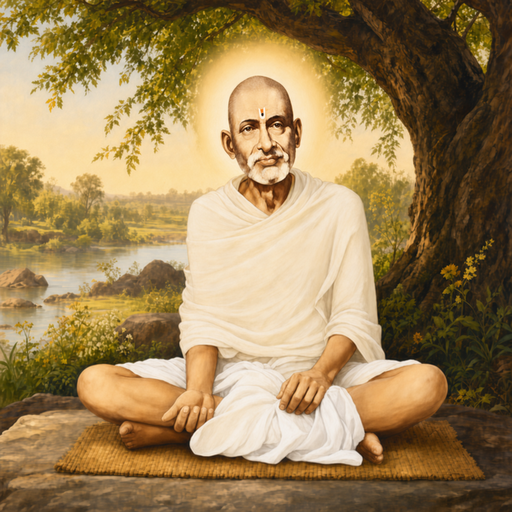
This year's dates (2026)
- Shri Gajanan Maharaj Prakat Din — Shegaon (Sunday) — the panchang's primary label for this day8 Feb
- Guru Purnima festival — Shirdi and Shegaon (Wednesday) — the panchang's primary label is the general 'Guru Purnima'; the Shegaon entry is a secondary event29 Jul
- Shri Gajanan Maharaj Punyatithi — Shegaon (Tuesday) — a secondary event; the festival rule is Rishi Panchami, which coincides with this same day15 Sep
Deity and significance
Identity: Gajanan Maharaj is not a traditional puranic deity — he is a historical avadhoot/sant whom devotees regard as divine. His birth and early life are entirely unknown — English Wikipedia itself states that no information is available about his birth or early years. When first encountered, he was found in a digambar (unclothed) state, eating discarded food near a temple — devotees are said to have drawn the lesson from this that "food should never be wasted."
Swami Samarth discipleship: according to some traditions, Gajanan Maharaj was a disciple of Akkalkot's Swami Samarth and resided with him before coming to Shegaon — as Marathi Wikipedia and some devotional sources state. However, English Wikipedia does not mention this claim at all, stating only that his origins are uncertain.
The Dattatreya tradition: Marathi Wikipedia connects Gajanan Maharaj to the Dattatreya tradition, though without directly using the word "avatar"; English Wikipedia only compares him to Narasimha Saraswati, Vasudevanand Saraswati, and Shirdi's Sai Baba, without making an avatar claim.
Mantra and teaching: "Gan Gan Ganat Bote" is his constantly-chanted mantra — devotees hold that the first "gan" means the jiva/soul, the second "gan" means Shiv/the supreme soul, "ganat" means "in the heart," and "bote" means "to meet" — overall signifying the union of the individual soul with the supreme soul. He is regarded as an exponent of all three paths — karma yoga, bhakti yoga, and gyan yoga.
Warkari connection: he is said to have regularly participated in Pandharpur's Ashadhi Wari and in the Nashik-Trimbakeshwar/Brahmagiri circumambulation. Some accounts connect this to the later development of Shegaon's own grand annual palkhi tradition.
History and legend (sthal-purana)
The primary traditional source is "Shri Gajanan Vijay," a 21-chapter text composed by Dasganu Maharaj (1868-1962, also the first president of the Shirdi Sai Sansthan) — the main foundational text for Shegaon, much as the Sai Satcharita is for Shirdi. The various versions available ultimately appear to retell this same single text. Based on Dasganu Maharaj's year of death, this text is now likely in the public domain.
Manifestation (23 February 1878): he was first seen outside a shop in Shegaon, in his youth (around age 30), in a digambar state, eating discarded food, by the moneylender Bankatlal Agarwal — who, recognizing something extraordinary in him, began serving him.
32 years of residence and miracles: accounts describe relief from plague and famine, healing of leprosy, the revival of Janrao Deshmukh, lighting a chillum without fire, filling a dry well with water, extracting sugarcane juice with bare hands, and surviving bee stings unharmed. He is also said to have blessed Lokmanya Tilak before his imprisonment.
Disciple lineage: Bankatlal Agarwal, Pitambar Saitwal, Bhaskar Patil (Jayle — later Bhaskar Maharaj Jayle, whose grandson Vasudev Maharaj Jayle established the Shraddhasagar Ashram at Akot), Balabhau (regarded as his successor), Hari Patil, and Pundlik Bhokare.
The trust's founding, during his own lifetime (12 September 1908): devotees established a 12-member board of trustees on 12 September 1908 — two full years before his samadhi. Note this distinction carefully: the trust was founded before his samadhi, not after it. The district administration's official site independently confirms both this trust and its website as official.
Sanjeevan Samadhi (8 September 1910, Rishi Panchami): he is believed to have voluntarily given up his body ("Sanjeevan Samadhi"); today's Samadhi Mandir stands at the very spot he is said to have indicated in advance.
Architecture
The Samadhi Mandir is built of white marble. Southeast of the main temple, at the exact spot where he took samadhi, stand marble paduka (footprints).
Devotees can view the samadhi up close through an underground tunnel; a large marble idol of the Maharaj stands within. The outer walls are carved with sculptures of various deities.
The premises also hold a dhuni (sacred fire) believed to have burned continuously since his time, his preserved wooden sandals/paduka, and an old umbar tree said to date from his era.
A Shri Ram Mandir stands alongside — the morning Kakad Aarti is held jointly at both temples.
This is a modern (20th-century) samadhi-temple complex — ancient Hemadpanti stone temple architecture, as seen at Kolhapur or Tuljapur, doesn't apply here; it is a complex that has continued to expand over time. The trust also runs engineering colleges (affiliated with Amravati University).
Main festivals and yatra
Dates are taken from the panchang. Verify all yatra timings with the temple committee.
| Festival | Tithi/rule | 2026 date | Nakshatra | Note |
|---|---|---|---|---|
| Prakat Din | Magh Krishna Saptami | 8 February (Sunday) | Swati | The first darshan (historical date 23 February 1878); the panchang's primary label for this day. |
| Punyatithi/Sanjeevan Samadhi | Bhadrapad Shukla Chaturthi (until 7:43 AM, then Panchami) — festival rule: Rishi Panchami | 15 September (Tuesday) | Swati | The original samadhi date is 8 September 1910; Rishi Panchami coincidentally falls on the same day. |
| Guru Purnima | Ashadh Shukla Purnima | 29 July (Wednesday) | Uttarashadha | Shared with Shirdi; a secondary entry in the panchang. See Guru Purnima for more. |
| Ashadhi Wari palkhi (Shegaon to Pandharpur) | Solar/tradition-fixed, not tithi-based | Approximately 21 June to 19 August (not in the panchang, web-sourced only) | — | Its 57th year in 2026; the Pandharpur stay runs 23-28 July, spanning Ashadhi Ekadashi. See Ashadhi Ekadashi and Pandharpur Vitthal for the general Wari context. |
The Ashadhi Wari palkhi: this palkhi, setting out from Shegaon every year, is regarded as one of Maharashtra's major modern Wari traditions — it covers roughly 700-750 km on foot over 33 days, passing through nine districts (Buldhana, Akola, Washim, Hingoli, Parbhani, Beed, Dharashiv, Solapur, and Jalna), with a return journey as well.
The daily internal palkhi: the temple's own site states that an internal palkhi procession (with haripath) is also held on Thursdays and specific tithis at the main temple — this is a separate, smaller daily/weekly practice, distinct from the annual Pandharpur palkhi, and shouldn't be confused with it.
Darshan and aarti timings
The official site and third-party sites disagree — confirm any timing with the temple committee before treating it as final.
- Per the official site: Kakad Aarti at 5:00 AM (Samadhi Mandir and Ram Mandir); Panchamrit puja and Panchaarti from 5:30 to 7:30 AM; Panchopchar puja, aarti, and mahanaivedya at 11:00 AM; Dnyaneshwari discourse from 4:00 to 5:00 PM; Haripath from 5:00 to 6:00 PM (with a palkhi on Thursdays/specific tithis); Panchopchar puja, aarti, and naivedya at sunset; bhajan/panchapadi from 8:00 to 9:00 PM; kirtan from 8:00 to 10:00 PM (on Thursdays/specific tithis/festivals); Shej Aarti and prasad distribution at 9:30 PM; the temple then stays closed until 5:00 AM.
- Per third-party sites: darshan from 5:00 AM to 12:00 PM and 4:00 to 10:00 PM, closed from 12:00 to 4:00 PM.
Special rituals here
Panchamrit abhishek and shodashopchar-style puja at least three times a day (dawn, 11:00 AM, sunset).
A Dnyaneshwari discourse and Haripath every evening; kirtan and an internal palkhi procession on Thursdays and specific tithis/festivals.
Free mahaprasad (roti-sabzi-rice-sweet) for thousands of devotees daily — the exact timing and rules, per travel sources, are approximately 9:00 AM to 9:00 PM.
For the exact sequence of pujas and the list of materials used, direct contact with the trust is needed for deeper detail.
How to reach
By rail: Shegaon railway station is just 2 km from the temple; on the Howrah-Nagpur-Mumbai main line, with direct trains to Mumbai, Delhi, Chennai, Pune, Nagpur, and Secunderabad, among other cities. Akola is 37 km, Amravati 125 km, and Nagpur 290 km (by rail).
By road: the bus stand is 1 km from the temple; connected via National Highway 6 to Khamgaon, Nandura, Balapur, Malkapur, and Akola.
By air: the nearest airports are Chhatrapati Sambhajinagar (about 220 km) and Nagpur (about 314 km).
General distances: about 300 km west of Nagpur, and about 550 km east of Mumbai.
Nearby places
- Anand Sagar — a garden complex built by the trust, within Shegaon itself, established in 2005 (at a cost of about ₹300 crore), covering about 140 hectares (about 346 acres), with a 3,500-seat amphitheater, gardens, temples, and fountains.
- Lonar Lake — a saltwater lake formed by a meteorite impact (a National Geo-Heritage Monument), about 119-121 km from Shegaon by road.
- Akola — the nearest major city, 37 km away by rail.
Good to know before you go
- The temple's management is consistently praised for its discipline and cleanliness — the darshan queue offers first aid, a childcare room, free tea, and air conditioning.
- Free mahaprasad and several bhaktaniwas/accommodation options are available; some sources say in-person registration may be required — verify in advance with the official site.
- Set aside half a day to a full day for Anand Sagar — both temple darshan and family tourism are possible in a single trip.
- Expect heavy crowds along the palkhi route and at Pandharpur during the Ashadhi Wari season (June to August).
- Darshan timings may change during crowded periods (Prakat Din, Punyatithi, Guru Purnima) — contact the trust in advance.
FAQ
- Who was Gajanan Maharaj of Shegaon?
- A 19th-century avadhoot/sant whose birth and early life are unknown; he resided in Shegaon for 32 years and took samadhi there.
- When did Gajanan Maharaj first appear in Shegaon?
- On 23 February 1878, at around age 30 — the tithi-based festival day for 2026 falls on 8 February.
- When was Gajanan Maharaj's punyatithi/samadhi?
- 8 September 1910, on Rishi Panchami (Sanjeevan Samadhi) — the 2026 tithi-based day falls on 15 September.
- What does the mantra "Gan Gan Ganat Bote" mean?
- Devotees regard it as a symbol of the union of the individual soul with the supreme soul.
- Was Gajanan Maharaj a disciple of Swami Samarth?
- Some devotional traditions say yes, but English Wikipedia and some other sources don't corroborate this — it remains a contested, unresolved point.
- When does Shegaon's palkhi depart for Pandharpur?
- Every year for the Ashadhi Wari (around 21 June in 2026, its 57th year) — the exact date changes annually.
- What are the darshan timings at the Shegaon temple?
- Sources disagree — check with the temple committee before you travel.
- How far is Shegaon from Mumbai/Pune/Nagpur?
- About 300 km west of Nagpur, and about 550 km east of Mumbai; there is direct rail connectivity.
- What is there to see at Anand Sagar in Shegaon?
- A garden complex built by the trust — gardens, temples, an amphitheater, and fountains.
- What other sights are near Shegaon?
- Lonar Lake (about 120 km, a meteorite-impact lake) and Akola (37 km).
Related Info
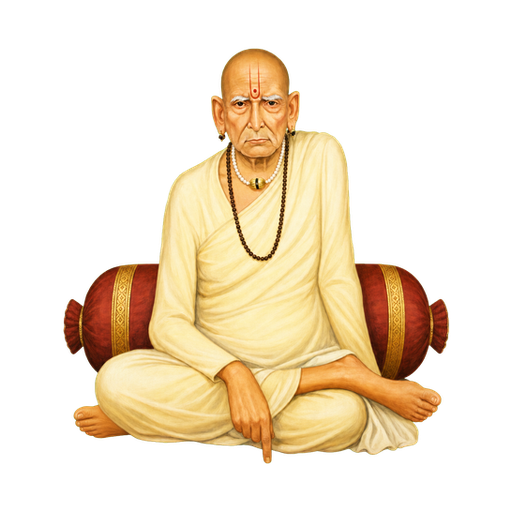 Akkalkot Swami Samarth19 Feb
 Shirdi Sai Baba26 Mar
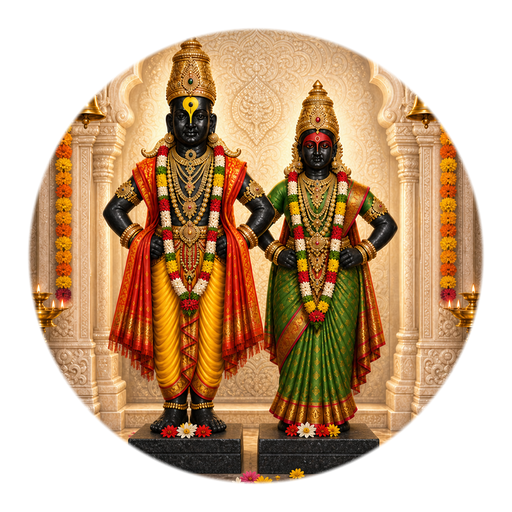 Pandharpur Vitthal-Rukmini Temple29 Jan
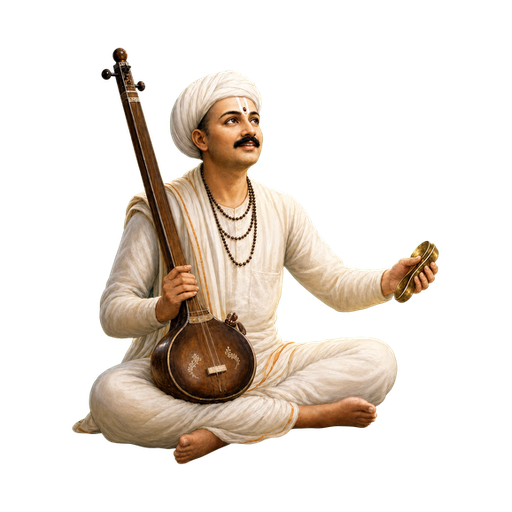 Dehu — Sant Tukaram Maharaj5 Mar
 Alandi Sant Dnyaneshwar Samadhi Mandir8 Jul
 Paithan — Sant Eknath Maharaj Samadhi Mandir9 Mar
 Sajjangad — Samarth Ramdas Samadhi11 Feb
- Ashadhi Ekadashi25 Jul
 Guru Purnima (Vyas Puja)29 Jul