Bhaumvati Amavasya
when the Amavasya tithi falls on a Tuesday, it's called Bhaumvati Amavasya — "Bhaum" is another name for the planet Mars, and Tuesday is its day. This isn't a tithi tied to one particular masa — it's a tithi-weekday combination that recurs through the year. In 2026, this combination falls exactly three times — 17 February, 14 July, and 8 December. The day is considered special because two separate observances — tarpan/shraddha for the ancestors, and worship of Hanuman/Mangal — come together on the same day.
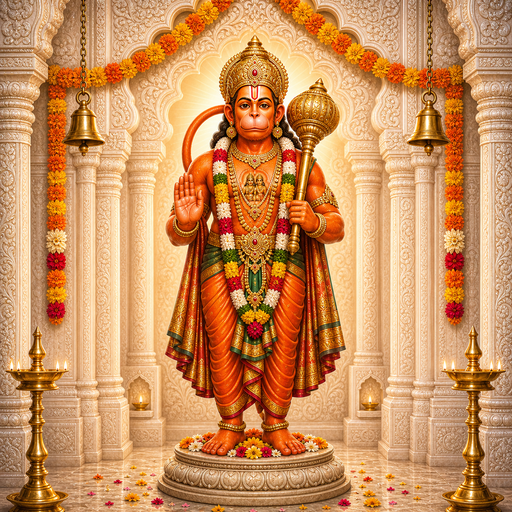
This year's dates (2026)
- The first Bhaumvati Amavasya of 2026 — the panchang's primary label is 'Darsha Amavasya'17 Feb
- The second Bhaumvati Amavasya of 2026 — the panchang's primary label is 'Darsha Amavasya'14 Jul
- The third (last) Bhaumvati Amavasya of 2026 — the panchang's primary label is 'Darsha Amavasya'8 Dec
⚠️ Looking for Angaraki Sankashti Chaturthi or Bhaumpradosh? Bhaumvati Amavasya is different from both of these — only the "Tuesday + Krishna Paksha tithi" template is shared. Angaraki Sankashti Chaturthi is the Chaturthi that falls on a Tuesday (Ganpati-centred); Bhaumpradosh is the Trayodashi that falls on a Tuesday (Shiva-centred); Bhaumvati Amavasya is the Amavasya that falls on a Tuesday (centred on the ancestors and Mangal). Three different tithis, three different central deities.
Deity and significance
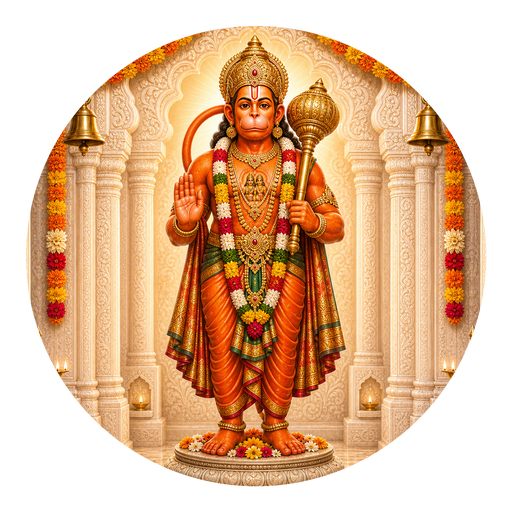
The tithi-deity of Amavasya is regarded as the ancestors (pitrus) — there's a general belief that tarpan or shraddha performed on this day reaches one's forebears with special effect. Tuesday is regarded as the day of the planet Mars, and popularly of Hanuman. Because Bhaumvati Amavasya brings these two separate devotional dimensions together, it's regarded as a doubly meritorious occasion — auspicious for both ancestor worship and Mangal-Hanuman worship.
Many sources say that bathing, giving charity, performing tarpan, chanting, and worship on Bhaumvati Amavasya brings relief from pitru-dosha, mangal-dosha, and financial difficulty — Hanuman worship in particular is considered effective against mangal-dosha, debt, and financial instability. All of these are astrological and faith-based claims, not scientifically established ones — they should be understood as matters of belief, not guarantees.
Like Somvati (Monday) and Shanishchari (Saturday), Bhaumvati (Tuesday) is also an Amavasya in the same weekday-based naming tradition.
The combination of Amavasya and Tuesday occurs roughly one to three times a year — the number varies from year to year; in 2026 it falls exactly three times.
The vrat katha
There is no separate, distinct katha for Bhaumvati Amavasya — this is a tithi-weekday combination, not a single puranic event or birth story. Two separate story themes related to Tuesday and to Amavasya are loosely relevant as background — but they aren't Bhaumvati Amavasya's own story.
The Mangalvar Vrat (Hanuman) page gives a general weekly Tuesday-vrat katha in detail — that isn't a separate Amavasya story, it's the general Tuesday story. Separately, there's a story connected to Bhaumpradosh (Mangal's penance to Shiva and the granting of Mangal-loka) — that too belongs to the Trayodashi tithi, not Amavasya. Neither of these is presented here as "Bhaumvati Amavasya's story" — the coming-together of Amavasya's ancestor worship and Tuesday's Mangal-Hanuman worship is the heart of this day.
Who should observe it
In general, family members wishing to remember and perform tarpan or shraddha for their ancestors, those who believe they have mangal-dosha or kuja-dosha in their horoscope and seek relief through worship, and devotees of Hanuman observe this day. Unlike Somvati Amavasya, there's no rule limiting this day to a particular group, such as married women — anyone can observe it for the dual purpose of ancestor devotion and Mangal worship. What exactly to do varies by tradition and belief — it isn't presented here as a universal obligation.
Puja vidhi
A general sequence, which can vary by household or local tradition:
- Bathe at dawn — in a sacred river if possible, or at home with Ganga water added to your bath water.
- Perform tarpan for the ancestors — sitting facing south at the root of a peepal tree, offering raw milk, black sesame seeds, Ganga water, and fragrant flowers while chanting "Om Pitru Devaya Namah" (eleven times, according to one source). Shraddha and pind-daan can also be performed if possible.
- Worship Hanuman or Mangal — reading the Hanuman Chalisa, chanting a Mangal mantra (according to some sources, at midday, with a ghee lamp, facing south).
- Give charity — red cloth, lentils (masoor dal), copper items, jaggery, red fruits, grain, or feeding those in need.
- Some sources also mention cow-service (gau-seva) and worship of the peepal tree — this is a regional variation.
Because Bhaumvati Amavasya recurs throughout the year, there's no separate multi-year closing ritual like Shivamuth or Solah Somvar — it's observed independently each time.
The exact vidhi, materials, and direction can vary by family and region — this shouldn't be taken as the one correct procedure.
Puja materials
Raw milk, black sesame seeds, Ganga water, cloves, rock sugar, fragrant flowers, a ghee lamp, incense, water and sesame seeds for the ancestor tarpan, and red cloth, lentils, copper items, jaggery, and grain for charity.
(This list can vary by tradition.)
 Ganga water
 Fragrant flowers
 Ghee lamp
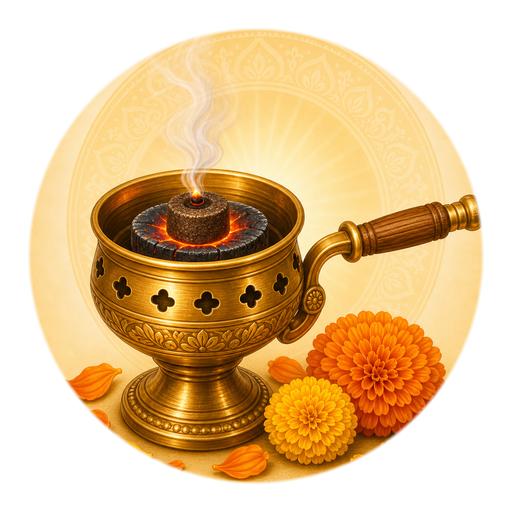 Incense
 Red cloth (for charity)
Fasting and dietary rules
There are no separate dietary or fasting rules specific to Bhaumvati Amavasya — fasting is considered optional. The general weekly Tuesday-vrat dietary rules (avoiding salt and grain, a sattvic diet of fruit, milk, jaggery, and lentils) are given in detail on the Mangalvar Vrat (Hanuman) page.
Those who are elderly, pregnant, unwell, or on regular medication should avoid a strict fast — observe it gently, according to your health.
Mantra
Only the name and meaning are given here; for the full recitation, follow your local priest or family tradition.
- Mangal bija mantras: "Om Am Angarakaya Namah" (also known as the debt-relief, or rinmochan, mantra) and "Om Kraam Kreem Kraum Sah Bhaumaya Namah" (a bija mantra for strength and courage) — both are general Mangal-worship mantras, not specific to Bhaumvati Amavasya.
- The Rinmochak Mangal Stotra: a stotra of Mangal's twenty-one names, believed to be recited for relief from debt.
- The Hanuman Chalisa: mentioned as part of general Hanuman devotion.
Regional customs
There is no distinct Maharashtrian practice for this day — it is a general Indian tradition, also observed the same way in Maharashtra.
No specific Maharashtrian temple has an official or verified connection to Bhaumvati Amavasya; for mangal-dosha puja, check with a trusted local priest or temple directly.
2026 Bhaumvati Amavasya — dates
| # | Date | Tithi (amanta) | Nakshatra |
|---|---|---|---|
| 1 | 17 February | Magh Krishna Amavasya | Dhanishtha |
| 2 | 14 July | Nij Jyeshtha Krishna Amavasya | Punarvasu |
| 3 | 8 December | Kartik Krishna Amavasya | Anuradha |
The panchang's primary label on all three of these dates is "Darsha Amavasya." Under the North Indian purnimanta system, these same dates are called Phalgun, Ashadh, and Margashirsh Amavasya respectively — this is simply an amanta-versus-purnimanta naming difference.
The number and dates of Bhaumvati Amavasya will vary in future years according to that year's panchang.
Good to know
- The exact start and end times of the Amavasya tithi, Rahukaal, and muhurat differ across all three dates and by city — check the relevant day's own page for these.
- Bhaumvati Amavasya (ancestors and Mangal, an Amavasya) is different from both Angaraki Sankashti Chaturthi (Ganpati, a Chaturthi) and Bhaumpradosh (a Trayodashi) — avoid confusing the names.
- Fasting is optional — those with diabetes, who are pregnant, elderly, or unwell should observe a gentler practice suited to their health.
- Take general safety precautions when bathing in a river or visiting a crowded pilgrimage site.
- Mangal-dosha and its remedies are matters of belief, not an astrological guarantee.
FAQ
- What is Bhaumvati Amavasya?
- When the Amavasya tithi falls on a Tuesday, it's called Bhaumvati Amavasya — "Bhaum" is another name for the planet Mars.
- When does Bhaumvati Amavasya fall in 2026?
- Three times in 2026 — 17 February, 14 July, and 8 December.
- How many times a year does Bhaumvati Amavasya occur?
- The number varies year to year, typically one to three times; in 2026 it falls exactly three times. There's no fixed universal number.
- What's the difference between Bhaumvati Amavasya and Angaraki Sankashti Chaturthi?
- Angaraki is the Chaturthi that falls on a Tuesday (Ganpati-centred); Bhaumvati is the Amavasya that falls on a Tuesday (centred on the ancestors and Mangal). Different tithis, different central deities — in 2026 their dates don't even coincide.
- What's the difference between Bhaumvati Amavasya and Bhaumpradosh?
- Bhaumpradosh is the Trayodashi that falls on a Tuesday (Shiva-centred, with its own legend); Bhaumvati Amavasya is the Amavasya that falls on a Tuesday (centred on the ancestors and Mangal).
- What should be done on Bhaumvati Amavasya?
- The general practice is a dawn bath followed by tarpan/shraddha for the ancestors and worship of Hanuman or Mangal; some traditions also mention peepal-tree worship and charity (such as red cloth, lentils, copper, and sesame seeds). The exact procedure and items vary by family and tradition — confirm with your family priest for your own kulachar.
- Why is Bhaumvati Amavasya considered so significant for mangal-dosha?
- Tuesday is regarded as the day of the planet Mars, and Amavasya is regarded as a tithi for reflection and ancestor worship. Their combination is considered especially effective for easing mangal-dosha and relieving ancestral debt — this is a faith-based claim, not a guarantee.
- Why is tarpan performed for the ancestors on Bhaumvati Amavasya?
- Amavasya itself is generally regarded as a day for remembering one's ancestors; some sources say that when it falls on a Tuesday, the tarpan or shraddha carries extra emotional and traditional significance.